Postal System
Postal System — an illustrated inventions story, set in Global. 10 illustrated pages, free to read on Wonder Inventions.
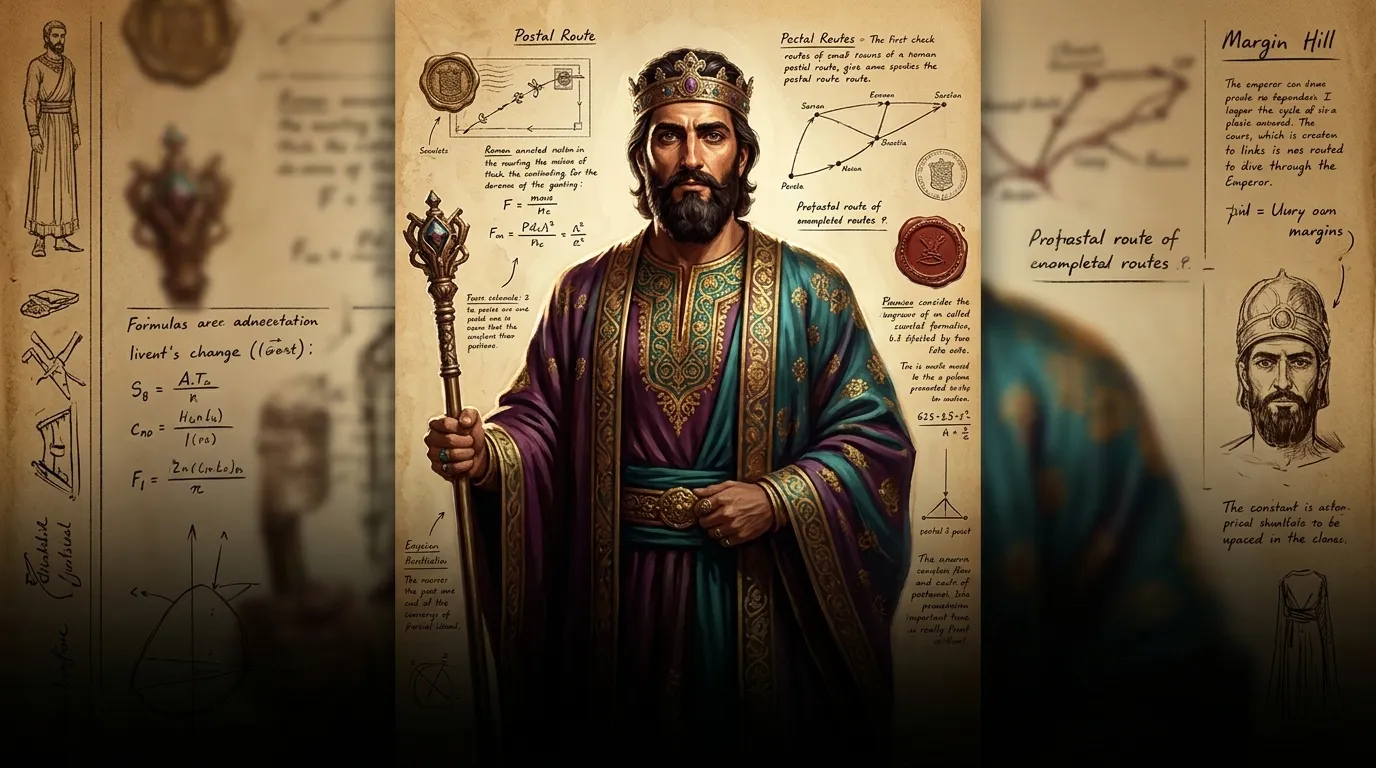
Page 1
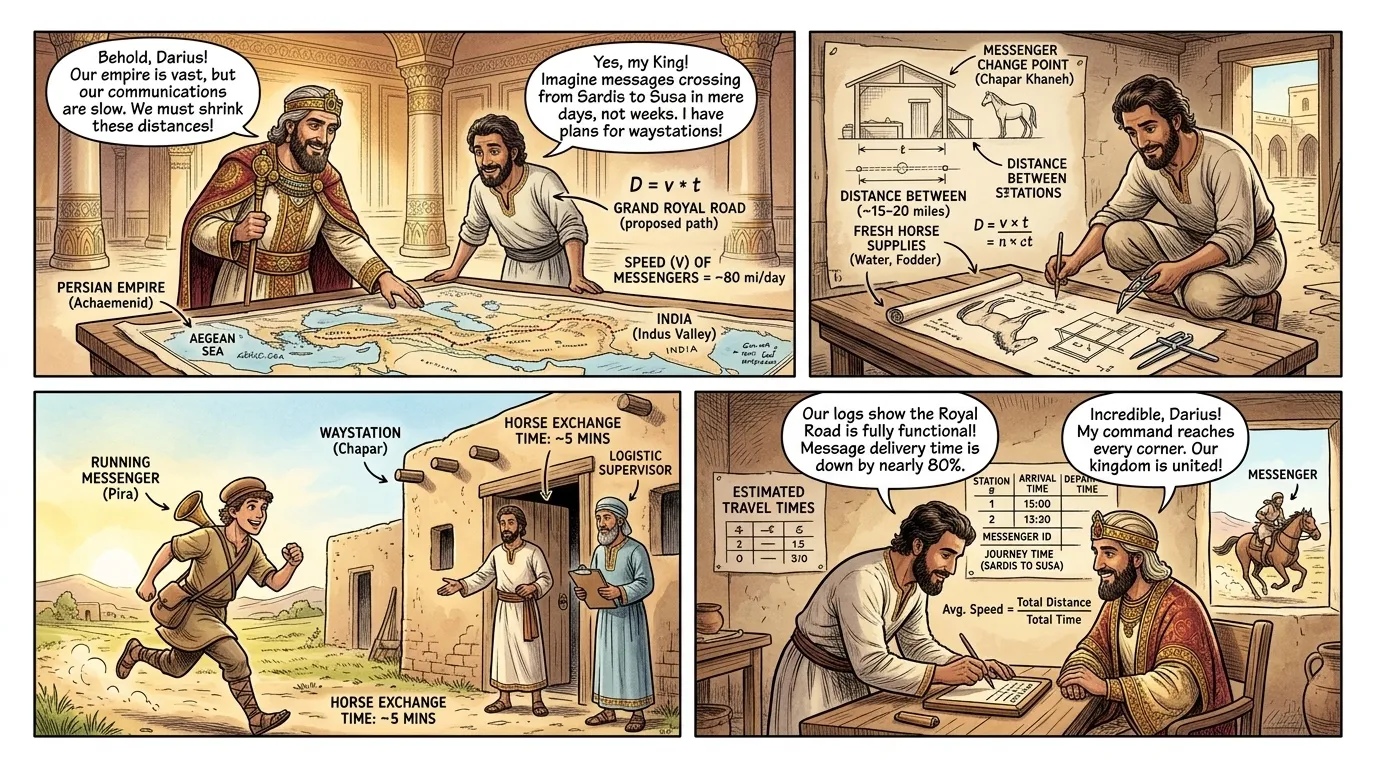
Across vast ancient empires, rulers faced a monumental challenge: how to communicate swiftly and reliably across immense distances. Before a true postal system, messages were slow, often lost, and difficult to verify, making effective governance almost impossible.
""Our empire stretches from the Aegean to India!" exclaimed Emperor Cyrus the Great, surveying a vast map. "How can I ensure my commands reach every satrap quickly and accurately?" A loyal advisor, a man named Darius, nodded thoughtfully. "Indeed, Your Majesty. Maintaining control over such a wide domain demands an efficient network.""
Page 2
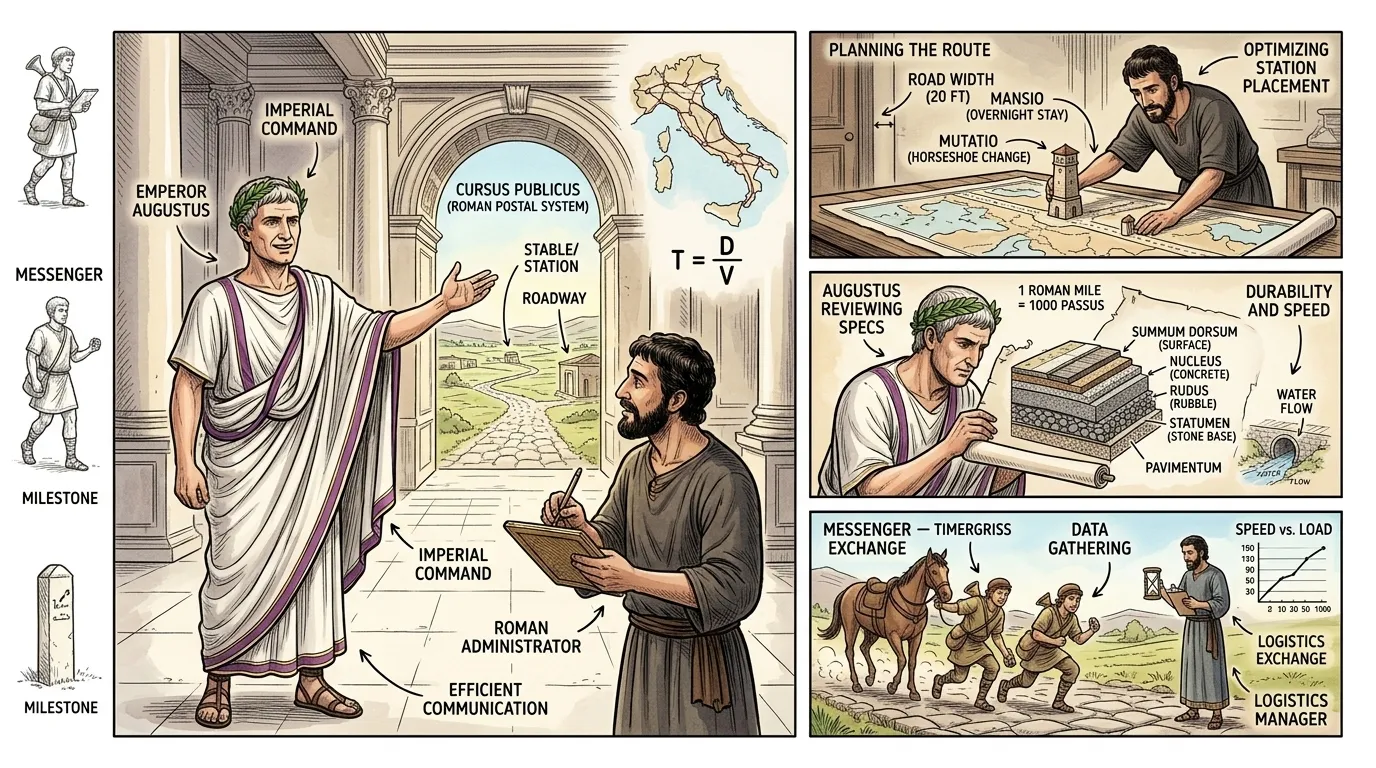
Centuries later, the mighty Roman Empire inherited this challenge. Emperor Augustus understood that a robust communication system was not a luxury, but a strategic necessity for stability and military command. He established the Cursus Publicus, an organized state-run post.
""The legions need their orders, and the provinces must report to Rome without delay," declared Emperor Augustus, a commanding figure in a white toga, gesturing emphatically. "This cursus publicus will ensure our messages travel faster than any private courier!" An accompanying Roman administrator, wearing a practical, dark tunica and holding a wax tablet, quickly scribbled notes. "Indeed, Caesar. Our relay stations, the mutationes and mansiones, will make this the fastest network in the known world.""
Page 3
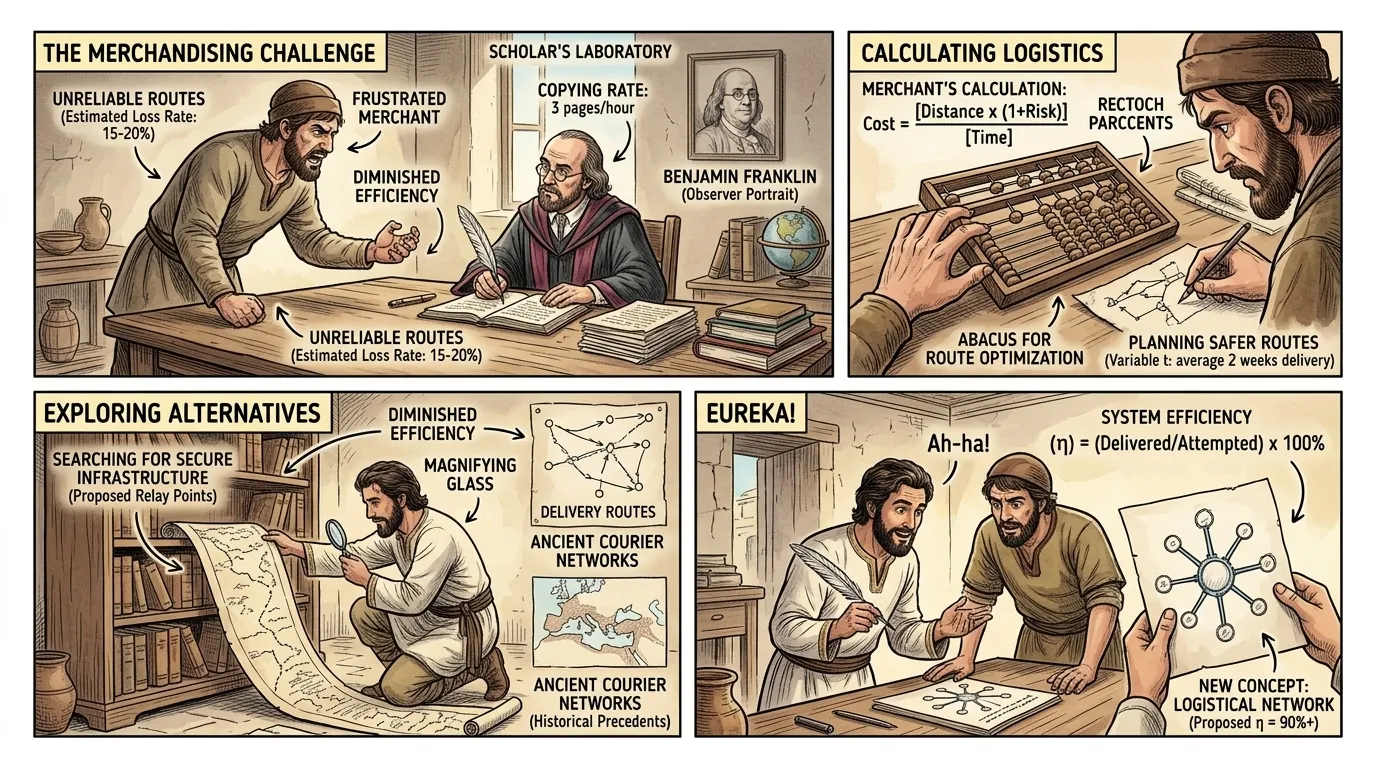
After the fall of unified empires, Europe fragmented, and formal state-run postal systems largely dissolved. Communication became localized and haphazard, relying on private couriers, merchant guilds, or university networks, which were often slow and costly.
""Another week, and still no word from Bruges!" a frustrated merchant, dressed in simple woolens and a leather cap, exclaimed, slamming his fist on a wooden table. "How are we to trade across borders if our letters take months to arrive?" A nearby scholar, meticulously copying a manuscript, looked up. "It is a critical problem, my friend. As Benjamin Franklin, a keen observer of human enterprise, once said, 'By failing to prepare, you are preparing to fail.' Without a reliable network, our ventures are indeed preparing for failure." The scholar continued, "Our university couriers are swift, but they are limited to academic correspondence.""
Page 4
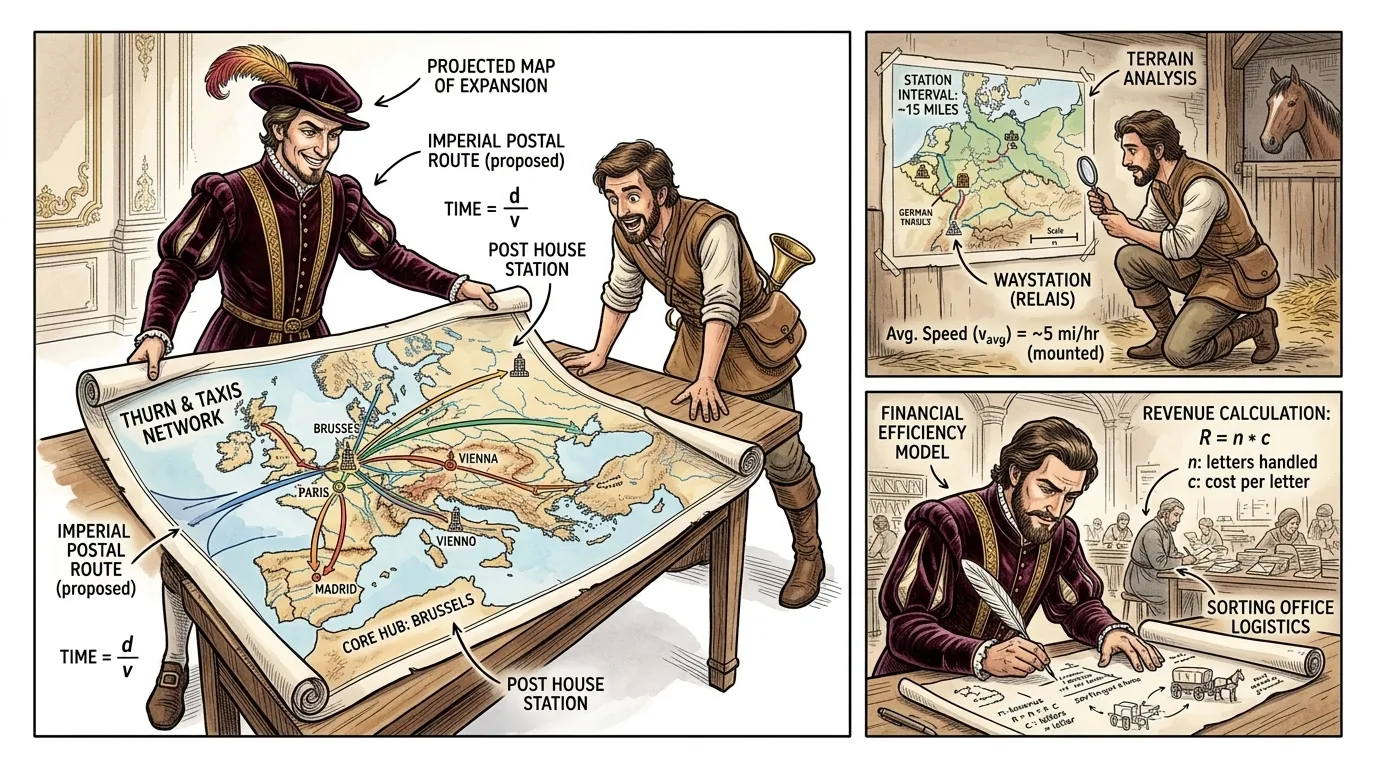
The 16th century saw a pivotal development with the rise of the Thurn und Taxis family. Franz von Taxis, a visionary entrepreneur, began to forge standardized routes and tariffs, creating the first truly international postal service across the Holy Roman Empire, connecting major cities.
""Imagine a letter traveling from Brussels to Naples in just weeks, not months!" declared Franz von Taxis, a man of sharp features and luxurious velvet attire, as he unrolled a large, intricate map of Europe. "We will establish fixed routes, reliable schedules, and uniform prices." A younger, eager messenger, dressed in sturdy leather and carrying a post horn, eagerly interjected, "And our riders, sir, will be the fastest in all the land, ensuring every message reaches its destination!" Von Taxis nodded, "Indeed. This enterprise will link kingdoms and fuel commerce like never before.""
Page 5
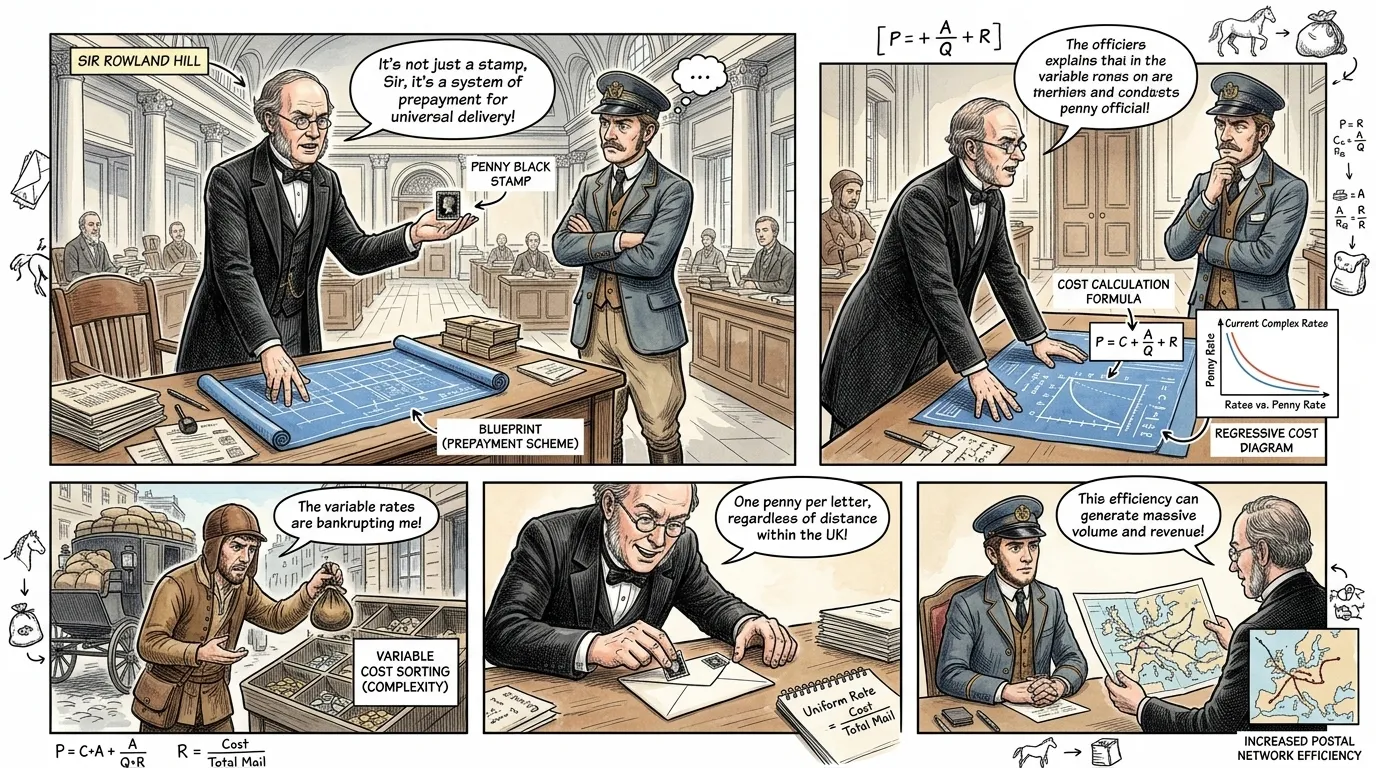
By the 19th century, Britain's postal system was plagued by high costs, confusing tariffs, and rampant fraud. It was a chaotic and inefficient service until Sir Rowland Hill proposed a revolutionary solution: uniform penny postage, paid for by the sender, marked with an adhesive stamp.
""The system is utterly broken; it punishes the poor and stifles communication," argued Rowland Hill, a determined man with spectacles and a formal black suit, tapping a blueprint on his desk. "A uniform rate, paid in advance, using a simple adhesive stamp—that is the key!" A skeptical postal official, stiff in his uniform, raised an eyebrow. "A single penny for any letter, anywhere? It seems impossible, Mr. Hill, and how will we verify payment?" Hill confidently presented a small, black square. "With this, sir: the 'Penny Black.' Simple, elegant, and revolutionary.""
Page 6
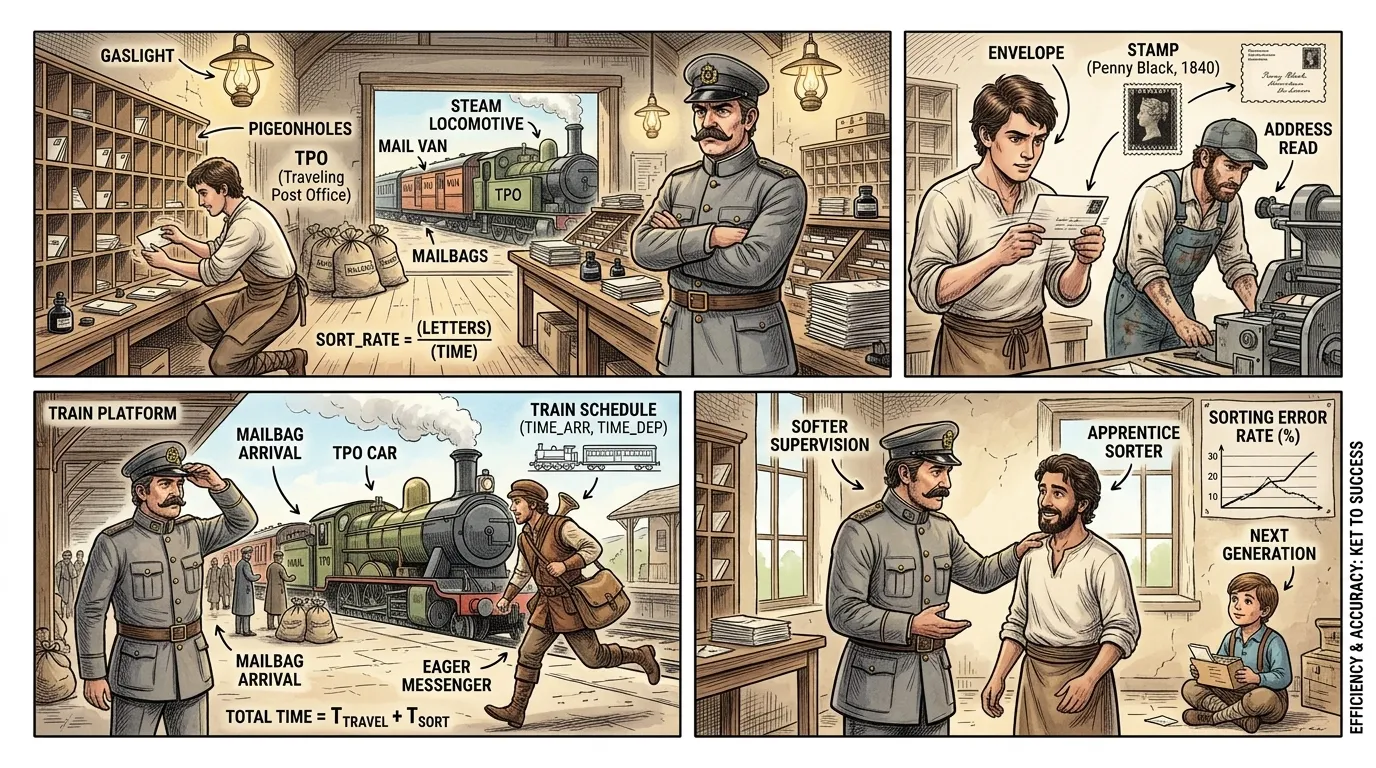
The introduction of the Penny Post transformed mail volume, necessitating new mechanisms for processing. The 19th century saw the development of increasingly sophisticated manual sorting methods and the integration of the burgeoning railway network to transport vast quantities of mail.
""The volume of letters is astounding! We must sort with speed and precision," instructed a stern postmaster, a man with a thick mustache and a grey uniform, overseeing a bustling sorting room. "Every letter must reach its correct pigeonhole!" A young sorter, his hands moving deftly, replied, "Yes, sir! And with the new railway service, our mailbags travel hundreds of miles overnight. It's a marvel how quickly they reach distant cities now." The postmaster nodded. "Indeed, this 'traveling post office' aboard the trains is a game-changer for national delivery speed.""
Page 7
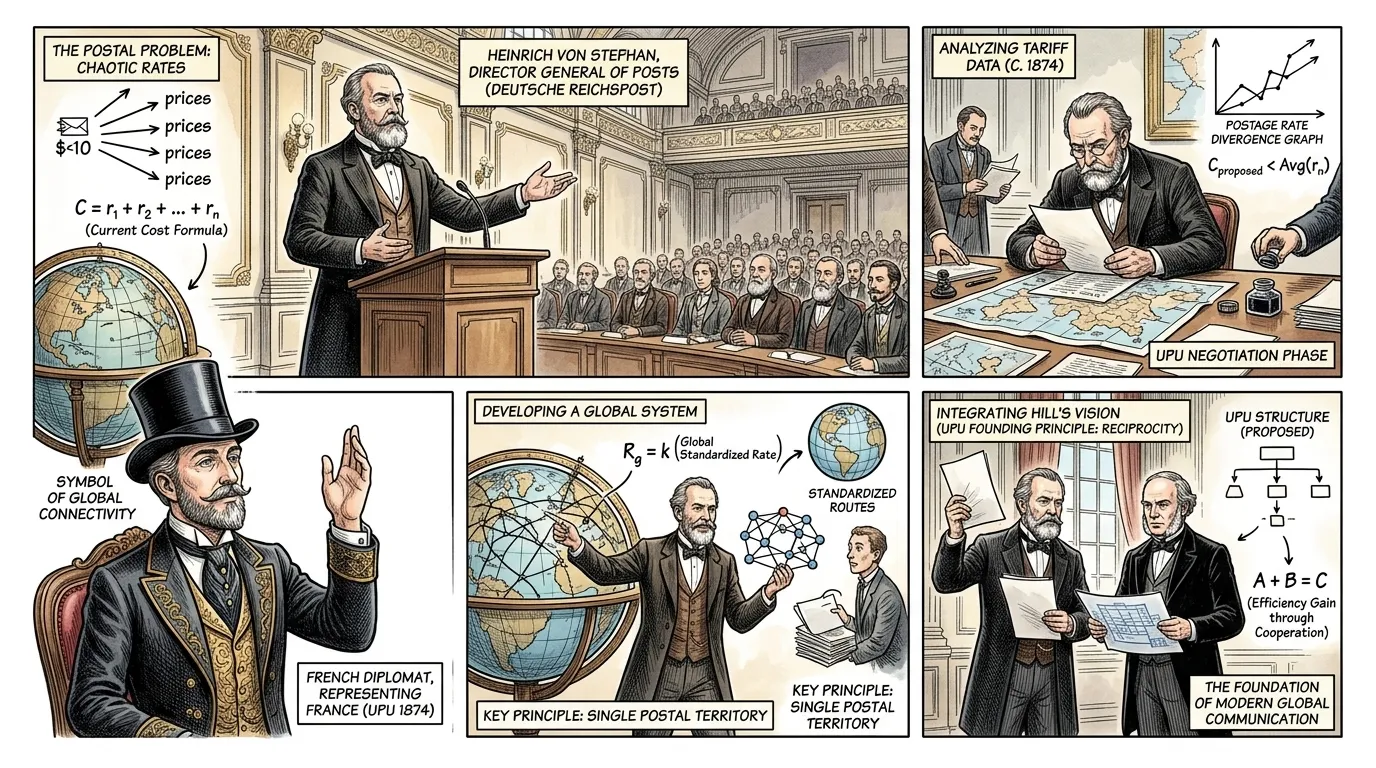
As global trade and communication expanded, international mail became a labyrinth of inconsistent treaties and tariffs. Heinrich von Stephan, a German postal administrator, spearheaded the creation of the Universal Postal Union (UPU) in 1874, simplifying and standardizing international mail delivery.
""Why should sending a letter across a border be more complicated than sending it across a street?" argued Heinrich von Stephan, a distinguished figure with a neat beard and a formal suit, addressing a room of international delegates. "We need a single postal territory for the entire world!" A French diplomat, elegant in his formal attire, raised a hand. "Monsieur von Stephan, your vision of harmonized tariffs and standardized sizes is ambitious, but entirely logical. It will truly unite our nations through communication." Von Stephan concluded, "This Universal Postal Union will ensure global connectivity, fostering peace and commerce.""
Page 8
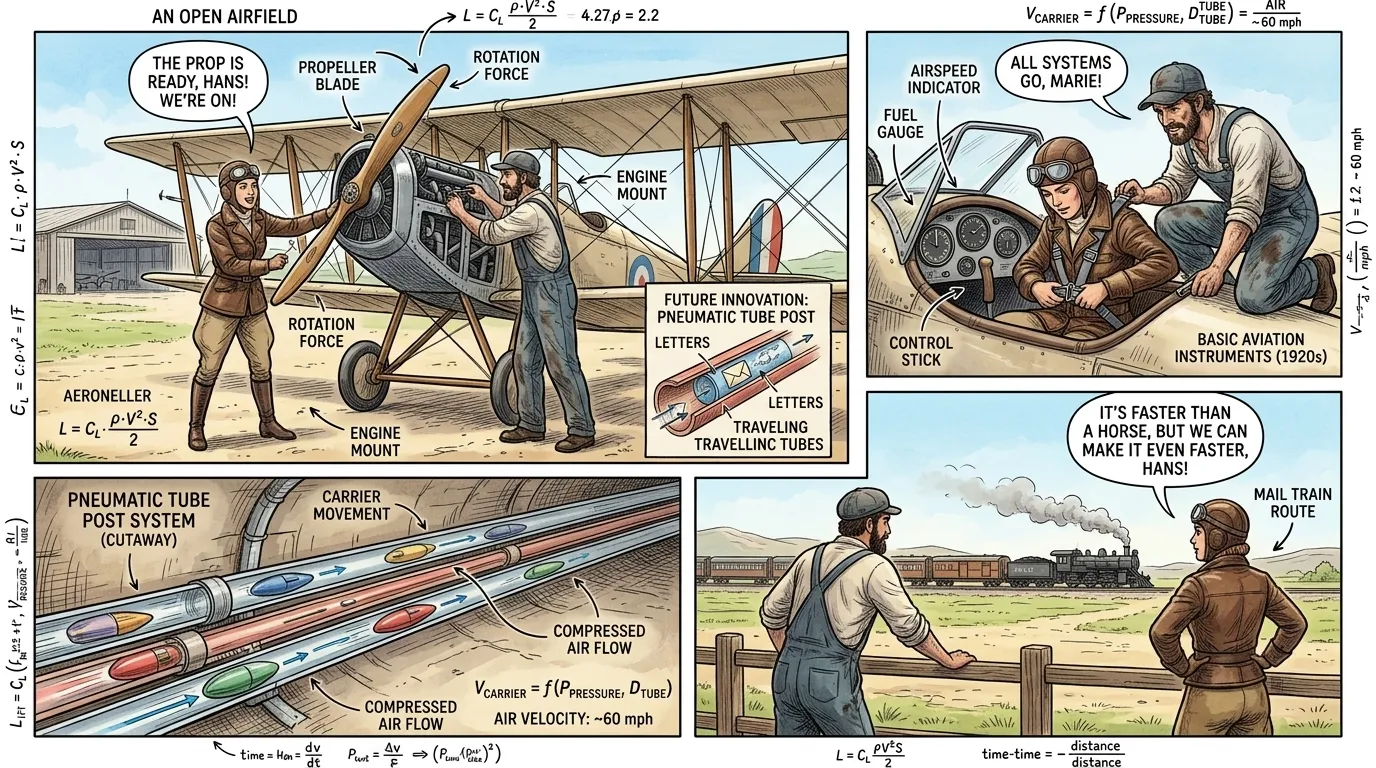
The 20th century brought new demands for speed. The advent of air travel revolutionized long-distance mail delivery, shrinking the world and connecting continents in unprecedented ways. As technology advanced, so did the postal system's methods.
""We're cutting delivery times from days to hours!" shouted a pioneering airmail pilot, a brave woman with goggles pushed up on her leather helmet, as she checked her biplane's propeller. "Imagine, a letter from New York to San Francisco in a single day!" Her mechanic, a rugged man with grease-stained overalls, nodded enthusiastically. "Indeed, captain! This 'airmail' changes everything. The world is becoming smaller with every flight. And soon, even within cities, 'pneumatic tubes' will whisk letters across town in minutes.""
Page 9
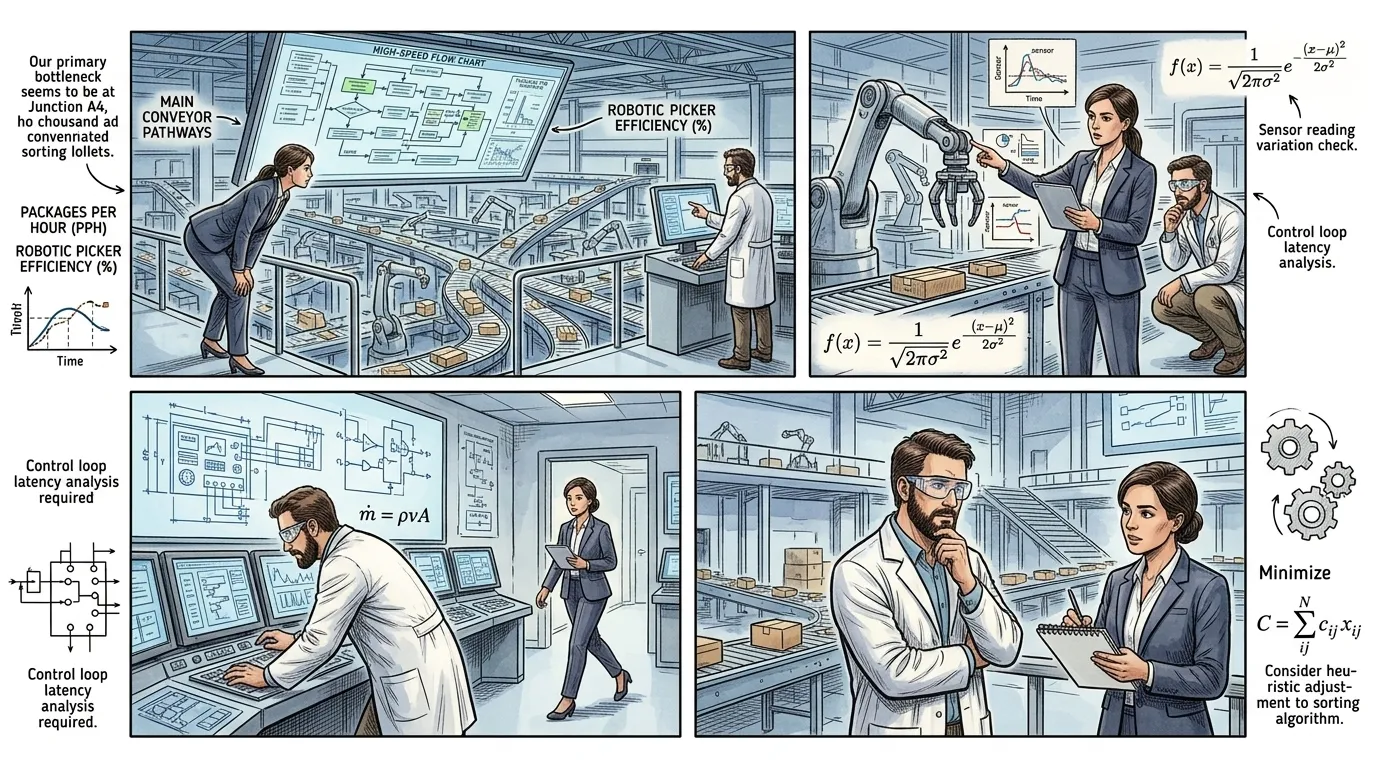
The late 20th and early 21st centuries presented a new paradigm. Digital communication, instant and ubiquitous, challenged the traditional letter. Yet, the postal system adapted, shifting focus to package delivery, becoming a vital backbone of global e-commerce and logistics.
""Email and instant messaging changed how people send letters, that's for sure," reflected a modern logistics manager, a woman in a smart business suit, overseeing a vast automated sorting facility. "But look around! The need to move physical goods, from small parcels to large freight, has exploded." A technician, expertly monitoring a control panel, agreed. "Absolutely! Our automated systems process millions of packages a day. The 'postal system' isn't just about letters anymore; it's the circulatory system of modern commerce.""
Page 10

From ancient runners to automated sorting hubs, the postal system has profoundly shaped human civilization. It connected empires, facilitated commerce, fostered literacy, and bridged distances between loved ones, demonstrating its timeless and transformative power.
""A simple letter can unite families across oceans," mused an elderly woman, gently holding a handwritten envelope. "And a package can bring joy, or vital supplies, to any doorstep," added a delivery driver, carefully placing a box on a porch. A voting official, holding a ballot, stated, "It underpins our democracies, ensuring every voice can be heard." A small child, excited, chimed in, "It brought my birthday present!" The postal system, ever adapting, continues to knit the fabric of global society, proving its indispensable legacy."
About this story
- Location: Global
- Audience: general readers
Read Wonder Inventions on your phone
Wonder Inventions is available on Android. Get Wonder Inventions on Google Play.