Pregnancy Test
Pregnancy Test — an illustrated inventions story, set in Global. 10 illustrated pages, free to read on Wonder Inventions.

Page 1
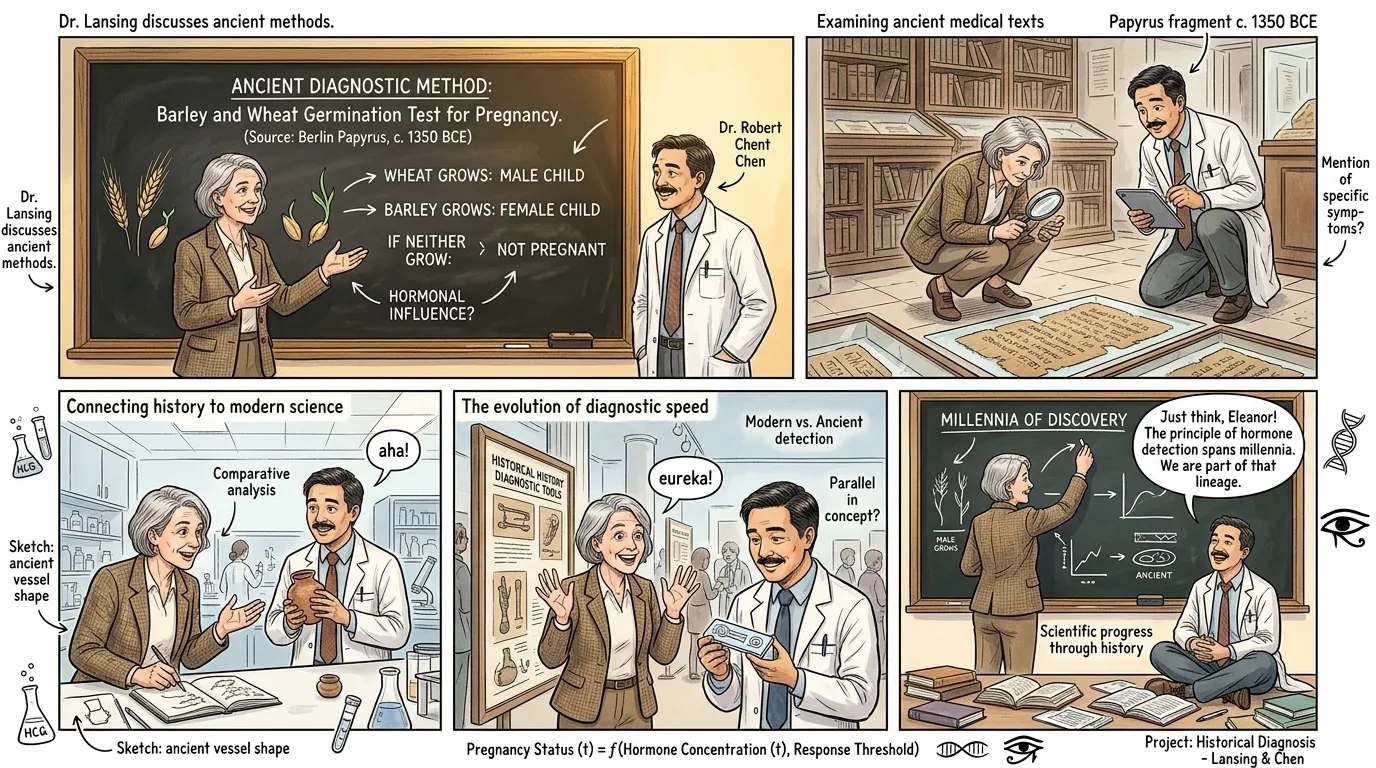
For centuries, the onset of pregnancy remained shrouded in uncertainty, a profound biological event detectable only through the slow march of physical changes. Early indicators were often anecdotal, unreliable, and deeply personal, leaving individuals navigating a complex mix of hope, anxiety, and doubt. The absence of a definitive, timely diagnosis profoundly impacted personal planning, medical care, and societal structures, creating a pressing need for clarity.
"Dr. Eleanor Lansing, a renowned medical historian, stands before a chalkboard diagramming ancient diagnostic methods. She gestures to the primitive illustrations. 'Imagine the sheer uncertainty,' she states to her colleague. 'From ancient Egyptian urine tests involving barley and wheat, where sprouting signified pregnancy, to folk remedies, definitive answers were elusive. We had no objective marker, no scientific certainty. The human body held its secrets tightly.'"
Page 2
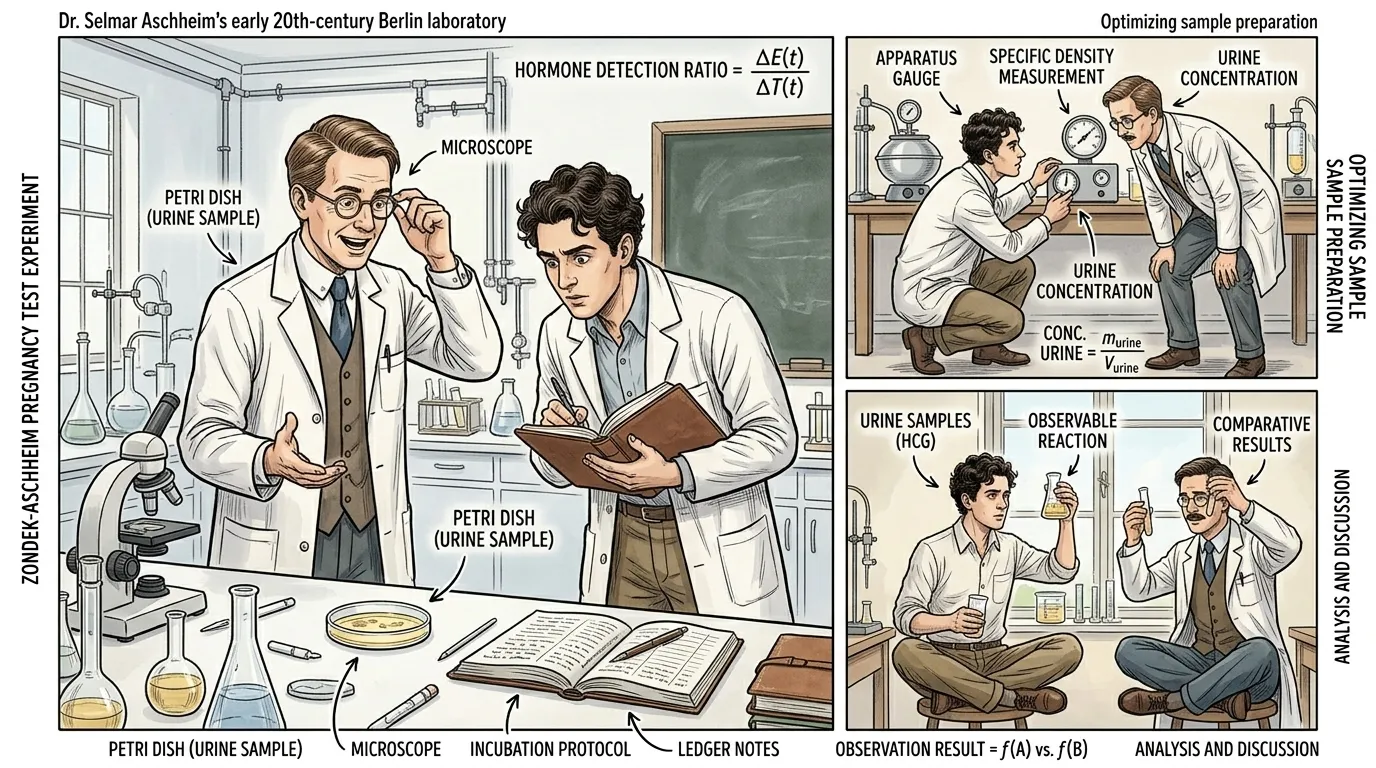
The early 20th century brought a revolutionary shift, driven by pioneering endocrinologists. The discovery of hormones began to unlock the intricate chemical messages governing the human body. In 1927, German scientists Selmar Aschheim and Bernhard Zondek made a monumental observation: the presence of a specific hormone, Human Chorionic Gonadotropin (HCG), in the urine of pregnant women. This critical insight transformed the quest for accurate diagnosis.
"In a sterile, early 20th-century Berlin laboratory, Dr. Selmar Aschheim, a meticulous man with wire-rimmed glasses and a neat side-parted brown hair, gestures excitedly towards a petri dish. Dr. Bernhard Zondek, a younger, enthusiastic scientist with dark, curly hair, peers over his shoulder. 'Look, Bernhard! The changes are undeniable,' Aschheim exclaims, adjusting his spectacles. 'This substance, this 'HCG,' clearly triggers specific ovarian responses in these mice. The very core of our understanding is shifting.' Zondek nods, making a note. 'Indeed, Selmar. The implications are profound. This hormone is the silent messenger we've sought for so long.'"
Page 3
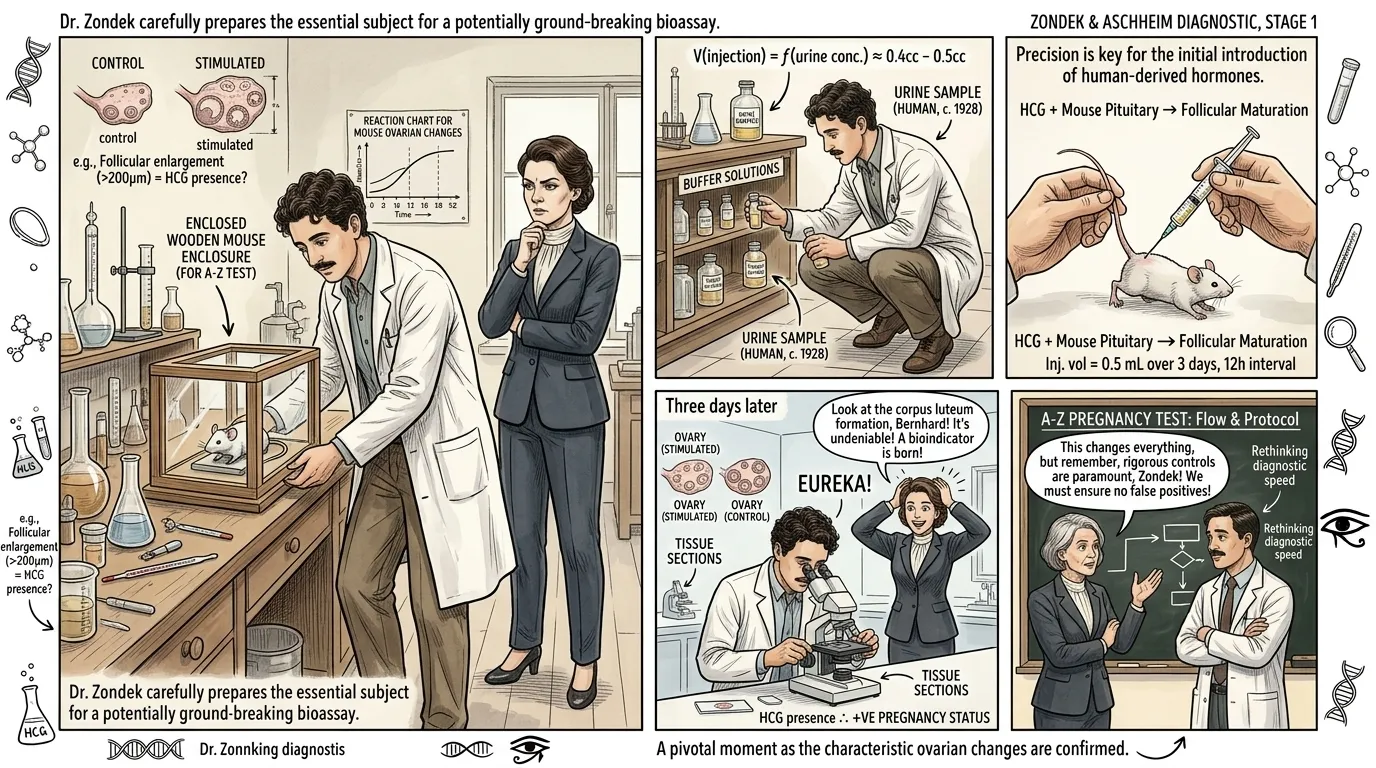
The discovery of HCG led directly to the first reliable pregnancy test: the Aschheim-Zondek (A-Z) test. This method, while groundbreaking, was far from simple. It involved injecting a woman's urine into immature female mice or rabbits, then waiting days for ovarian changes to confirm pregnancy. It was a complex, time-consuming, and ethically debated procedure, requiring live animals and trained technicians. The biological 'item' — the HCG hormone itself — was now understood, but its detection was a laborious challenge.
"Dr. Zondek carefully handles a small cage containing a laboratory mouse, explaining the process to a visiting colleague, Dr. Richter, a stern-faced woman in a tailored dark suit. 'The biological response is our indicator,' Zondek states, placing the cage gently. 'A small urine sample, injected, then we observe. The reaction within the animal's physiology, the hormonal cascade—it is the proof.' Dr. Richter raises an eyebrow. 'Days of waiting, ethical considerations, and the cost of maintaining colonies,' she remarks, thoughtfully. 'While ingenious, Dr. Zondek, we must find a method that transcends the vivarium. This knowledge, this HCG, demands a more accessible application.'"
Page 4
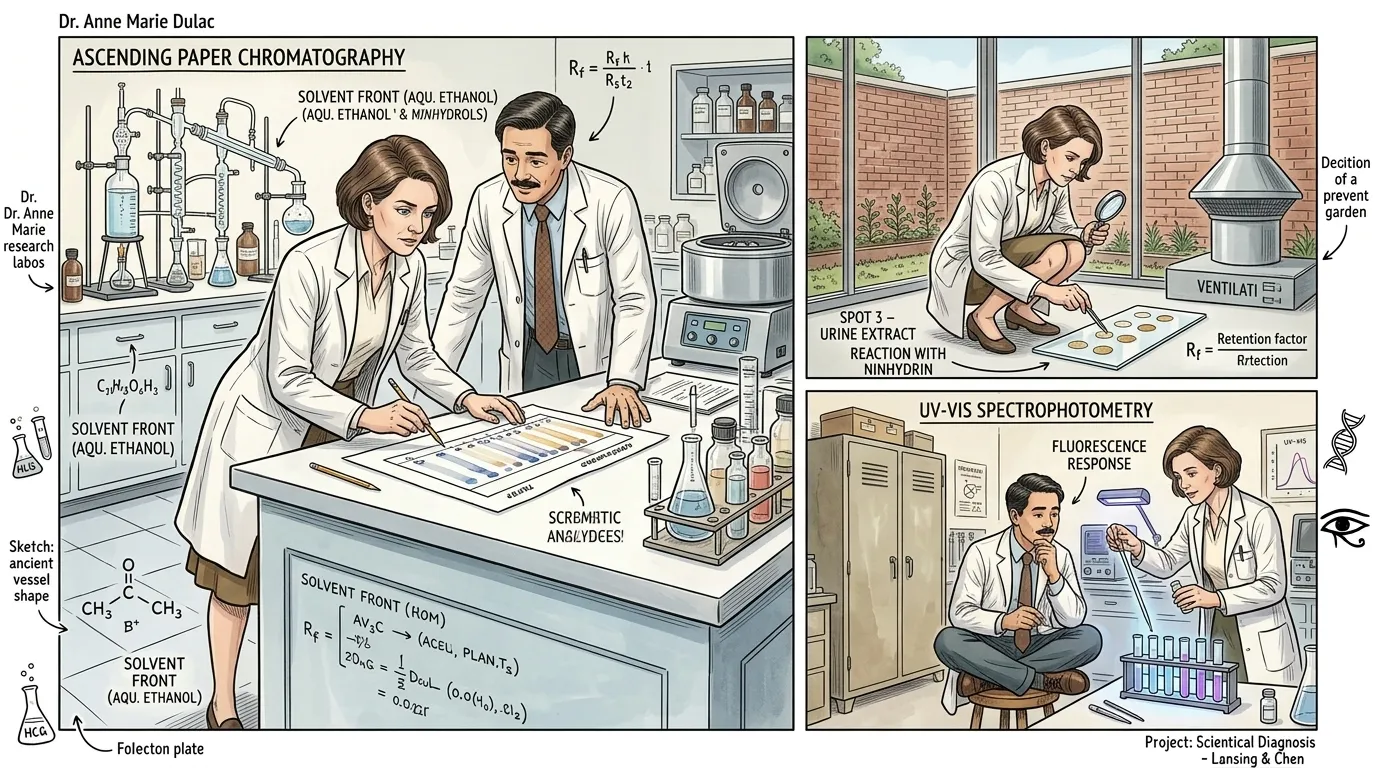
Post-World War II, societal shifts and advancements in medicine fueled a demand for more accessible and rapid diagnostic tools. The animal tests, despite their accuracy, were impractical for widespread use. Scientists continued to probe the biochemical pathways, searching for a way to detect HCG without involving living organisms. The challenge was immense: isolating and identifying the hormone's presence in a complex biological matrix like urine, quickly and affordably.
"In a mid-century research laboratory, Dr. Anne Marie Dulac, a brilliant biochemist with short, practical brown hair and intense blue eyes, reviews a complex chromatography paper. Her colleague, Dr. Robert Chen, a patient man with a neatly trimmed mustache, leans over her shoulder. 'The separation techniques are improving,' Dr. Dulac muses, tapping a pencil on the paper. 'But isolating HCG directly, in a way that yields a rapid, visual result... the precision required is daunting. We need a fundamental shift in our approach, Robert.' Dr. Chen nods. 'The public demands answers faster than a rabbit can react, Anne. Our current methods are elegant but slow. We need to bridge the gap between complex immunology and practical application.'"
Page 5
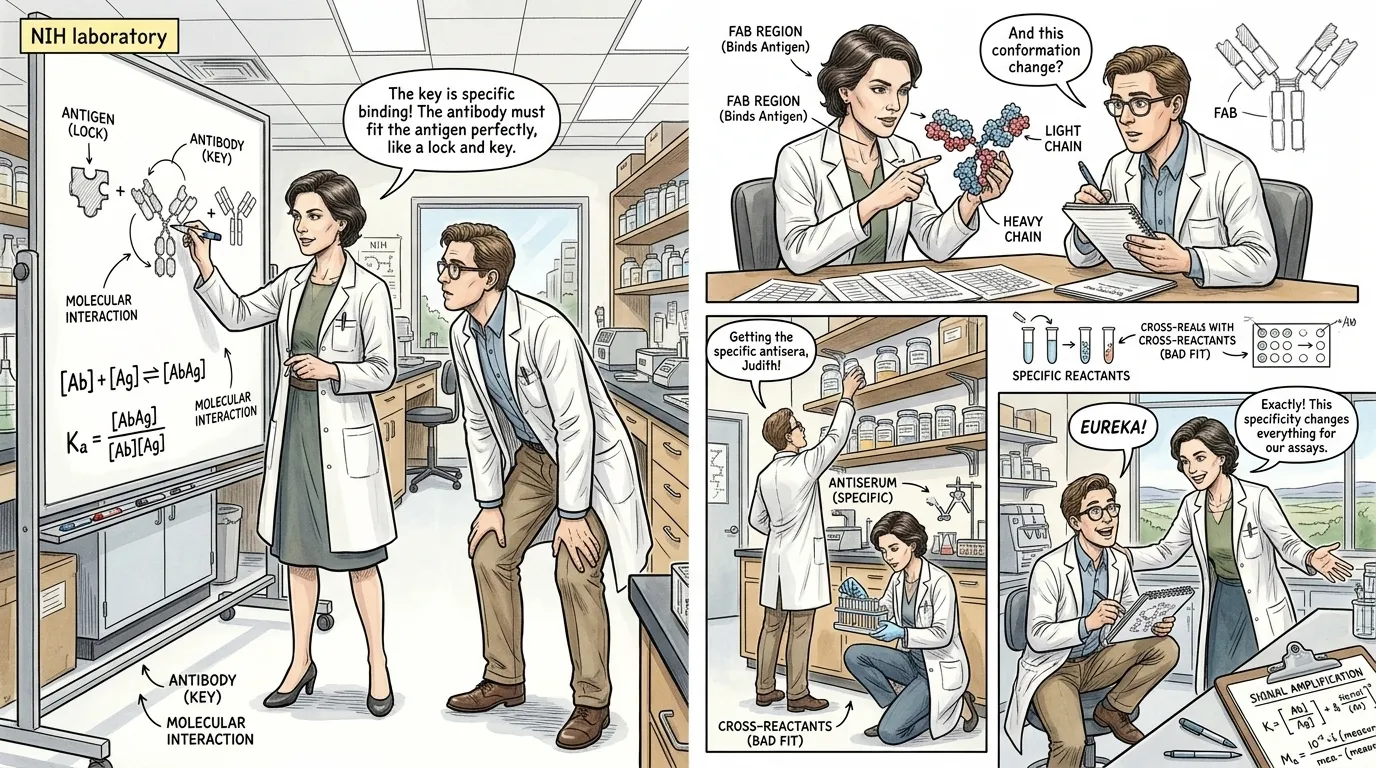
The 1960s ushered in the era of immunology, a field that would revolutionize diagnostic medicine. Scientists realized that specific antibodies, proteins produced by the immune system, could act as highly precise 'detectives,' designed to bind exclusively to target molecules—antigens. HCG, being a protein hormone, was an ideal candidate for this antibody-antigen reaction. This critical scientific principle—the highly specific binding of an antibody to its antigen—formed the intellectual foundation for the modern pregnancy test.
"Dr. Judith Vaitukaitis, a pioneering endocrinologist with sharp features and analytical dark eyes, sketches molecular structures on a whiteboard in her NIH lab. Her colleague, Dr. Glenn Braunstein, a focused researcher with a thoughtful expression, observes her work. 'The beauty of the antibody-antigen interaction is its specificity,' Vaitukaitis explains, drawing a lock-and-key diagram. 'We can create antibodies tailored precisely for HCG. The challenge, Glenn, is not just detection, but visualization. How do we make that invisible bond manifest as a clear, unmistakable signal for a layperson?' Braunstein muses, 'Indeed. A truly impactful diagnostic must transcend the lab. It must be a language understood by everyone, translating complex biochemistry into a simple 'yes' or 'no.' We need a transducer.'"
Page 6
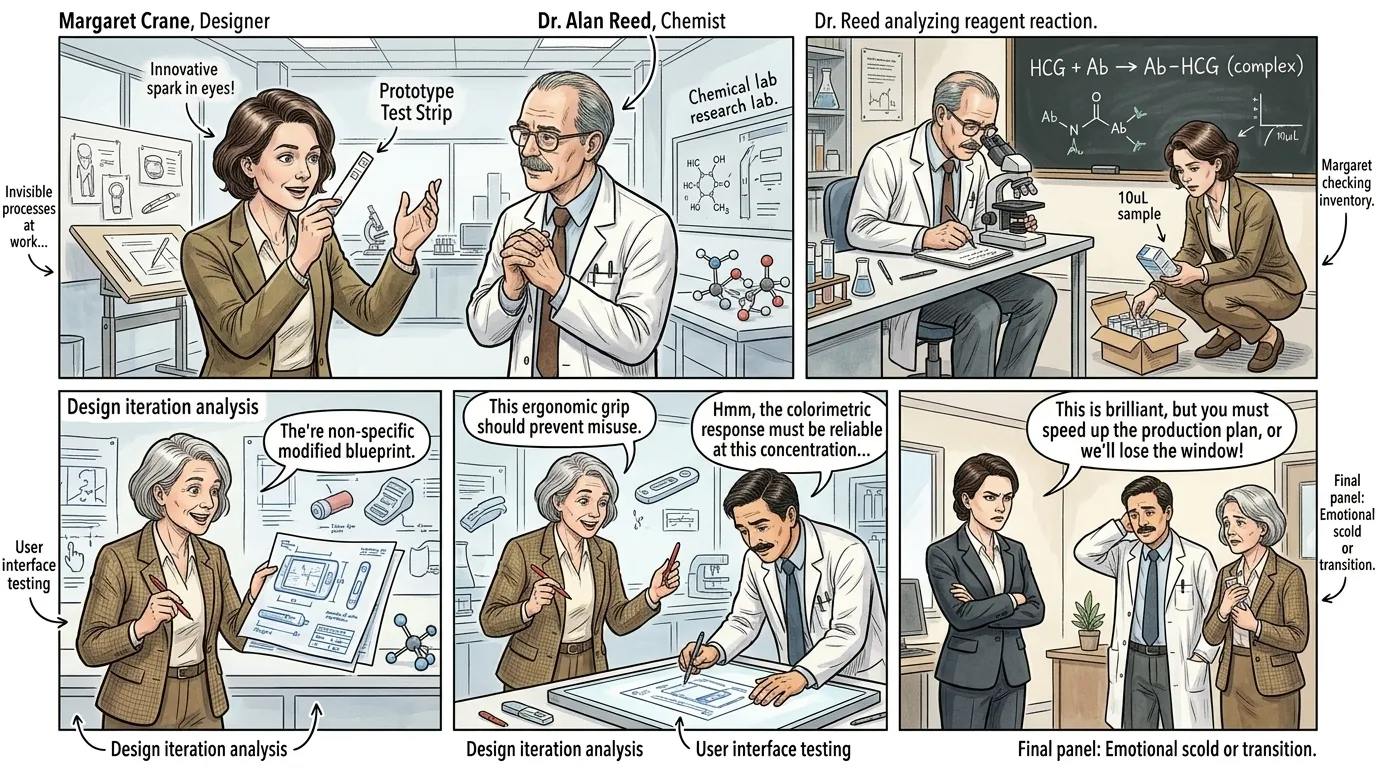
The breakthrough came with the development of the lateral flow immunoassay—the core technology behind today's rapid tests. This ingenious system translates the microscopic antibody-antigen reaction into a macroscopic, visible result. A small urine sample is applied, and if HCG is present, it encounters and binds to mobile antibodies conjugated with tiny colored particles, typically gold nanoparticles. This complex then begins to 'flow' along a nitrocellulose membrane via capillary action.
"Margaret Crane, an industrial designer with a keen eye for user experience, holds up a prototype test strip, discussing its design with a chemist, Dr. Alan Reed. 'The user interaction has to be effortless,' Crane, a woman in her 30s with stylish, wavy brown hair and an innovative spark in her eyes, states, examining the strip. 'The fluid must move predictably.' Dr. Reed, a meticulous man in his 50s with thinning grey hair and a lab coat, nods. 'It's all about capillary action, Margaret. The membrane acts like a wick. But the magic happens at the conjugated antibodies. If HCG is there, it latches onto these colored particles, forming a visible flag. This is where biochemistry meets intuition, making our invisible protein manifest.'"
Page 7
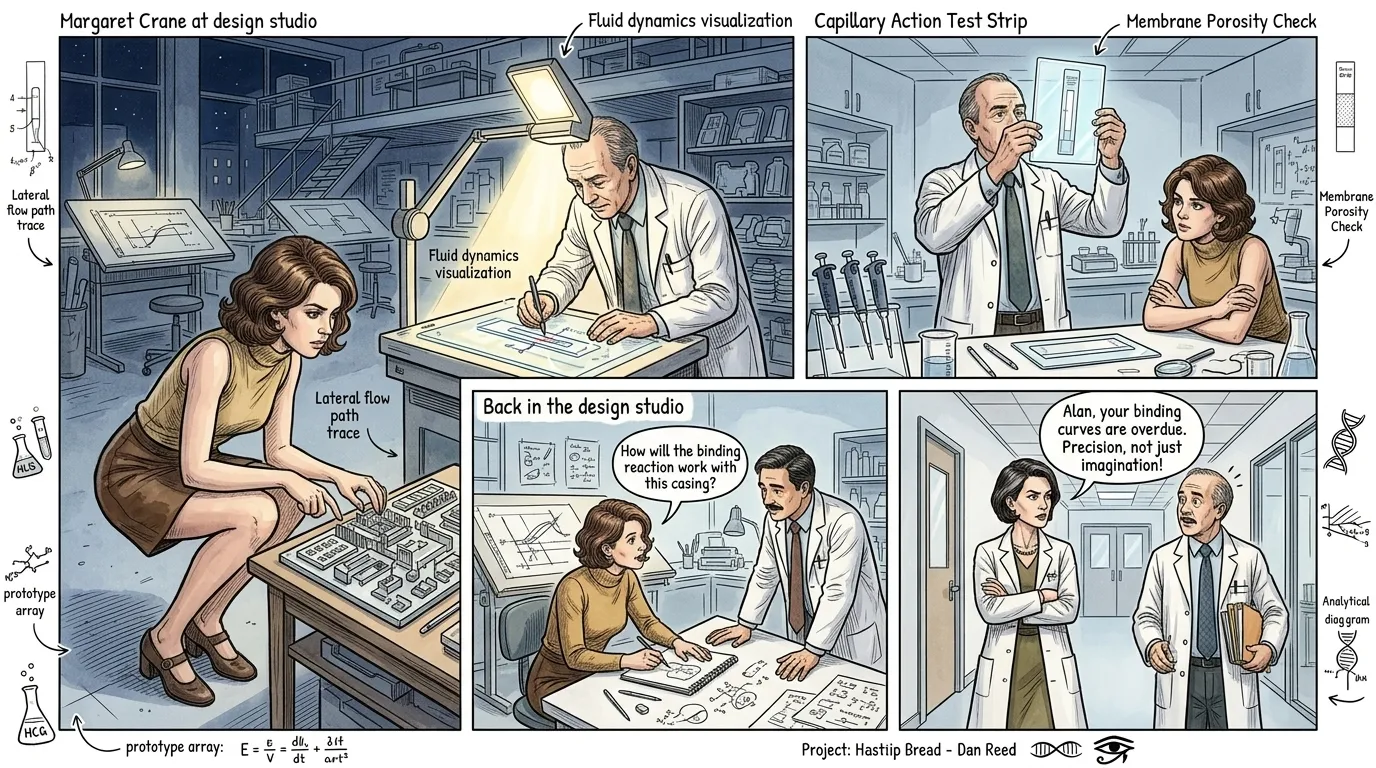
As the HCG-antibody-particle complex flows along the membrane, it encounters two crucial lines: the test line and the control line. The test line contains immobilized antibodies specifically designed to capture the HCG-antibody-particle complex, forming a visible colored band if HCG is present. Further along, the control line features antibodies that capture any unbound colored antibody particles, regardless of HCG presence. This control line confirms the test is working correctly, preventing false negatives due to a faulty strip or insufficient sample.
"Dr. Reed points to a magnified diagram of the test strip membrane, explaining its function to Crane. 'Here, at the test line, specific antibodies are fixed,' he illustrates, tracing a path with his finger. 'They act as a trap for our HCG-colored particle complex. If HCG is present, the line turns color. A positive.' Crane observes intently. 'And the control line, a fail-safe?' Dr. Reed affirms, 'Precisely. It ensures the fluid flowed, and our colored particles are active. It captures any unbound colored antibody, validating the test's integrity. As the ancient Greek philosopher Aristotle famously said, 'The roots of education are bitter, but the fruit is sweet.' Our bitter struggle for simplicity now yields the sweet fruit of clear, reliable information.'"
Page 8
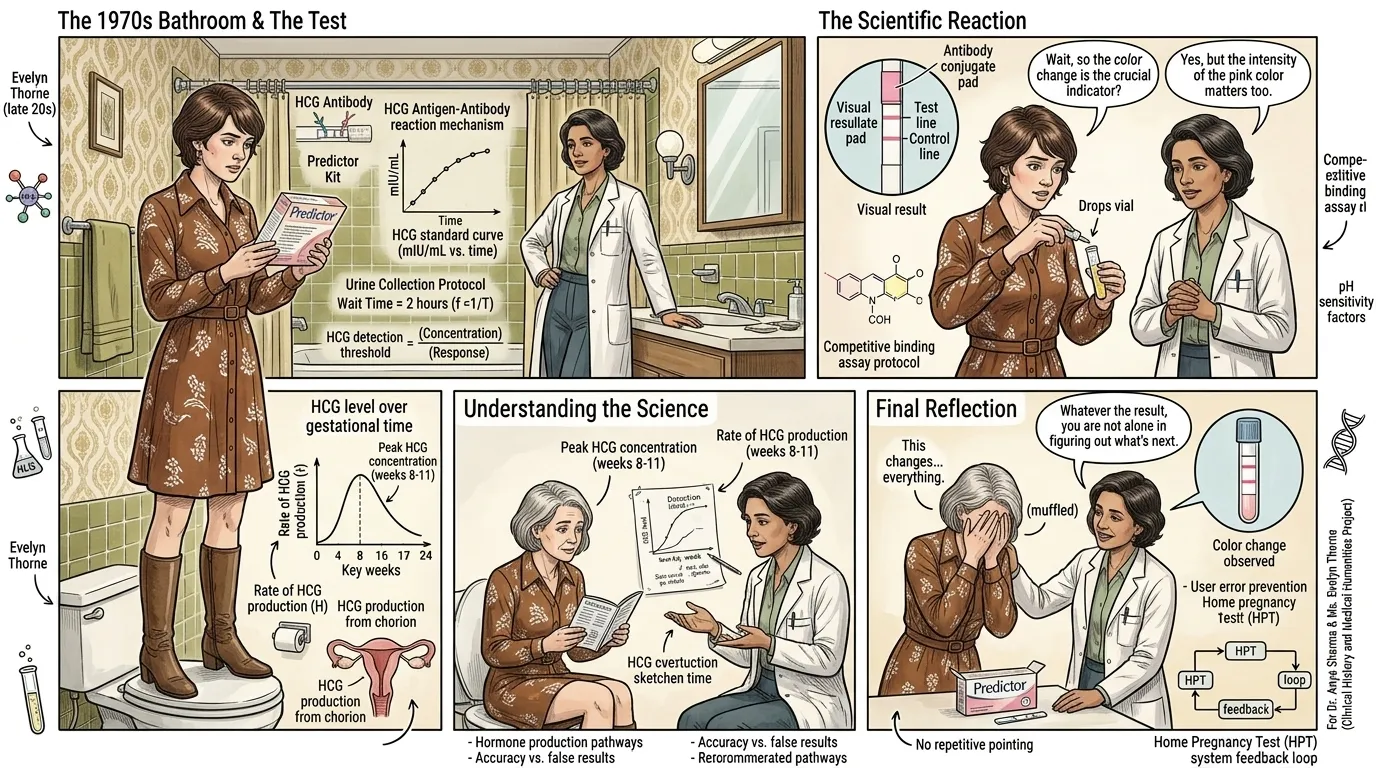
The introduction of the first home pregnancy tests in the 1970s marked a profound shift. No longer did individuals have to wait for medical appointments, or endure the anxiety of prolonged uncertainty. The ability to conduct a private, rapid, and accurate test at home, using the principles of HCG detection and antibody-based visualization, transformed personal autonomy and early health management. This direct application of the early knowledge of HCG and the later antibody breakthroughs empowered millions.
"A woman, Ms. Evelyn Thorne, in her late 20s with short, stylish hair typical of the 1970s, holds a home pregnancy test kit, looking at it with a mixture of wonder and slight apprehension in a brightly lit bathroom. Dr. Anya Sharma, a calm and empathetic physician in her 40s, stands nearby, observing. 'It's quite straightforward, isn't it?' Ms. Thorne remarks, turning the kit over in her hands. 'Just a few drops. The idea that such a tiny device can tell me something so profound...' Dr. Sharma smiles reassuringly. 'It's the culmination of decades of research, Evelyn. From the earliest observations of HCG to the precision of modern immunology. This simple kit now puts immediate information directly into your hands, empowering you to make informed decisions about your health and future, right here, right now.'"
Page 9
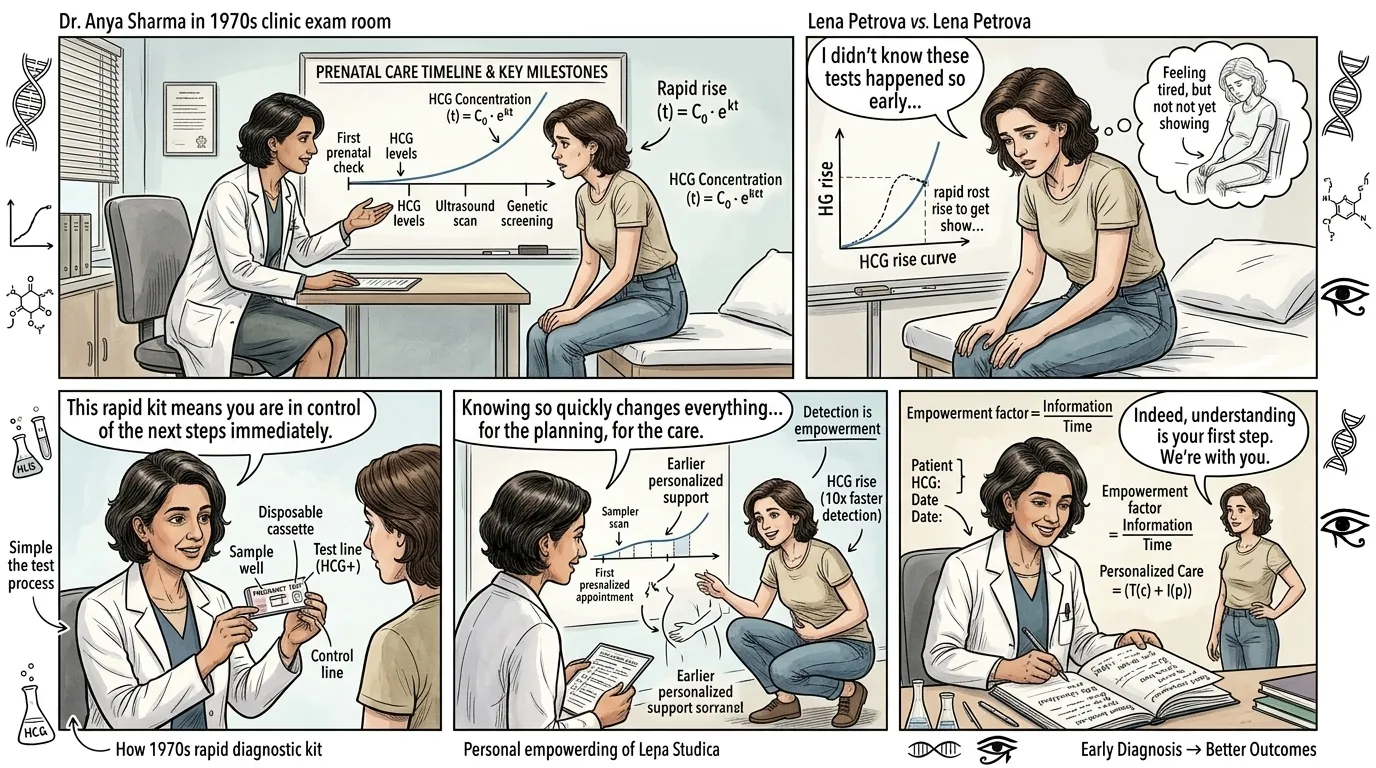
The widespread adoption of home pregnancy tests had far-reaching societal and medical consequences. It allowed for earlier prenatal care, improving outcomes for both parent and child. It provided vital information for family planning decisions, empowering individuals with control over their reproductive futures. The test also demystified the early stages of pregnancy, reducing anxiety and allowing for more timely intervention in cases of ectopic pregnancy or miscarriage.
"In a modern clinic, Dr. Sharma (40s, neat bob, professional attire) discusses the impact of rapid diagnostics with a pregnant patient, Ms. Lena Petrova, a young woman with long, dark hair. 'The early diagnosis allows us to begin prenatal care much sooner,' Dr. Sharma explains, gesturing to a chart. 'This leads to healthier pregnancies and better outcomes. It's not just about knowing, it's about acting decisively.' Ms. Petrova nods, touching her abdomen. 'It changed everything for me. That immediate certainty... it helped me prepare, emotionally and practically. The anxiety was manageable.' Dr. Sharma adds, 'This invention transformed an unknown biological state into actionable medical knowledge, truly aligning with the medical profession's highest aspirations: to serve, inform, and heal with precision and compassion.'"
Page 10
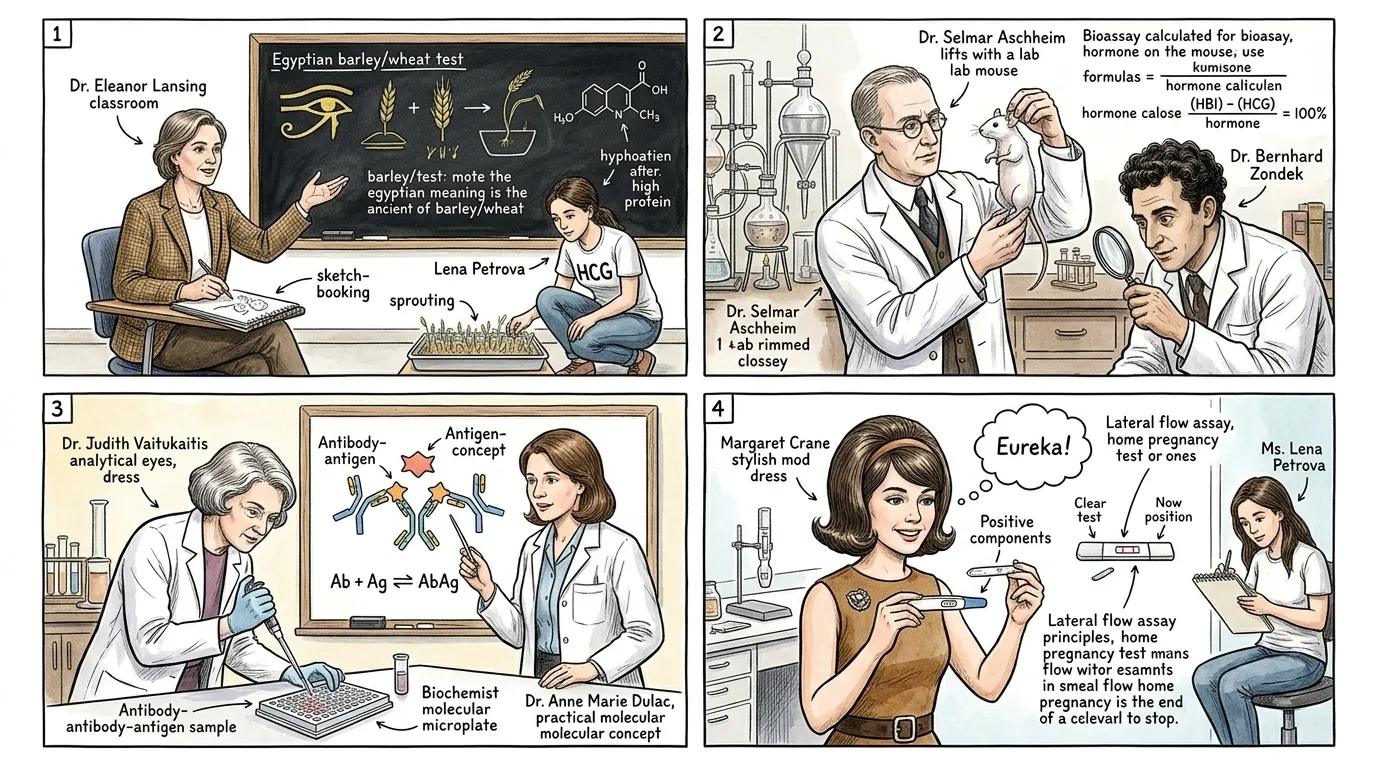
From ancient, unreliable conjectures to sophisticated biochemical assays, the journey to the modern pregnancy test reflects humanity's persistent quest for understanding and control over our own biology. This simple, often overlooked invention continues to empower millions worldwide, providing critical information at a pivotal moment. Its legacy is one of informed choice, accessible healthcare, and a fundamental shift in how individuals navigate one of life's most profound transitions. The pregnancy test remains a beacon of diagnostic innovation, silently shaping countless lives every day.
About this story
- Location: Global
- Audience: general readers
Read Wonder Inventions on your phone
Wonder Inventions is available on Android. Get Wonder Inventions on Google Play.