Personal Computer
Personal Computer — an illustrated inventions story, set in Global. 10 illustrated pages, free to read on Wonder Inventions.
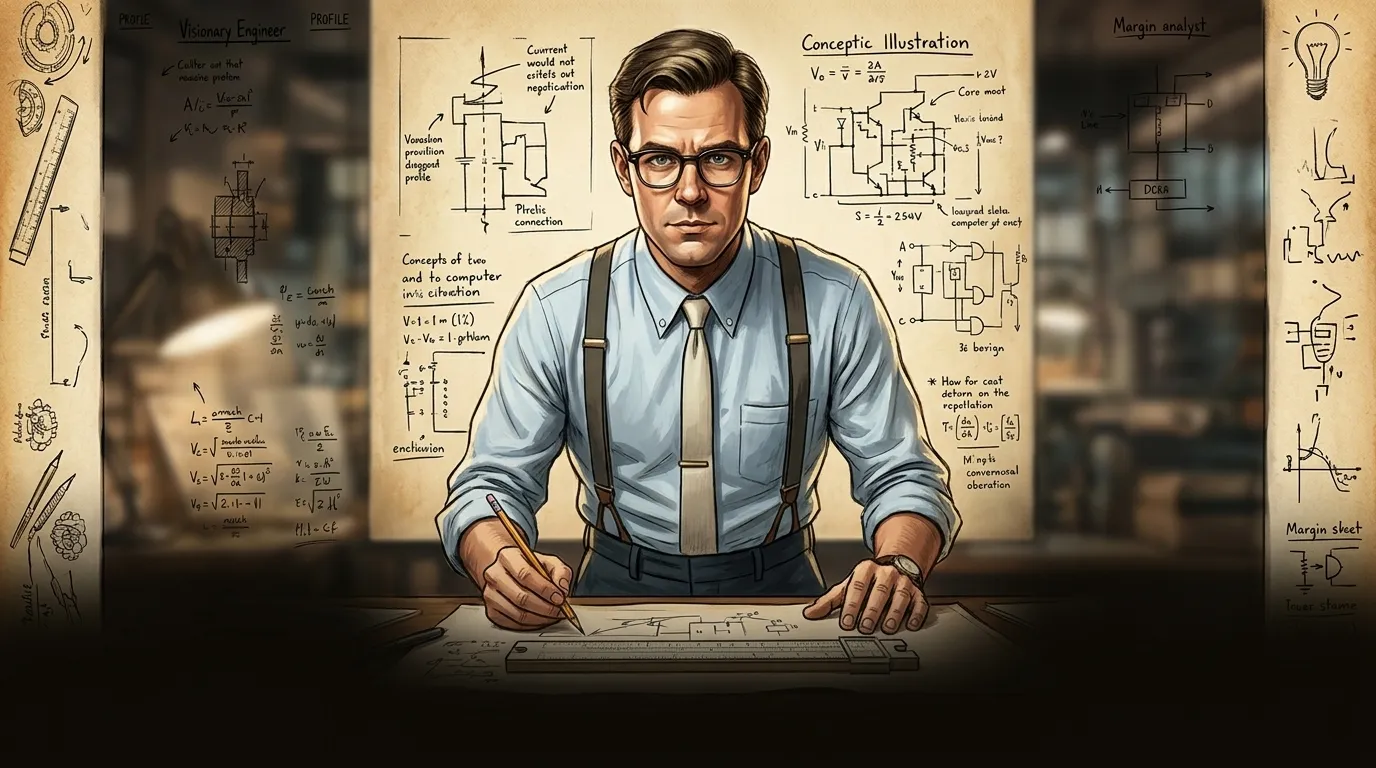
Page 1
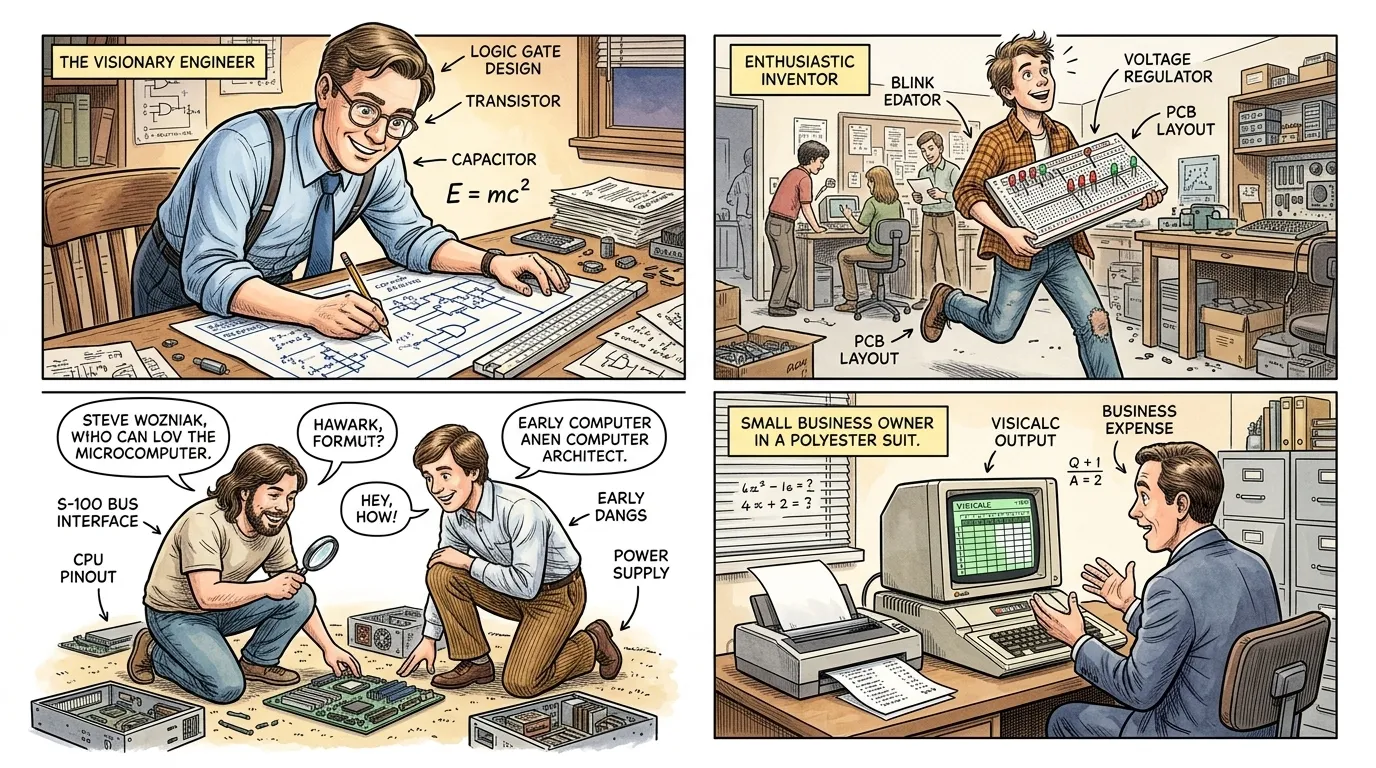
For decades, computing power remained sequestered behind the walls of corporate and academic institutions, machines of immense scale and cost. Only specialists could interact with these behemoths, limiting innovation and access to a select few. The individual was largely excluded from the digital revolution unfolding.
""The era of computing for the privileged few must end," declared a visionary engineer, sketching furiously. "We need a machine not for rooms, but for desks, for every person. This isn't just about smaller hardware; it's about empowering every mind.""
Page 2
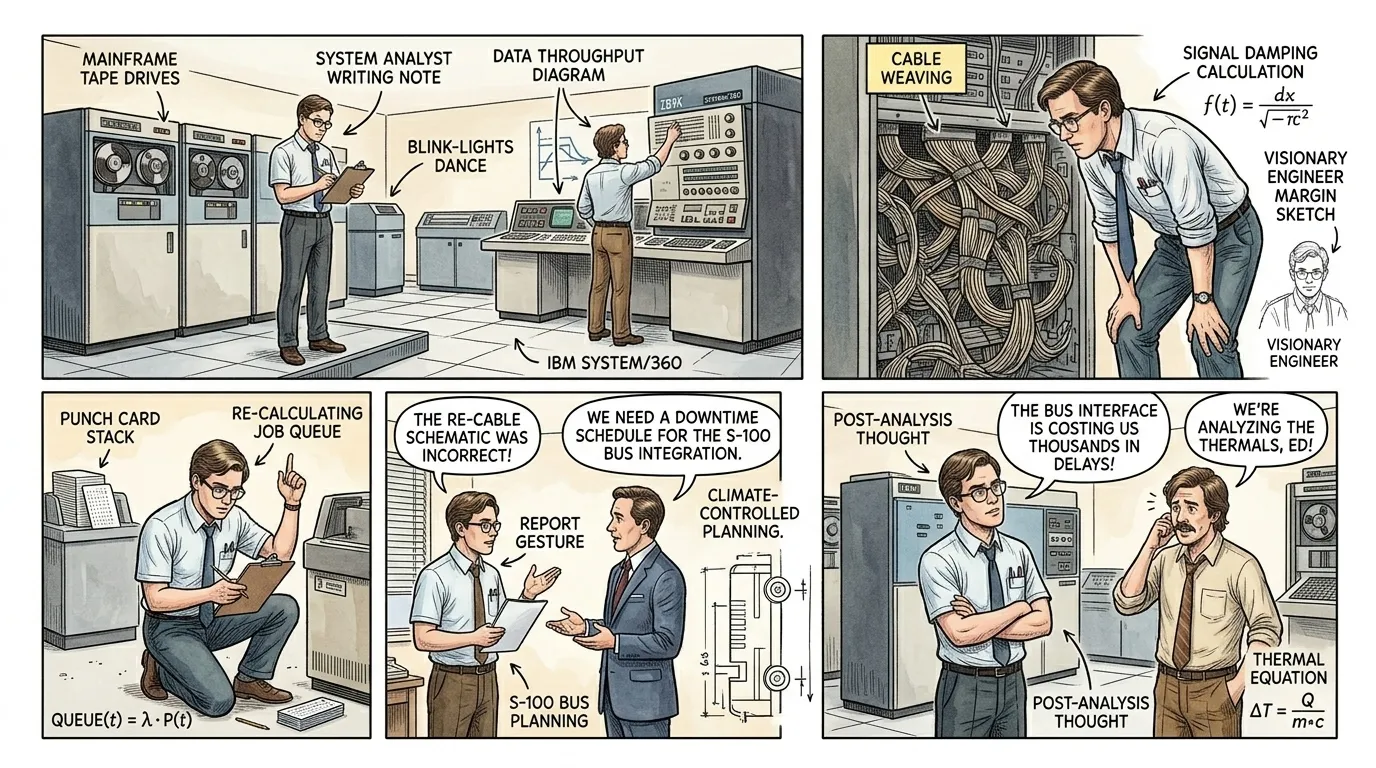
In the mid-20th century, computing was an industrial endeavor. Mainframe computers, colossal machines like the IBM System/360, filled entire climate-controlled rooms, consuming vast amounts of power and requiring dedicated teams of operators and programmers. Their staggering cost and operational complexity meant they were exclusive to large corporations, universities, and government agencies.
""These machines redefined calculation, but at what cost?" a systems analyst mused, watching magnetic tapes spin. "Every instruction, every byte of data, requires careful management, a precise protocol from a specialized technician. It's an elite system.""
Page 3
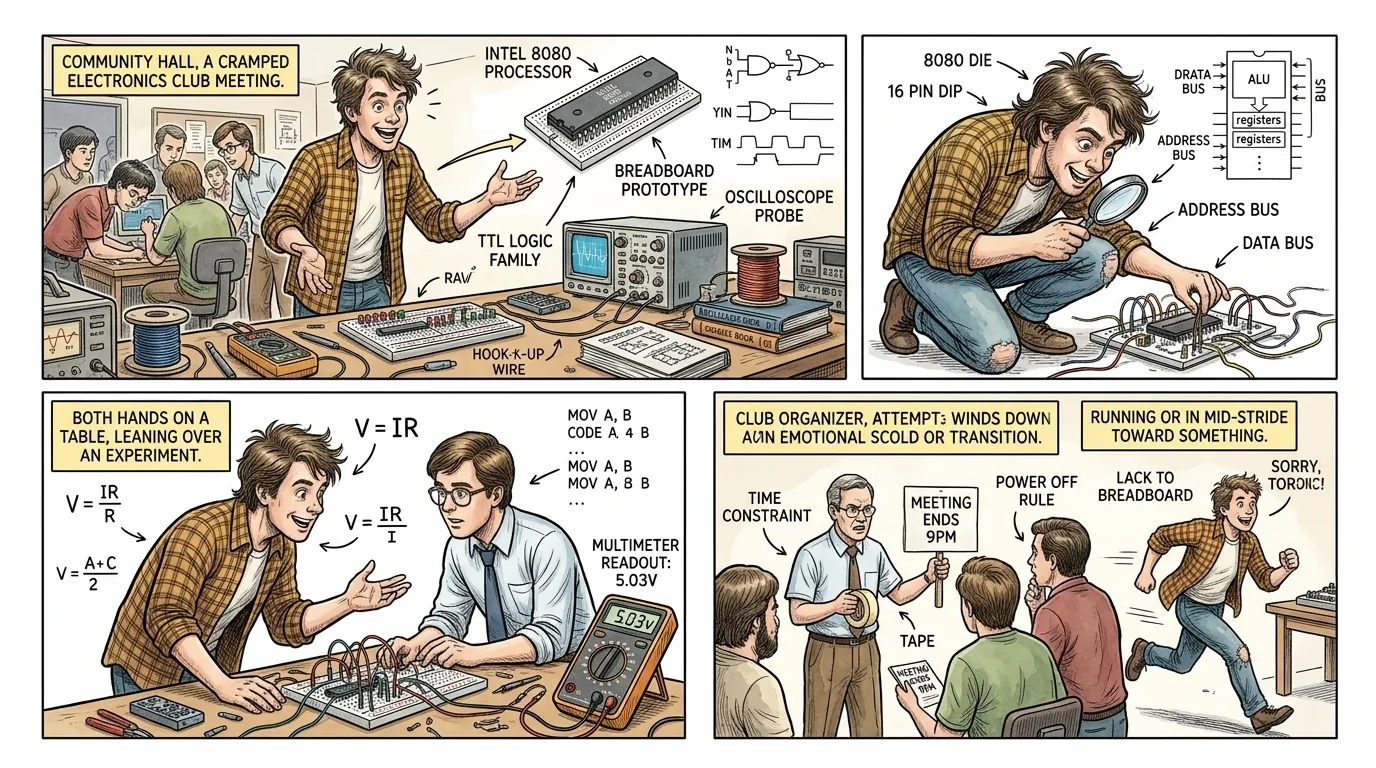
The introduction of the Intel 4004 in 1971, followed by the more powerful 8080 in 1974, dramatically changed the landscape. Suddenly, the core processing unit of a computer, once a room-sized assembly of transistors, could fit on a single chip. This sparked a fervent dream among electronics hobbyists and engineers: to build their own, affordable computers.
""Imagine a full computer in a box the size of a typewriter," an enthusiastic inventor exclaimed at a cramped electronics club meeting. "The Intel 8080 changes everything. But the real challenge isn't just getting the chip; it's how we connect it, how we build a flexible system around it. The 'bus' architecture is critical for true modularity.""
Page 4
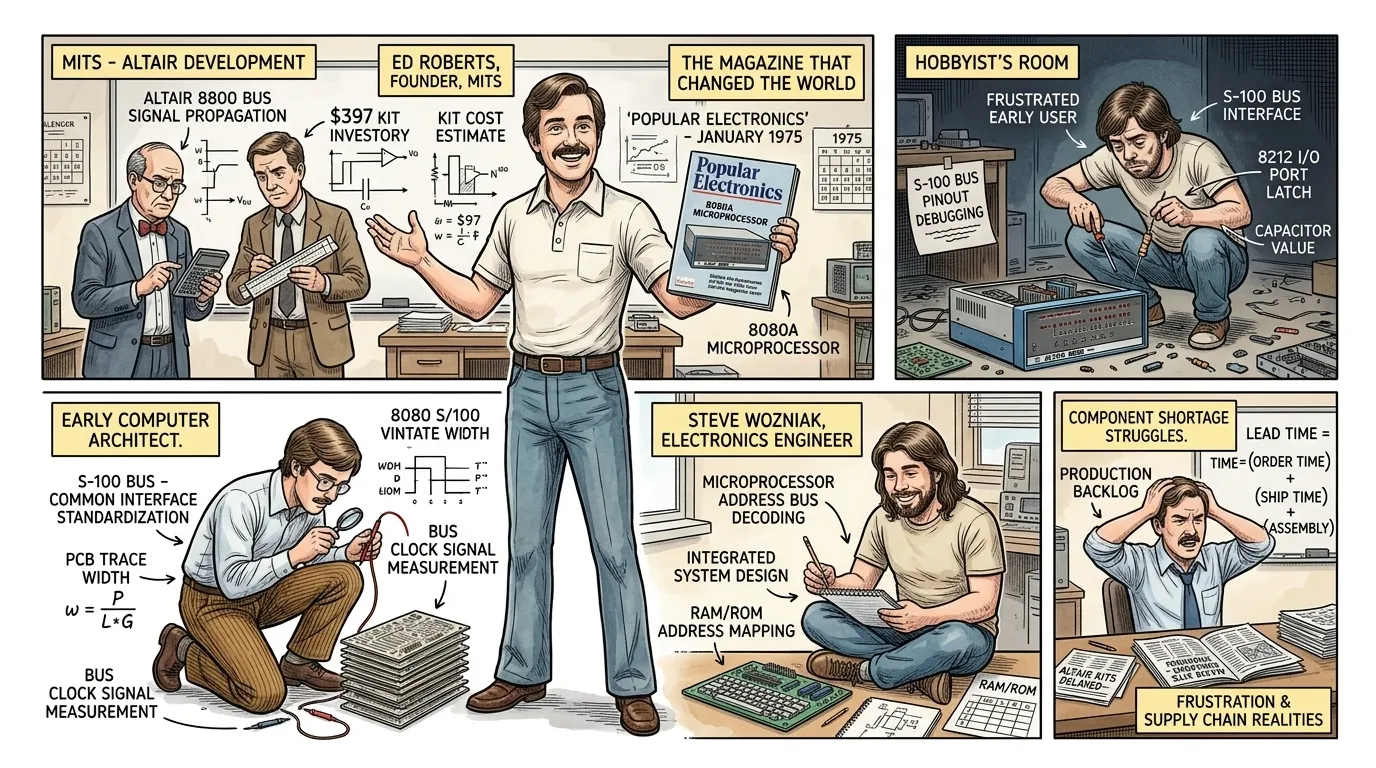
In Albuquerque, New Mexico, Ed Roberts, owner of Micro Instrumentation and Telemetry Systems (MITS), recognized the latent demand for personal computing. Faced with a failing calculator business, Roberts gambled on an audacious idea: a computer kit built around the Intel 8080. Named the Altair 8800, it debuted in a 1975 issue of Popular Electronics, selling for a revolutionary 397.
""We had to make it affordable, a machine that hobbyists could assemble themselves," Roberts explained in a historical interview. "The vision wasn't just a device; it was an invitation. As Ralph Waldo Emerson once said, 'The ancestor of every action is a thought.' For us, that thought was personal empowerment through technology.""
Page 5
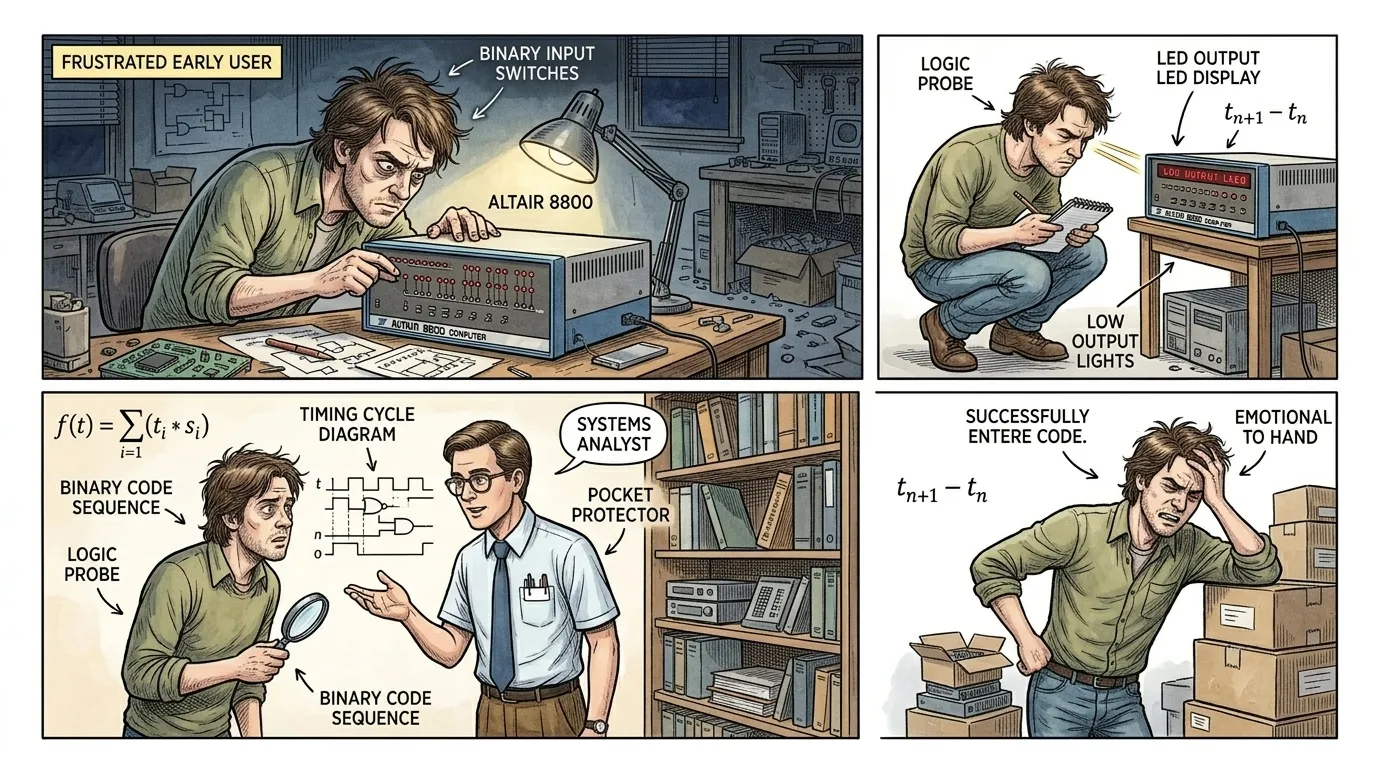
While revolutionary, the Altair 8800 was far from user-friendly. Programming it involved laboriously flipping switches on the front panel to input binary code, bit by painstaking bit. Output was limited to blinking lights. This demanding interface quickly revealed the next critical hurdle for personal computing: the need for accessible input and output systems.
""Imagine entering a program, hundreds of lines long, by hand," a frustrated early user might have sighed. "A single mistake, a flipped switch, and the entire sequence collapses. This isn't just slow; it's a testament to patience, not productivity. We need a faster, more intuitive way to communicate with the machine.""
Page 6
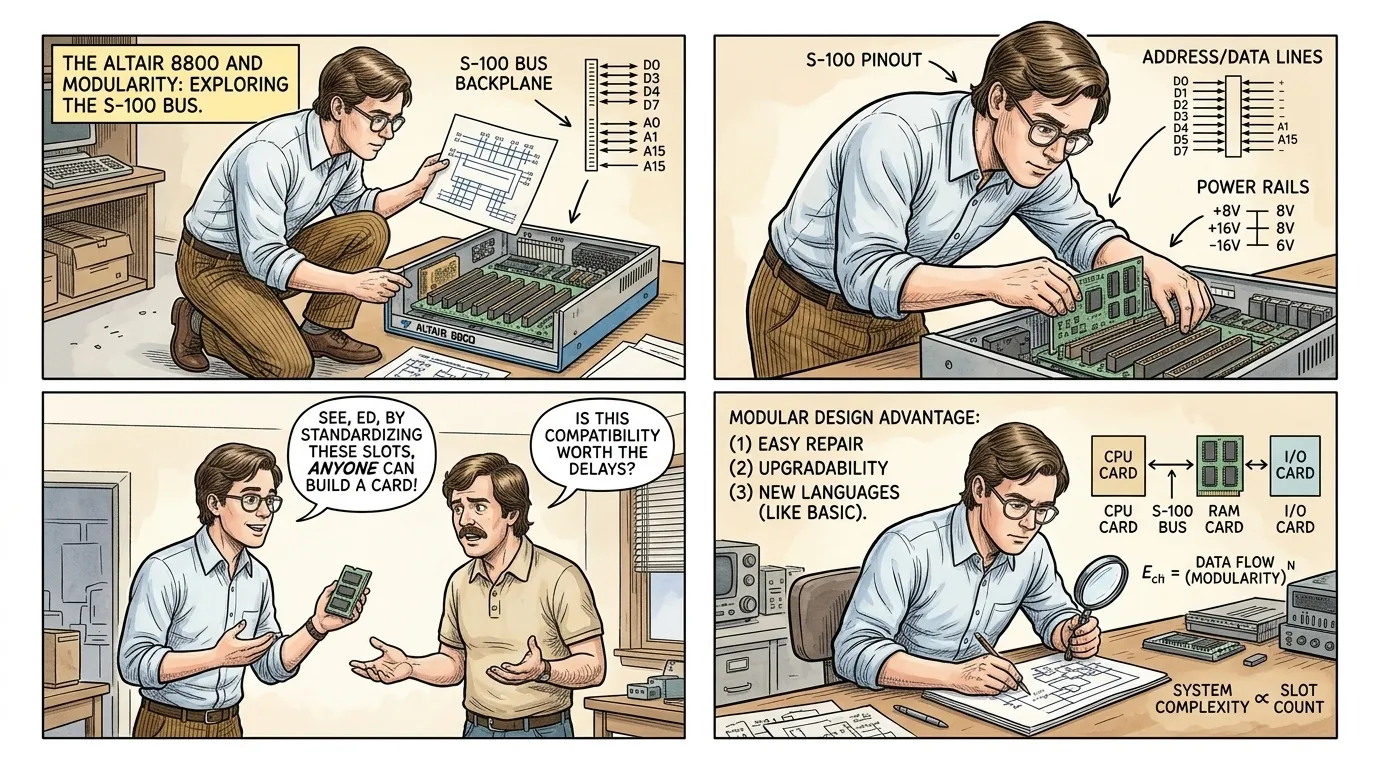
The Altair's true genius lay in its 'bus' architecture, specifically the S-100 bus. This standardized connection allowed hobbyists to add expansion cards for memory, input/output, and eventually, peripherals like keyboards and monitors. Simultaneously, the development of Altair BASIC by Bill Gates and Paul Allen offered a higher-level programming language, transforming interaction from cryptic binary to understandable commands.
""The S-100 bus was a revelation," an early computer architect might have observed. "It meant the Altair wasn't a closed box, but a platform. Coupled with BASIC, you could speak to the machine in something resembling English, transforming a switch-flipping ordeal into a conversation. It was the first step towards true human-computer interaction.""
Page 7
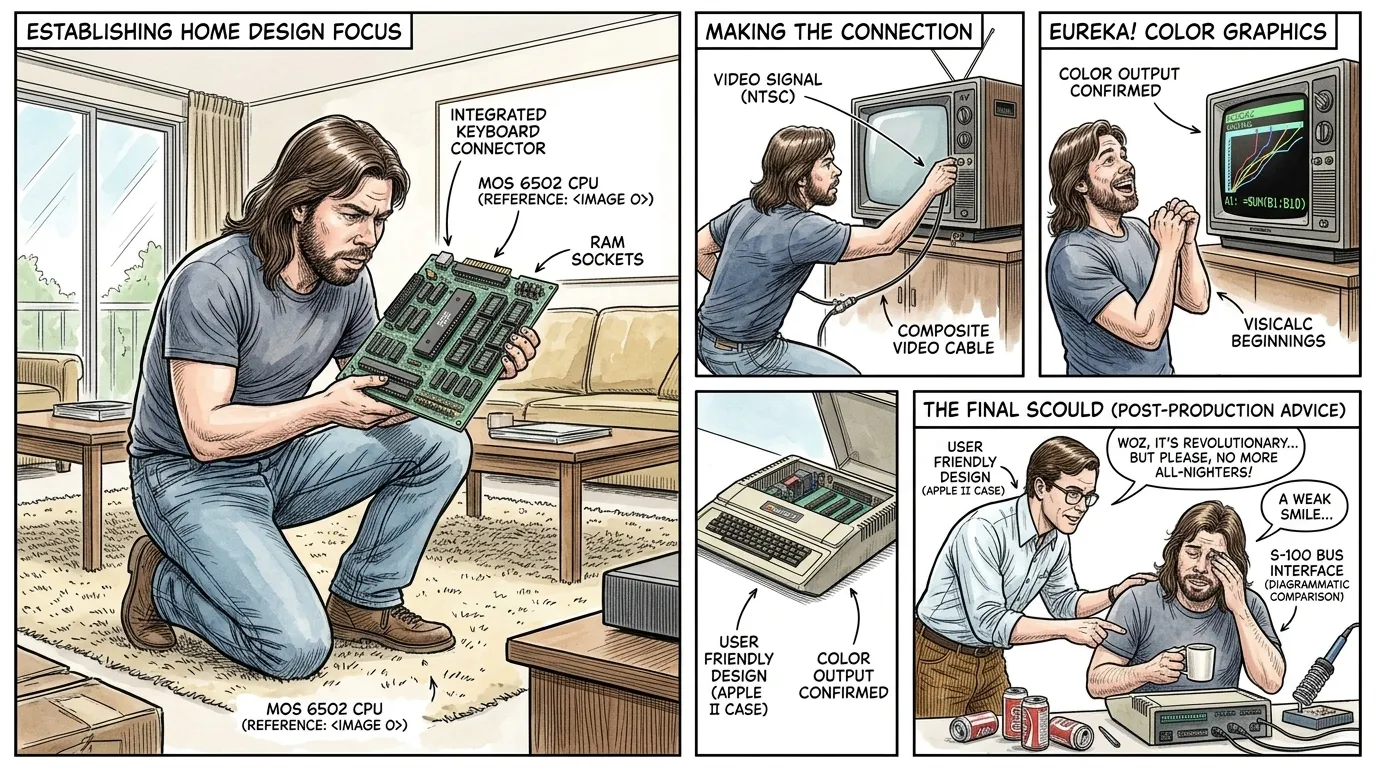
While the Altair inspired, it was the Apple II, released in 1977, that truly brought the personal computer closer to the masses. Designed by Steve Wozniak, it integrated a microprocessor, keyboard, and color graphics output into a single, user-friendly unit. It could plug directly into a television, bypassing the need for expensive dedicated monitors and complex assembly.
""We wanted a computer that someone could take home, plug in, and use right away," Steve Wozniak recalled. "No soldering, no complex setup. Just turn it on, and it works. The keyboard and TV display were fundamental. It felt less like an experiment and more like a tool ready for use.""
Page 8
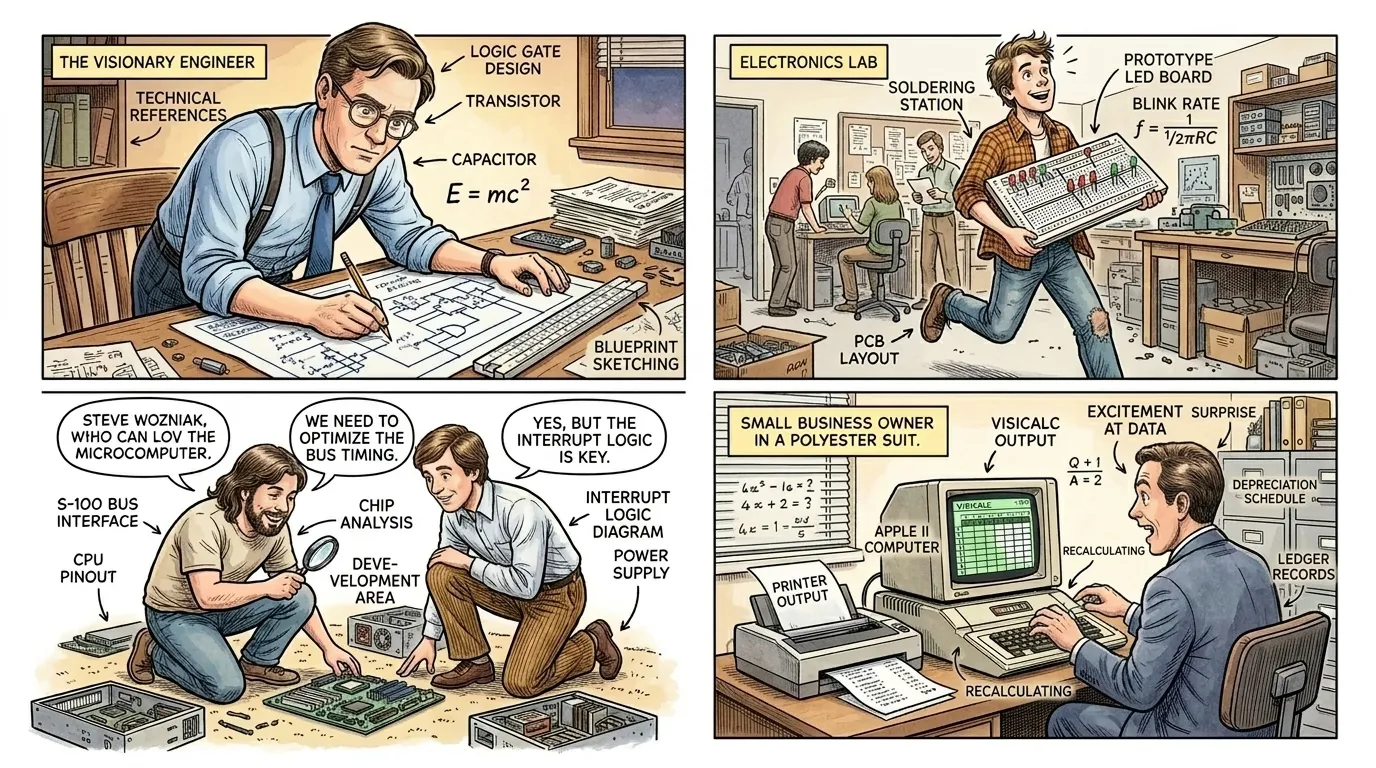
The true catalyst for the personal computer's broader adoption was not just hardware, but transformative software. VisiCalc, the first spreadsheet program, released in 1979 for the Apple II, revolutionized business accounting and financial modeling. Suddenly, complex calculations that once took days could be performed in minutes, making the personal computer an indispensable business tool.
""This changes everything," a small business owner exclaimed, watching numbers recalculate instantly on the screen. "I remember reading about the importance of modularity in early computer design, the 'bus' architecture allowing expansion. Now, with software like VisiCalc, those expansion slots are filled with potent capabilities, allowing us to manage our finances with unprecedented speed and accuracy. It's no longer just for hobbyists; it's for profit.""
Page 9
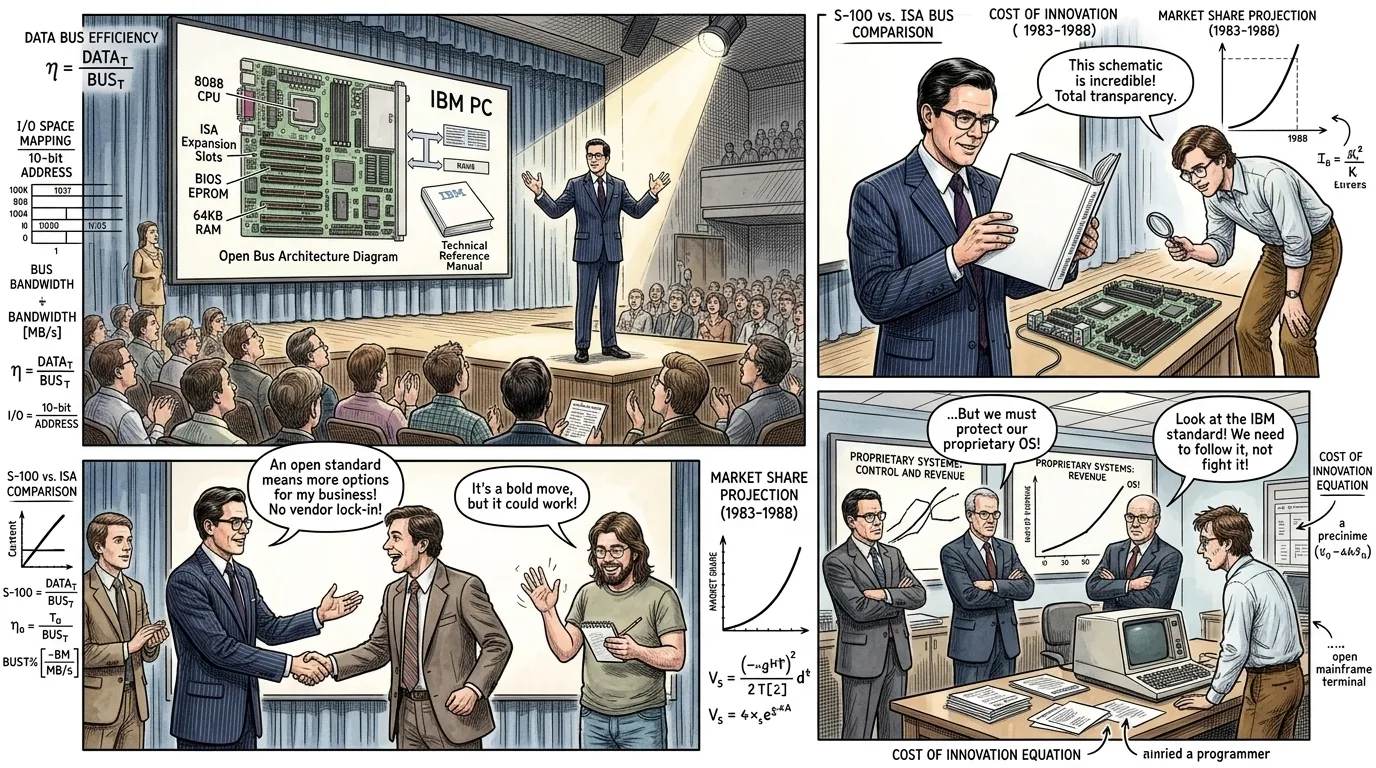
IBM's entry into the personal computer market in 1981 with the IBM PC legitimized the technology for corporate America. Crucially, IBM chose an 'open architecture', meaning it published its specifications, allowing third-party companies to develop compatible hardware and software. This decision fostered an unprecedented ecosystem of innovation, solidifying the personal computer's place in homes and businesses globally.
""The open standard was the masterstroke," an IBM executive affirmed, addressing a conference in 1981. "It ensured rapid expansion and adaptation. We understood that, as Isaac Newton famously put it, 'If I have seen further than others, it is by standing upon the shoulders of giants.' By opening our platform, we invited countless giants to build with us, accelerating progress for everyone.""
Page 10
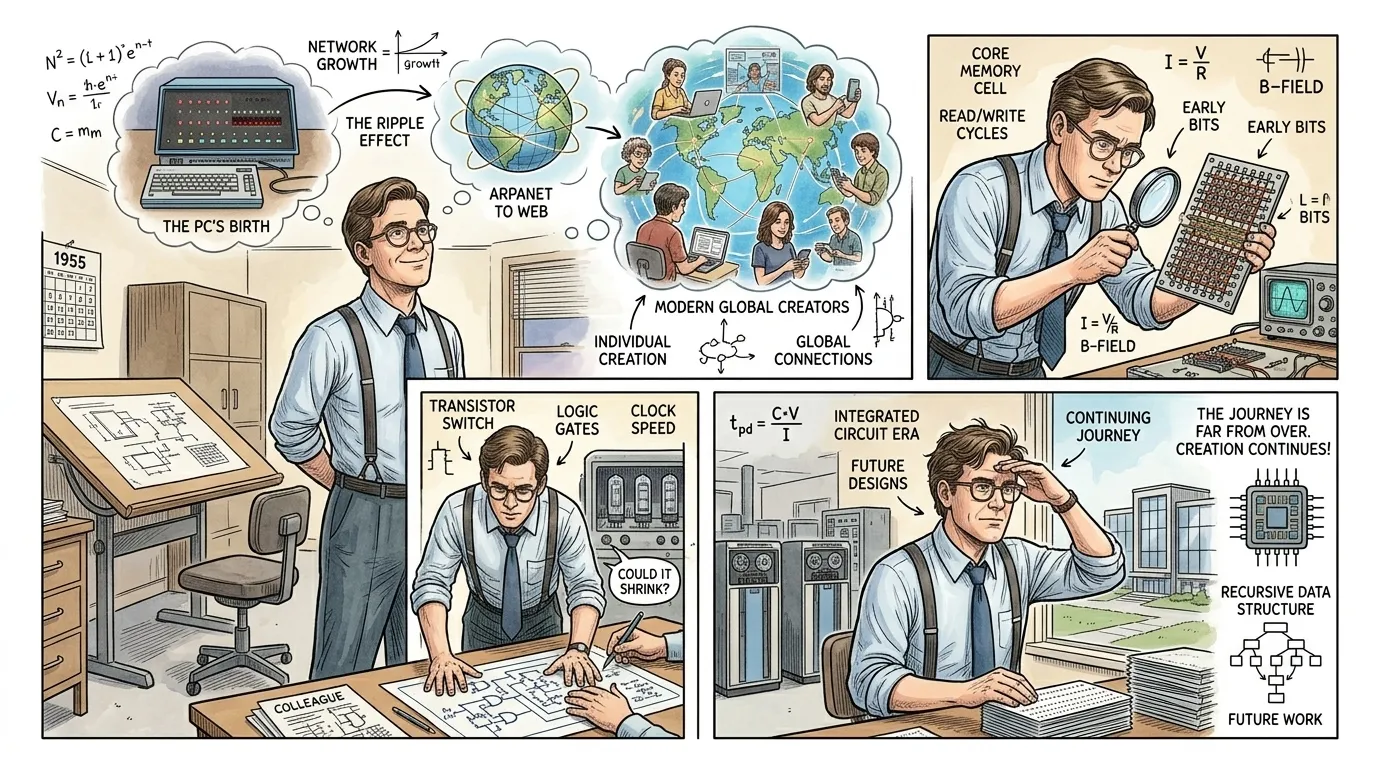
The personal computer, born from hobbyist dreams and commercial ambition, irrevocably altered the course of human history. From humble beginnings as blinking lights and clunky switches, it evolved into an indispensable tool that empowers billions. It transformed industries, ignited the information age, and laid the foundation for every subsequent digital innovation, including the internet and mobile computing. The world, once limited by information access, was now connected, collaborative, and infinitely more capable.
""Consider the profound ripple effect," a narrator's voice might observe, reflecting on the journey. "From a handful of enthusiasts in garages to a global digital tapestry. The individual, once a mere consumer of information, became a creator, a communicator, and a participant in a truly interconnected world. The journey continues, driven by the very principles of accessibility and innovation that defined its birth.""
About this story
- Location: Global
- Audience: general readers
Read Wonder Inventions on your phone
Wonder Inventions is available on Android. Get Wonder Inventions on Google Play.