Penicillin Production
Penicillin Production — an illustrated inventions story, set in Global. 10 illustrated pages, free to read on Wonder Inventions.
Page 1
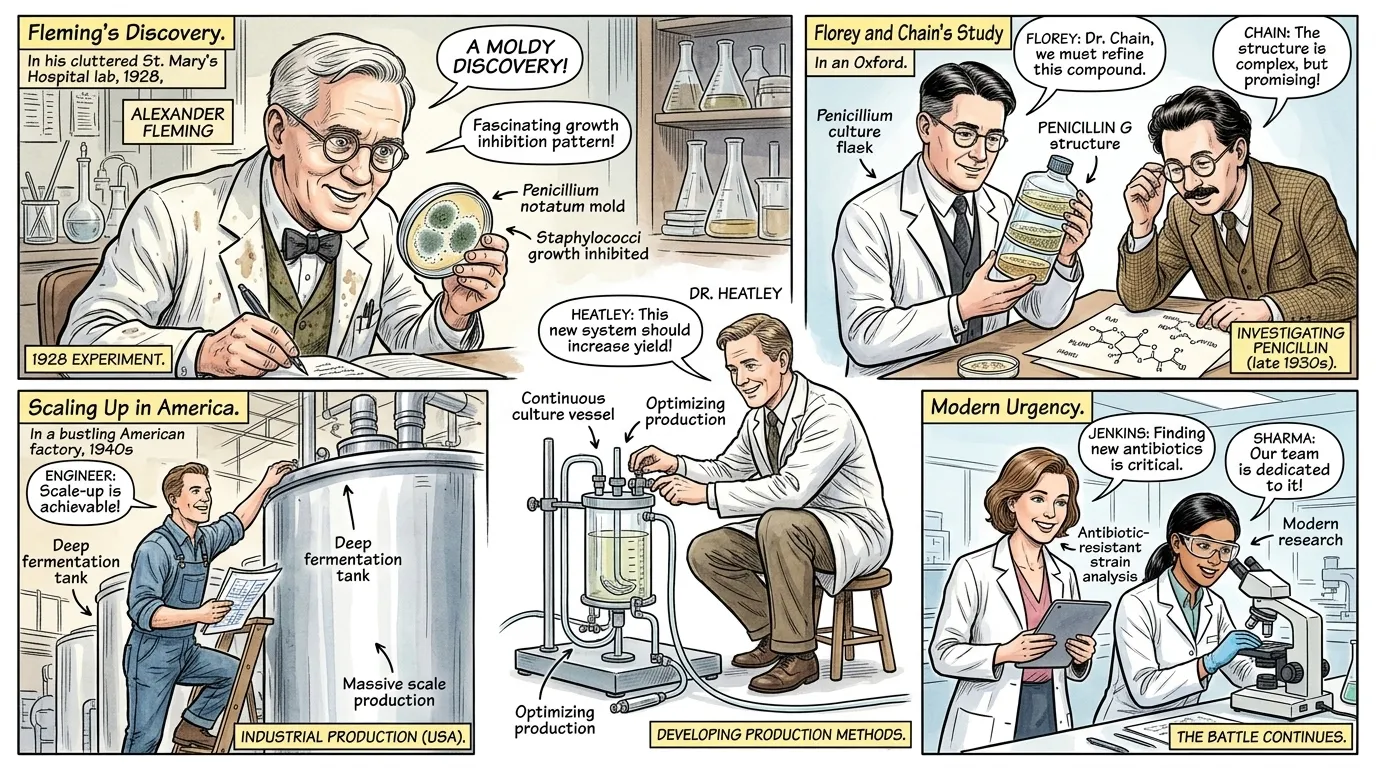
Before the mid-20th century, bacterial infections were a leading cause of death, transforming minor injuries into fatal conditions. Pneumonia, sepsis, and gangrene claimed millions, unchallenged by effective treatments. This grim reality underscored an urgent, unmet medical need.
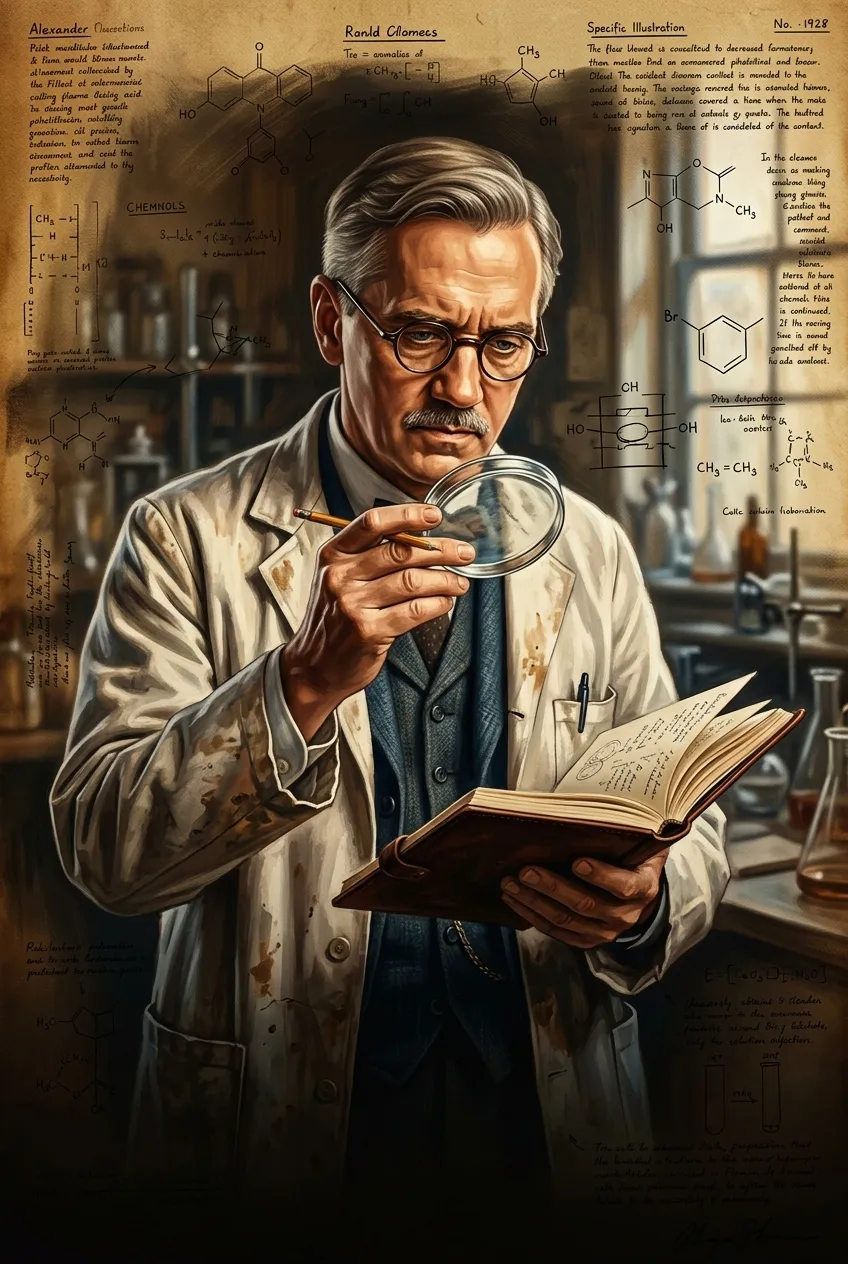
"In the quiet hum of St. Mary's Hospital, London, a Scottish bacteriologist, Alexander Fleming, meticulously examined his petri dishes in September 1928. He noticed something peculiar: a common mold, Penicillium notatum, had contaminated a staphylococcus culture, but crucially, bacteria failed to grow around it. 'The mold appears to be producing some inhibitory substance,' Fleming observed, jotting down his initial findings. 'This could be significant.'"
Page 2
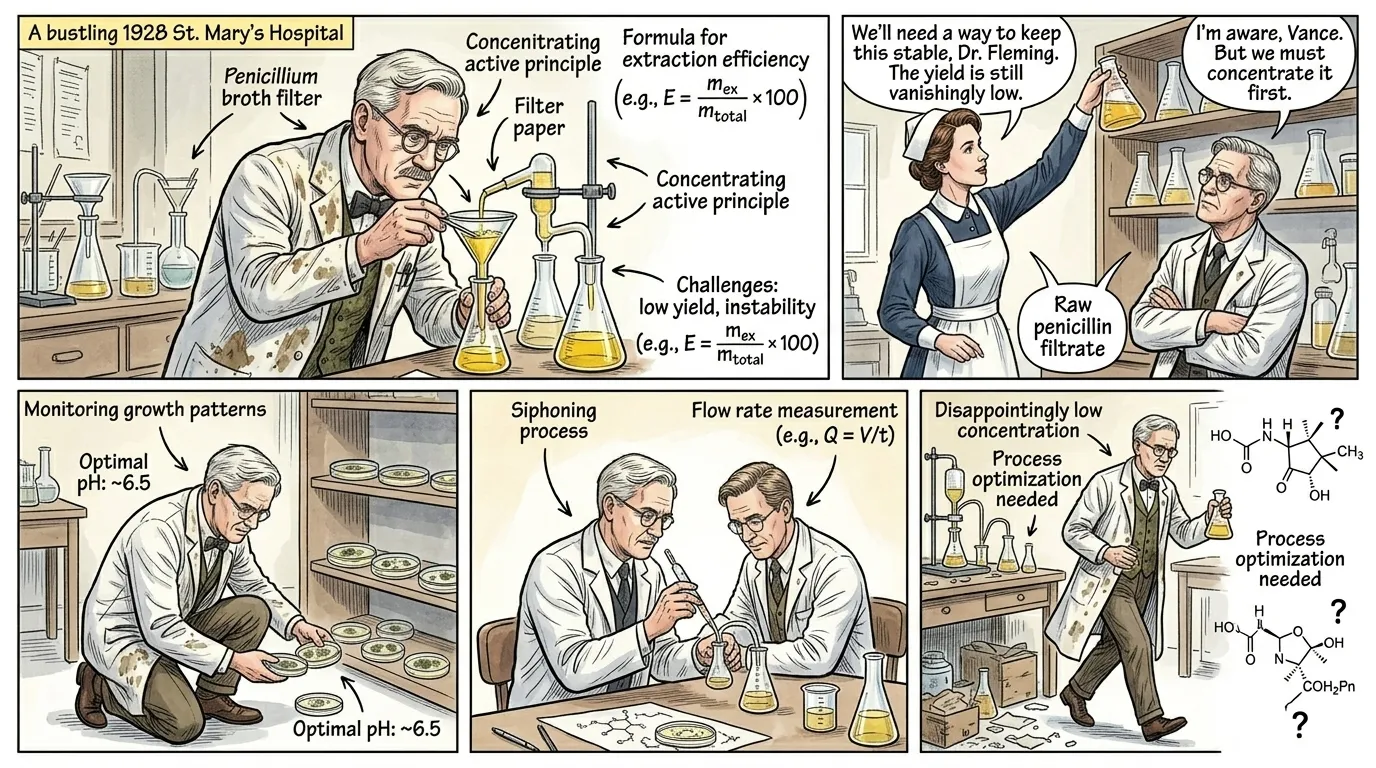
Fleming's accidental discovery revealed penicillin's potent antibacterial effect, yet isolating and purifying the substance proved exceptionally challenging. He struggled with its inherent instability and the notoriously low yield from his surface cultures. Producing enough for clinical use seemed insurmountable at the time.
"Fleming meticulously filtered his mold broth, trying to concentrate the active principle. He leaned back, his brow furrowed. 'The 'mold juice' is effective, but it is so difficult to obtain in quantity, and it loses its potency too quickly,' he murmured to his assistant. 'It's a wonder, but an elusive one. Its instability in raw form makes it impractical for therapeutic application. The true challenge lies not just in discovery, but in reliable production.'"
Page 3
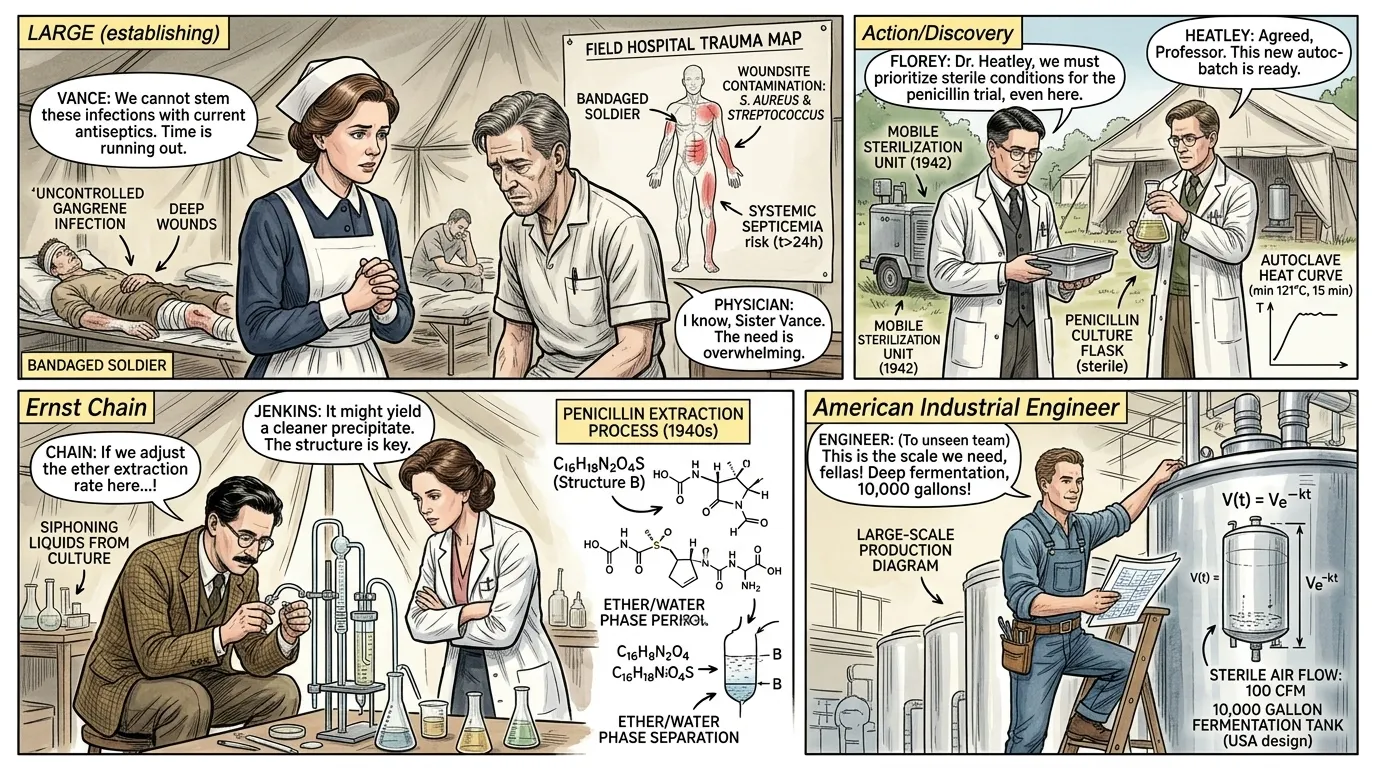
As the 1930s drew to a close, the world plunged into conflict, revealing the brutal effectiveness of bacteria on the battlefield. Wounded soldiers and civilians perished not from their initial injuries, but from subsequent infections. The need for a potent antimicrobial agent became not just academic, but a matter of national survival and global public health.
"Dr. Eleanor Vance, a lead nurse in a field hospital, watched as another soldier succumbed to gas gangrene. 'The wounds themselves are often treatable, yet infection claims them swiftly,' she lamented to a weary physician. 'We need something, anything, to turn the tide against these invisible enemies. As American President Franklin Roosevelt once said, 'The only thing we have to fear is fear itself,' but I tell you, doctor, the real fear is this creeping infection we cannot stop.' The physician nodded grimly. 'Without an effective weapon, our battlefield victories are diminished by hospital defeats.'"
Page 4
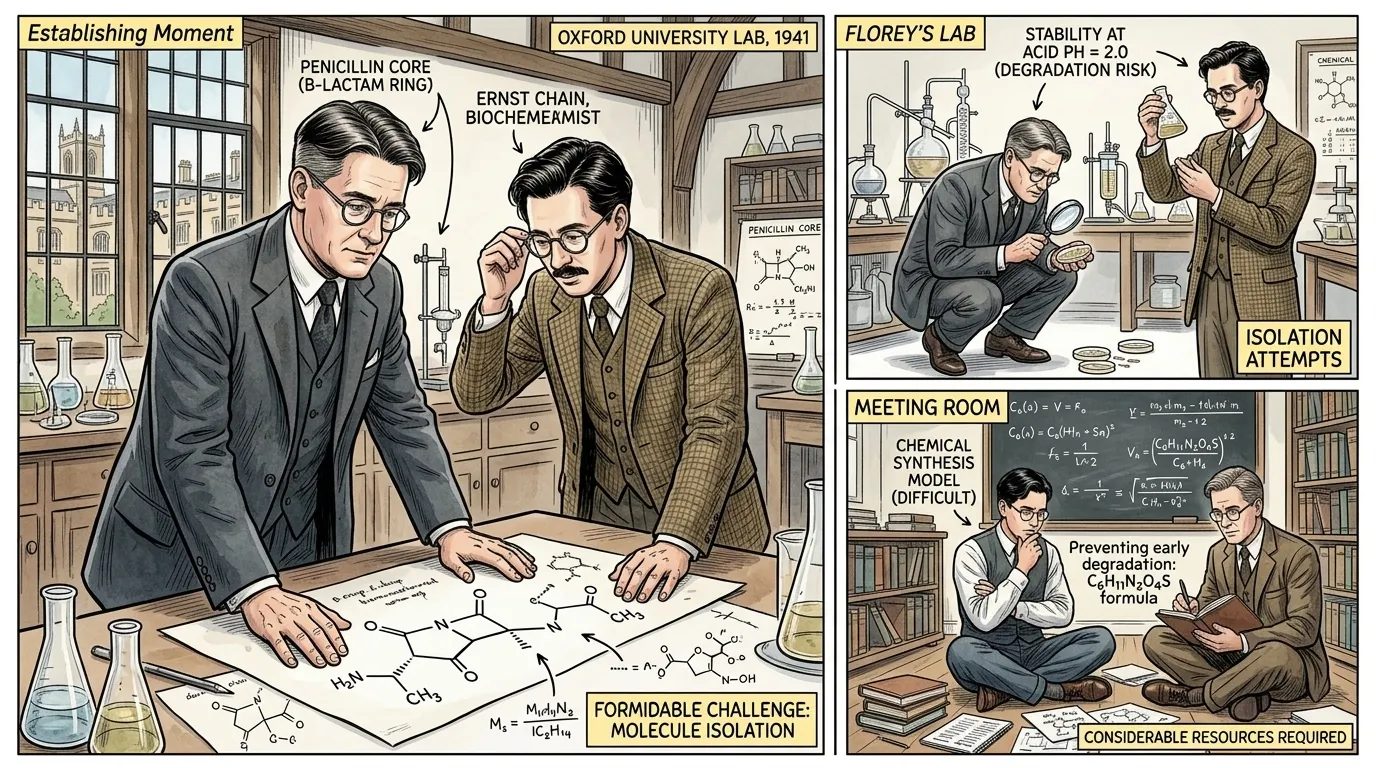
In 1939, a team at Oxford University, led by pathologist Howard Florey and biochemist Ernst Chain, decided to re-examine Fleming's decade-old work. Their combined expertise, Florey's drive for therapeutic application and Chain's biochemical prowess, proved to be the catalyst needed to unlock penicillin's potential. They understood that the fundamental challenge was not just identifying the substance, but mastering its production.
"Professor Florey, leaning over a diagram of a complex chemical structure, addressed his colleague. 'Chain, Fleming's initial observations are compelling, but the instability he noted means we must approach this with rigorous biochemistry. Can we isolate enough of this 'penicillin' to test systematically?' Chain, a younger man with intense focus, adjusted his spectacles. 'The challenge is formidable, Professor. It's not just about filtering a mold culture; it's about understanding the molecule, its synthesis, and preventing its degradation. We must develop methods to produce it efficiently, even if in small quantities, for initial trials.'"
Page 5
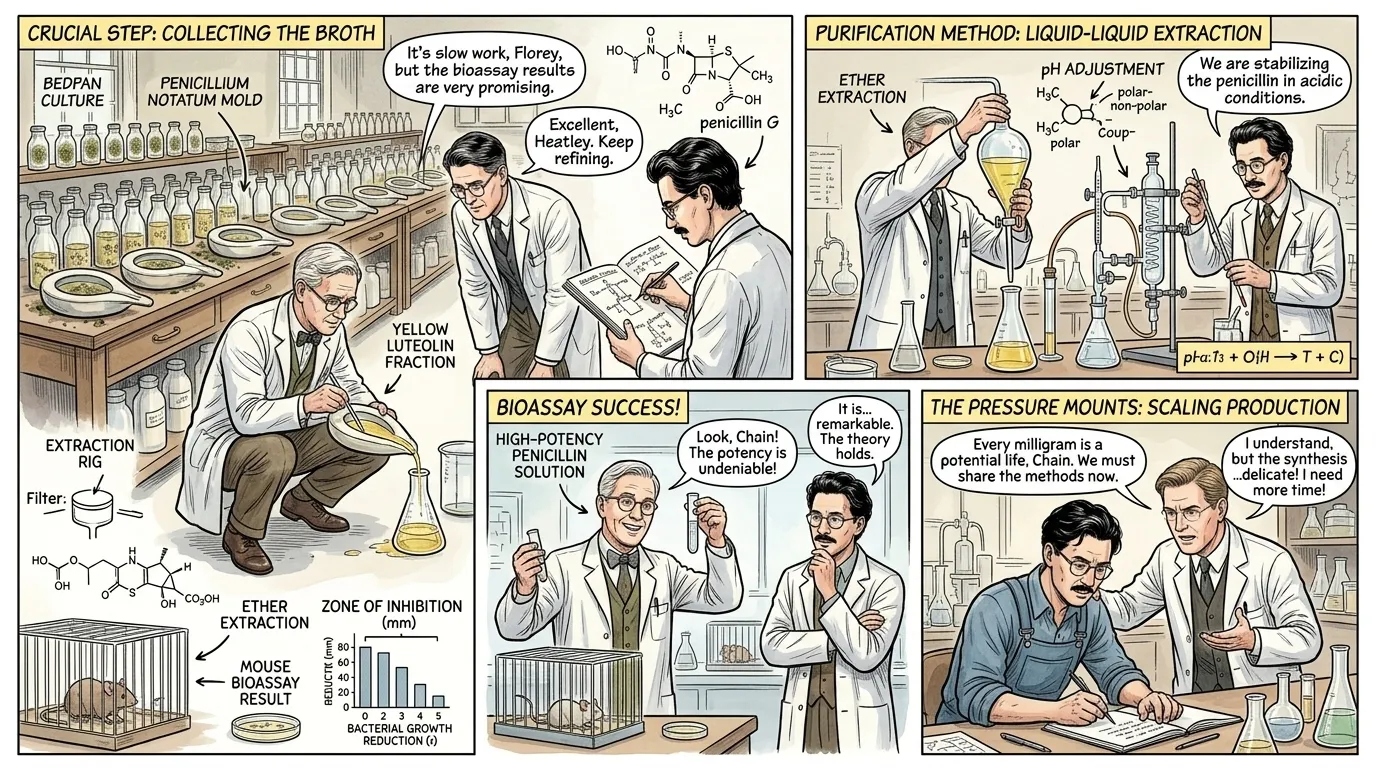
The Oxford team's initial breakthrough involved developing a method to extract small, yet significant, amounts of stable penicillin. They employed banks of ceramic bedpans and milk bottles as culture vessels, growing the Penicillium notatum mold on the surface of a nutrient broth. This primitive setup allowed for the production of just enough penicillin to conduct crucial animal trials, confirming its efficacy and safety.
"Dr. Heatley, a key member of Florey's team, carefully siphoned a yellow liquid from one of hundreds of makeshift culture vessels. 'This batch shows promise in our bioassay, Professor,' he reported to Florey. 'The yields are still minuscule, but consistent enough for our animal tests.' Florey observed, 'Indeed, the purification method you've refined is crucial. Each milligram represents a step towards understanding its therapeutic potential. We cannot afford waste; every drop is precious for our next stage of trials on infected mice.'"
Page 6
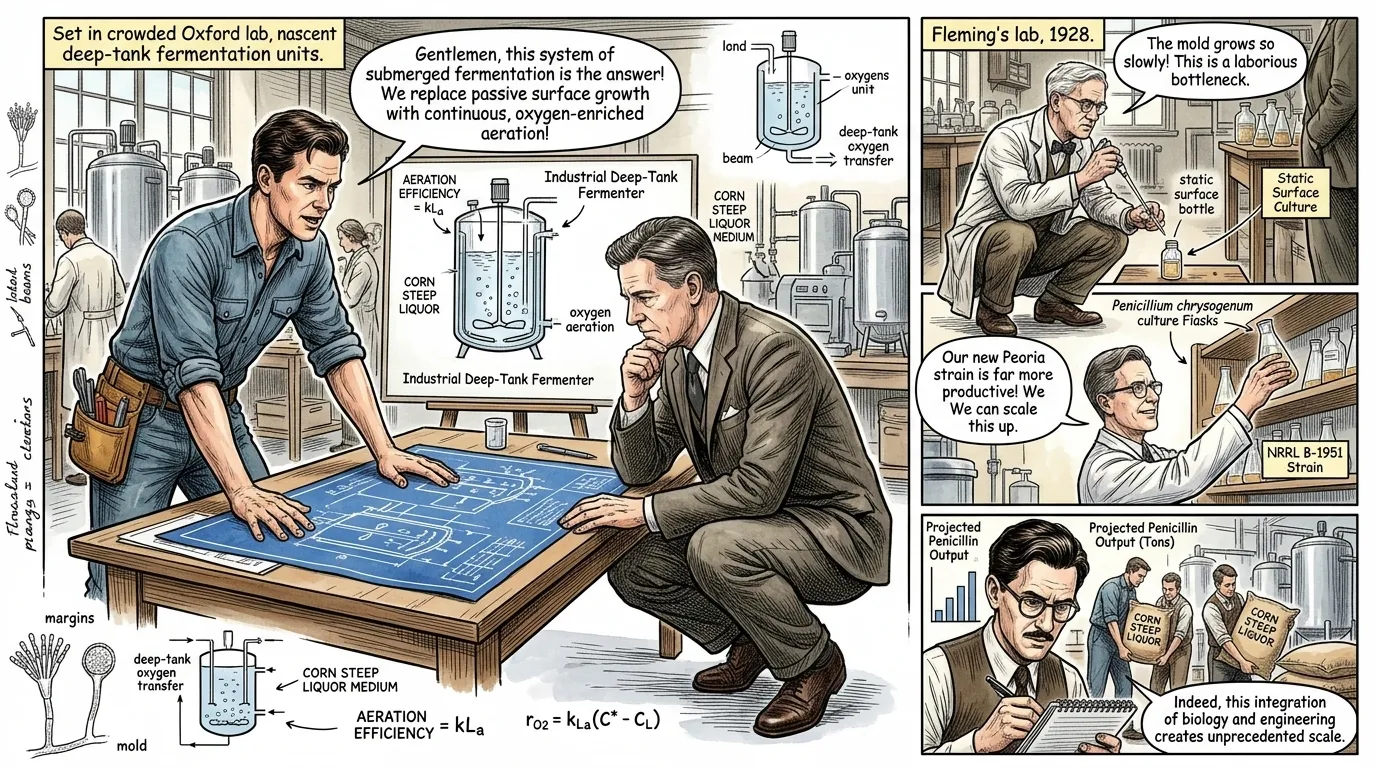
The true bottleneck in penicillin production was the low yield of surface culture. The critical breakthrough came with the adoption of deep-tank fermentation. This method involved submerging the mold in vast, agitated tanks of nutrient-rich liquid, continuously aerating the culture. This radical shift, coupled with the discovery of the superior penicillin-producing strain Penicillium chrysogenum and the addition of corn steep liquor, exponentially increased penicillin output.
"An American industrial engineer, working alongside the British team, pointed to a schematic. 'By moving from static surface cultures to these large, aerated tanks, we can dramatically increase the mold's growth and penicillin yield,' he explained. 'The continuous agitation and oxygen supply are critical.' Florey, reviewing the plans, nodded. 'The principle is sound. If we can control temperature and nutrient flow, particularly with this new strain and corn steep liquor, we could scale production to unprecedented levels. This is the industrial leap we desperately need.'"
Page 7
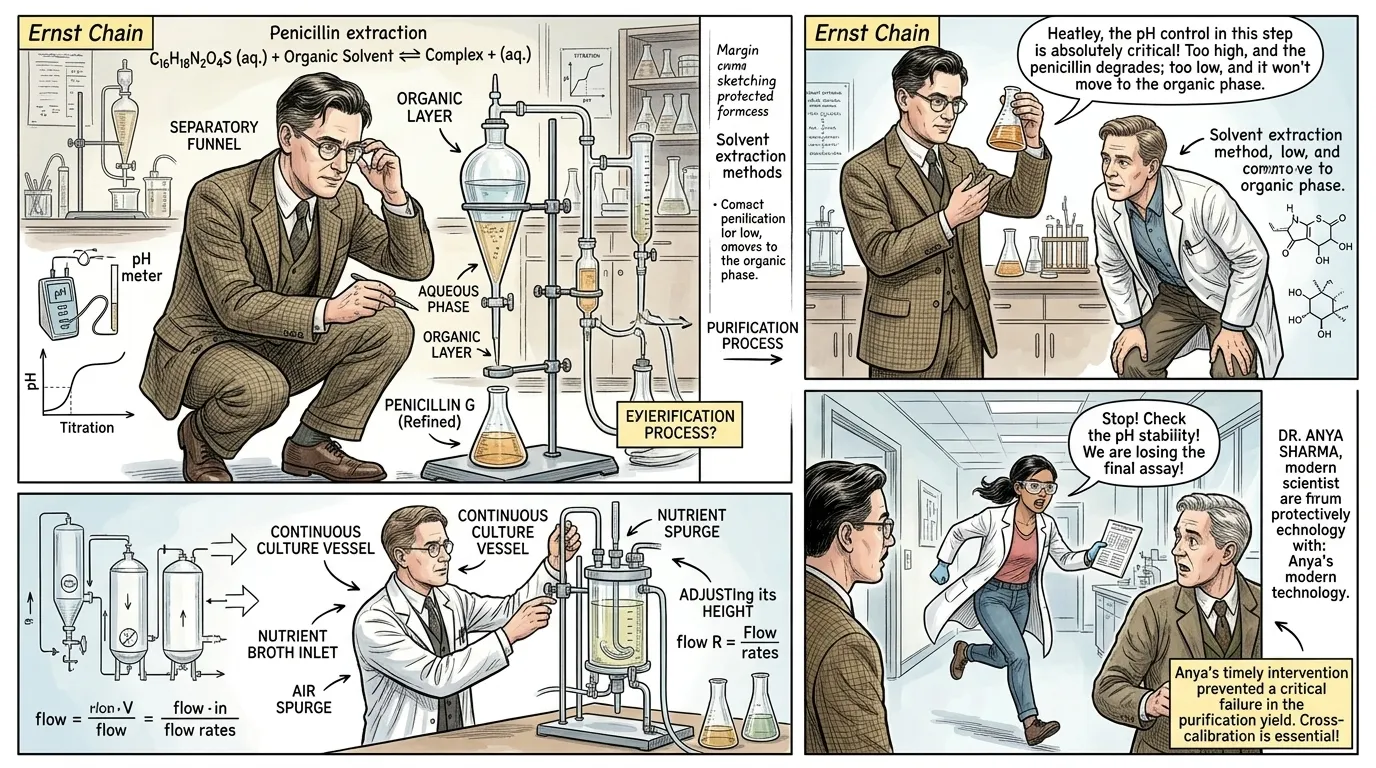
Once the penicillin was produced in the deep-tank fermenters, the next challenge was to extract and purify it from the vast quantities of fermentation broth. This intricate chemical process involved adjusting pH levels to make penicillin soluble in organic solvents, followed by repeated solvent extractions and back-extractions into aqueous solutions. The final steps often involved freeze-drying to obtain the stable, pure crystalline penicillin suitable for medical use.
"Ernst Chain, overseeing a complex array of glassware, explained the process to a visiting biochemist. 'After fermentation, the penicillin is in a dilute broth. We manipulate the pH, making it soluble in an organic solvent like amyl acetate, then separate it,' Chain elaborated, gesturing to a large separatory funnel. 'Then, by adjusting the pH again, we can 'wash' it back into water, concentrating it each time. It's a race against its inherent instability, making each step precise and critical. The goal is a pure, stable crystalline powder.'"
Page 8
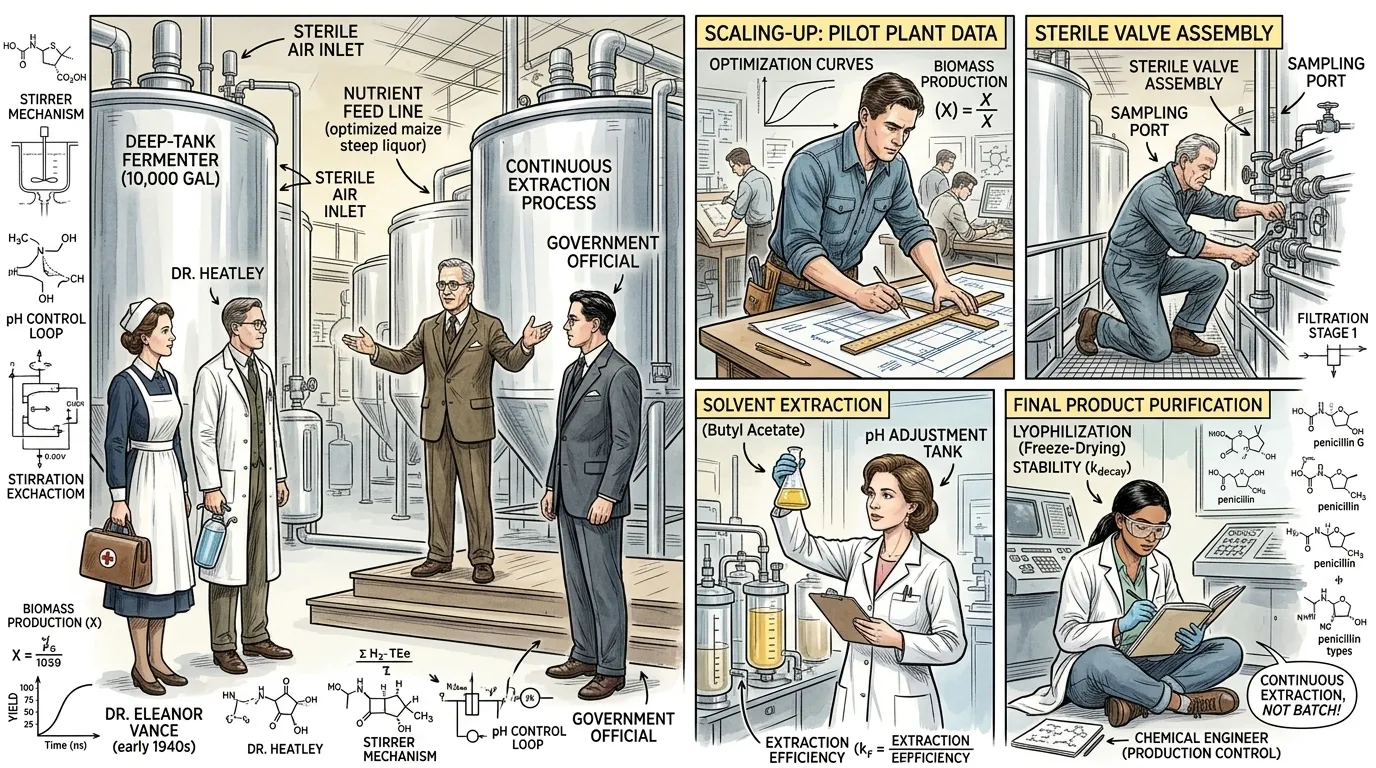
The scale of demand, particularly during World War II, necessitated an unprecedented industrial effort. The British government, preoccupied with war, turned to the United States. American pharmaceutical companies, with significant government backing and coordinated research, rapidly adapted the deep-tank fermentation process and refined extraction techniques. This collaboration transformed penicillin from a laboratory curiosity into a mass-produced, life-saving drug.
"A factory manager, gesturing across a vast production floor filled with towering fermenters, addressed a visiting delegation. 'When Professor Florey brought us the challenge, we understood the urgency. We scaled up the deep-tank method, optimized nutrient feeds, and developed continuous extraction lines. This isn't just science anymore; it's industrial might applied to saving lives.' A government official replied, 'The collective ingenuity, from the discovery of Penicillium chrysogenum to these immense production facilities, has created a truly transformative resource. The commitment to producing this at scale is our answer to the battlefield's greatest threat.'"
Page 9
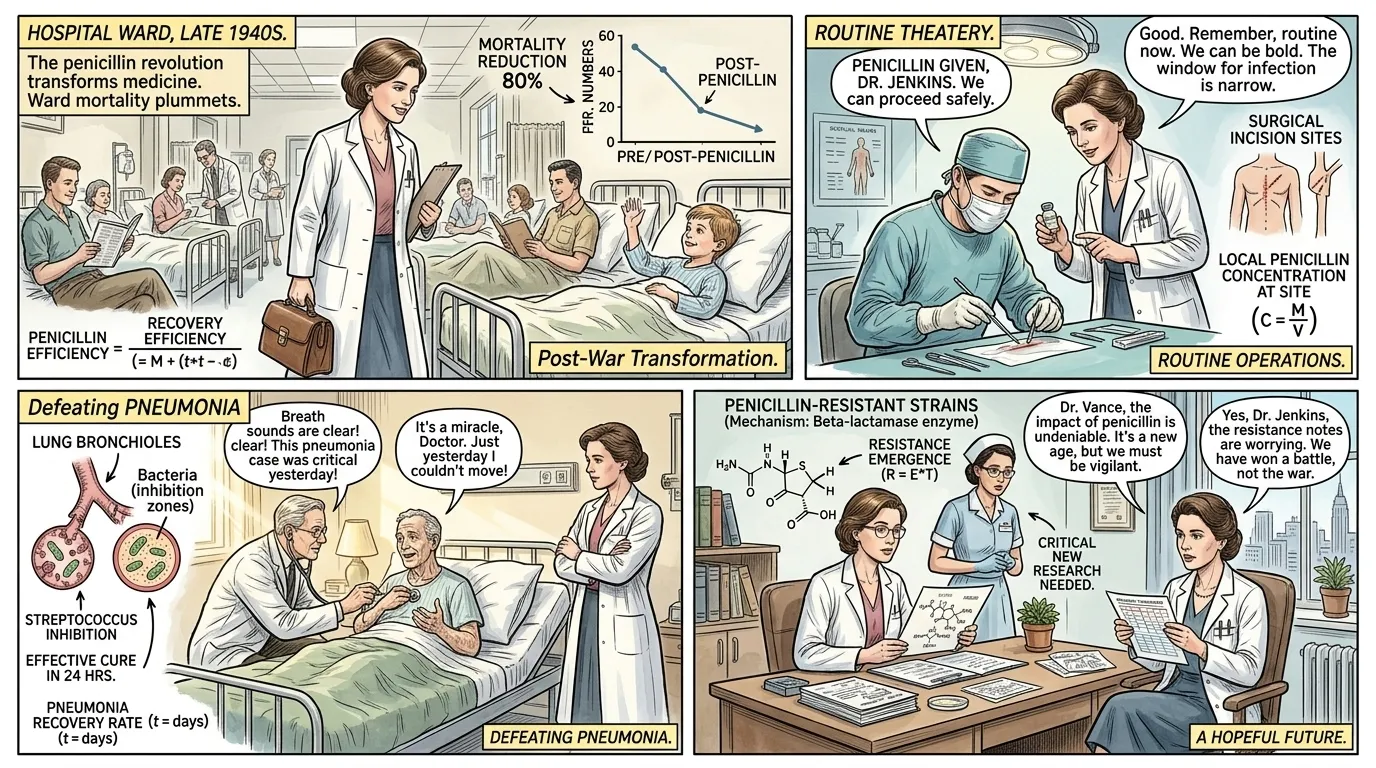
By D-Day in 1944, enough penicillin was being produced to treat every Allied soldier wounded on the battlefields of Europe. The drug dramatically reduced mortality rates from bacterial infections, transforming military medicine. Post-war, its availability revolutionized civilian healthcare, making previously deadly diseases like pneumonia, meningitis, and syphilis curable, ushering in an era of unprecedented public health improvement.
"Dr. Clara Jenkins, a civilian hospital physician in the late 1940s, reflected on the change. 'Just a few years ago, a diagnosis of bacterial pneumonia often meant a grim prognosis. Now, with penicillin, we see patients recover swiftly and completely. It's truly miraculous.' A colleague added, 'The impact on surgical outcomes is equally profound. Operations once deemed too risky due to infection are now routine. This single drug has redefined what is possible in medicine, making life-saving interventions safer and more effective for countless individuals.'"
Page 10
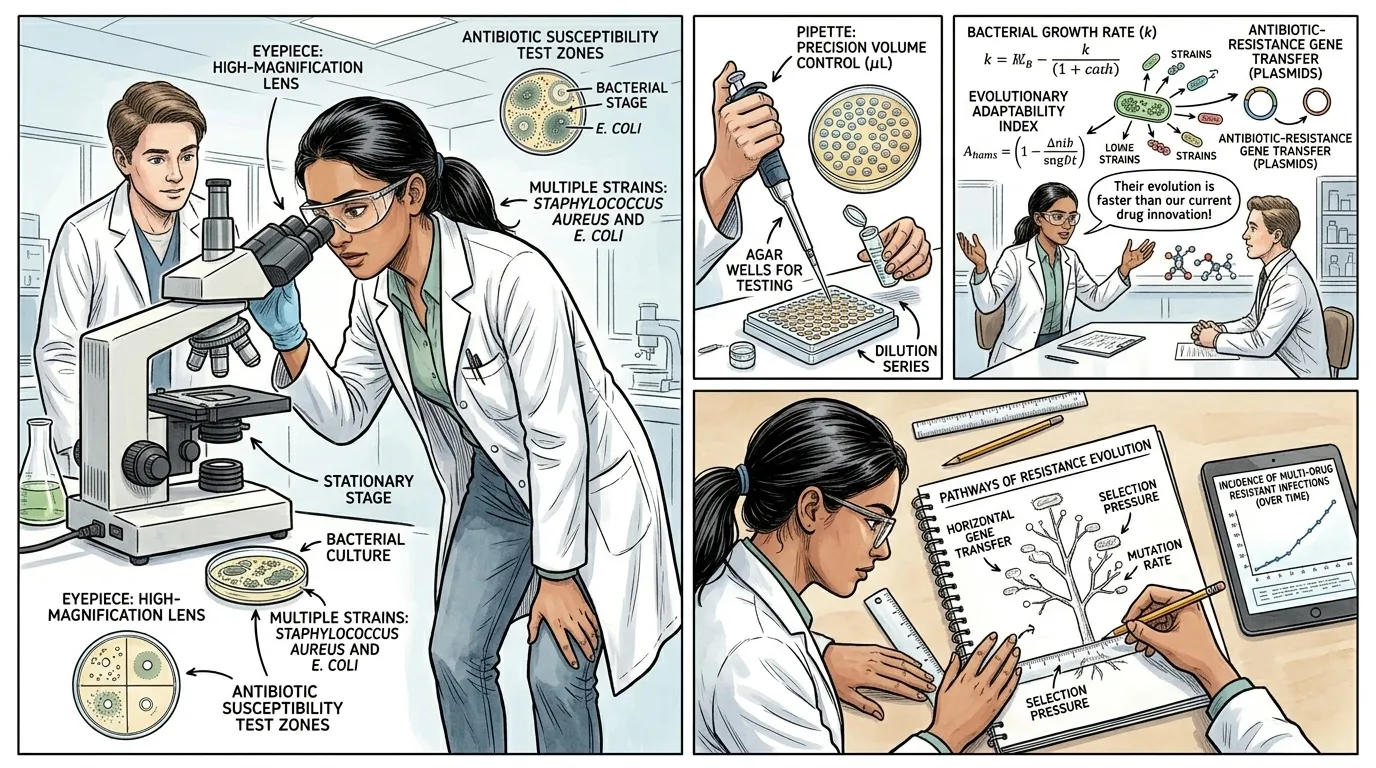
Penicillin's success opened the floodgates for further antibiotic research, leading to the discovery of streptomycin, tetracycline, and many others, ushering in the 'antibiotic age.' These drugs collectively transformed human health and extended lifespans, but their widespread use also introduced a critical new challenge: antibiotic resistance. The ongoing battle against evolving bacteria remains a central front in medical science, a direct legacy of penicillin's transformative power.
"A modern bacteriologist, Dr. Anya Sharma, examined a complex bacterial culture under a microscope. 'Penicillin taught us the power of antimicrobial compounds, but also the evolutionary adaptability of bacteria,' she explained to a colleague. 'Today, we face strains resistant to even our most advanced drugs. The legacy of penicillin is not just about triumph, but also a continuous, urgent call to innovation. We must keep discovering, keep adapting, or risk returning to a pre-antibiotic era.' Her colleague nodded, 'The fight is far from over, but penicillin showed us it's a fight we can win, given enough ingenuity.'"
About this story
- Location: Global
- Audience: general readers
Read Wonder Inventions on your phone
Wonder Inventions is available on Android. Get Wonder Inventions on Google Play.