Pacemaker
Pacemaker — an illustrated inventions story, set in Global. 10 illustrated pages, free to read on Wonder Inventions.
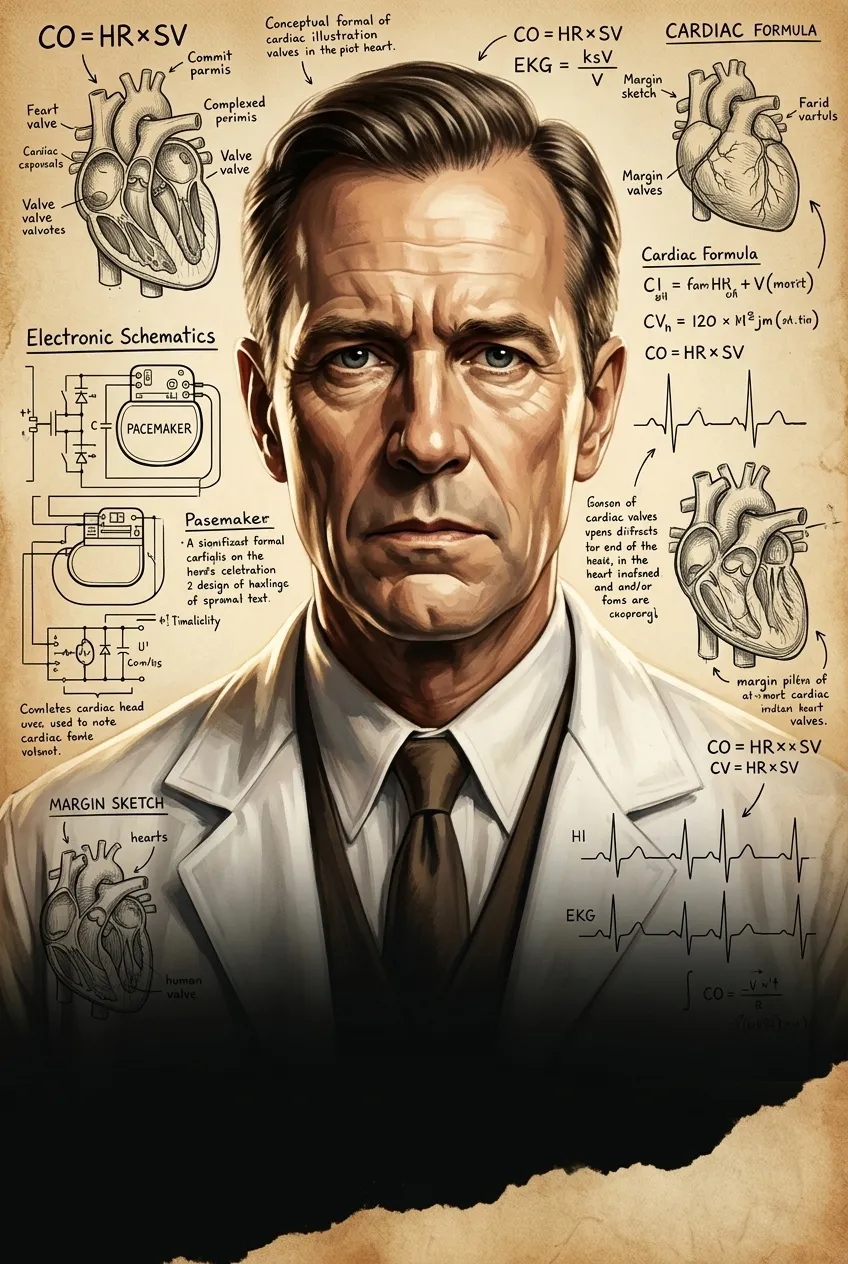
Page 1
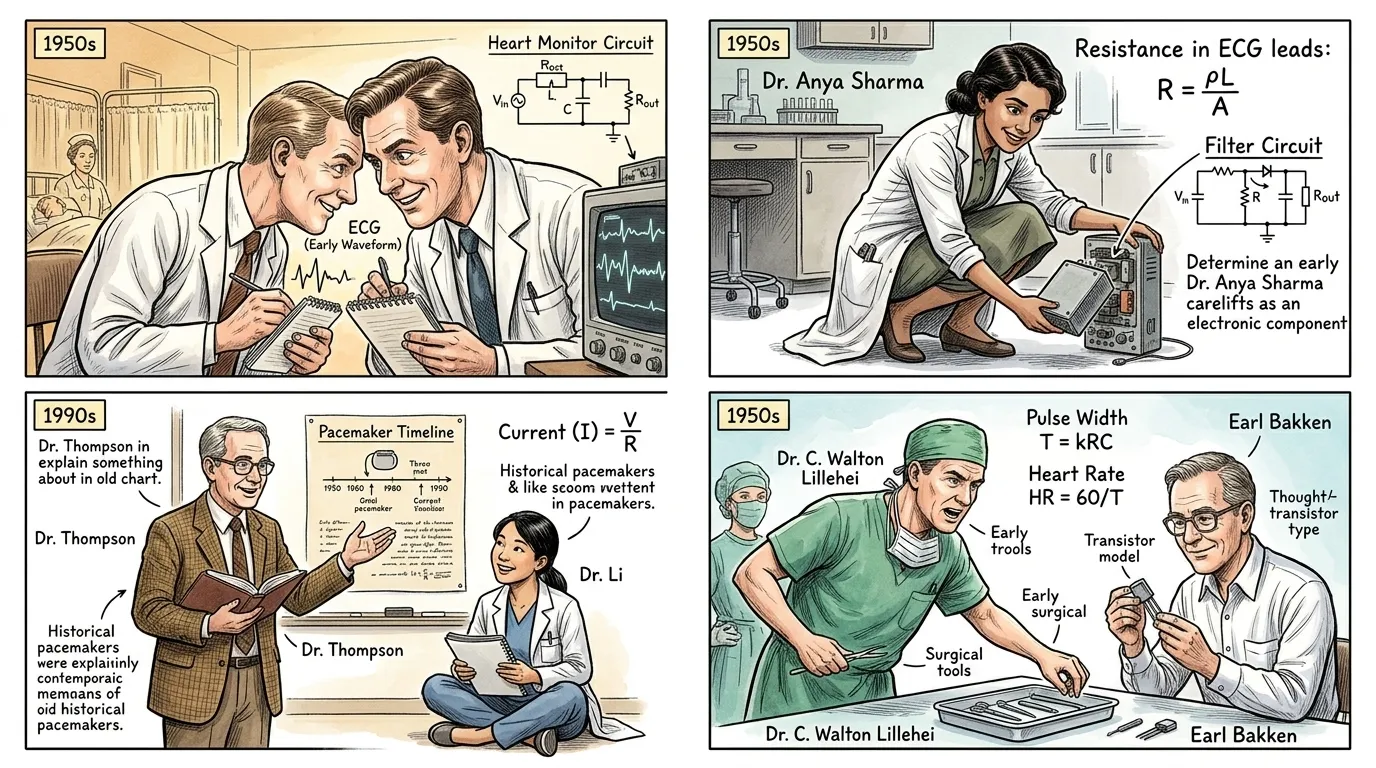
Before the advent of cardiac pacing, a condition known as heart block often condemned patients to a grim prognosis. The heart, failing to maintain a consistent electrical rhythm, would falter, leading to dizziness, fainting, and ultimately, death. Medical professionals stood largely helpless, observing the erratic pulses of life slowly fade. This dire challenge spurred a new frontier in bioengineering.
"Dr. Miller, a prominent cardiologist, observes a patient's failing heart monitor. 'The heart's natural pacemaker, the SA node, is failing to send its signals consistently,' he states, his voice grave. 'Without a stable electrical impulse, the ventricles struggle to pump. This patient needs a reliable external stimulus, something we simply do not possess in a practical form.'"
Page 2
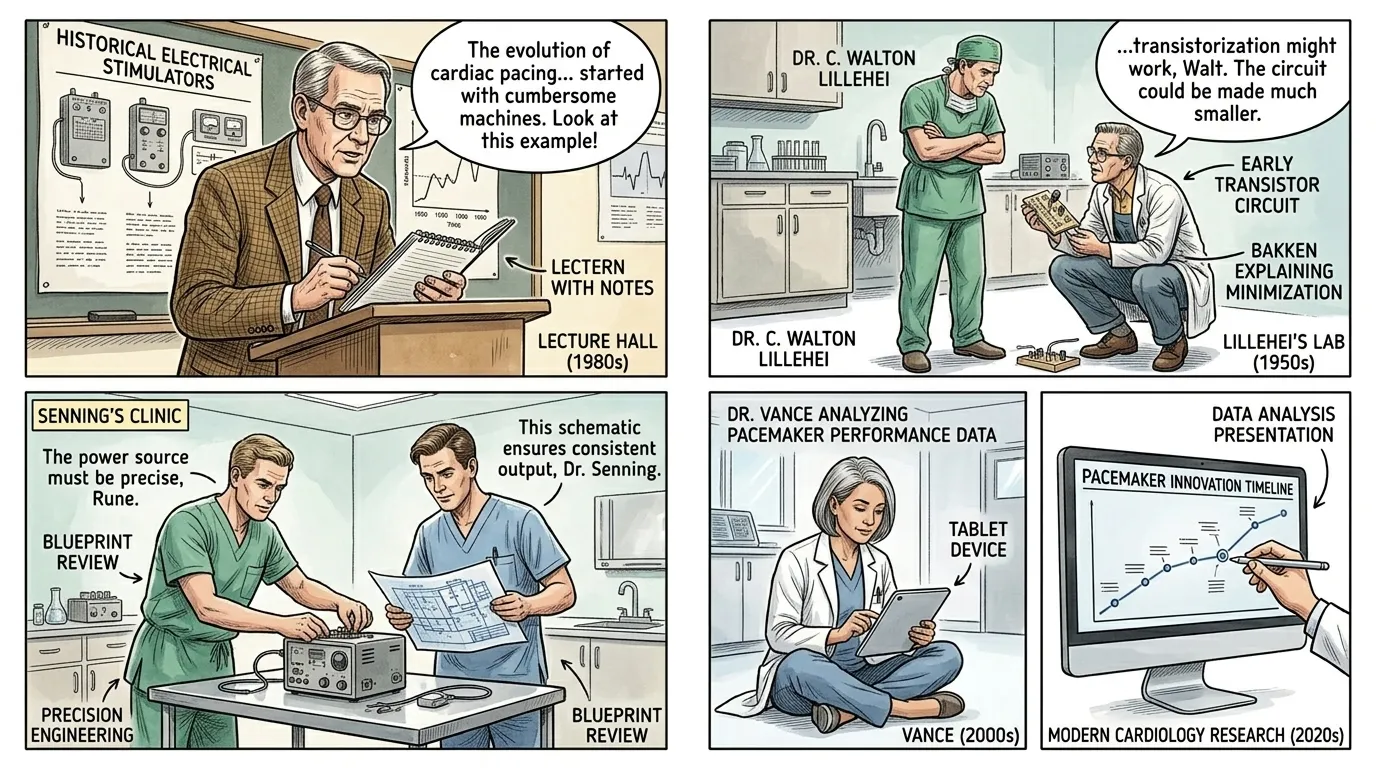
Early physiological research in the 19th and early 20th centuries had already established the electrical nature of the heart's contractions. Scientists understood that carefully applied electrical impulses could stimulate muscle tissue. However, translating this knowledge into a therapeutic solution for a failing human heart proved immensely challenging, fraught with technical and ethical complexities. The immediate problem was finding a method to deliver these impulses externally and reliably without causing further harm.
"Dr. Thompson, a medical historian, gestures towards a diagram of an early electrical stimulator. 'In the 1930s and 40s,' he explains, 'researchers like Albert Hyman experimented with cumbersome devices, often using hand-cranked generators. These machines were laboratory curiosities, far too crude for clinical use.' He pauses, then adds, 'The challenge wasn't just generating a pulse, but precisely controlling its timing and intensity to mimic the heart's delicate rhythm. And then, there was the crucial question of continuous power.'"
Page 3
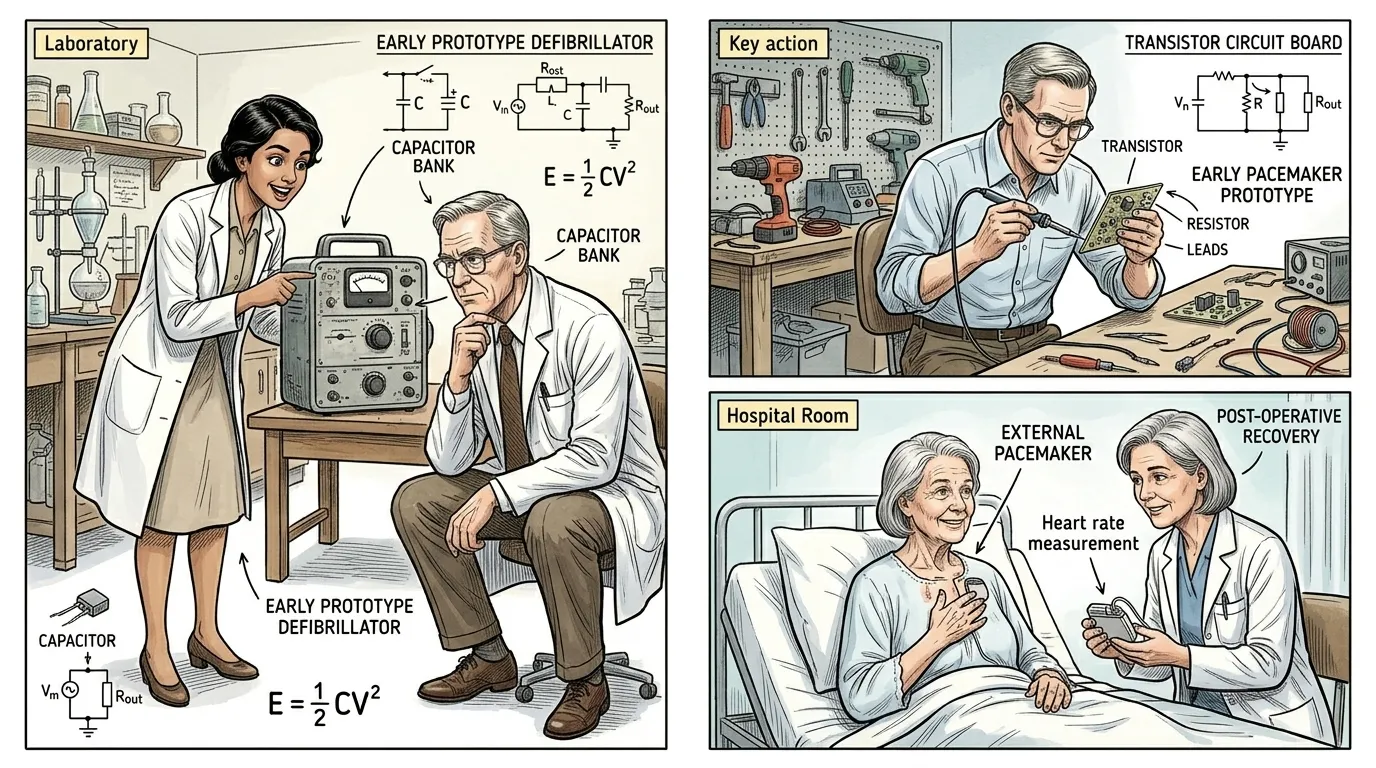
While direct cardiac pacing remained elusive, related research made significant strides. In 1950, Canadian electrical engineer John Hopps, while investigating hypothermia, discovered that a high-frequency radio wave applied to the heart could restart it after it had stopped due to cold. This led to his invention of the external defibrillator, demonstrating the potential for externally controlled electrical impulses to regulate cardiac activity. This was a crucial conceptual step, even if it didn't solve the long-term pacing problem, establishing the viability of electrical intervention.
"A young, determined researcher, Dr. Anya Sharma, points to an early prototype. 'Hopps' work,' she states, 'while focused on defibrillation, confirmed a fundamental truth: the heart responds to external electrical commands. The question then became, how do we make that command regular and sustaining for a heart struggling with chronic rhythm issues?' She turns to an older mentor, Dr. Ben Carter. 'The power sources were immense, the electrodes often external and traumatic. We learned what was possible, but the path to a portable, long-term solution seemed impossible with the existing technology.'"
Page 4
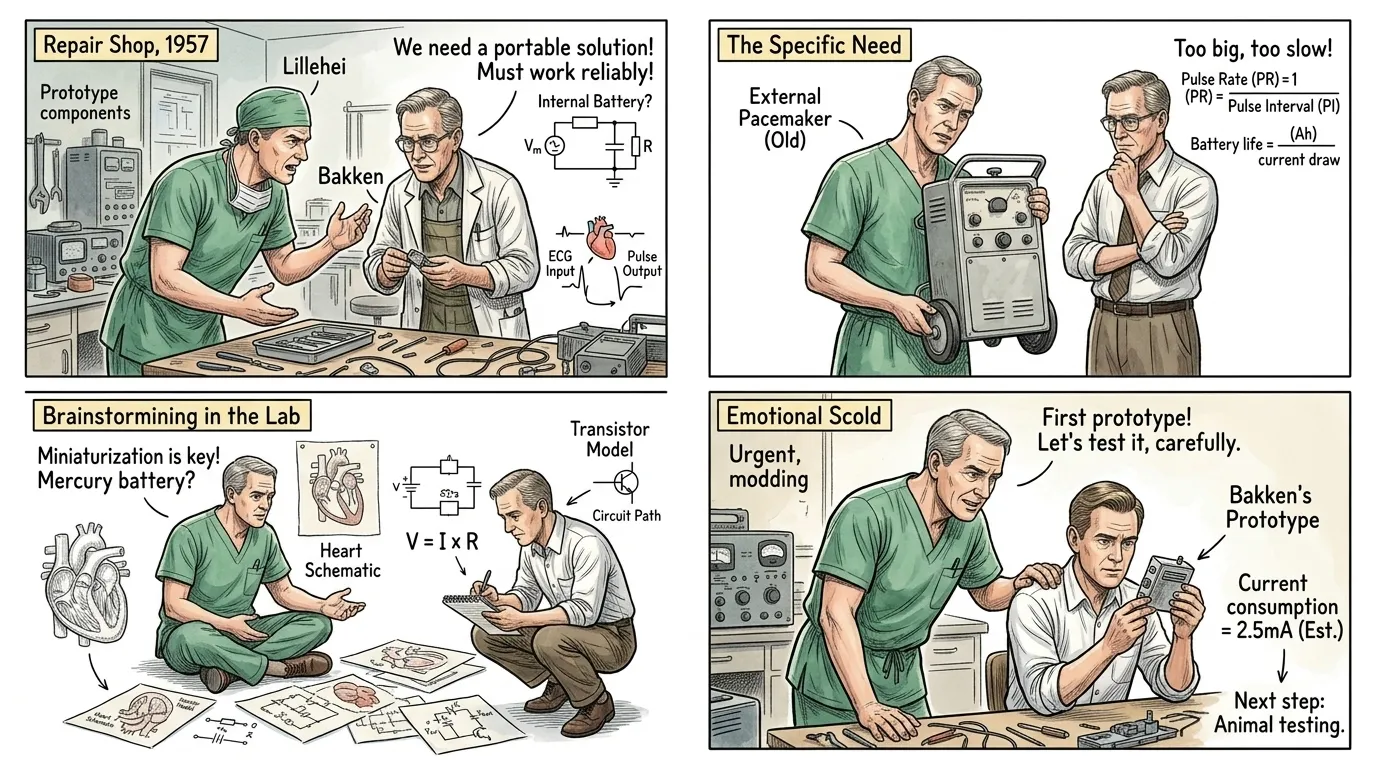
In 1957, a routine power outage plunged Minneapolis into darkness. For Dr. C. Walton Lillehei, a pioneering cardiac surgeon at the University of Minnesota, this was catastrophic. He had been using large, alternating current-powered external pacemakers to support infants recovering from open-heart surgery. Without power, these delicate patients were at grave risk. He urgently needed a battery-powered solution, a call that reached Earl Bakken, a young electrical engineer and co-founder of Medtronic, then a small medical equipment repair shop.
"Dr. C. Walton Lillehei, a confident and focused surgeon in his 40s, with short, combed dark hair, wearing green surgical scrubs, gestures emphatically to a young Earl Bakken. 'Earl,' he says, his voice urgent, 'these babies, they depend on that rhythmic pulse. When the power goes out, we are helpless. We need a device, portable, reliable, battery-powered, to provide that critical pacing.' Bakken, a thoughtful man in his early 30s with glasses and an engineering mindset, nods slowly. 'A challenge of portability and precision,' he muses. 'It's about more than just keeping the lights on; it's about sustaining life itself. 'Necessity is the mother of invention,' as Plato once wisely observed, and here, the necessity is profoundly clear.'"
Page 5
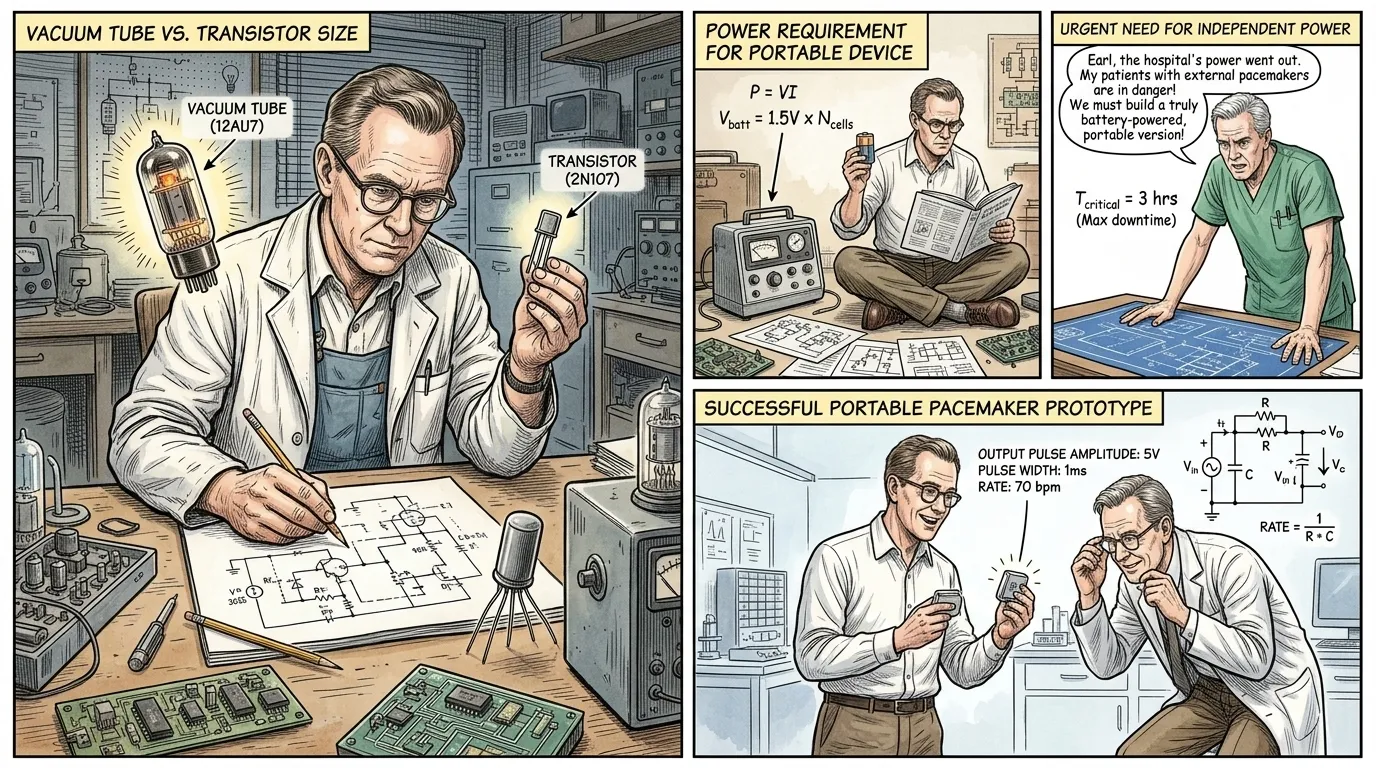
Bakken took on the challenge. The existing external pacemakers were bulky, wall-powered units that were far from portable. The core engineering problem was to miniaturize the complex circuitry, power it reliably with batteries, and ensure it delivered a precise, consistent electrical pulse to the heart through surface electrodes. This required a fundamental shift from large, vacuum-tube-based electronics to the then-emerging solid-state transistor technology.
"Bakken, hunched over his workbench, examines a large vacuum tube, then a much smaller transistor. 'The vacuum tubes,' he explains to an unseen colleague, 'are too power-hungry, too fragile, and far too large. For true portability, we need the transistor. It's stable, efficient, but integrating it into a precise timing circuit presents its own set of hurdles.' He sketches a circuit diagram on a notepad. 'We need to create an oscillator that generates the pulse, an amplifier to strengthen it, and a way to adjust the rate. All from a small battery, no larger than this.' He holds up a D-cell battery."
Page 6
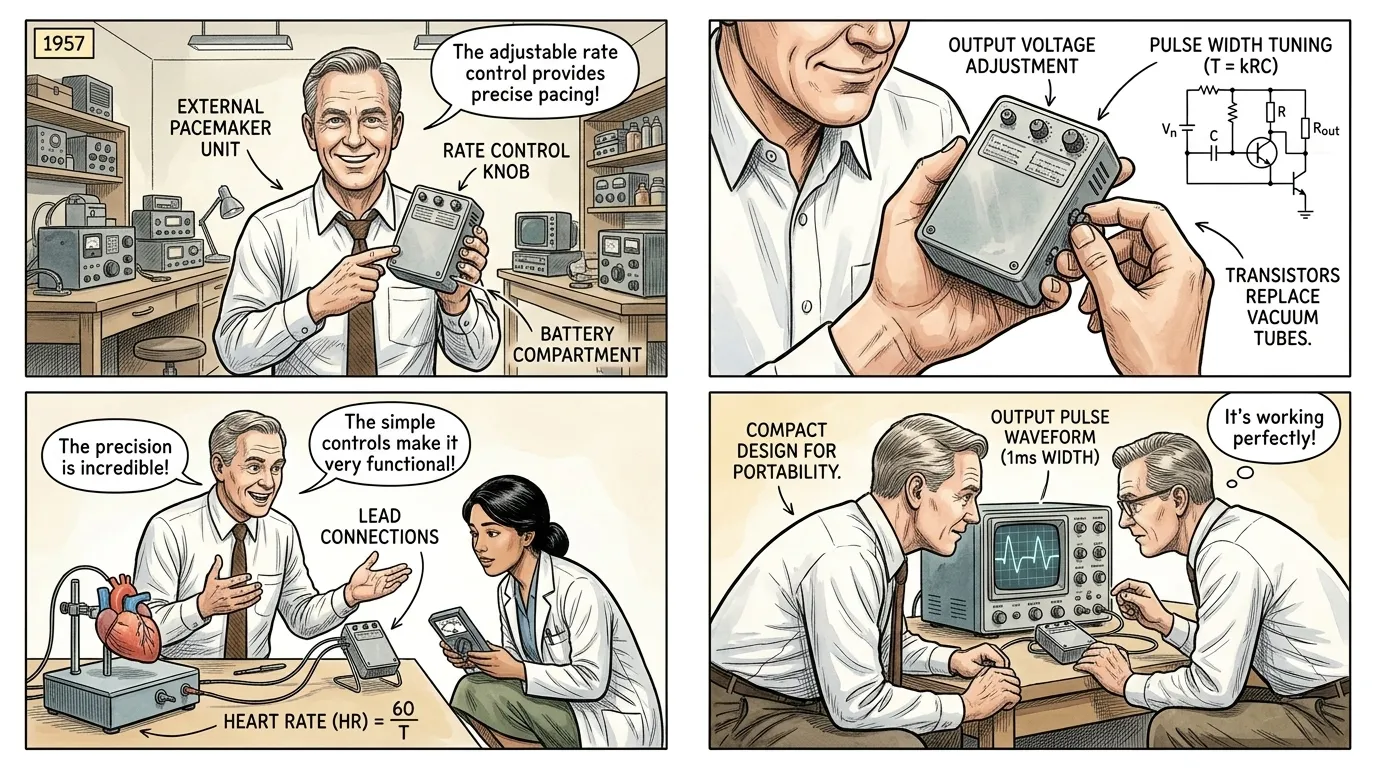
Inspired by a circuit diagram for a metronome in a magazine, Bakken realized he could adapt the concept to create a reliable pulse generator. By using transistors instead of vacuum tubes, he designed a compact, battery-powered device. This external pacemaker featured an adjustable rate control and delivered electrical pulses to electrodes placed on the patient's skin. It was the world's first successful wearable, battery-operated pacemaker, a revolution in cardiac care.
"Bakken, proudly holding his compact device, explains its function. 'This small box,' he says, gesturing to its simple controls, 'contains a transistorized oscillator, generating a precise electrical pulse. That pulse is then amplified and delivered to the surface electrodes. We can now regulate the heart's rhythm, providing the exact beat per minute needed.' He points to a knob. 'And with this dial, physicians can adjust the pacing rate, offering unparalleled control and flexibility for the patient.'"
Page 7
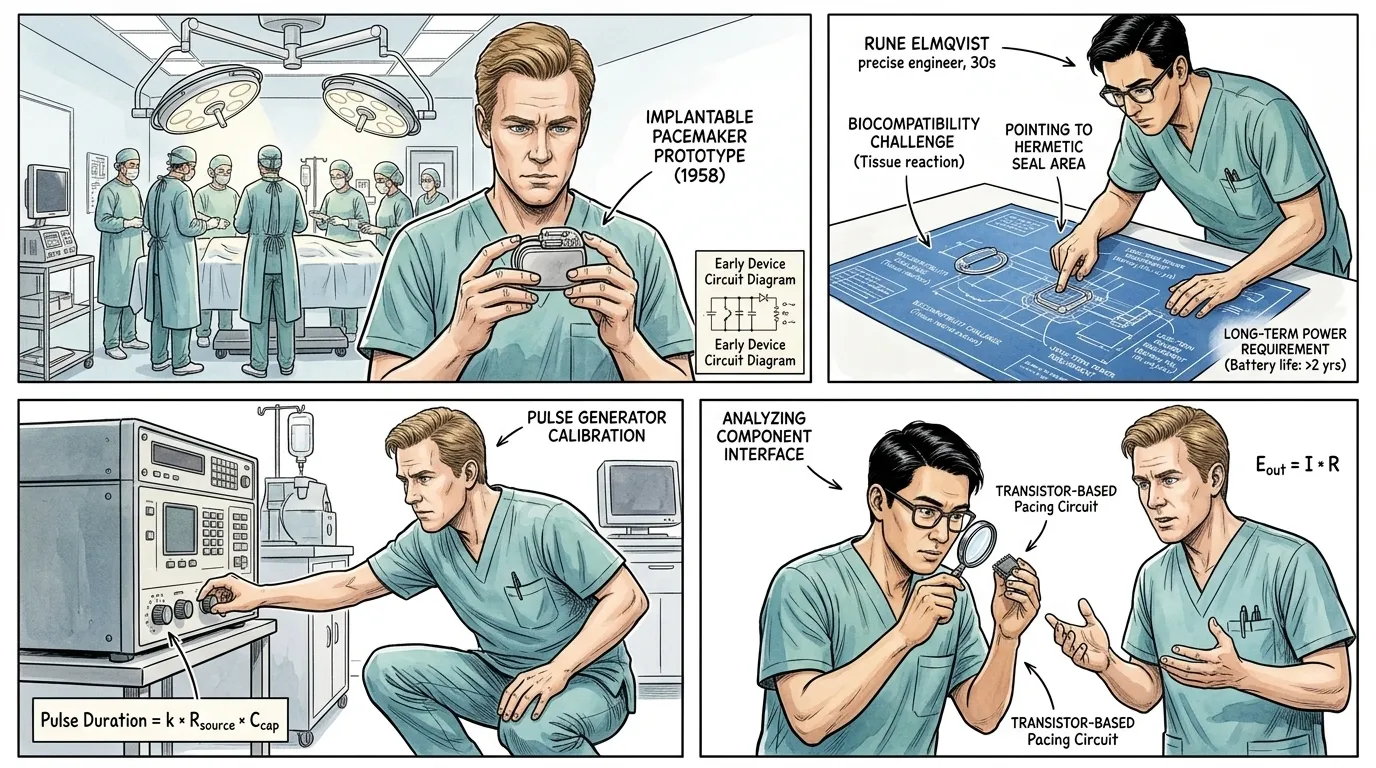
While Bakken's external pacemaker was life-saving, it was temporary and carried risks of infection and patient discomfort. The ultimate goal was an internal, implantable device. This monumental step was achieved in Sweden in 1958 by engineer Rune Elmqvist and surgeon Åke Senning. They developed a fully implantable pacemaker using rechargeable batteries and hermetically sealed components, successfully implanting it into Arne Larsson, who would live for decades with multiple pacemaker replacements.
"Dr. Senning, a focused Swedish surgeon in his 40s, with a serious demeanor and light brown hair, wearing surgical scrubs, carefully holds an early implantable pacemaker. 'The challenge was immense,' he explains to Elmqvist, a precise engineer in his 30s, with dark hair and glasses, also in scrubs, reviewing a blueprint. 'Not only miniaturization but also biocompatibility. The body's hostile environment, the need for long-term power, and materials that wouldn't degrade or cause rejection.' Elmqvist points to a sealed component on the blueprint. 'We had to encapsulate the entire unit, ensuring no fluids could enter, and pioneer a rechargeable battery that could last for years. This required a completely new approach to material science and electrical isolation.'"
Page 8
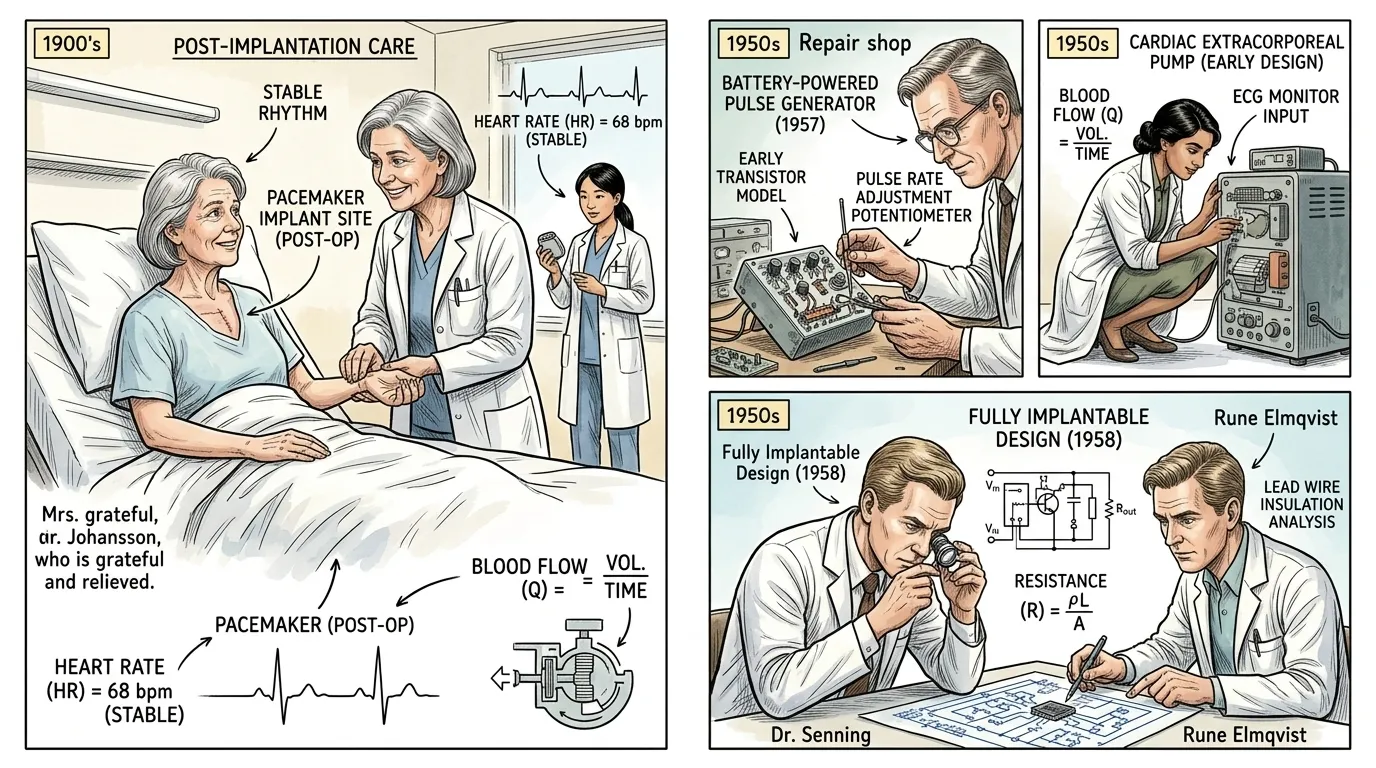
The introduction of both external and, critically, implantable pacemakers transformed the prognosis for patients with heart block. What was once a death sentence became a treatable condition, offering patients the chance to live full, active lives. The early days were marked by rapid learning and refinement, with doctors and engineers working closely to improve reliability and longevity. Each successful implantation represented a triumph over a previously intractable disease.
"A grateful patient, an elderly woman with kind eyes, sits up in a hospital bed, a faint incision visible on her chest. Dr. Eleanor Vance, a compassionate physician in her 50s with sensible grey hair, wearing a white lab coat, smiles warmly. 'Mrs. Johansson,' Dr. Vance says, 'your heart's rhythm is perfectly stable now. The pacemaker is working beautifully, delivering consistent pulses. You're no longer tethered to a machine. We've literally given you a new lease on life.' Mrs. Johansson, tears in her eyes, replies, 'It's a miracle, doctor. I can feel the strength returning, the dizziness gone. I can finally look forward to seeing my grandchildren grow.'"
Page 9
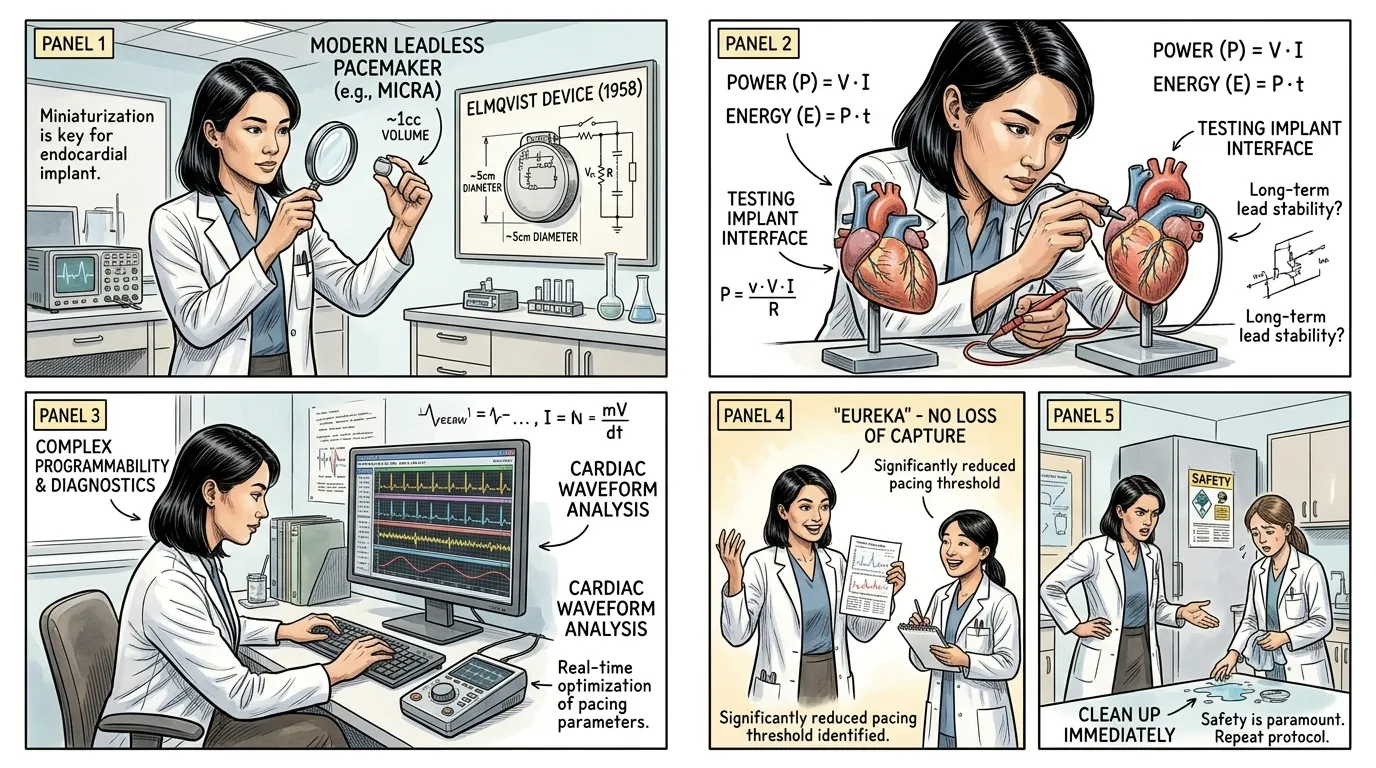
The initial pacemakers were groundbreaking but primitive by today's standards. Over decades, relentless innovation drove dramatic improvements. Lithium-iodine batteries replaced bulky, short-lived power sources, extending battery life to 10-15 years. Microprocessor technology allowed for programmability, enabling doctors to fine-tune pacing parameters non-invasively. Dual-chamber pacing emerged, precisely synchronizing the atria and ventricles for optimal cardiac output. These advancements made pacemakers smaller, more efficient, and far more adaptable to individual patient needs.
"Dr. Li, a modern biomedical engineer in her 40s with sleek dark hair, wearing a contemporary lab coat, holds a tiny, advanced pacemaker next to a historical diagram of Elmqvist's original device, highlighting the vast size difference. 'Look at this,' she exclaims, 'the original device was roughly the size of a hockey puck. Today's models are often smaller than a quarter, weighing just a few grams. This miniaturization, coupled with sophisticated programmability, means we can customize therapies with incredible precision.' She gestures to a computer screen showing complex cardiac waveforms. 'We've moved from simply stimulating the heart to intelligently managing its rhythm, responding dynamically to the body's needs. The evolution of battery technology, especially the lithium-iodine cell, was the true game-changer for long-term implantation.'"
Page 10
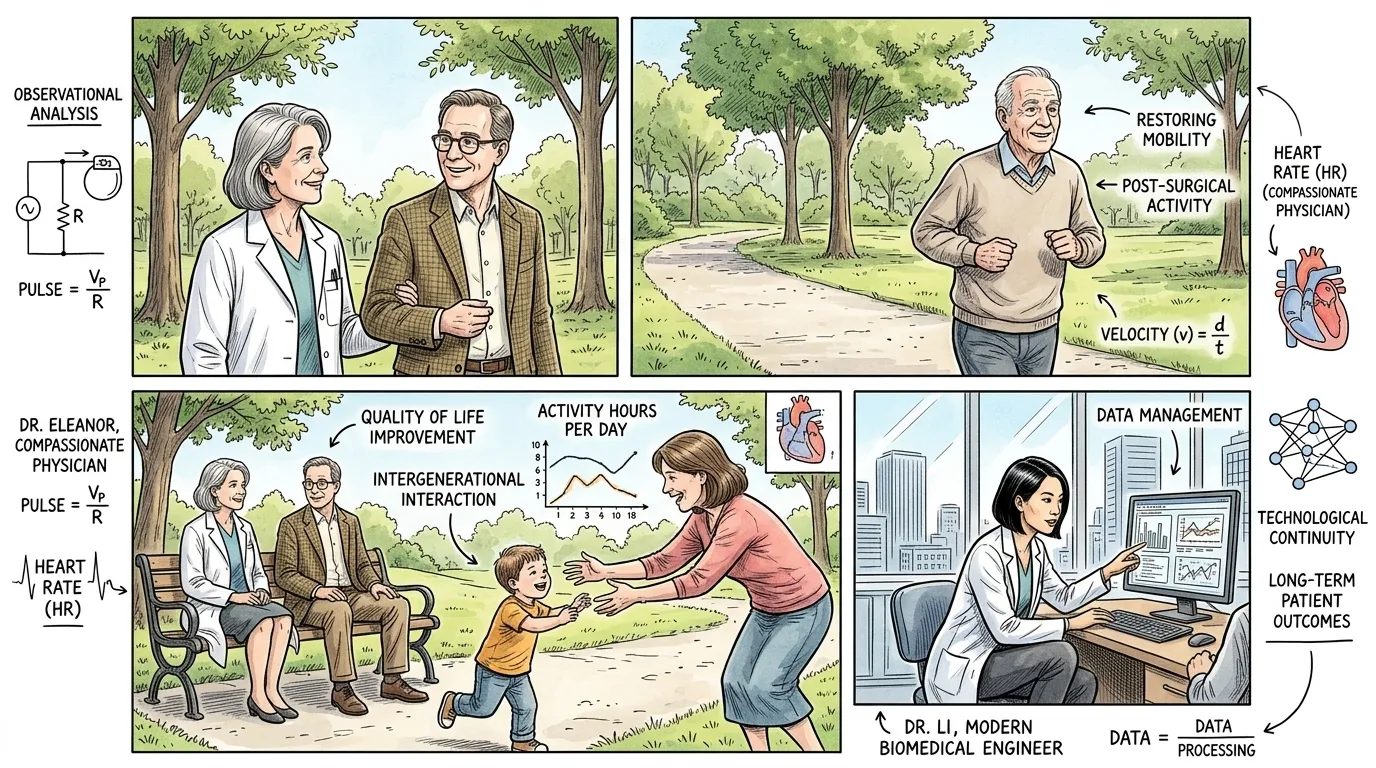
Today, over a million people worldwide rely on pacemakers to sustain their lives. This invention, born from urgent necessity and refined by relentless innovation, has become a cornerstone of modern cardiology. It allows individuals, from the elderly to surprisingly young patients, to overcome severe cardiac rhythm disorders, restoring their ability to live active, fulfilling lives. The pacemaker is a testament to how human ingenuity, combined with scientific understanding, can profoundly alter the course of human health and longevity.
"Dr. Vance, observing a diverse group of people, reflects, 'The pacemaker's impact is immeasurable. We see patients who were once bedridden now hiking, dancing, living vibrant lives. It's not just about extending life, but improving its quality, profoundly.' An elderly man, smiling, jogs gently in a park. A middle-aged woman plays with her grandchild. A young professional works diligently at a desk. Dr. Thompson, the medical historian, adds, 'From crude external jolts to intelligent, implantable devices, the journey of the pacemaker is a microcosm of medical progress. It reminds us of the power of dedication and the lasting echo of a single, brilliant idea.'"
About this story
- Location: Global
- Audience: general readers
Questions and answers
Read Wonder Inventions on your phone
Wonder Inventions is available on Android. Get Wonder Inventions on Google Play.