Pager
Pager — an illustrated inventions story, set in Global. 10 illustrated pages, free to read on Wonder Inventions.
Page 1
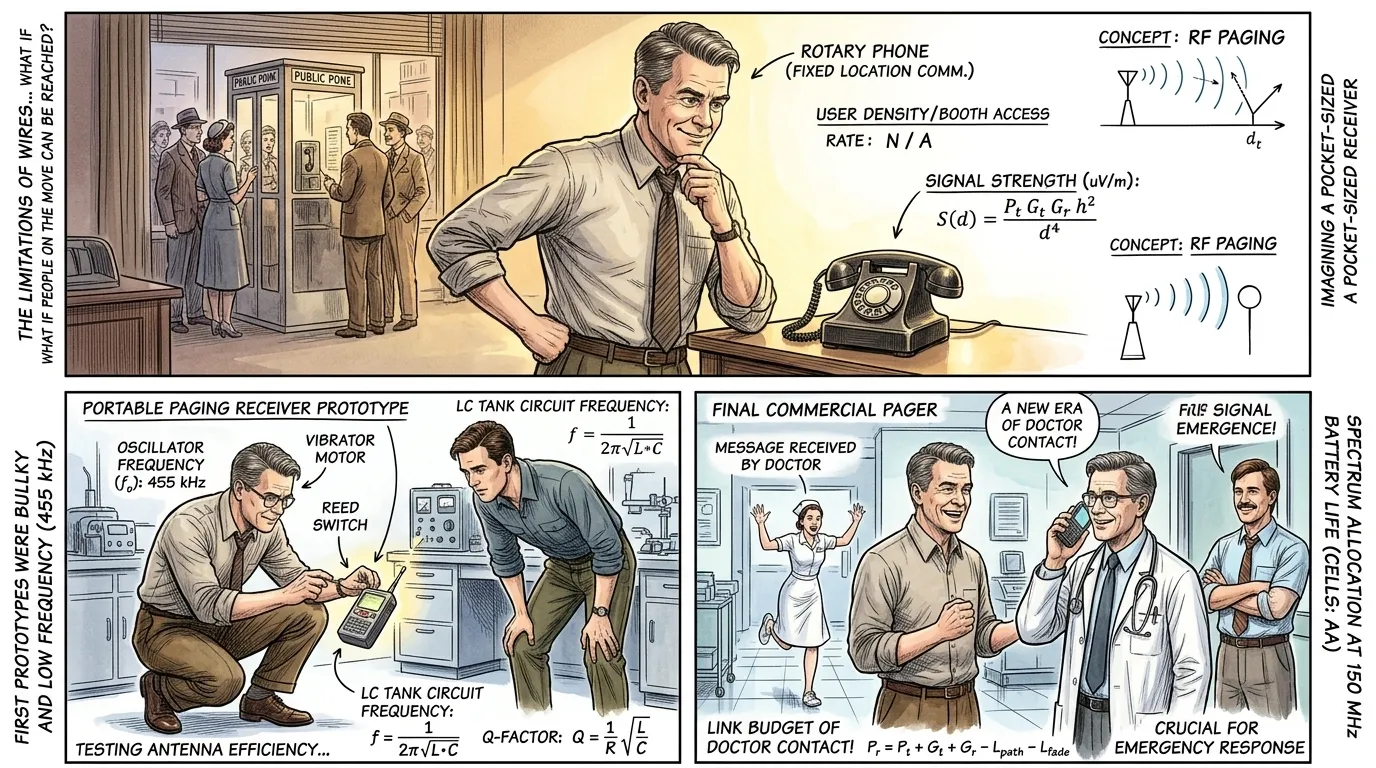
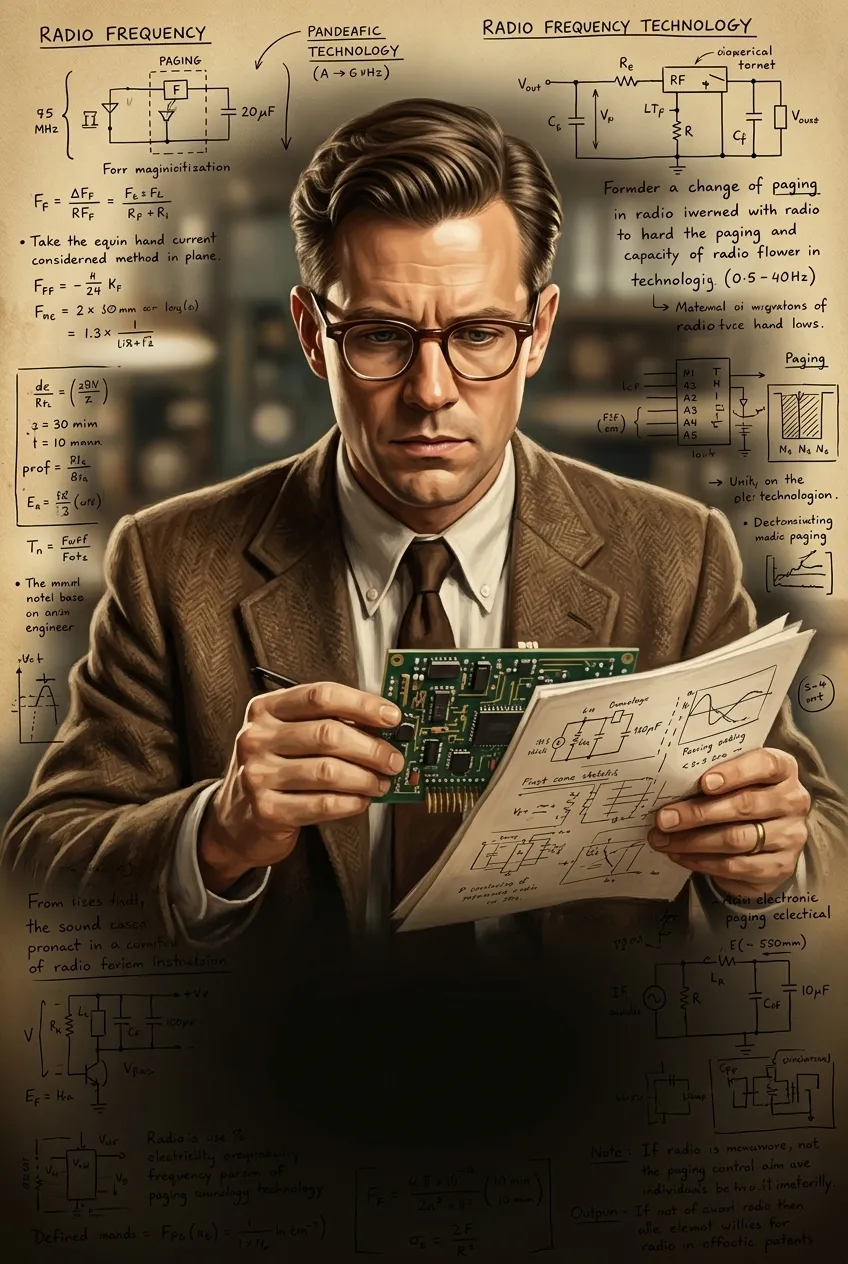
Before the advent of widespread personal mobile technology, reaching individuals outside of a fixed location presented a profound challenge. Essential professionals—doctors, emergency responders, key personnel—were tethered to landlines, their availability dictated by their proximity to a desk phone or a specific building. This created critical delays in urgent situations, where minutes could mean the difference between success and failure in medical emergencies or critical business decisions.
"Al Gross, a visionary inventor, often reflected on this inherent limitation. As he once articulated, "I just felt it was a natural application of radio to be able to contact people on the go," encapsulating his determination to untether communication and provide instant alerts."
Page 2
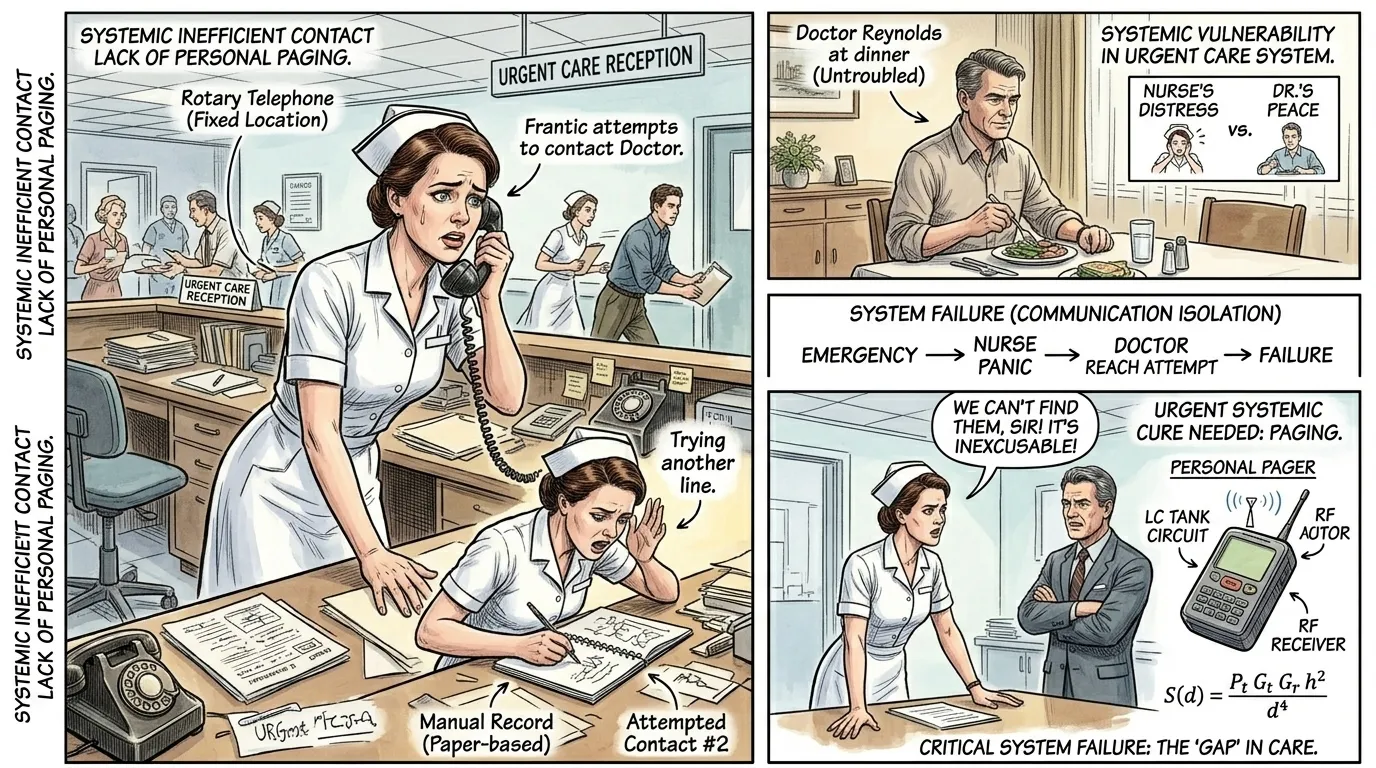
Imagine a surgeon away from the hospital, dining at home, while a patient in critical condition suddenly requires immediate intervention. The only method to reach them involved a laborious chain of calls: the hospital desk calling their home phone, hoping they were there, or a neighbor being dispatched to find them. This fragmented communication created immense inefficiencies and, more critically, jeopardized lives.
"A nurse, frantic, often had to explain to a relative, "Doctor Reynolds isn't reachable at the moment; we're trying every number we have." This stark reality highlighted the systemic vulnerability in urgent care and other time-sensitive professions, where every second counted and delays were unavoidable."
Page 3
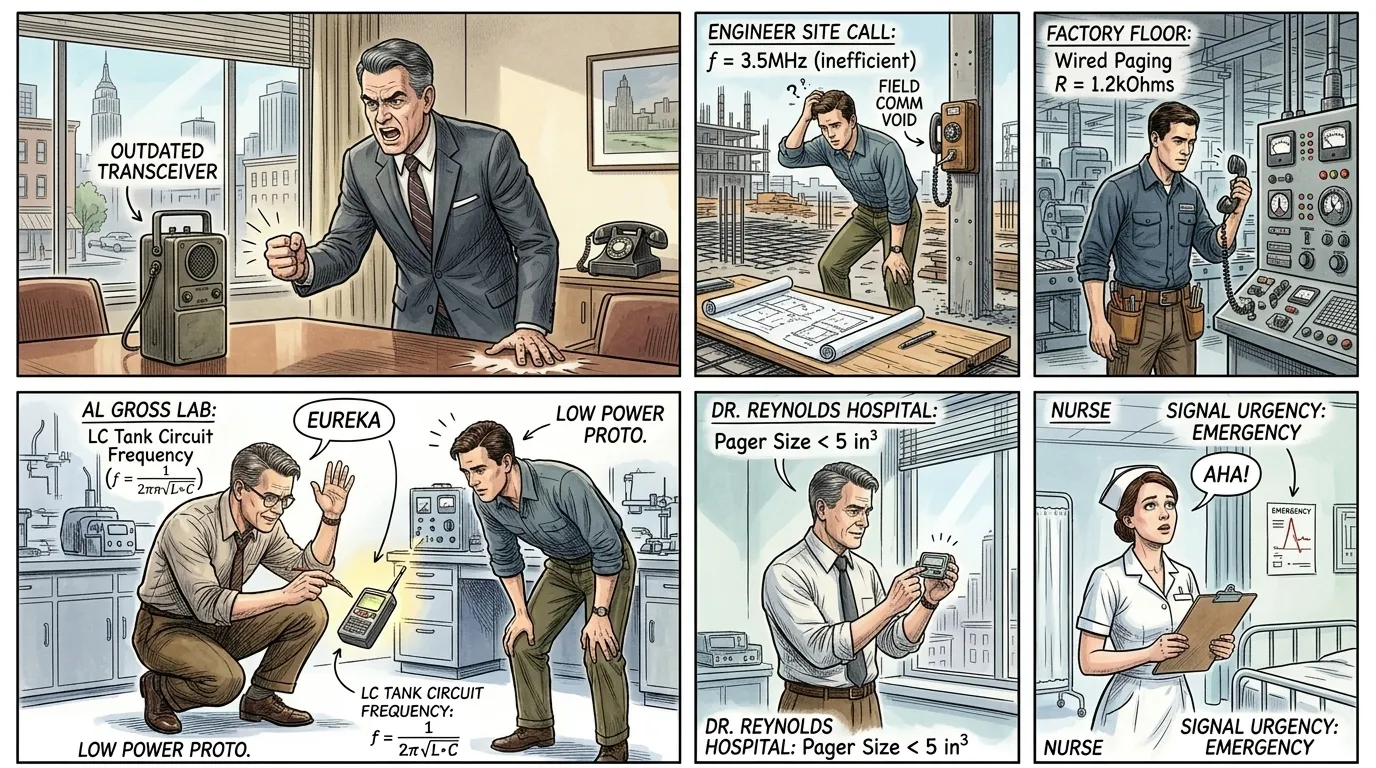
Beyond emergency services, a range of professions suffered from this communication void. Business executives traveling between meetings, engineers overseeing industrial processes across vast sites, or technicians on call often missed crucial updates. The existing solutions, like two-way radios, were too bulky, intrusive, and often required constant monitoring, ill-suited for discreet, personal alerts.
"One business leader, frustrated by missed opportunities, might have declared, "We need a way to send a silent signal, a discreet tap on the shoulder, not a blaring broadcast that interrupts everyone." The demand for a personal, unobtrusive notification system was becoming increasingly clear, driven by the escalating pace of modern industry and healthcare."
Page 4
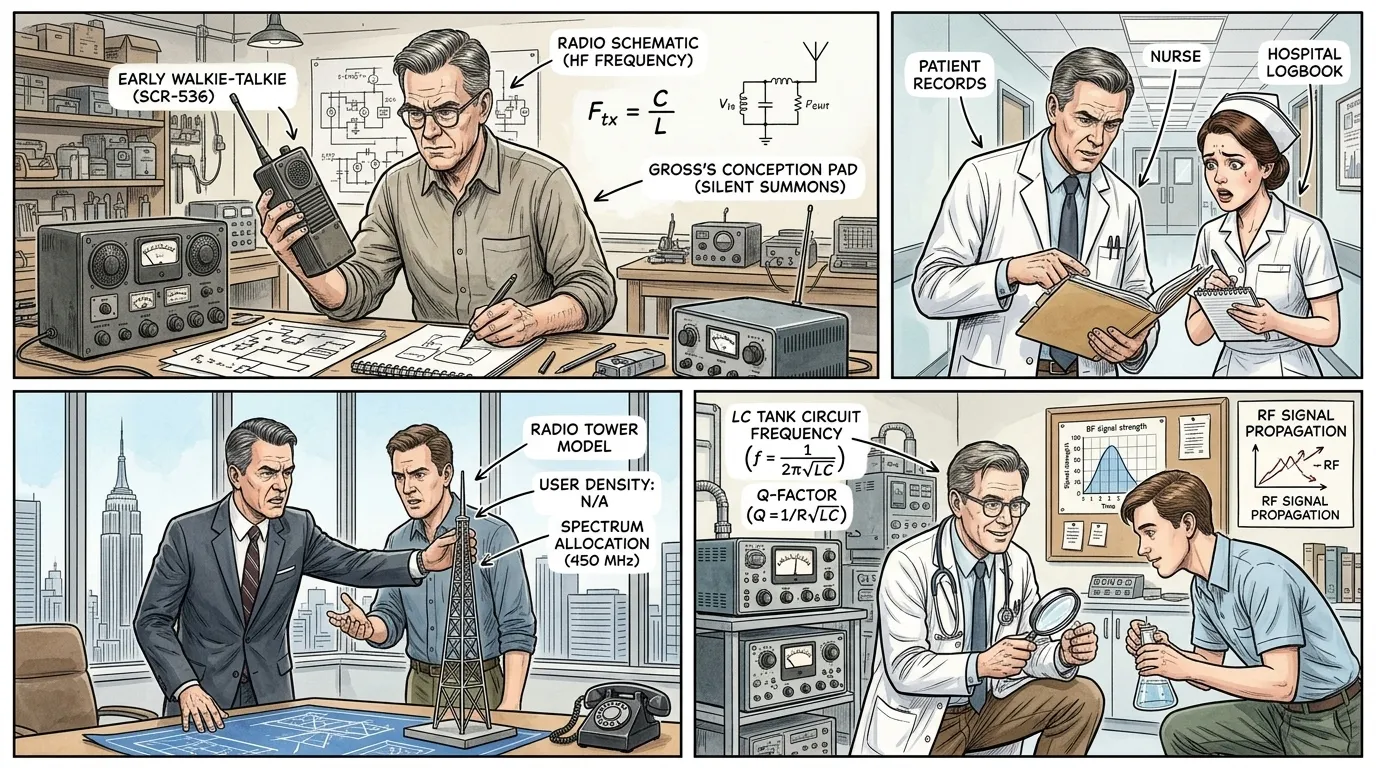
Alfred J. Gross, an American electrical engineer, was a self-taught radio enthusiast from a young age. By the 1930s, he had already pioneered early two-way radios, including the famous 'Walkie-Talkie' used by the U.S. military during World War II. His expertise lay in miniaturizing radio components and developing compact, portable communication devices. Yet, even with these successes, he recognized the limitations of bulky two-way communication for personal alerts.
"Gross, always pushing the boundaries of radio technology, realized that a simpler, one-way system held immense potential. He often mused, "If we can send voice, why can't we send a silent summons? A simple alert, a discrete notification, without the need for a bulky transceiver." His innovative mind sought to distill the essence of communication into its most fundamental form."
Page 5
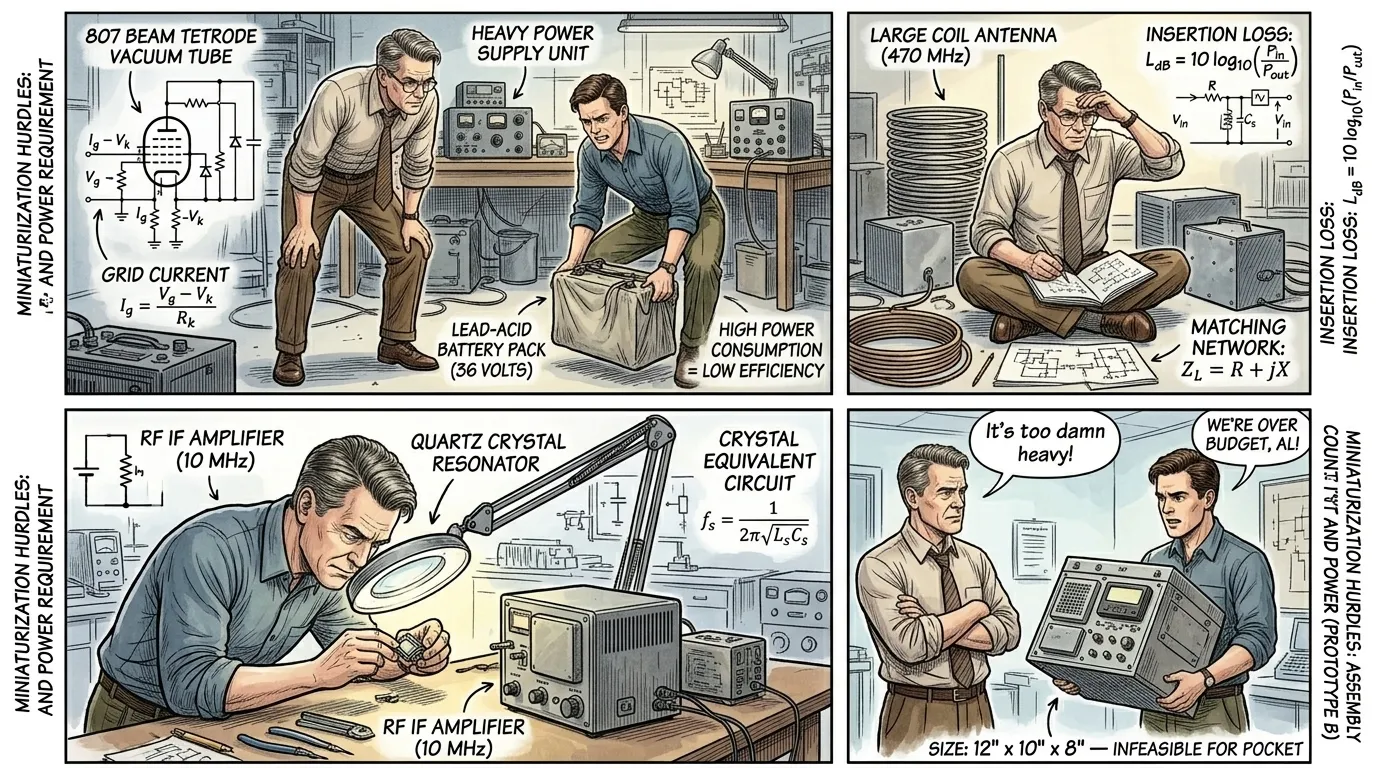
Developing the pager was not without significant hurdles. Early radio technology required bulky vacuum tubes and large power sources, making truly portable, pocket-sized devices a distant dream. Gross had to miniaturize components to an unprecedented degree while ensuring reliable signal reception over significant distances. Battery life was another formidable challenge, as constant radio reception drained power rapidly.
"Reflecting on the early stages, an engineer collaborating with Gross might have grimaced, stating, "The receivers were too large, the batteries too heavy, and the interference too great. We needed breakthroughs in every single component to make this viable for personal use." This candid assessment underscores the extensive iterative design and material science challenges that defined the early development phase."
Page 6
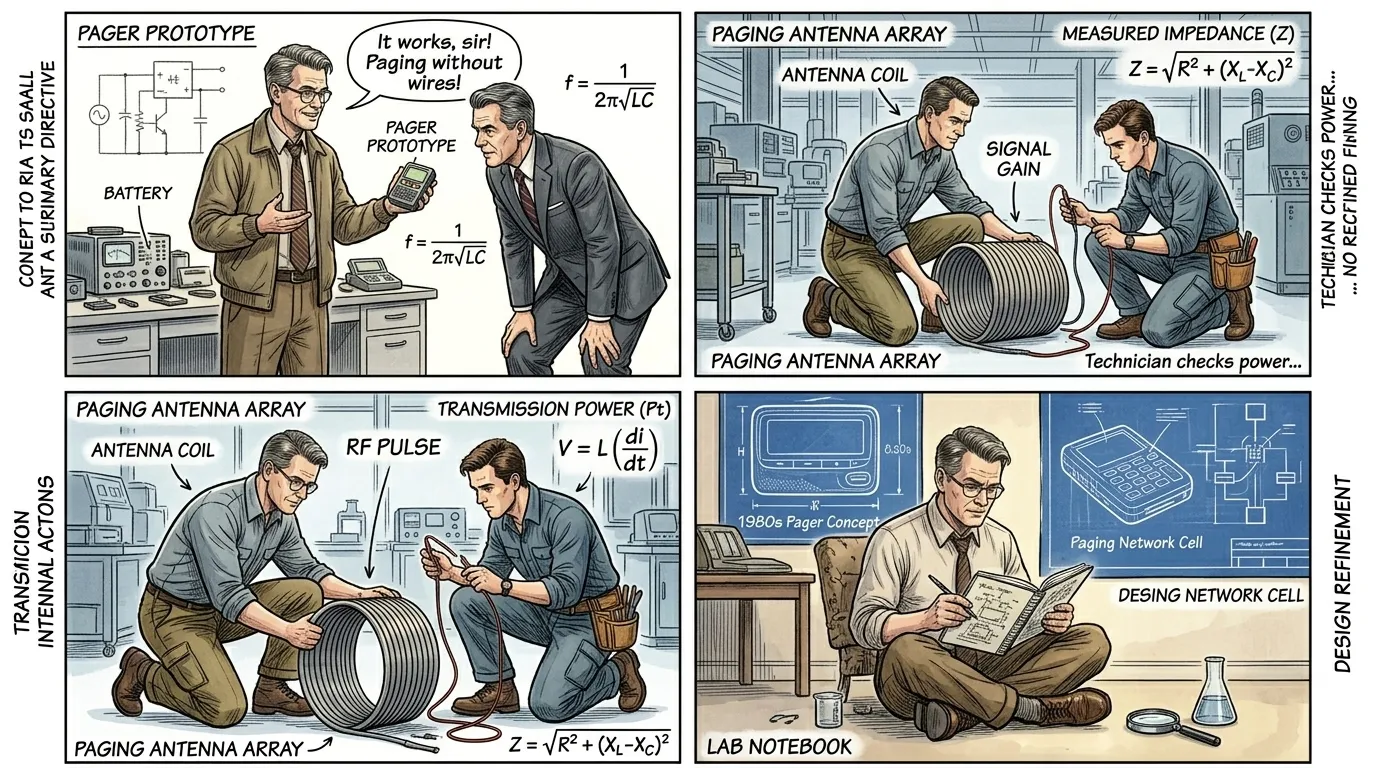
Gross's breakthrough involved a simplified radio receiver capable of picking up a specific frequency. When a central dispatcher needed to contact someone, they would broadcast a unique audio tone over a dedicated radio frequency. The pager, continuously monitoring this frequency, would recognize its assigned tone. Upon detection, it would emit an audible beep, signaling the wearer.
""It's about dedicated frequency and tone," Gross would explain, demonstrating the device to an early investor. "Each pager listens only for its specific sequence. No constant monitoring required by the user, only a simple, unmistakable alert when needed." This elegant solution eliminated the need for complex displays or two-way communication, focusing solely on efficient notification."
Page 7
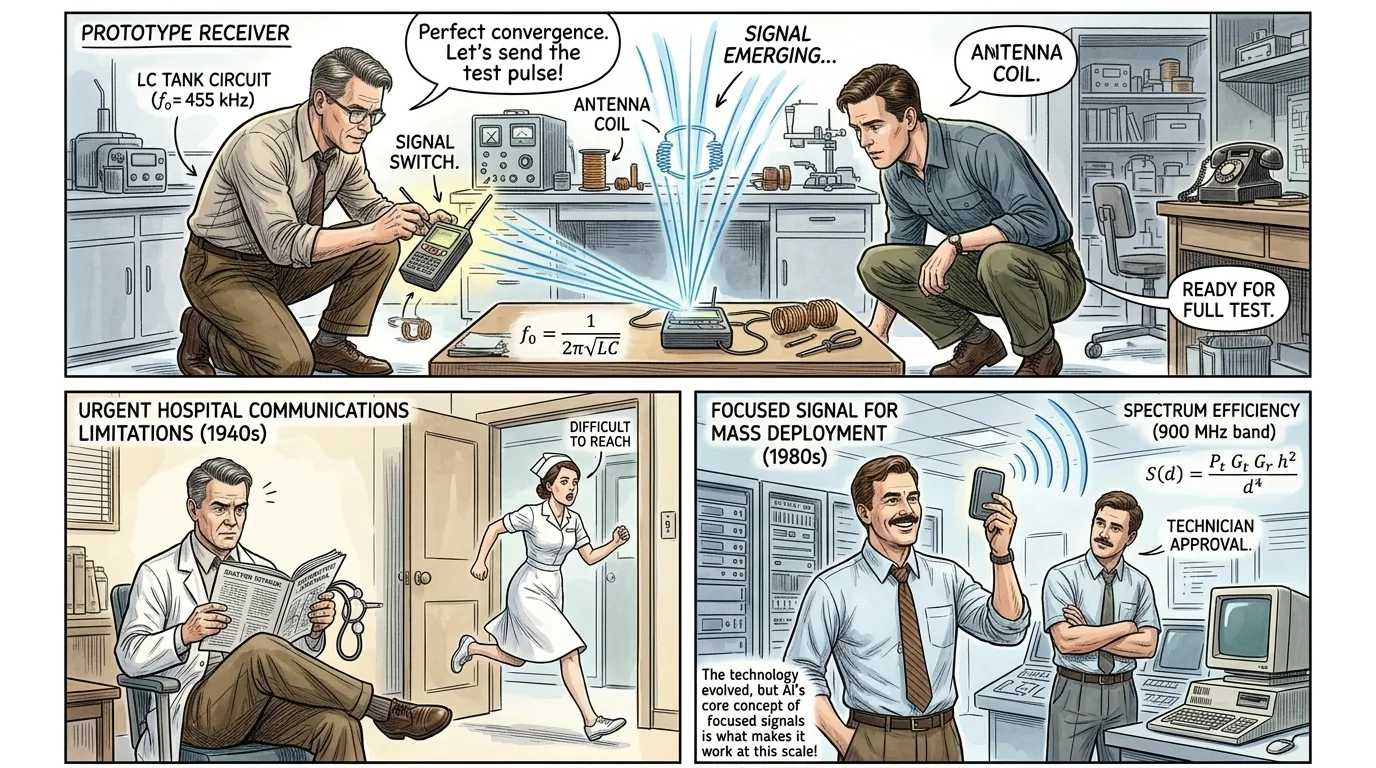
The operation was ingeniously simple. A central transmitting station, often located at a hospital or a large corporate campus, would broadcast signals. Each pager was programmed with a unique frequency or a combination of tones. When the dispatcher wanted to alert a specific individual, they would activate the transmitter, sending out that individual's unique signal. The pager, constantly scanning, would identify its unique signature, activate a small vibrator or speaker, and alert the wearer.
""This isn't just noise," a technician might elaborate to a new user, "it's a targeted communication. Your pager listens for its specific electronic fingerprint. It ignores all other signals, ensuring you only get the alerts meant for you." This selective reception was key to its practical functionality, preventing a cacophony of unwanted notifications in a shared radio space."
Page 8
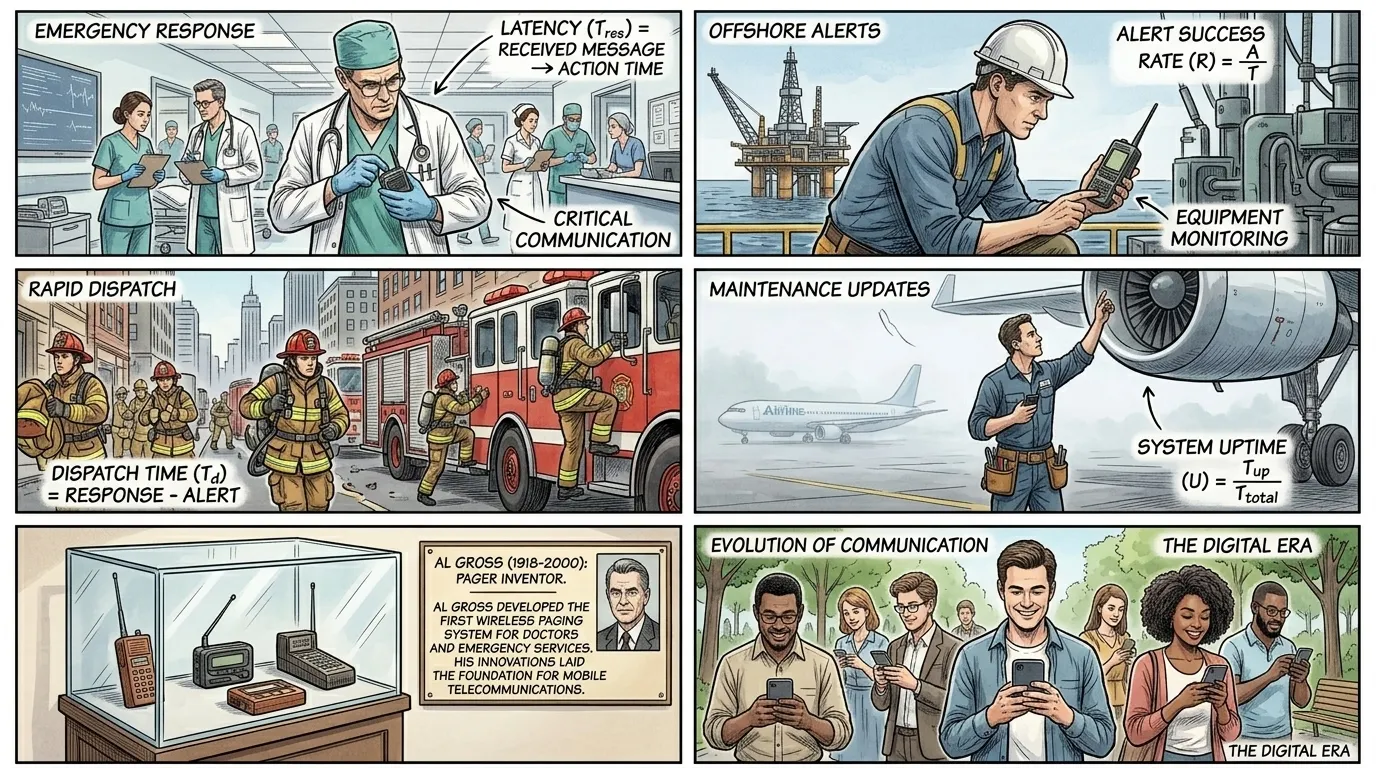
The pager found its initial and most critical application in hospitals. Doctors, who previously had to be paged over public address systems or manually tracked down, could now be reached instantly and discreetly. This dramatically improved response times for emergencies, allowing medical staff to remain mobile within the hospital while staying connected. The first commercial pager system, developed by Motorola, debuted in St. Thomas's Hospital in New York City in 1950.
"Dr. Max Miller, a pioneering user at St. Thomas's, reportedly stated, "This device has given us back precious minutes, minutes that save lives." This early endorsement underscored the profound impact of the pager, transforming hospital logistics and patient care by enabling swift coordination among medical teams."
Page 9
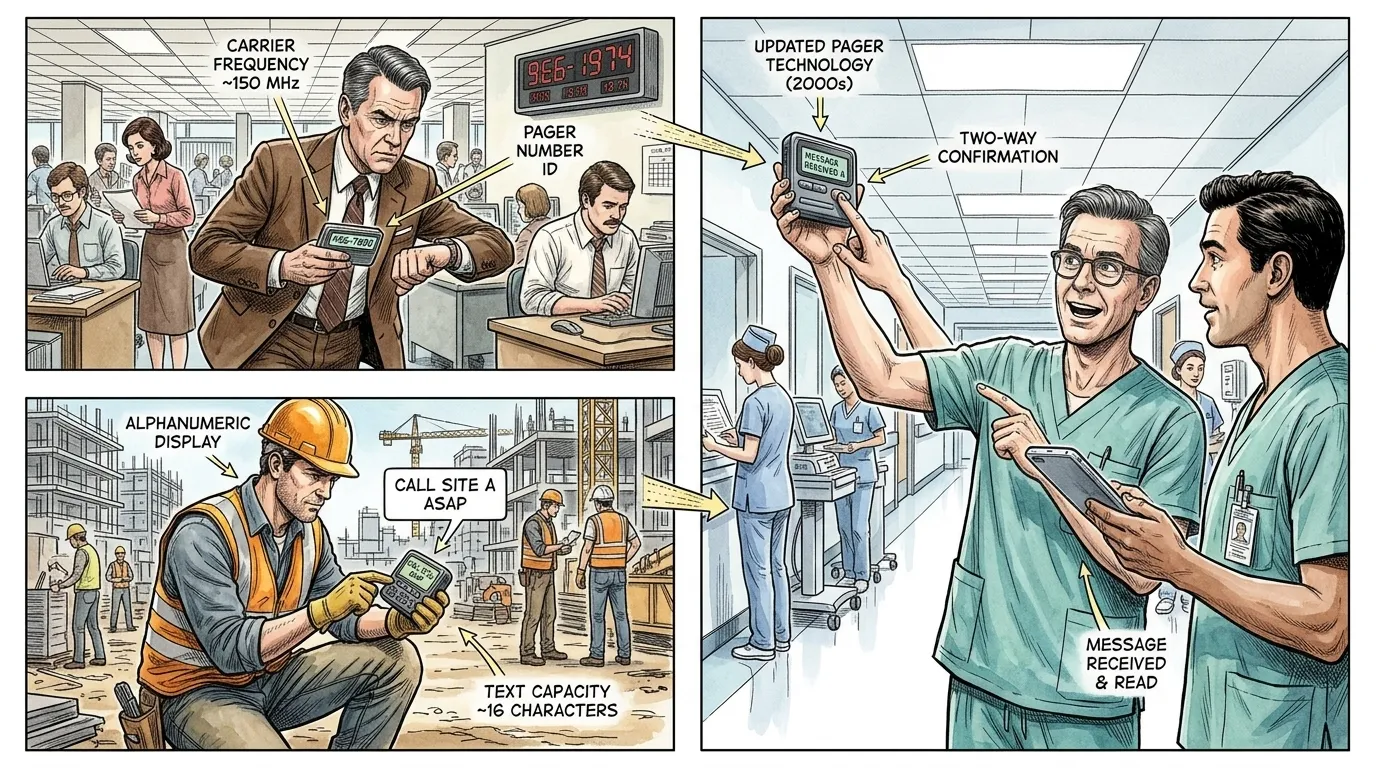
From basic tone-only devices, pagers rapidly evolved. Numeric pagers, displaying short phone numbers or codes, emerged in the 1970s, followed by alphanumeric pagers capable of receiving short text messages in the 1980s. They became indispensable tools across various industries: emergency services, construction, logistics, and field service. For decades, the pager was synonymous with immediate, reliable, one-way communication.
"A telecom engineer from the 1980s, perhaps presenting a new model, might have proudly announced, "We've moved beyond simple beeps; now we deliver information directly. This device means you're always just a message away from critical data, no matter where your work takes you." This advancement cemented the pager's role as a vital link in the information chain before the era of widespread mobile phones."
Page 10
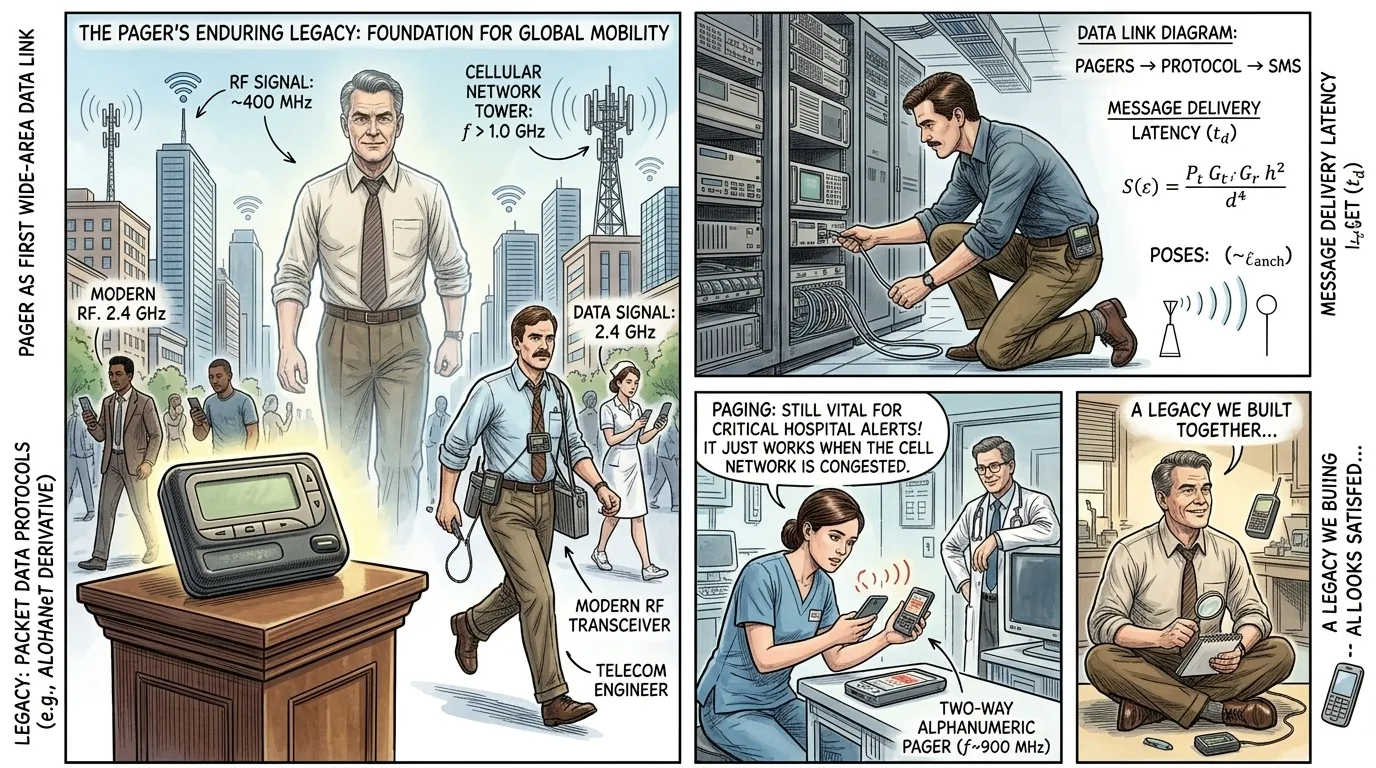
While cell phones eventually superseded pagers for most consumer use, the pager's legacy is undeniable. It established the cultural expectation of instant, personal reachability. Critical infrastructure still utilizes pagers for their reliability, long battery life, and superior signal penetration, especially in environments where cell service is unreliable. The pager laid the essential groundwork for mobile communication, proving the immense value of being always connected.
"The profound shift brought about by Al Gross's invention resonates even today. As one communications historian aptly put it, "The pager didn't just notify; it transformed our perception of accessibility, paving the way for a truly mobile society." Its impact on modern life, from critical care to everyday connectivity, remains a testament to its groundbreaking design and the enduring human need to communicate across distances."
About this story
- Location: Global
- Audience: general readers
Questions and answers
Read Wonder Inventions on your phone
Wonder Inventions is available on Android. Get Wonder Inventions on Google Play.