Numerical Control Machine
Numerical Control Machine — an illustrated inventions story, set in Global. 10 illustrated pages, free to read on Wonder Inventions.
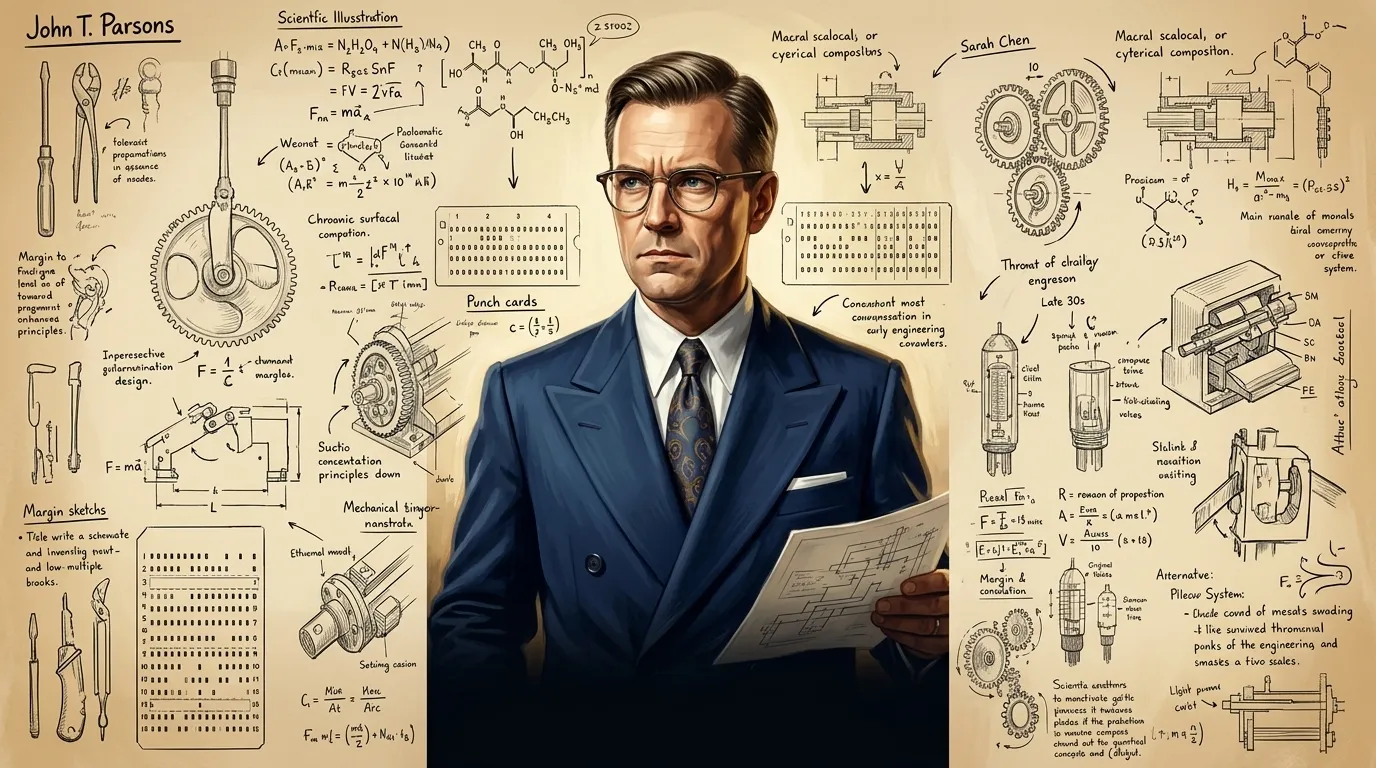
Page 1
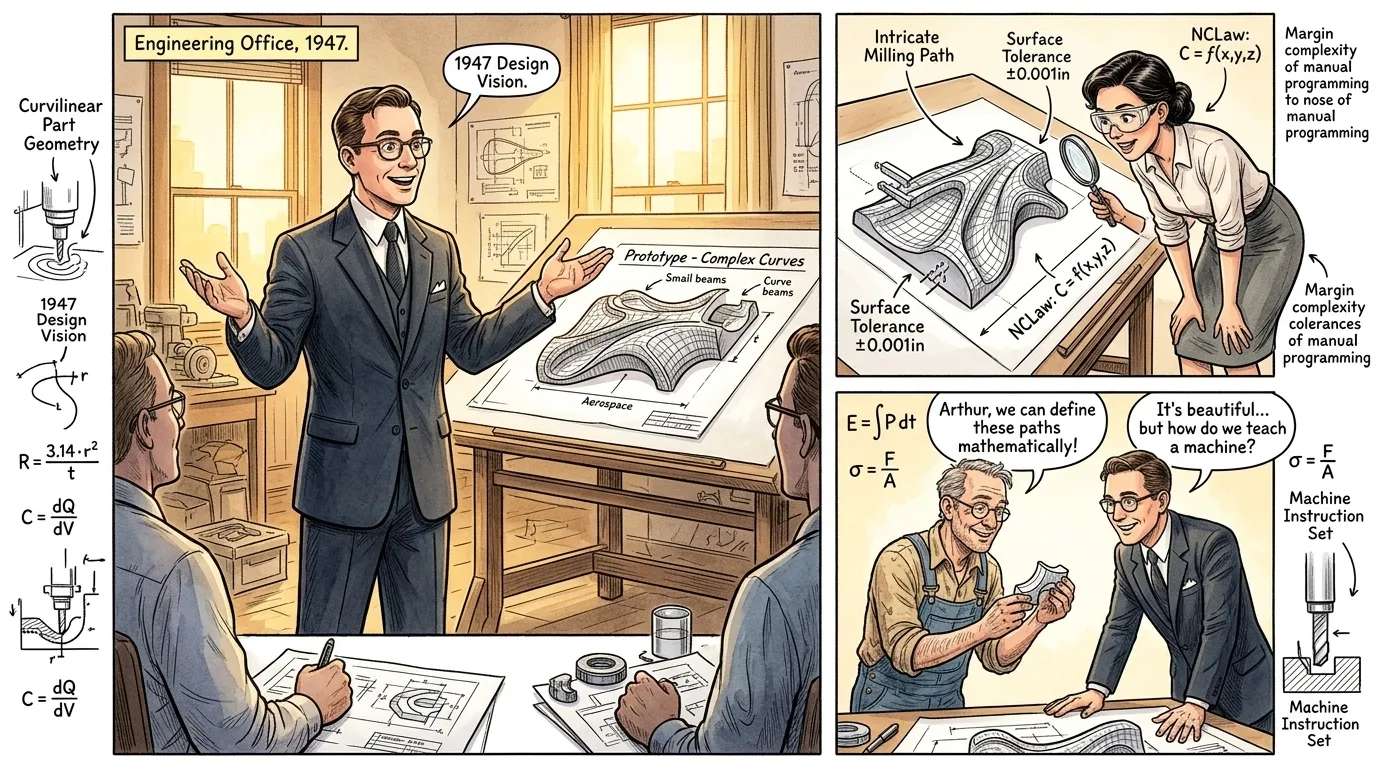
The year is 1947, Michigan, USA. The burgeoning aerospace industry faced an intractable challenge: manufacturing intricate, curvilinear components with unparalleled accuracy and repeatability. Traditional machining, reliant on skilled human operators and intricate templates, struggled to meet the demands of supersonic flight and complex missile guidance systems. The margin for error was infinitesimal, and consistency across thousands of parts was nearly impossible to achieve, threatening the very foundations of advanced engineering.
""The shapes we need for these new aircraft," explained John T. Parsons, founder of the Parsons Corporation, to his engineers, "are beyond what any human hand can reliably reproduce. We need a new way to guide the cutters, something far more precise and automated.""
Page 2
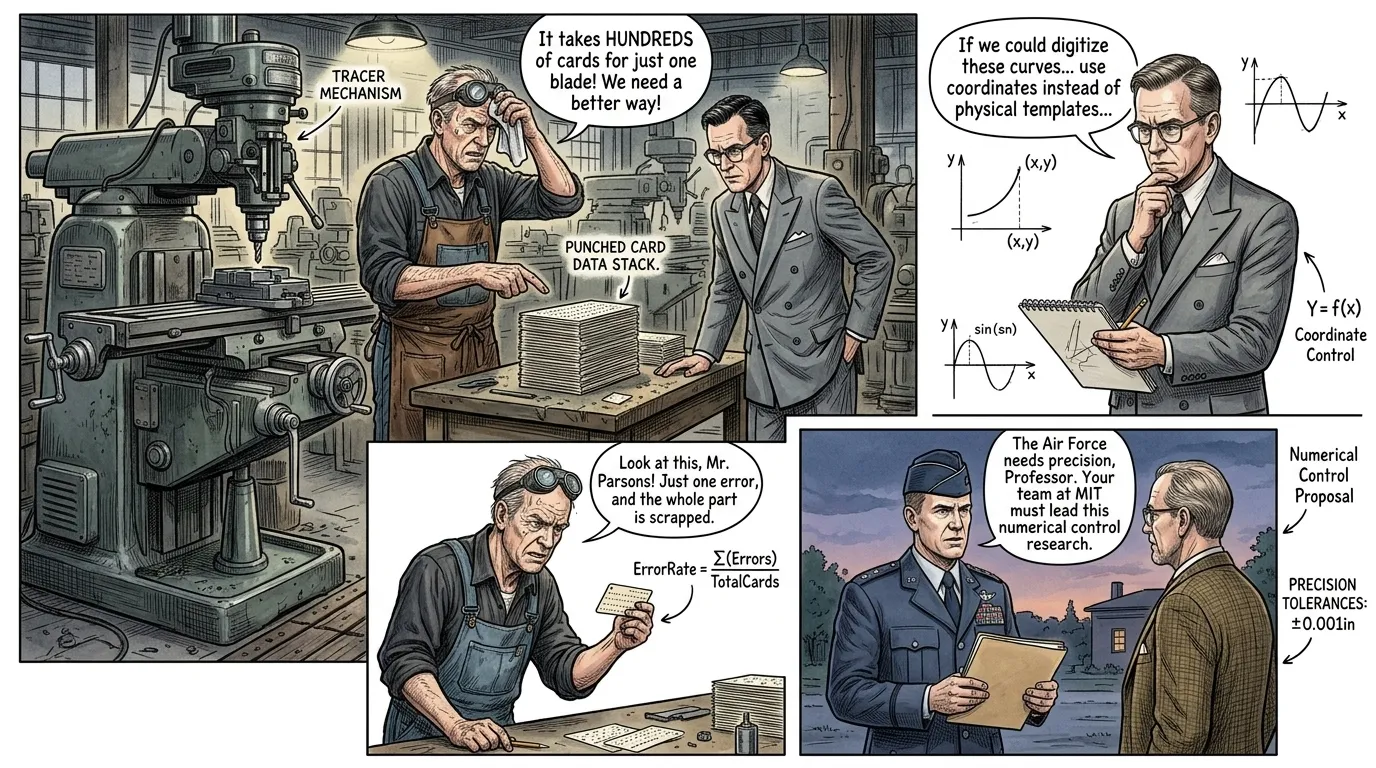
Before the advent of numerical control, precision manufacturing was an art form, a testament to human skill honed over years. Machinists relied on physical templates, meticulously guiding cutting tools along predetermined paths. This process, known as tracer milling, was slow, prone to cumulative errors, and incredibly expensive due to the high labor cost and material waste from imperfect parts. Each complex part, like an aircraft propeller or turbine blade, demanded hours of painstaking work, and even then, slight variations between 'identical' components were unavoidable.
""Can you imagine," a veteran machinist, Arthur Jenkins, lamented, wiping sweat from his brow, "spending a full day on one complex curve, only for the next blade to be just slightly off? There's no perfect repeatability with a human touch. We need a 'digital template,' something unwavering." He points to a stack of punched cards on a workbench."
Page 3
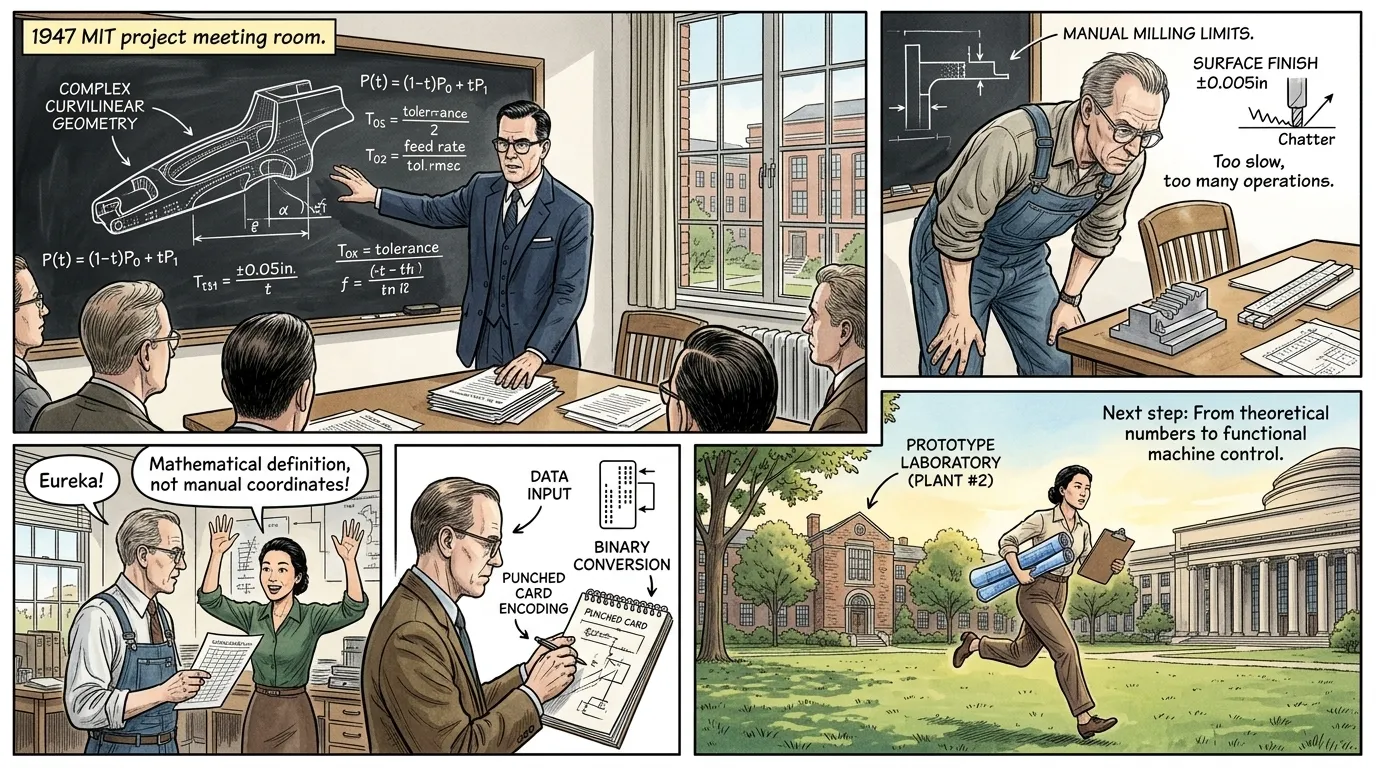
The pressure to mass-produce highly complex, dimensionally accurate parts intensified after World War II, particularly for military applications. The demand for intricate aircraft components, requiring exact curvature and consistent weight distribution, exposed the limitations of existing manufacturing techniques. Even the most skilled artisans could not guarantee the consistent perfection required for aerospace reliability. This fundamental problem spurred Parsons to conceive a radical new approach: guiding machine tools with precise, pre-programmed data rather than human hands.
""We recognized," John Parsons explained during a project meeting, "that the problem wasn't the machinist's skill, but the inherent variability of manual control. We needed to remove that variable, to encode the precision. The crucial insight, as the British mathematician Charles Babbage once articulated in the 19th century, is that 'accuracy of calculation is the soul of all machinery.' We had to find a way to make the machine itself 'calculate' its path.""
Page 4
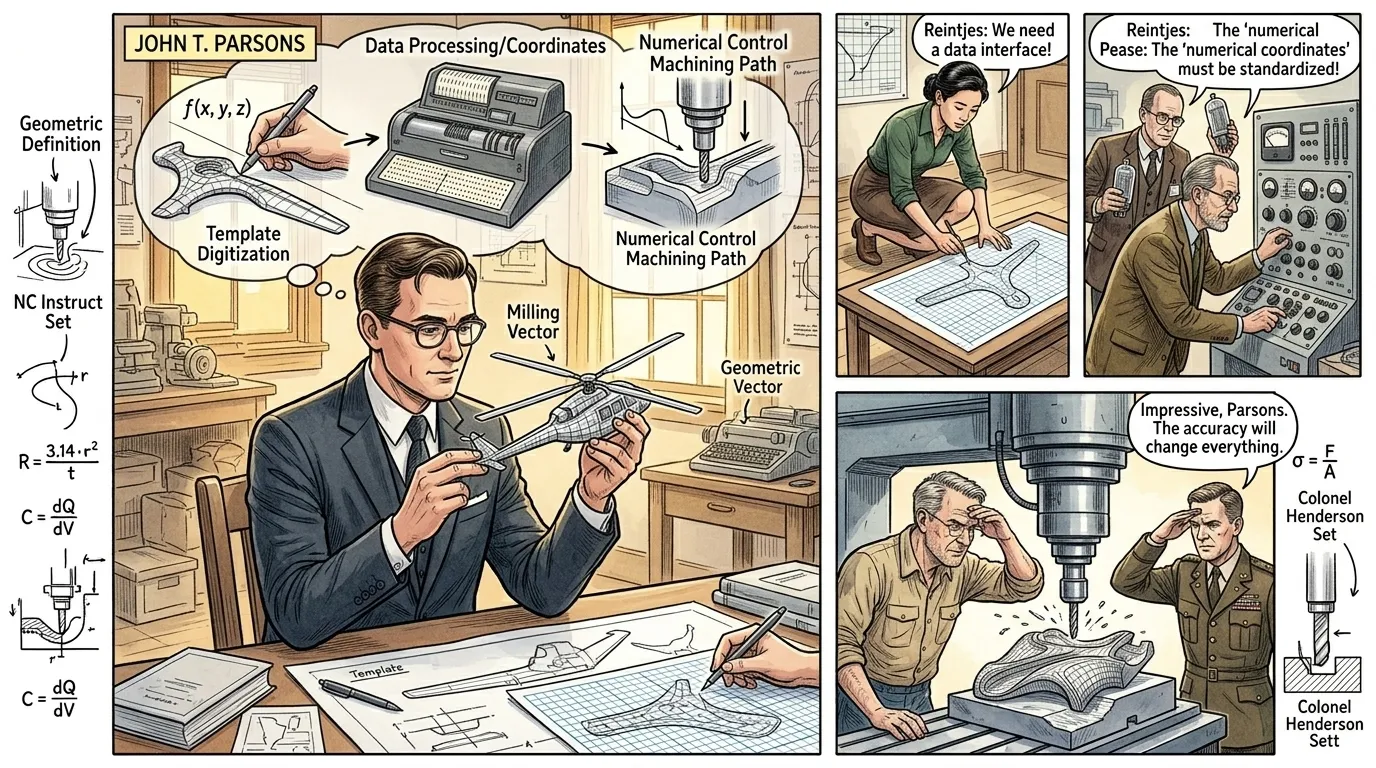
John T. Parsons, an inventor and entrepreneur with a background in engineering, first conceived the core idea of Numerical Control (NC) in 1947. His initial contract with the U.S. Air Force was to develop a method for making templates for helicopter rotor blades more efficiently. Parsons realized that instead of physically guiding a tracer, he could use punched-card tabulating machines to calculate the coordinates of thousands of points along the blade's surface. These coordinates could then drive a machine, moving the cutter incrementally along a precisely calculated path, eliminating human error.
""My original thought," Parsons reflected in an interview years later, "was to automate the making of templates. But then I saw the deeper potential: why make the template at all if the machine could read the data directly? It was a leap from reproducing a physical model to generating a part from pure information.""
Page 5
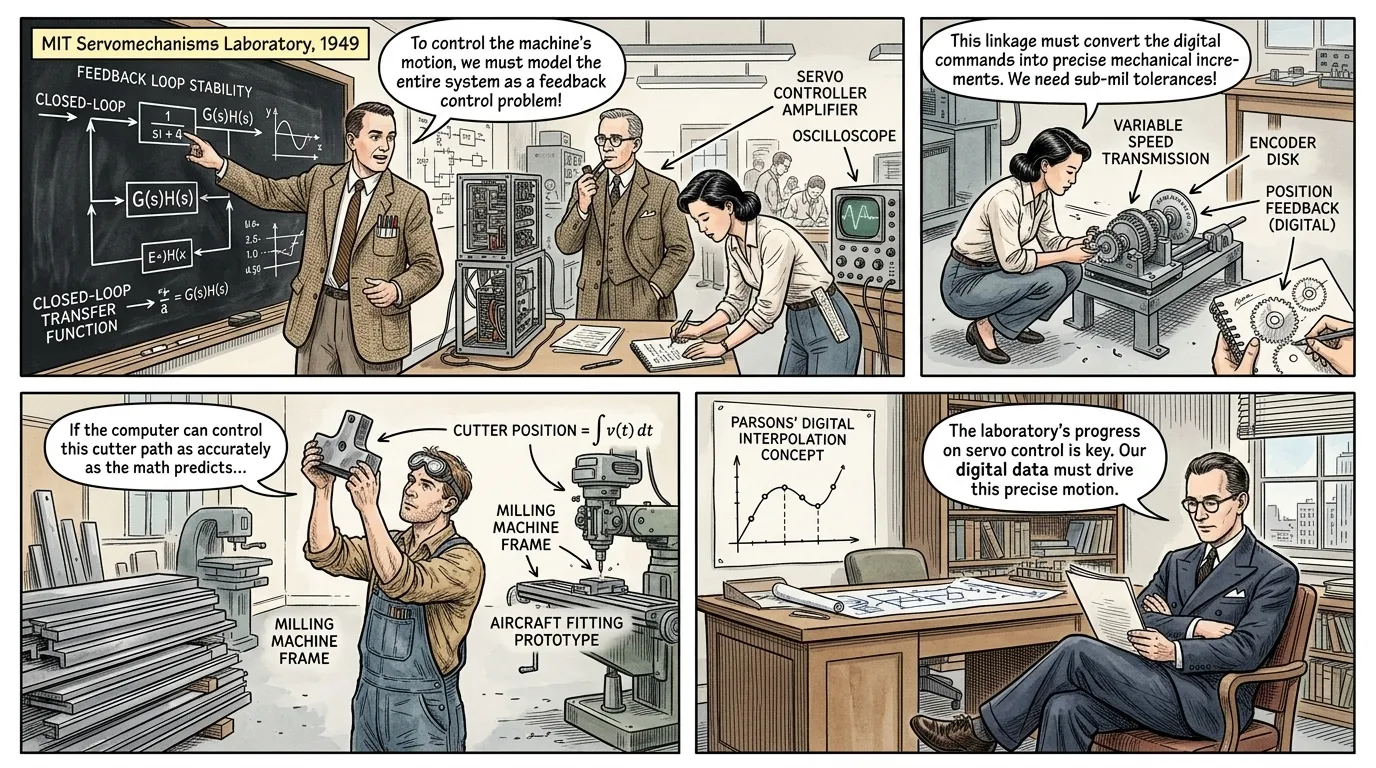
Parsons' revolutionary concept quickly gained traction with the U.S. Air Force, who saw its potential for missile and aircraft manufacturing. They awarded a contract to the Massachusetts Institute of Technology (MIT)'s Servomechanisms Laboratory in 1949 to develop the practical implementation of Parsons' idea. The MIT team, led by Professors J. Francis Reintjes and William M. Pease, faced the monumental challenge of translating abstract numerical data into the precise, continuous mechanical motion of a machine tool. This was where the critical engineering hurdles lay.
""The Air Force's demand was unequivocal," Professor Pease explained to his team, gesturing towards complex diagrams on a blackboard. "They needed a machine that could interpret thousands of data points and then move with absolute accuracy. This wasn't just about reading numbers; it was about creating a dynamic control system. The servomechanisms, the feedback loops – that's where the magic, or rather, the engineering, happens.""
Page 6
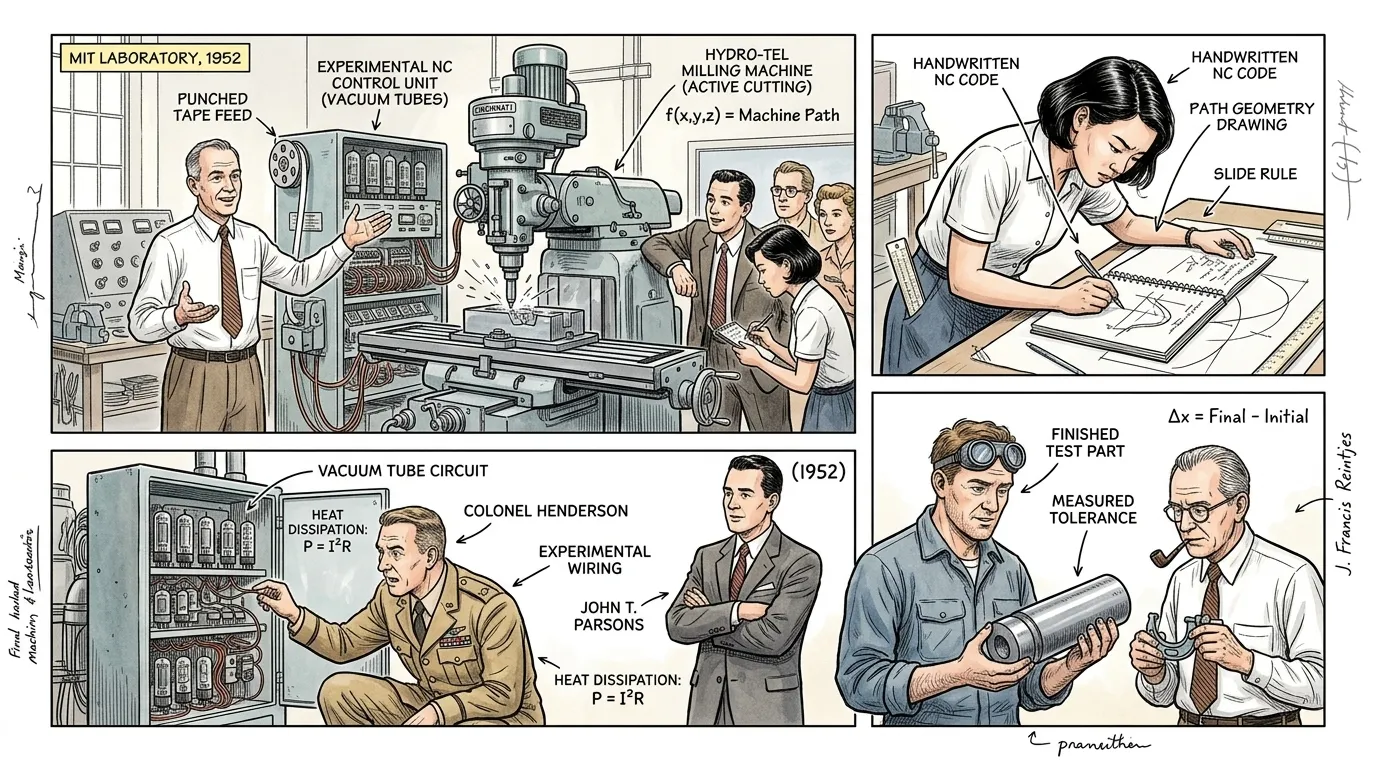
By 1952, the MIT team unveiled its groundbreaking prototype: a Cincinnati Hydro-Tel milling machine retrofitted with their experimental control system. The core innovation lay in the integration of electronic servomechanisms. These sophisticated feedback systems allowed the machine to precisely interpret instructions from punched tape, continuously adjusting the movement of its cutting tool along three axes (X, Y, and Z). Each hole pattern on the tape represented a specific coordinate, and the servomechanisms ensured the machine reached that exact point and moved to the next with incredible fidelity.
""Imagine," Pease told visitors during a demonstration, "a stream of digital information feeding into the machine, telling it precisely where to move, moment by moment. The servomechanism acts like an extremely obedient driver, constantly checking its position against the command and correcting any deviation. It closes the loop, ensuring accuracy that human hands simply cannot match." He gestures to a visible part of the control unit."
Page 7
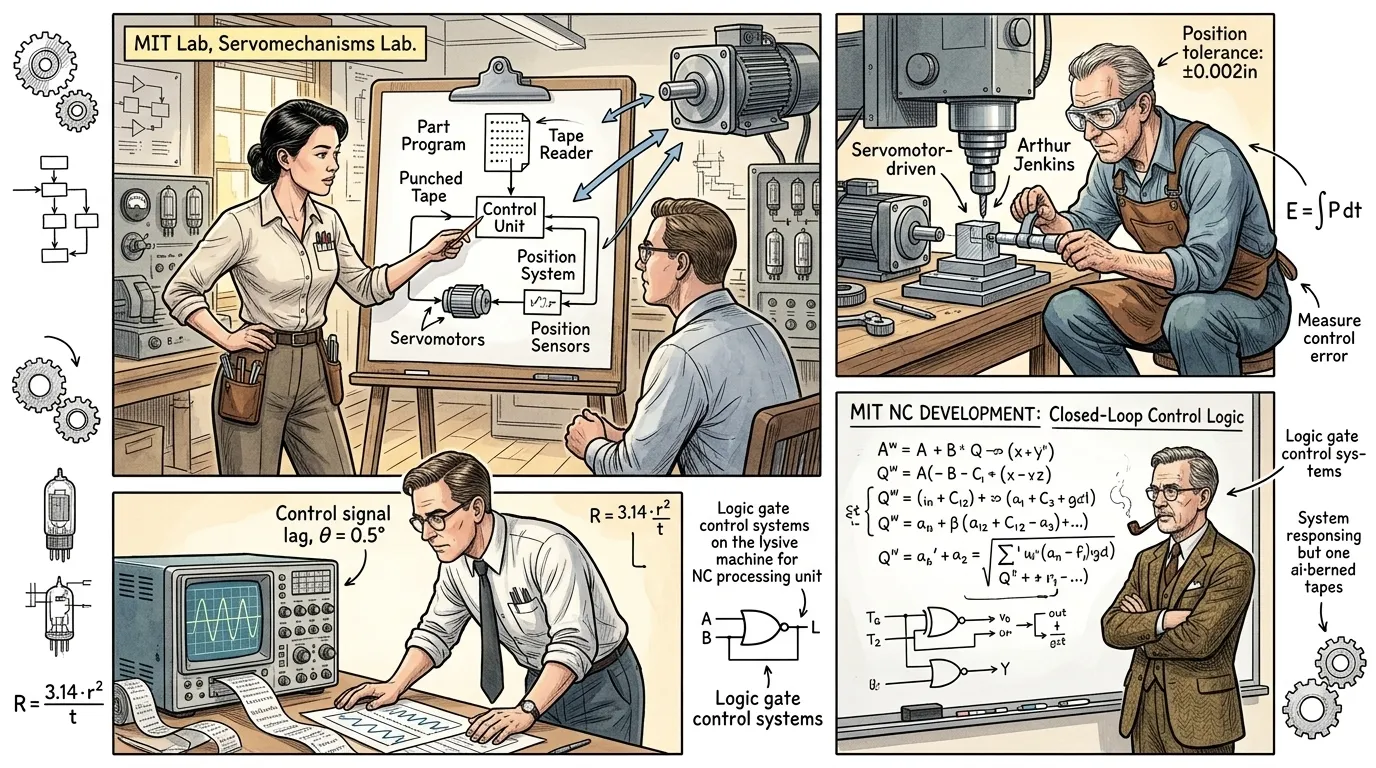
The Numerical Control machine's operation was a marvel of electromechanical engineering. It began with a part program, a sequence of instructions (often in G-code) derived from engineering drawings. This program was then encoded onto punched paper tape. The tape reader, an optical or mechanical device, translated the holes into electrical pulses. These pulses fed into a control unit, which then sent precise analog signals to powerful servomotors connected to each of the machine's axes. Crucially, position sensors on each axis provided constant feedback to the control unit, verifying actual position against commanded position. Any discrepancy was immediately corrected, ensuring absolute precision.
""This feedback loop," an MIT engineer, Sarah Chen, explains to a colleague, pointing to a simplified schematic, "is what makes it truly 'controlled.' Without it, the machine would simply follow open-loop commands, prone to drift and error. The sensors are the machine's 'eyes,' constantly confirming its reality against the digital ideal. This continuous self-correction is the foundation of its unwavering accuracy.""
Page 8
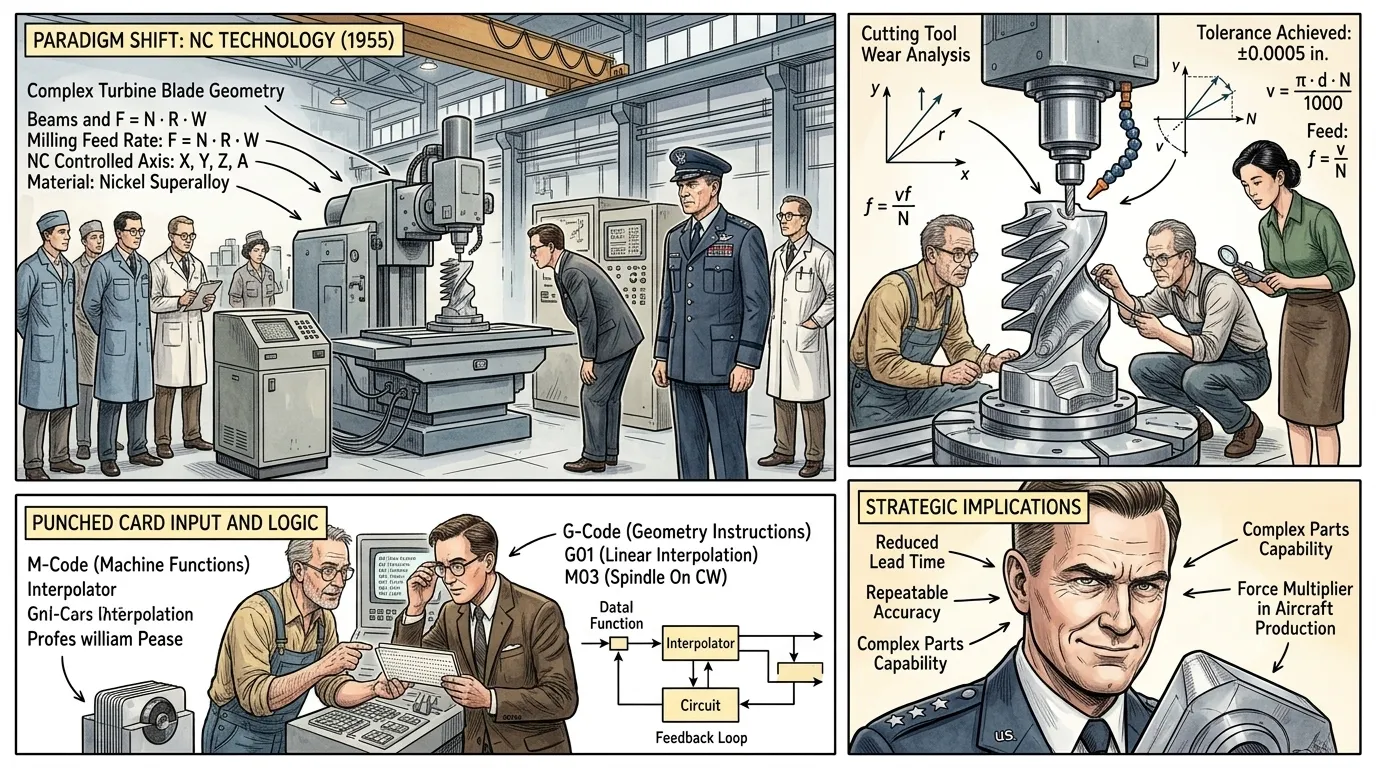
The demonstration of the MIT prototype in 1952 heralded a new era in manufacturing. The U.S. Air Force, recognizing its immense strategic value, quickly adopted NC technology. It allowed for the creation of intricate aircraft and missile components with unprecedented speed and accuracy, far surpassing human capabilities. This transition from manual skill to programmed precision marked a paradigm shift, moving manufacturing from 'hard automation,' where machines performed only fixed tasks, to 'soft automation,' where machines could be reprogrammed for diverse jobs. The impact on defense manufacturing was immediate and profound.
""The Air Force," a military procurement officer, Colonel Henderson, remarked at an early NC facility in 1955, observing a complex part being milled flawlessly, "understands that true strength lies not just in firepower, but in the precision of its components. As the Roman philosopher Seneca the Younger said, 'Every new beginning comes from some other beginning's end.' This machine is the end of an era of manual limitations and the beginning of unparalleled industrial capability.""
Page 9
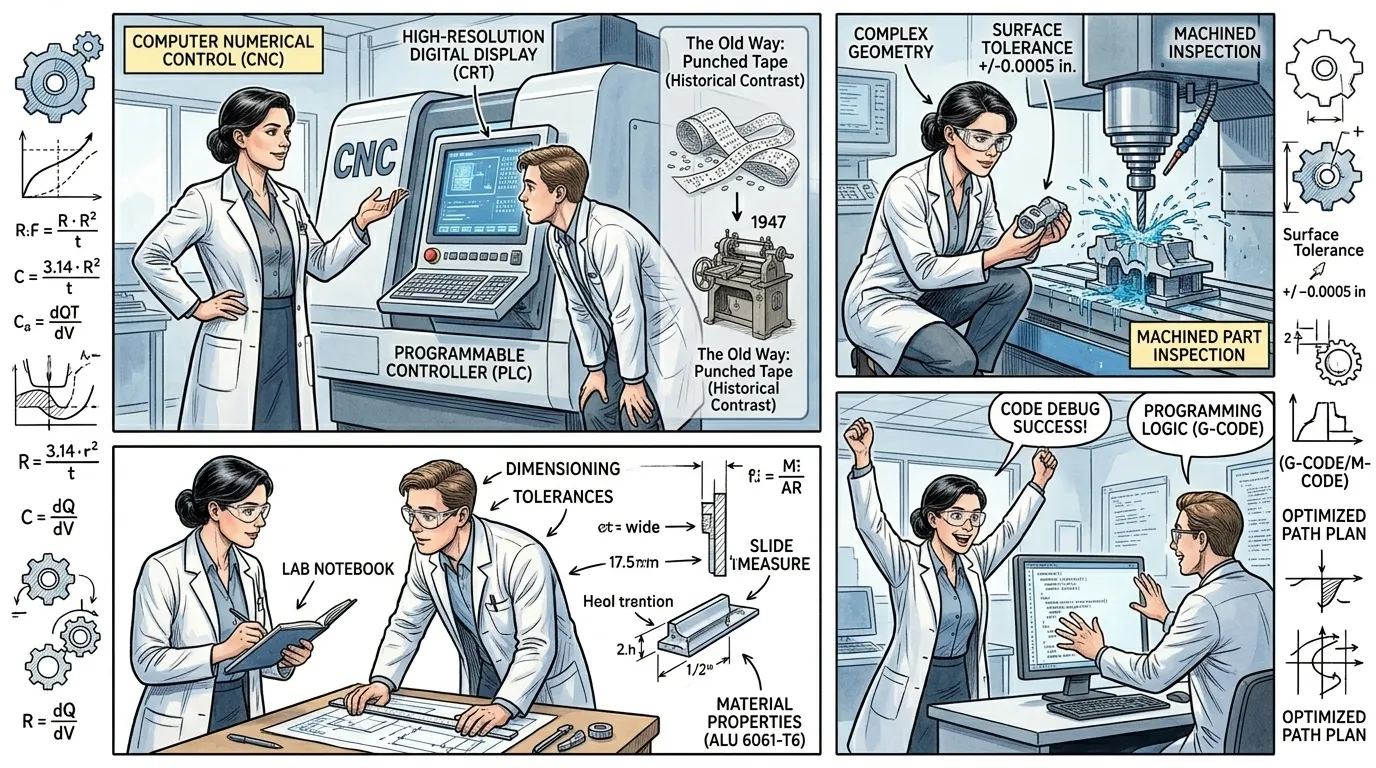
The initial Numerical Control machines, while revolutionary, were expensive and cumbersome, often requiring rooms full of dedicated electronics. However, the relentless march of computing power rapidly transformed NC technology. The introduction of microprocessors in the 1970s led to the development of Computer Numerical Control (CNC). Instead of punched tape, entire programs could be stored and executed directly by an onboard computer. This vastly increased flexibility, simplified programming, and made NC technology accessible to a far broader range of industries, from automotive to medical device manufacturing.
""The leap from punched tape to integrated computing," Dr. Eleanor Vance, a lead engineer at a modern CNC facility in the 1980s, explained to a new technician, "was nothing short of transformative. It wasn't just about faster processing; it was about integrating design and manufacturing seamlessly. We could now create prototypes in days, not weeks, and adapt production lines with unprecedented agility. It democratized precision.""
Page 10
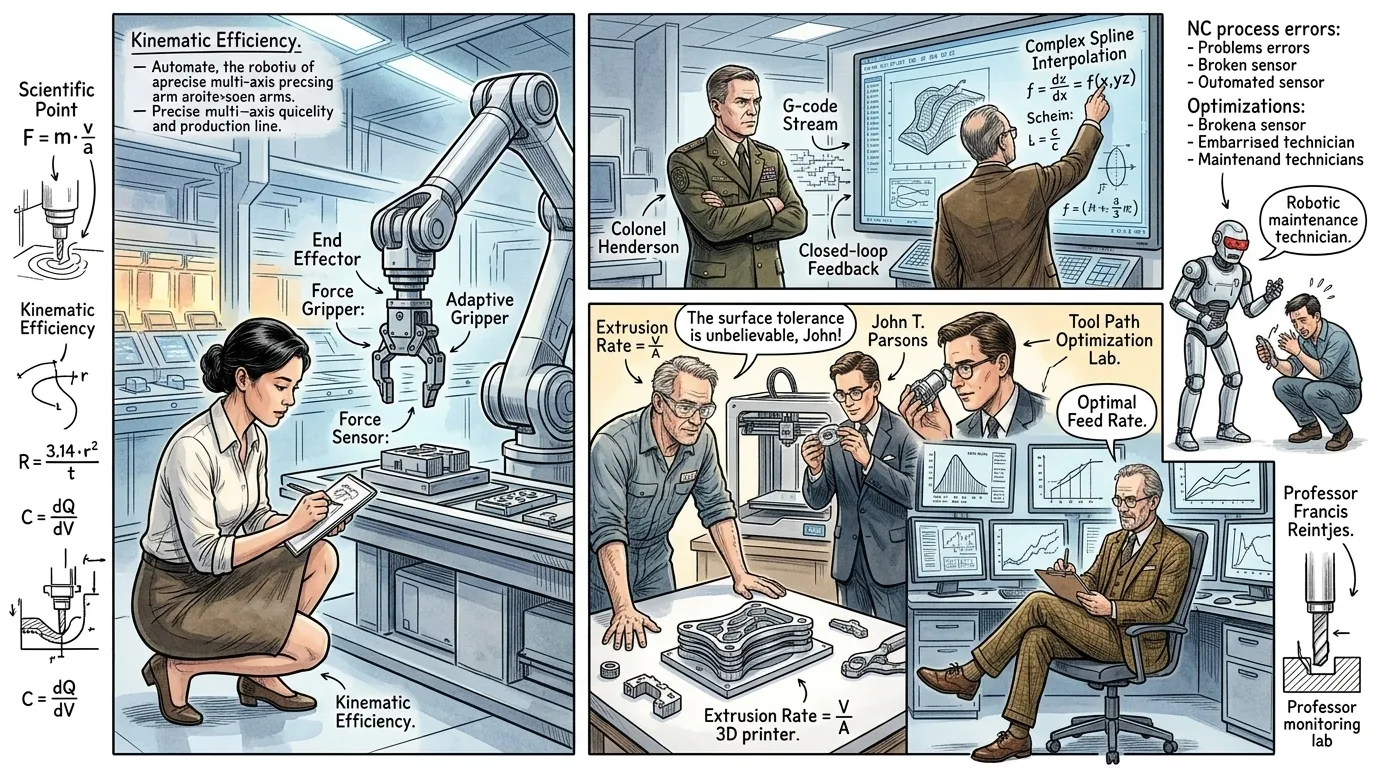
The Numerical Control machine, conceived by John T. Parsons and realized by MIT, laid the indispensable foundation for modern automated manufacturing. Its principles—digital control, feedback loops, and programmed precision—are embedded in every aspect of contemporary industry. From automated assembly lines and robotic arms to advanced 3D printing and sophisticated CAD/CAM systems, NC's legacy is ubiquitous. It enabled the production of complex components with consistency and efficiency previously unimaginable, driving technological progress and fundamentally reshaping the global industrial landscape. The shift from manual skill to digital instruction continues to define our manufacturing future.
About this story
- Location: Global
- Audience: general readers
Questions and answers
Read Wonder Inventions on your phone
Wonder Inventions is available on Android. Get Wonder Inventions on Google Play.