Federico Fellini
Federico Fellini — an illustrated biography story, set in Global. 10 illustrated pages, free to read on Wonder People.
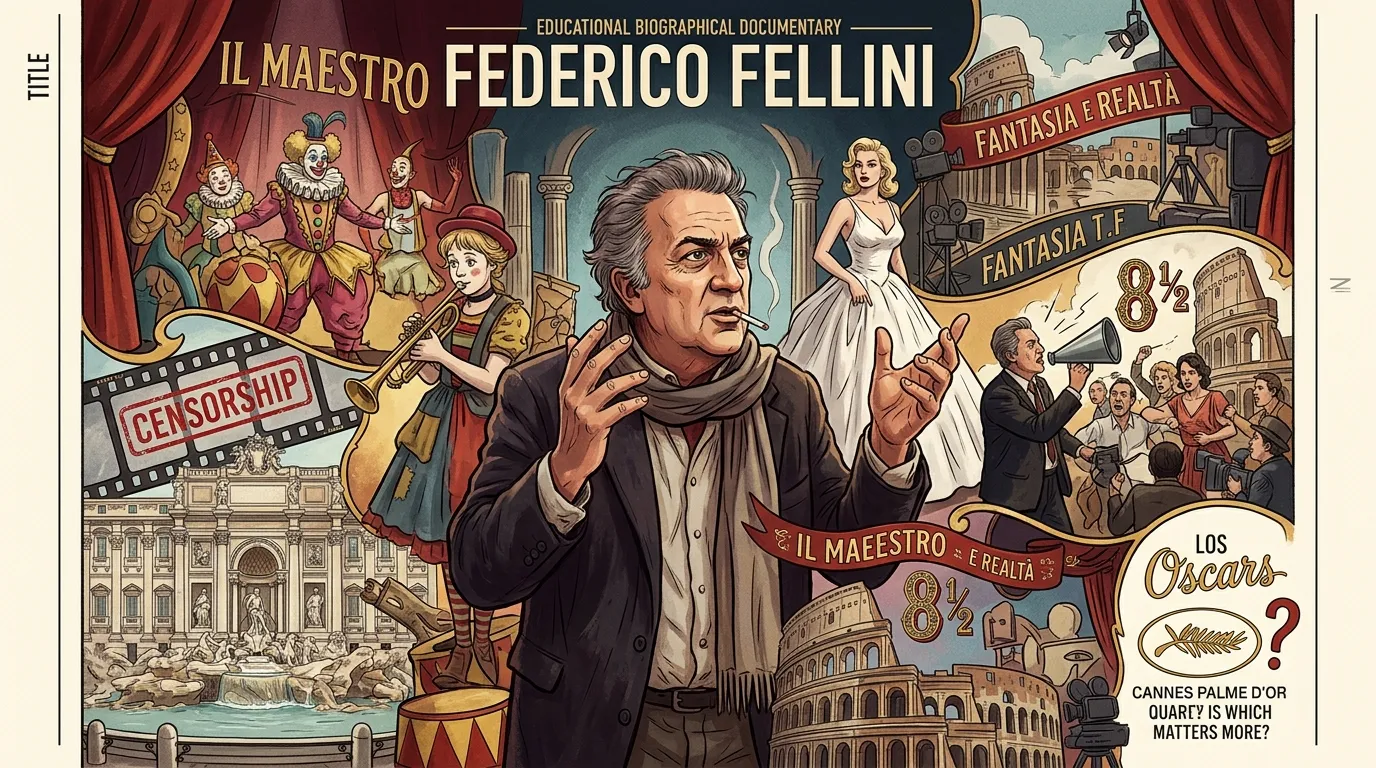
Page 1
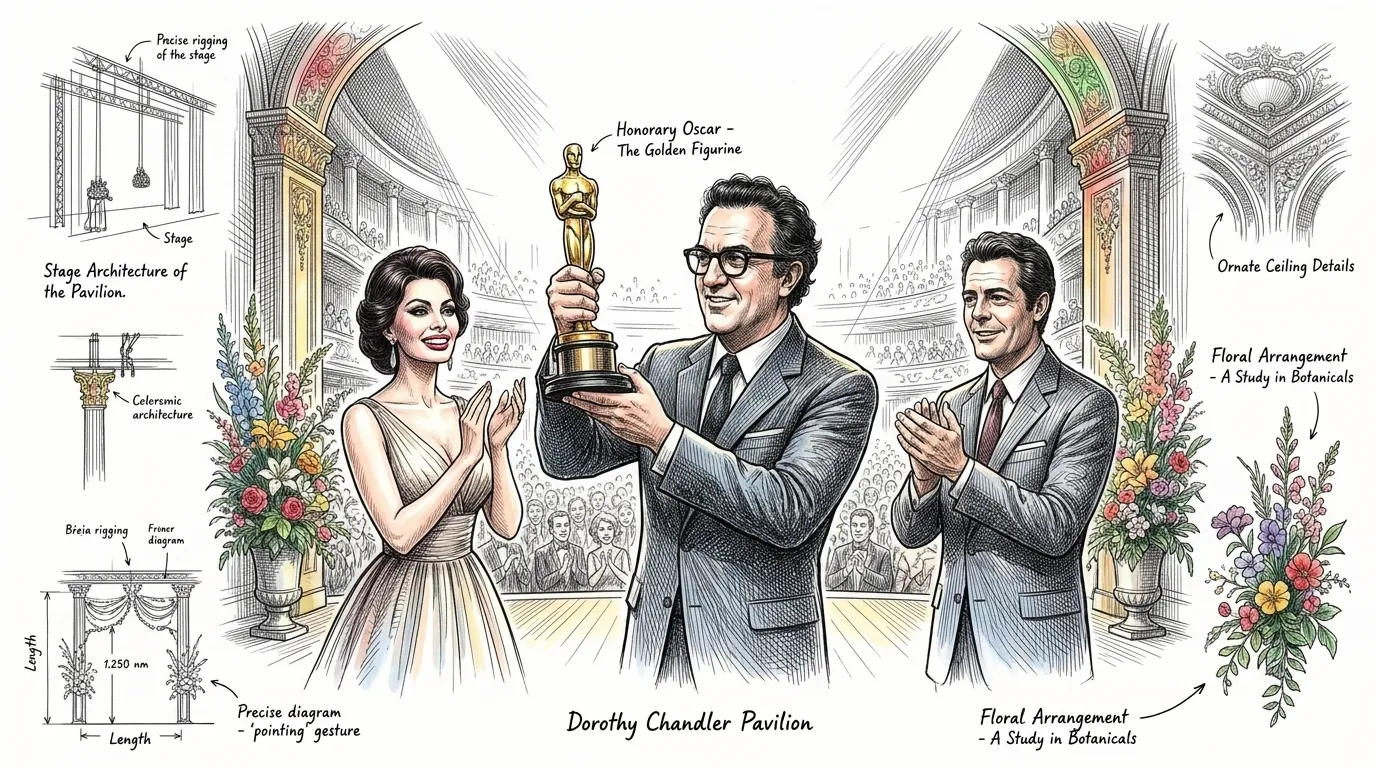
In Los Angeles, California, at the Dorothy Chandler Pavilion on March 29, 1993, Federico Fellini received his fifth Academy Award. An Honorary Oscar, it recognized a lifetime of cinematic achievement that redefined the medium. As iconic actors Sophia Loren and Marcello Mastroianni stood beside him, a global audience of millions witnessed a rare moment: the world's most visionary director, frail but defiant, accepting the ultimate tribute for a body of work that transcended mere storytelling, becoming a language unto itself.
Biographical Fact: Federico Fellini's Honorary Academy Award in 1993, presented by two of his most frequent collaborators, symbolized his undisputed status as a titan of global cinema. This capstone achievement followed four previous competitive Oscars for Best Foreign Language Film.
Page 2
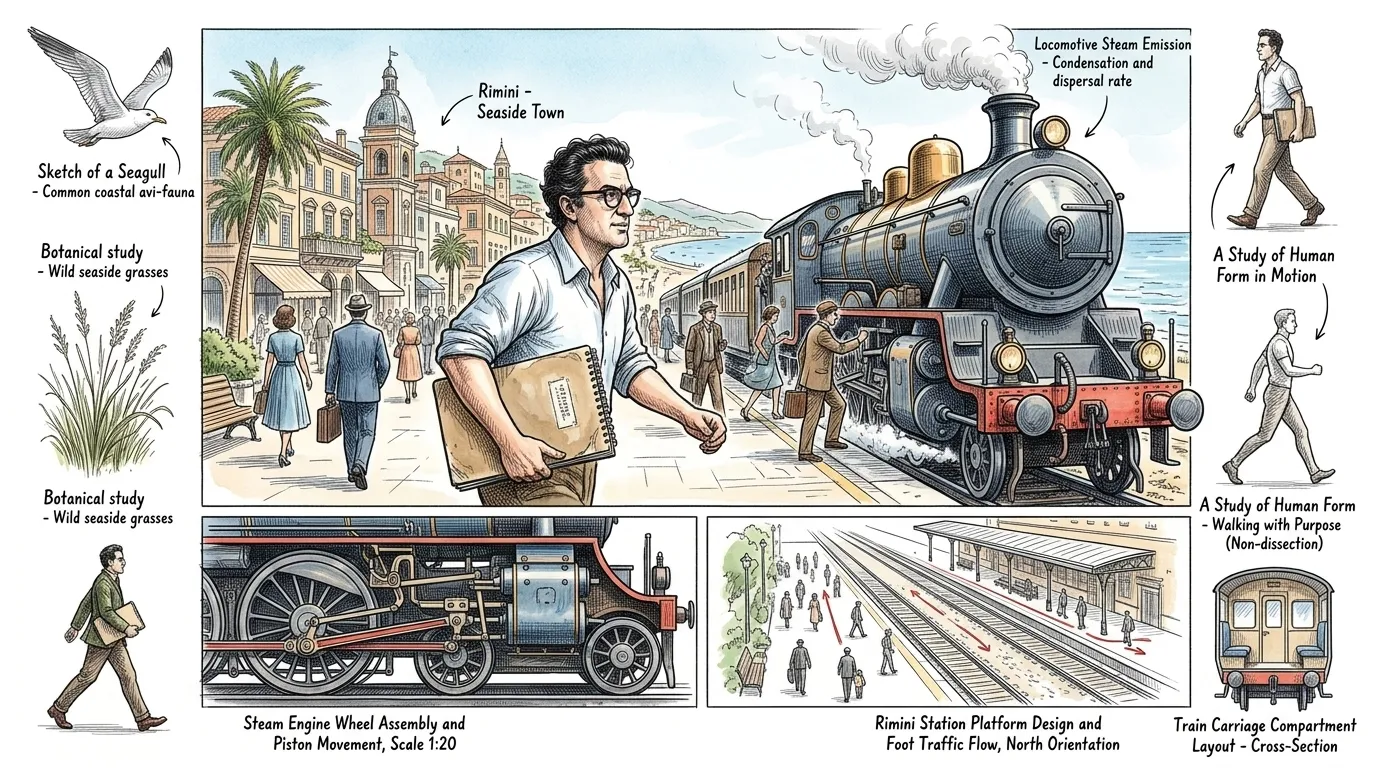
Before the global accolades, there was Rimini. A small Adriatic seaside town in Emilia-Romagna, Italy, where Federico Fellini spent his formative years. In 1939, at the age of 19, driven by an insatiable hunger for a life beyond provincial confines and a burgeoning talent for caricature and journalism, he made a decisive break. He boarded a train, leaving the familiar behind, bound for Rome, the eternal city, the epicenter of Italian culture and opportunity, carrying only his ambition and a sketchbook filled with dreams.
Biographical Fact: Fellini's departure from Rimini to Rome in 1939 was a pivotal moment. His hometown's characters and atmosphere would deeply influence the semi-autobiographical elements found in many of his later films, particularly Amarcord.
Page 3
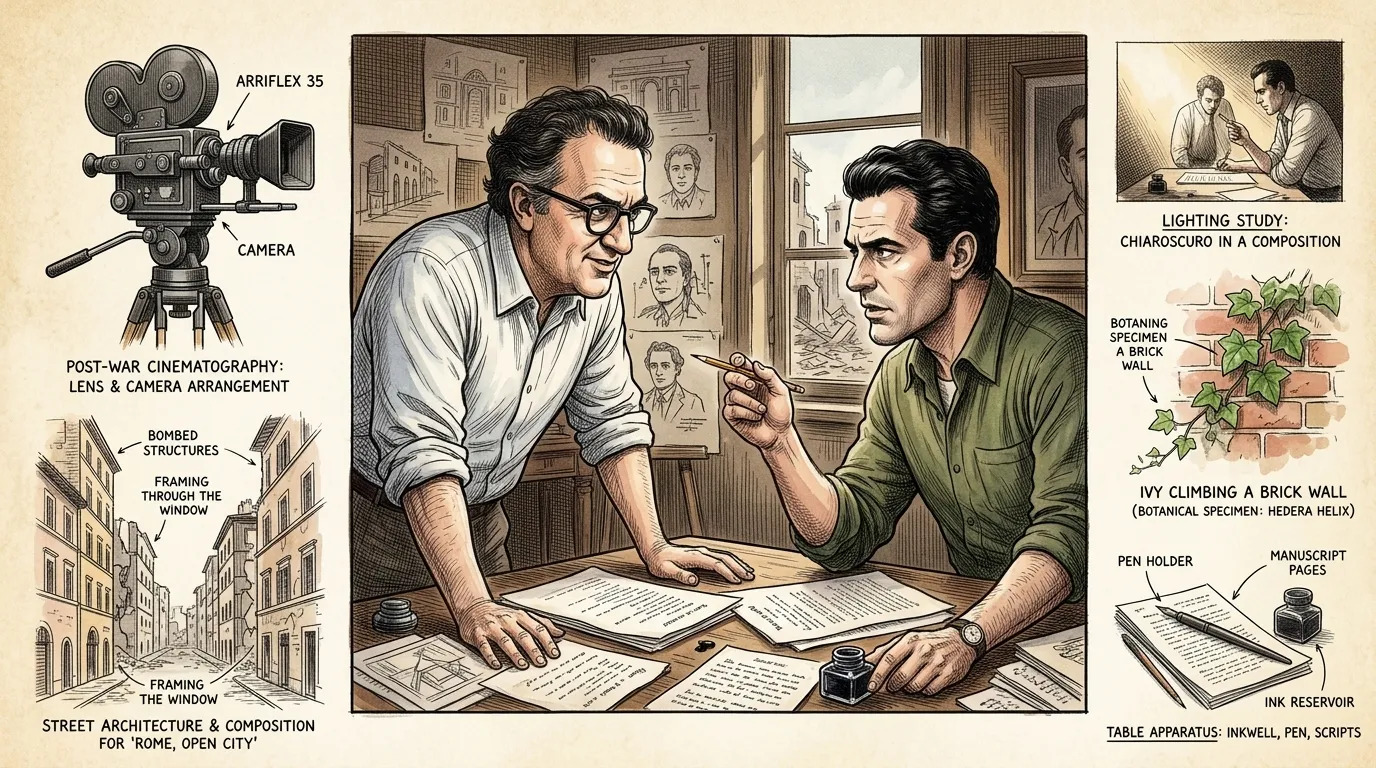
In post-war Rome, Fellini found his entry into cinema not as a director, but as a prolific screenwriter. He collaborated closely with emerging talents, including Roberto Rossellini, a pioneer of Italian Neorealism. In 1945, he co-wrote the script for Rossellini's groundbreaking film, Rome, Open City. This immersion in a raw, authentic cinematic style, depicting the harsh realities of a war-torn Italy, honed Fellini's narrative skills and exposed him to the power of film as a mirror to society, even as his own fantastical leanings began to stir.
Biographical Fact: Fellini's collaboration on Rome, Open City (1945) was a formative experience. While Neorealism was a foundational influence, Fellini would soon transcend its strictures to develop his unique, dream-like vision.
Page 4
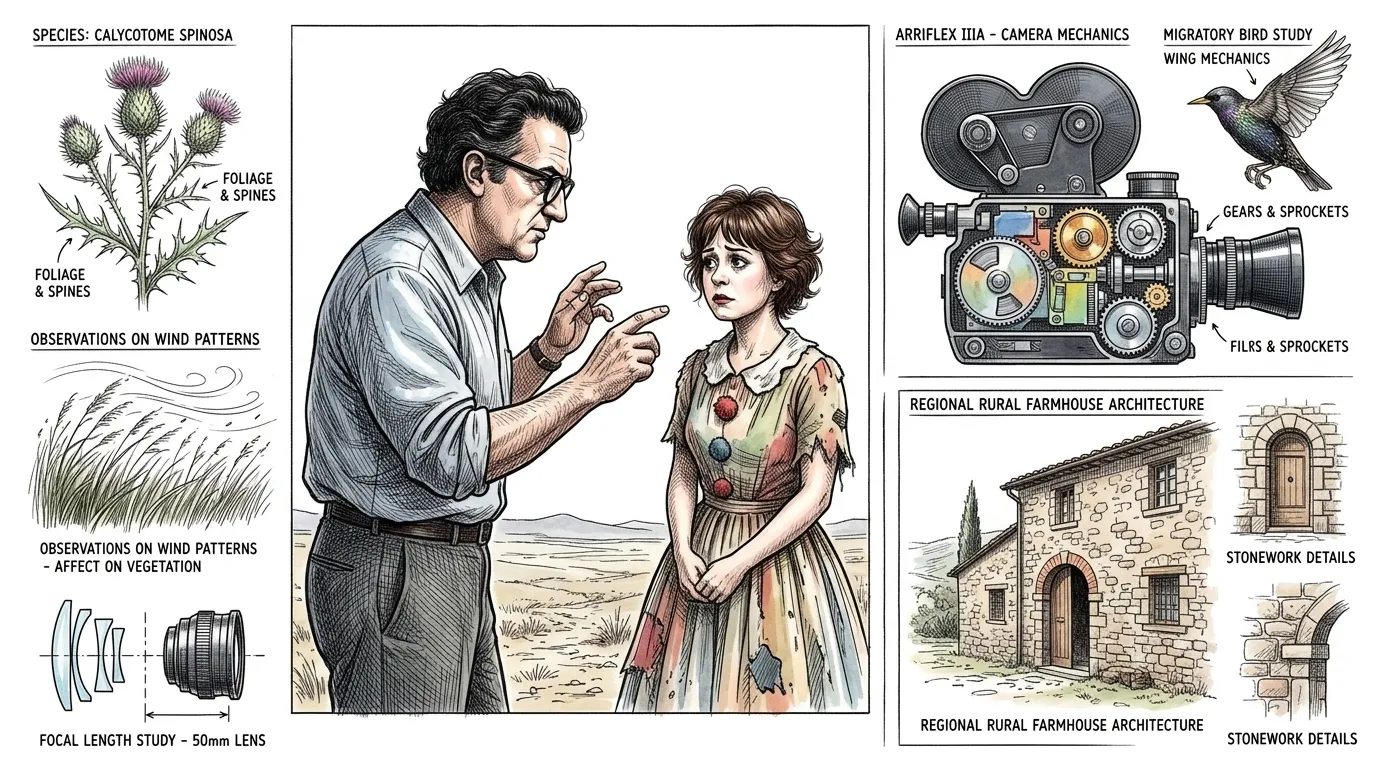
By 1954, Federico Fellini stepped fully into his own as a director with La Strada. This film, a poignant tale of a naive young woman sold to a brutal strongman, marked a distinct departure from pure Neorealism, weaving in allegorical depth and a unique blend of cruelty and tenderness. On a windswept, desolate Italian landscape, Fellini meticulously guided his wife, Giulietta Masina, through a performance that would become iconic, pushing her to embody the fragile spirit of Gelsomina, defining his ability to extract profound human emotion on screen.
Biographical Fact: La Strada (1954) was Fellini's first major international success and won the Academy Award for Best Foreign Language Film. It established his narrative voice, blending social realism with profound spiritual undertones and launching Giulietta Masina to global recognition.
Page 5
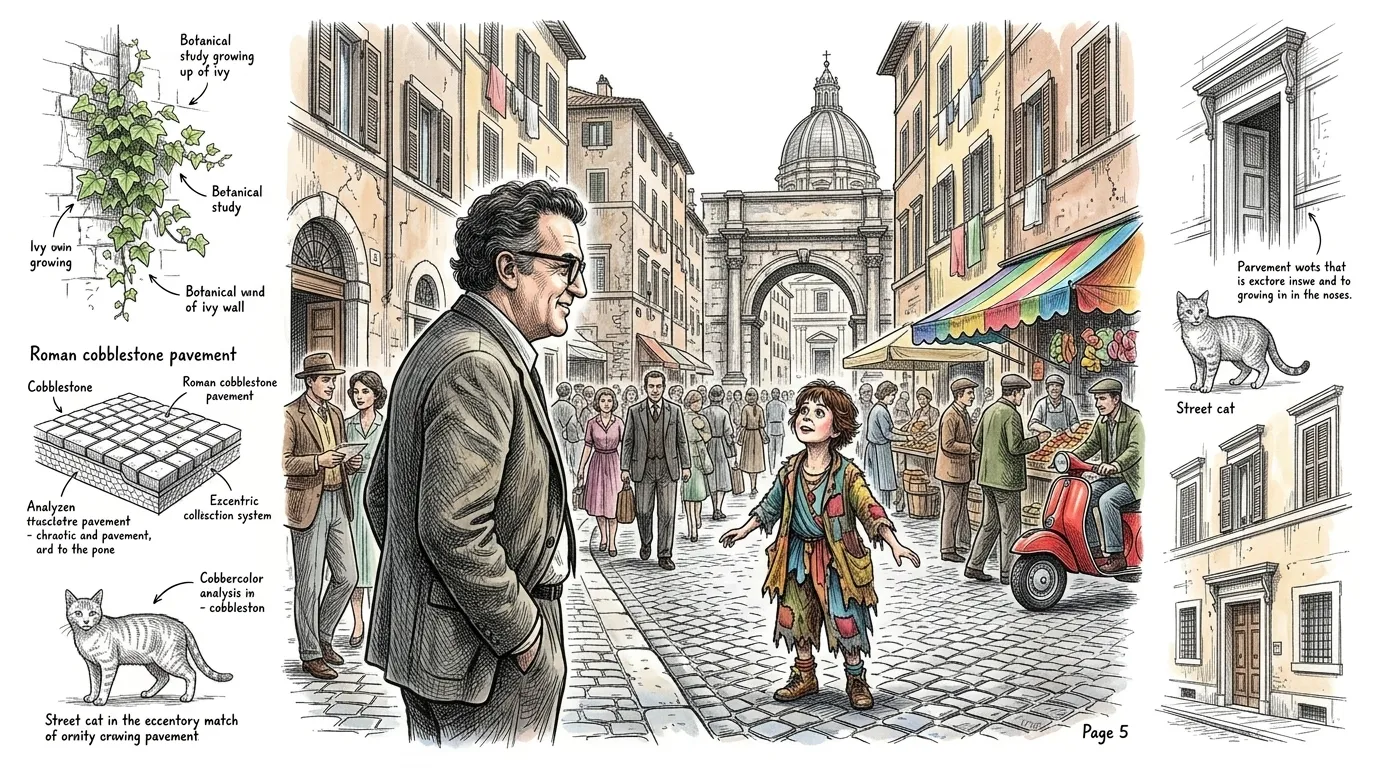
Three years after La Strada, Fellini returned to similar themes of innocence amidst despair with Nights of Cabiria (1957). Once again, he cast Giulietta Masina, this time as a resilient, street-smart prostitute named Cabiria, whose indomitable hope perpetually collides with a cruel world. Directing a pivotal scene on the bustling, gritty streets of Rome, Fellini orchestrated a ballet of human interaction, capturing Cabiria's unwavering optimism despite betrayal, solidifying his signature blend of poetic realism and poignant character study.
Biographical Fact: Nights of Cabiria (1957) earned Fellini his second Oscar for Best Foreign Language Film. It further refined his ability to portray marginalized characters with profound empathy and established his reputation for blending commedia dell'arte influences with modern cinema.
Page 6
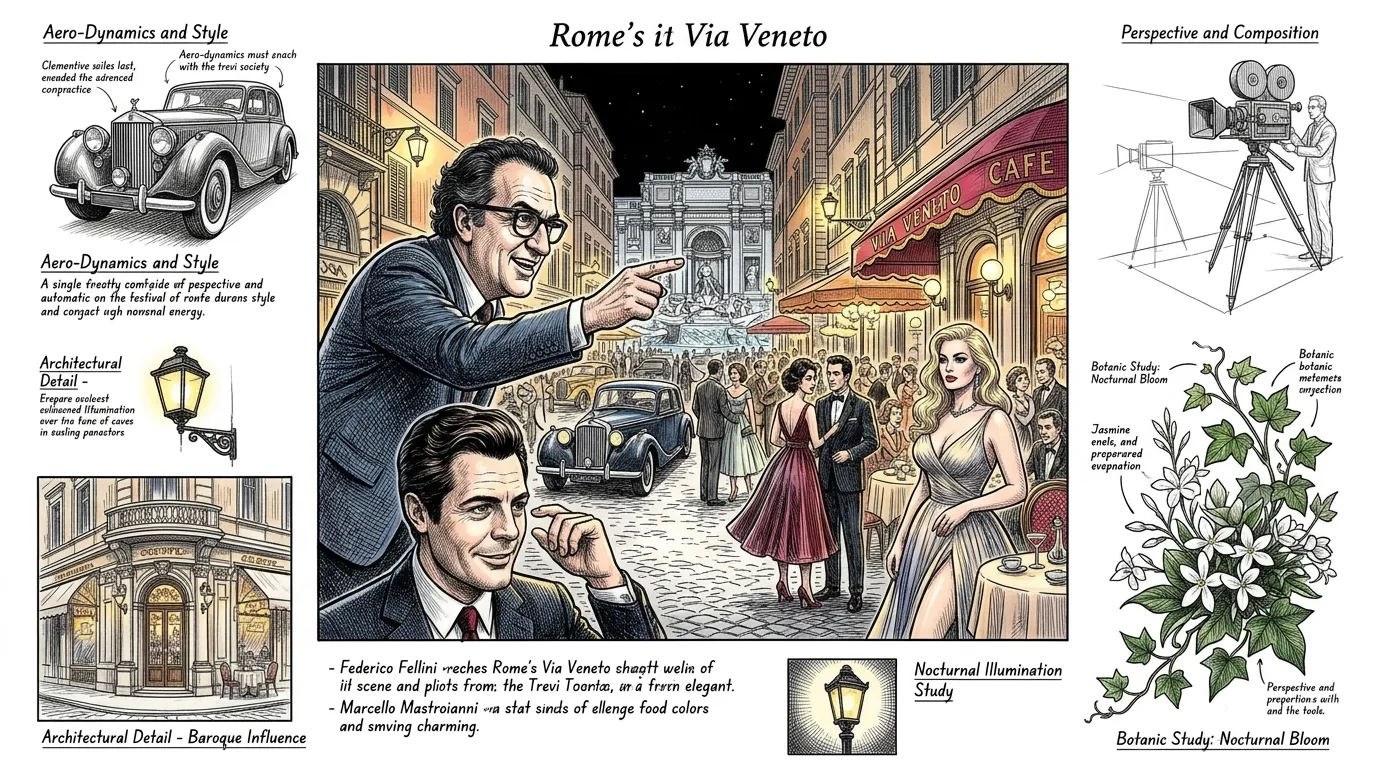
In 1960, Federico Fellini unleashed La Dolce Vita upon an unsuspecting world. The film, a sprawling, episodic portrait of Rome's decadent high society through the eyes of journalist Marcello Rubini (portrayed by Marcello Mastroianni), became an instant sensation and scandal. Its iconic Trevi Fountain scene, featuring Anita Ekberg, cemented itself in cinematic history. On the bustling set, Fellini orchestrated the frenetic energy of the Via Veneto, capturing a society teetering between spiritual emptiness and hedonistic abandon, sparking intense debate across Italy and beyond.
Biographical Fact: La Dolce Vita (1960) won the Palme d'Or at Cannes and was a massive international hit, though it faced condemnation from the Vatican for its perceived immorality. It vividly captured a moment of societal transformation and introduced the term 'paparazzi' into the global lexicon.
Page 7
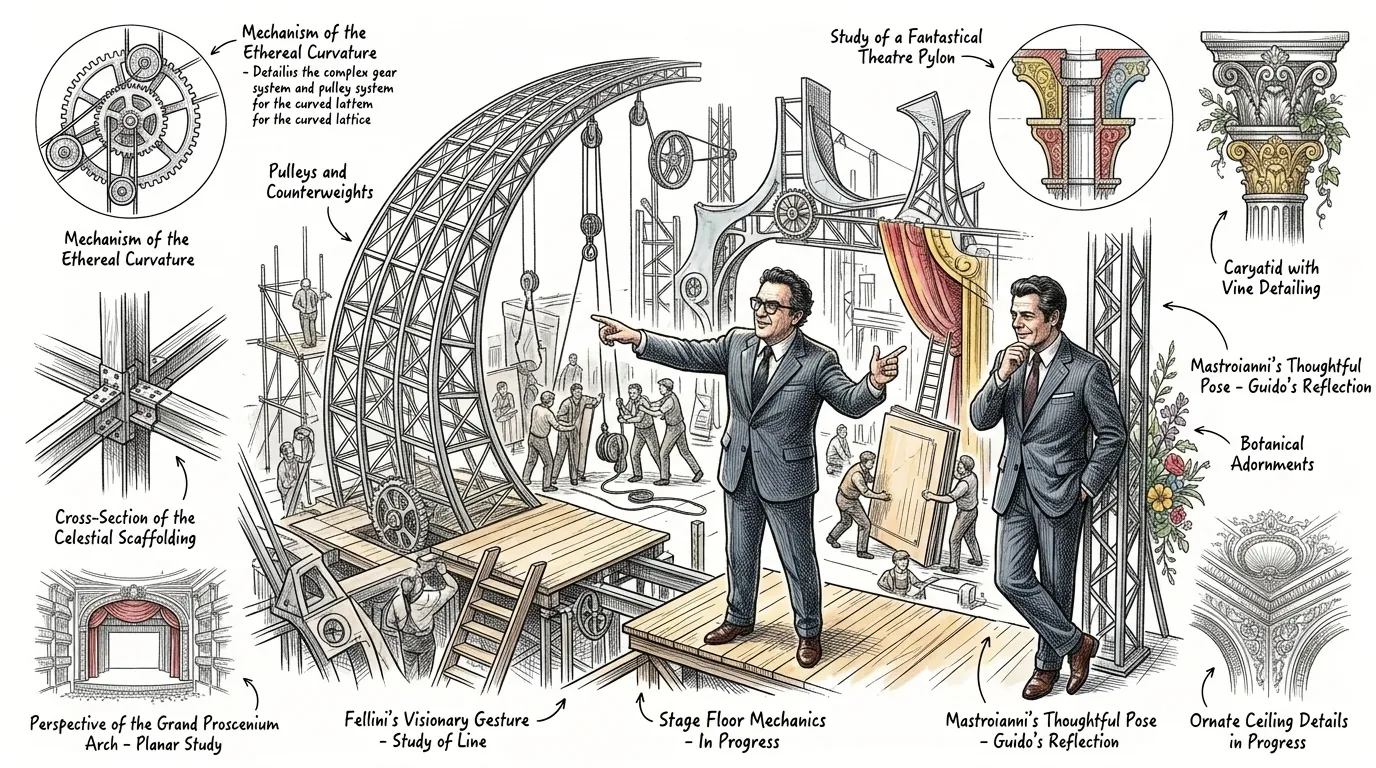
After the immense success of La Dolce Vita, Fellini faced a profound creative block. This struggle became the very subject of his next masterpiece, 81 2 (1963). The film, a surreal, meta-cinematic exploration of a director's artistic crisis, saw Marcello Mastroianni embody Fellini's alter ego, Guido Anselmi. On a sprawling, dream-like set constructed outside Rome, Fellini confronted his own anxieties and memories, blending reality, fantasy, and autobiography into a groundbreaking work that redefined the boundaries of narrative and self-reflection in cinema.
Biographical Fact: 81 2 (1963) is considered one of Fellini's greatest works, winning him his third Academy Award for Best Foreign Language Film. Its innovative structure and deeply personal themes had a profound influence on subsequent filmmakers, inspiring countless attempts at self-reflexive cinema.
Page 8
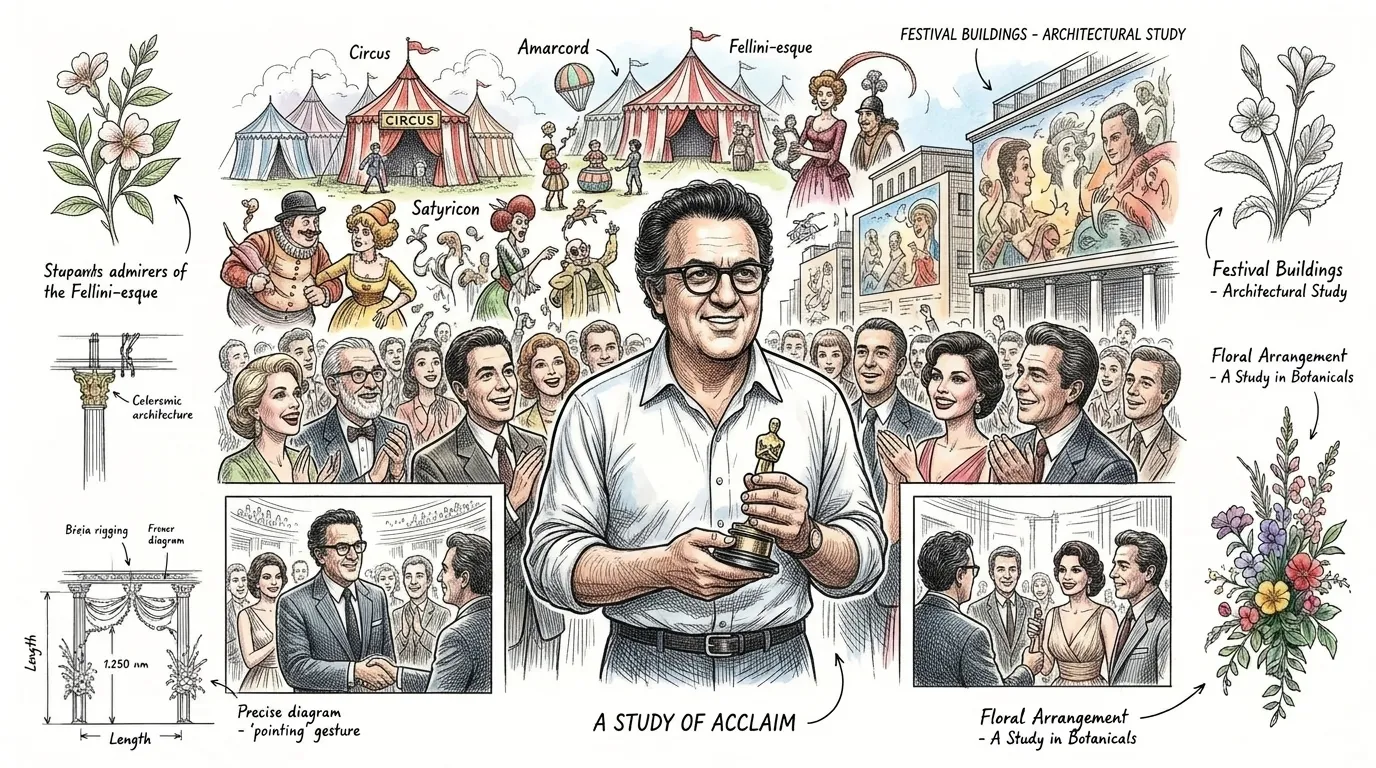
By the late 1960s and 70s, Fellini's unique cinematic style became globally recognized as 'Fellini-esque'—a vibrant, baroque blend of memory, dream, fantasy, and social commentary. Films like Satyricon (1969) and Amarcord (1973), which earned him his fourth Oscar, further solidified this reputation. His impact resonated across continents. At international film festivals, other directors and critics often referenced his visual language, his use of non-professional actors, and his distinctive circus-like atmosphere, acknowledging him as a singular force who expanded cinema's vocabulary.
Biographical Fact: The term 'Fellini-esque' entered critical discourse, signifying a distinct aesthetic and narrative approach characterized by surrealism, exuberance, and introspection. This recognition cemented his place as a master auteur whose vision was unmistakable.
Page 9
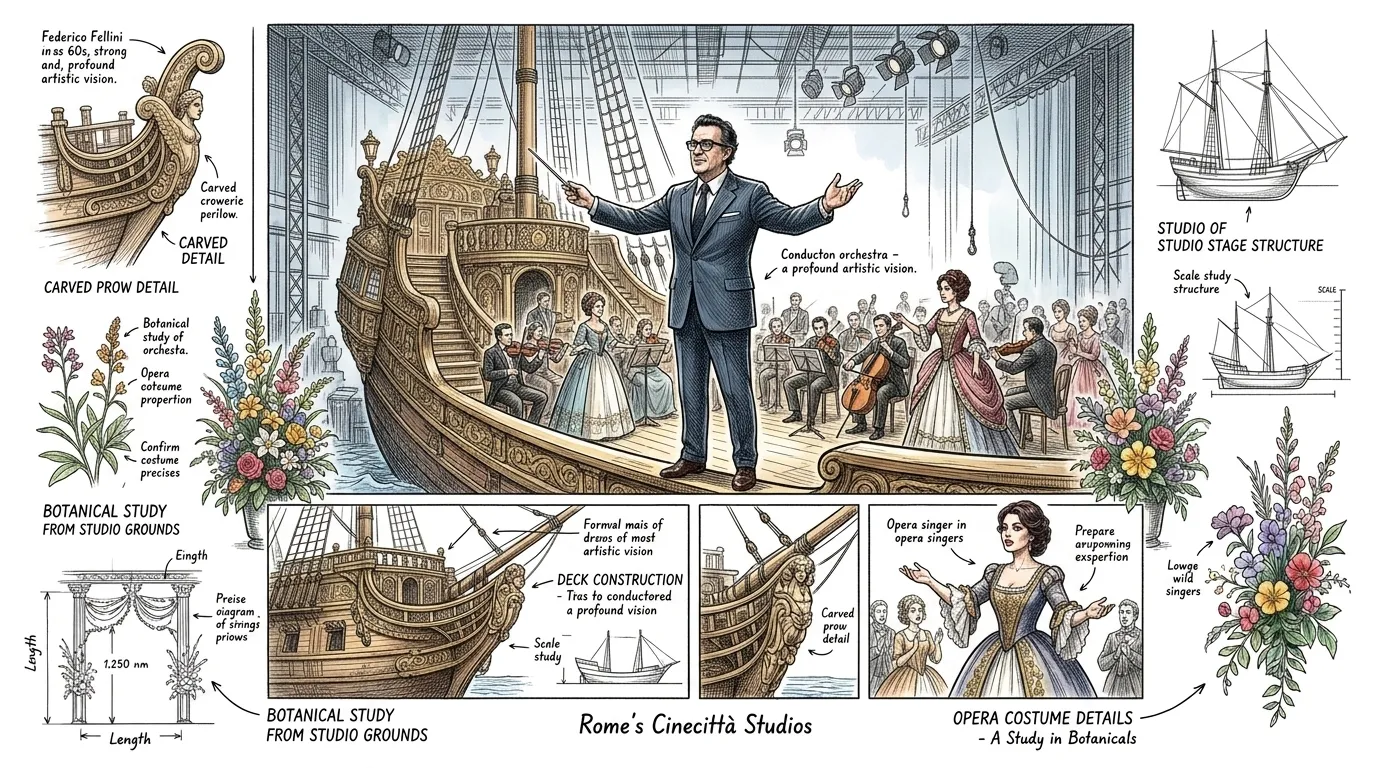
Even as cinematic trends shifted, Federico Fellini continued to produce films that were unmistakably his own. In 1983, with And the Ship Sails On, he crafted an opulent, elegiac fable set on a grand cruise ship carrying opera singers to scatter the ashes of a beloved diva. On a massive, meticulously constructed ship set within Rome's Cinecittà Studios, Fellini, now in his 60s, commanded the elaborate production. He proved that his unique vision, his grand theatricality, and his profound meditation on illusion and reality remained potent forces, captivating audiences with its beauty and philosophical depth.
Biographical Fact: And the Ship Sails On (1983) demonstrated Fellini's continued artistic vitality late in his career. It was a visually stunning and deeply symbolic work that reiterated his fascination with artifice, memory, and the human condition, further solidifying his unique contribution to cinema.
Page 10
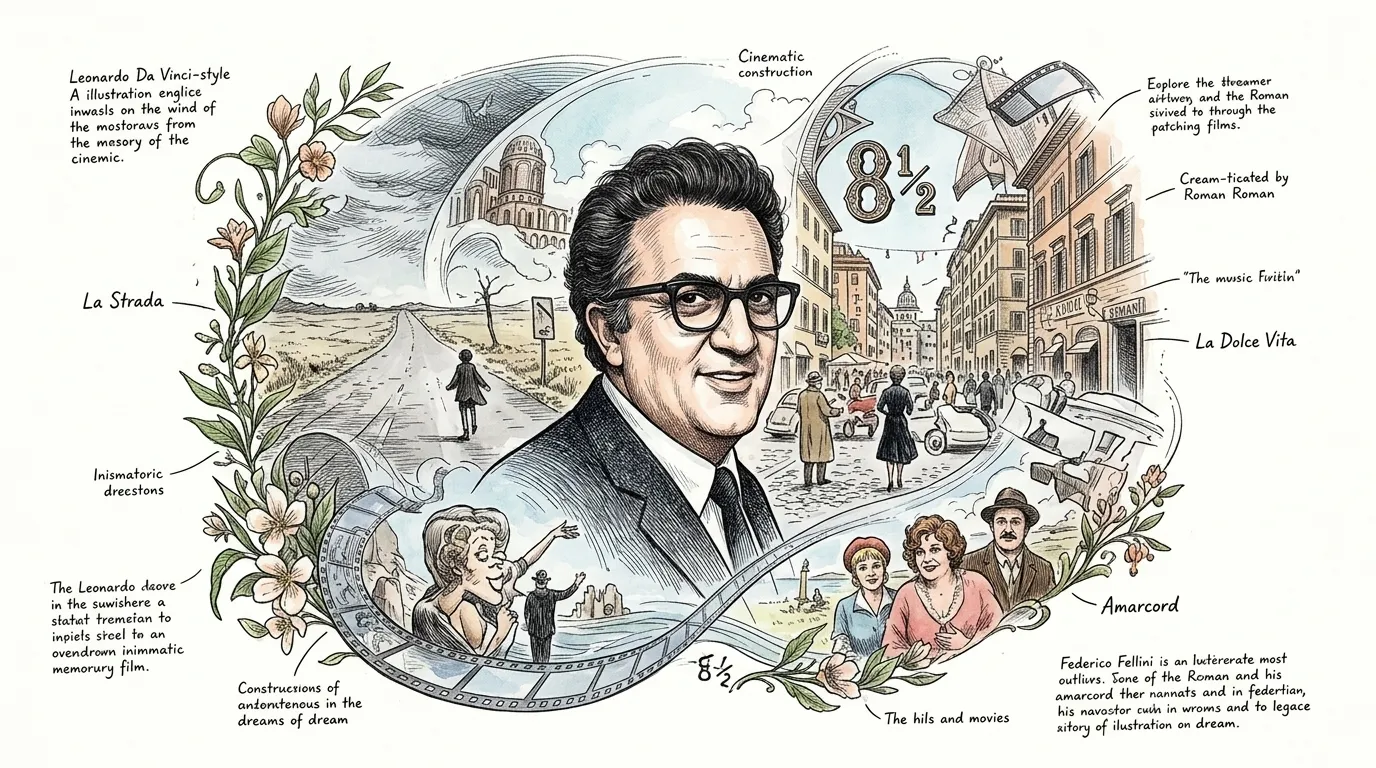
Federico Fellini, who passed away in 1993, left behind a cinematic universe unparalleled in its imaginative scope and personal resonance. His films, from La Strada to Amarcord, are not merely stories; they are explorations of memory, dream, and the human psyche, rendered with a visual poetry that continues to inspire. His work transcended national boundaries, influencing generations of filmmakers, artists, and thinkers. Fellini taught the world that cinema could be a grand, joyous, sorrowful, and utterly unique journey into the subconscious, an enduring legacy that forever changed how stories are told on screen.
Biographical Fact: Fellini's legacy is marked by his ability to fuse autobiography with surrealism, transforming personal experience into universal art. His unique visual language and thematic depth continue to be studied and celebrated, securing his place as one of cinema's truly original and indispensable voices.
About this story
- Location: Global
- Audience: general readers
Questions and answers
Read Wonder People on your phone
Wonder People is available on Android. Get Wonder People on Google Play.