Socrates
Socrates — an illustrated biography story. 10 illustrated pages, free to read on Wonder People.
Page 1
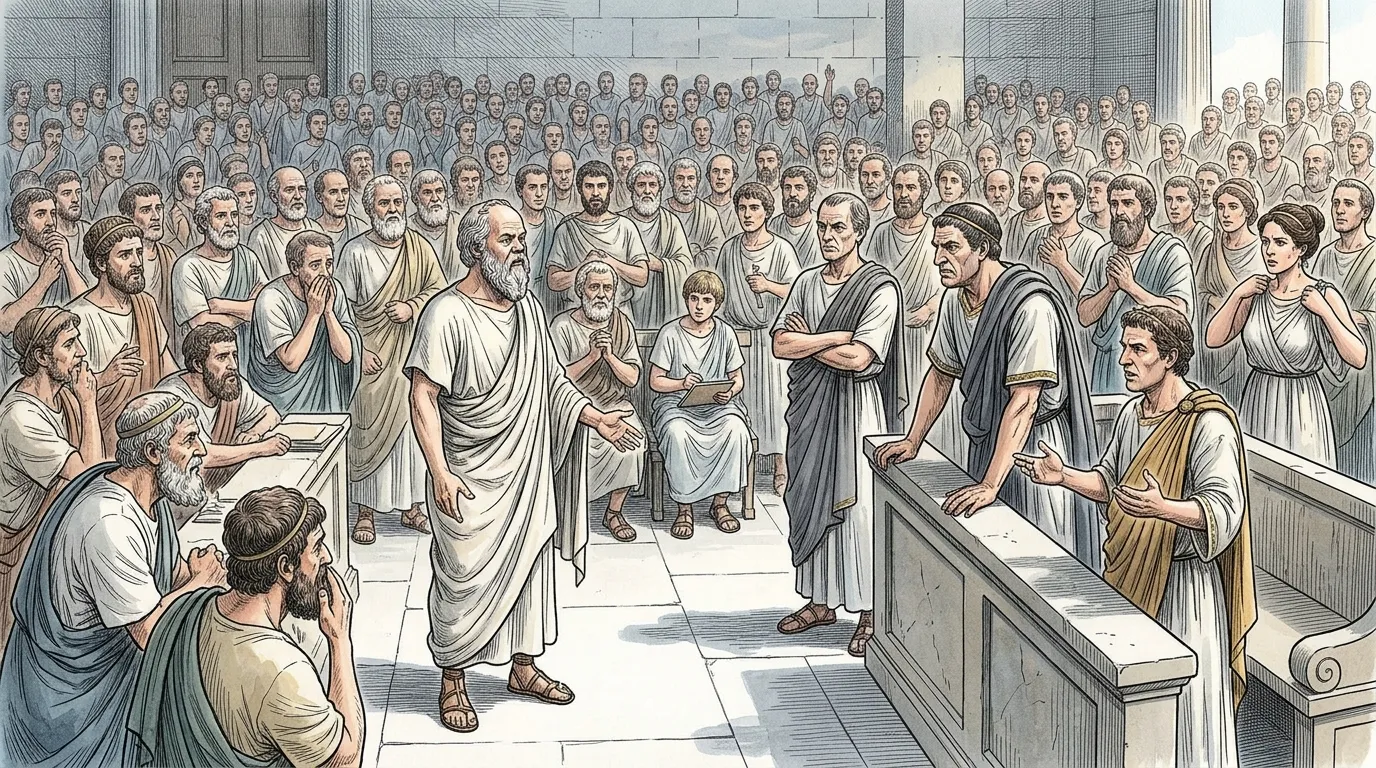
On a spring day in 399 BCE, within the Heliaia, the large Athenian law court, the philosopher Socrates stood accused before a jury of 501 citizens. His relentless questioning of conventional wisdom had provoked the city's powerful, and now the state sought to silence him permanently. He faced Meletus, Anytus, and Lycon, his accusers, but his defense was not an apology; it was a defiant affirmation of his lifelong mission.
"'I shall never alter my ways, not even if I have to die many times,' Socrates declared, his voice cutting through the murmuring crowd. 'As I have always said, a life without examination is not worth living.' His words, not his actions, now determined his fate, echoing across the vast hall and challenging the very foundations of Athenian society."
Page 2
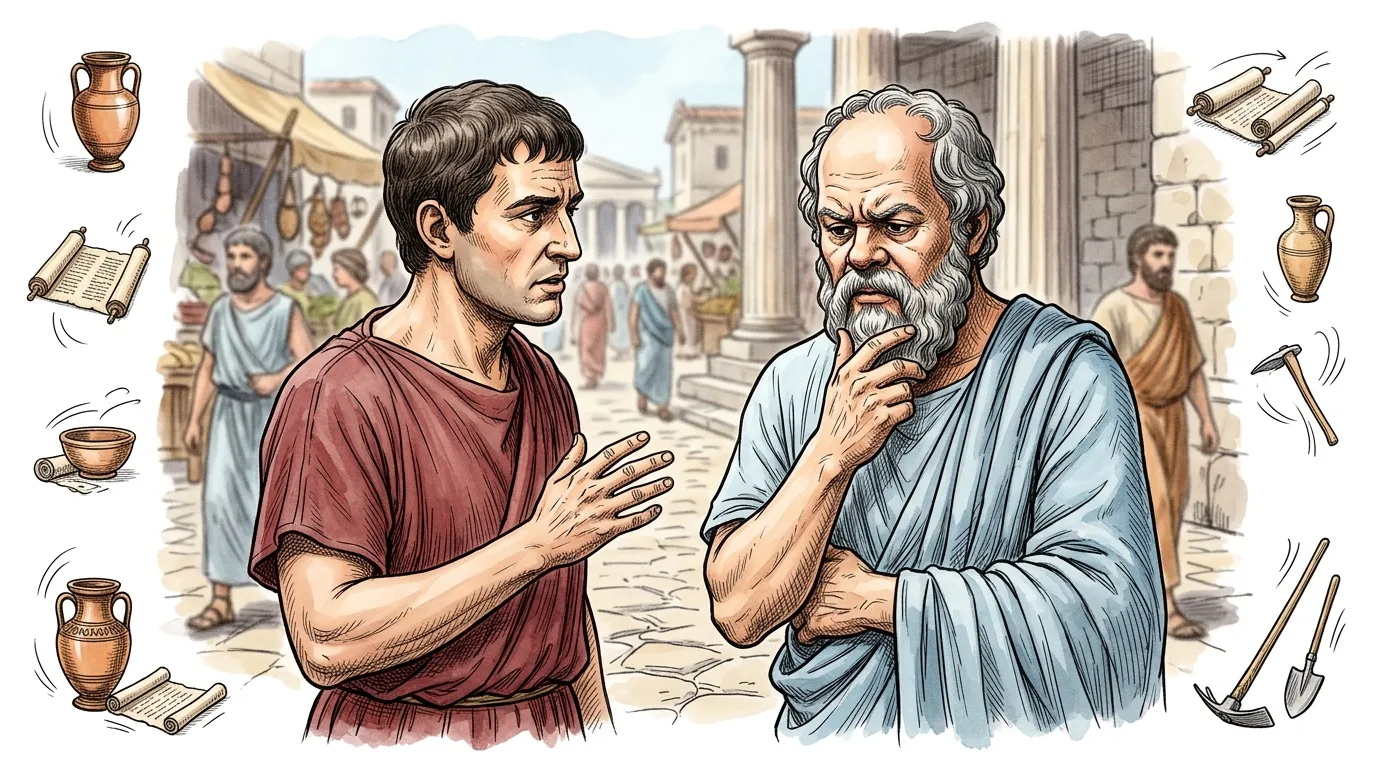
Before the public stage, a pivotal event shaped Socrates's path. His lifelong friend, Chaerephon, once asked the Oracle at Delphi if anyone was wiser than Socrates. The Oracle famously replied that no man was wiser. This pronouncement did not fill Socrates with pride, but rather with profound perplexity, sparking a lifelong quest to understand its meaning.
"'No man is wiser than Socrates,' Chaerephon recounted, his face earnest as he stood before a pensive Socrates in the bustling Agora. 'The Pythia spoke it directly.' Socrates stroked his beard, his brow furrowed. 'What could this mean?' he pondered aloud, 'For I know well that I have no wisdom, small or great. It is this riddle I must now dedicate my life to unraveling, by questioning all who claim knowledge.'"
Page 3
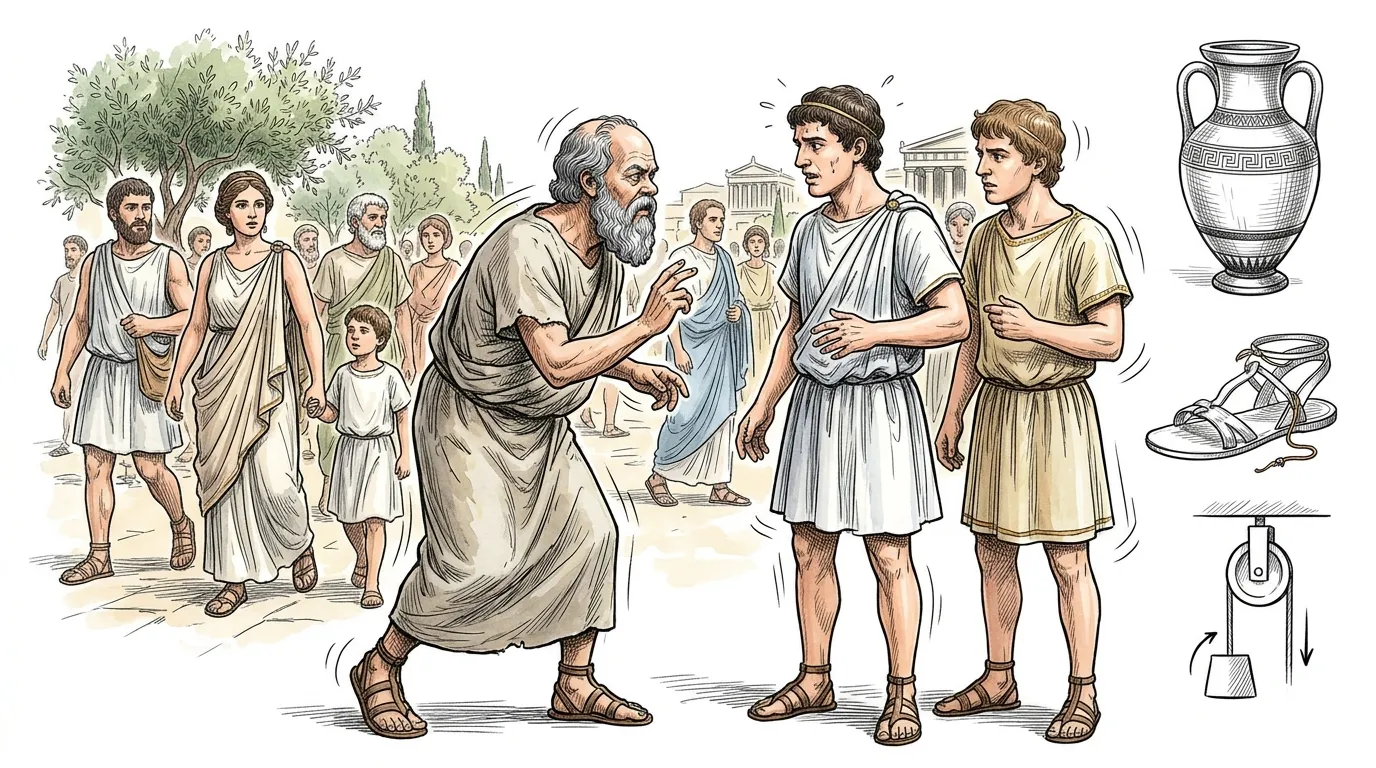
Driven by the Oracle's enigma, Socrates developed his distinctive method of inquiry: the Socratic method. He would engage anyone in conversation, from statesmen to craftsmen, asking probing questions to expose the contradictions in their beliefs and to demonstrate the limits of their professed knowledge. This public cross-examination, performed in the heart of Athens, revealed the true extent of human ignorance.
"'Tell me, young man, what is courage?' Socrates inquired, his eyes sharp with curiosity as he faced a confident Athenian youth in a public square. 'Is it simply never fearing? Or is true courage found in understanding what to fear and what not to fear?' The young man, initially eager, now stammered, realizing his definition was insufficient, a common outcome of Socrates's persistent questioning."
Page 4
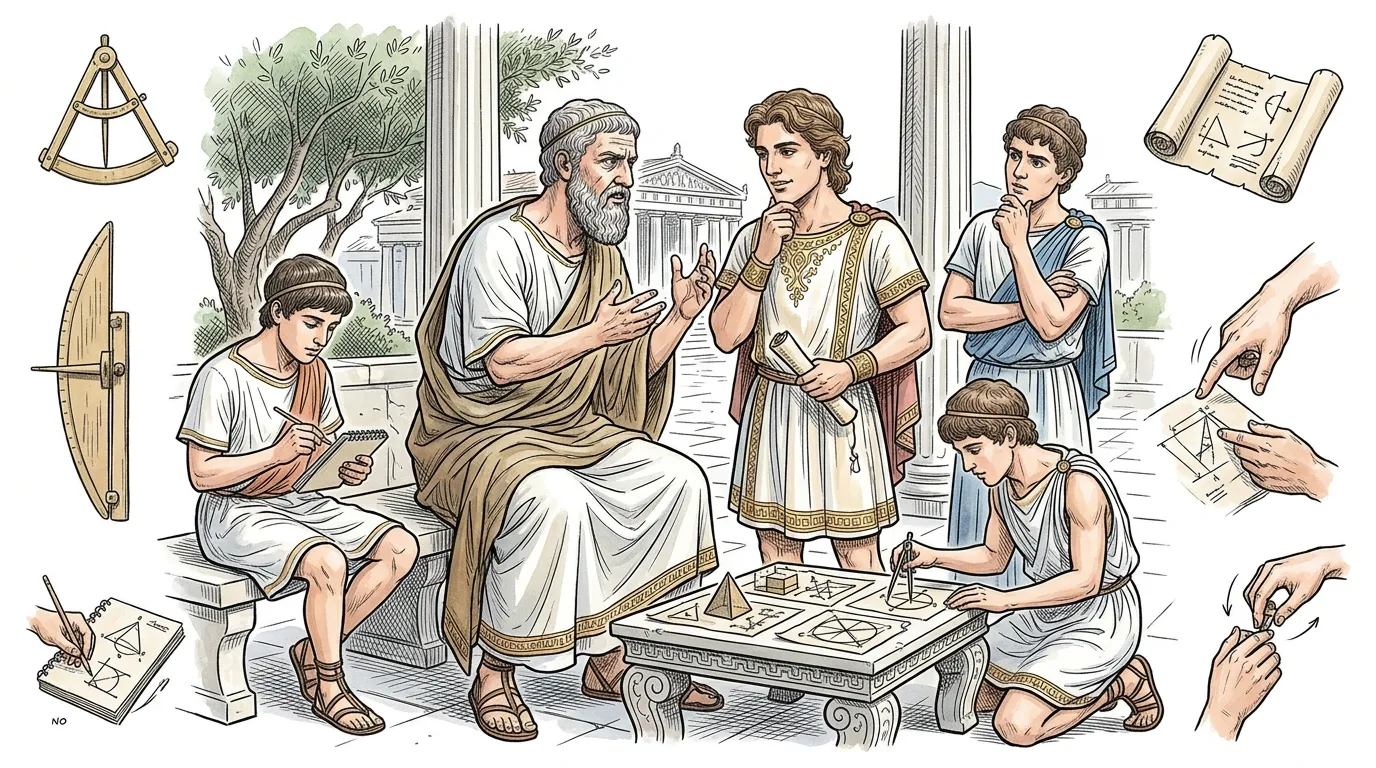
Socrates's unorthodox teachings attracted a circle of dedicated young followers, drawn by his intellectual rigor and his unwavering commitment to truth. These young men, often from prominent Athenian families, included figures like Plato and Alcibiades, who would later become immensely influential. Their devotion cemented Socrates's impact, but also drew the resentment of those whose authority he undermined.
"'His mind is a forge, shaping true understanding from the raw metal of common belief,' Plato remarked to Alcibiades, their voices low and intense. 'He compels us to examine everything.' Alcibiades, ever confident, nodded. 'Indeed, he forces us to confront our own ignorance, a discomforting but necessary path to wisdom.'"
Page 5
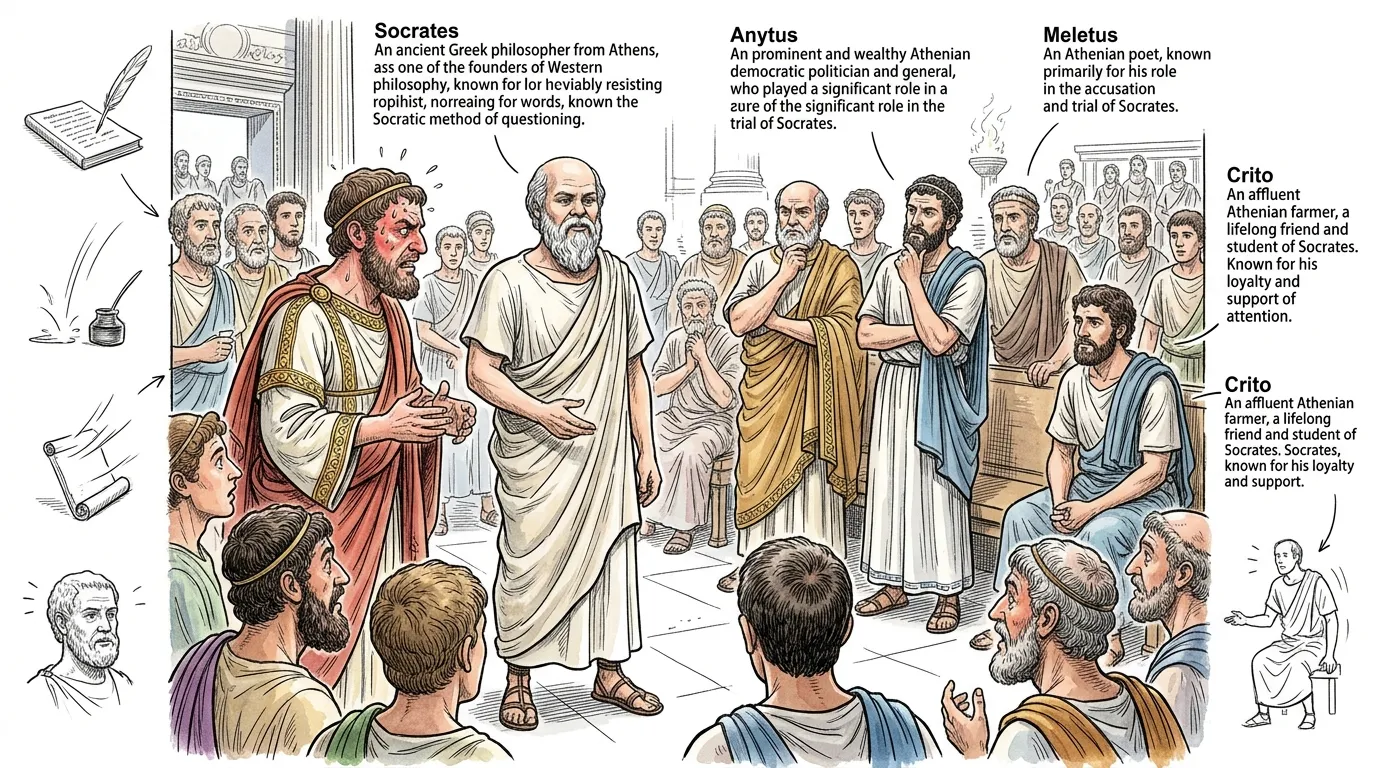
In an era dominated by Sophists who taught rhetoric and persuasion for a fee, Socrates offered a stark alternative. He charged no money, claiming to teach nothing, but rather to help others discover truth for themselves. His rigorous logic often exposed the shallow foundations of Sophist arguments, directly challenging their influence and drawing a clear line between rhetoric and genuine philosophical inquiry.
"'You claim to teach virtue, yet you cannot define it consistently without contradiction,' Socrates calmly stated to a prominent Sophist in a crowded assembly hall. 'How can one teach what one does not truly understand?' The Sophist, accustomed to easy victories, now visibly struggled for words, his face reddening as the crowd observed the stark intellectual disparity between them."
Page 6
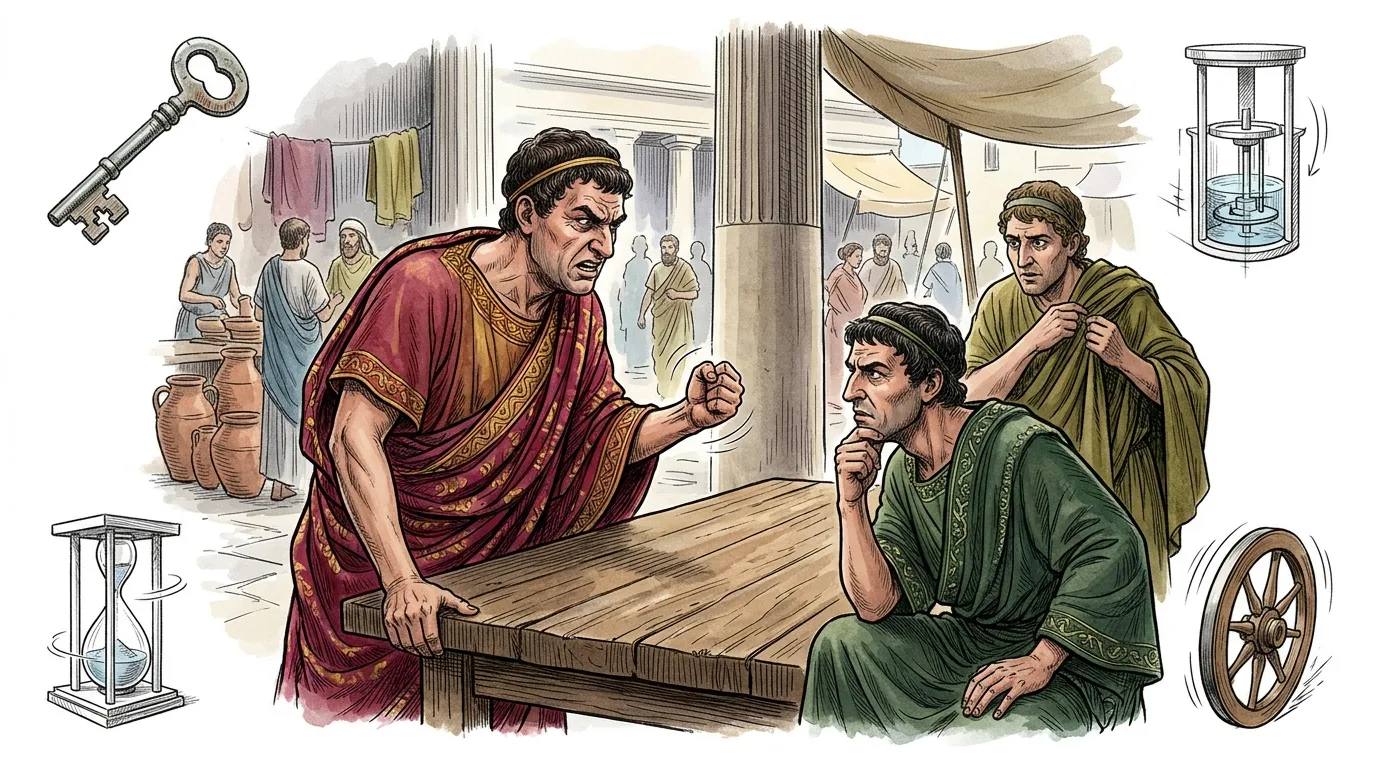
As Socrates's influence grew among the youth, so did the resentment of established figures. His constant questioning of authority, tradition, and the very concept of justice in the city-state was perceived as a threat. In the volatile political aftermath of Athens's defeat in the Peloponnesian War, the city sought scapegoats, and Socrates's relentless intellectual independence made him an increasingly convenient target for those seeking to restore order.
"'He corrupts the youth, turning them against their fathers and the traditions of Athens,' Anytus fumed to Meletus in a hushed corner of the Agora, his face dark with anger. 'His insolence grows, and the city suffers for it.' Meletus nodded grimly, 'Indeed, his impiety undermines our gods, and our very way of life demands a firm hand in these uncertain times.'"
Page 7
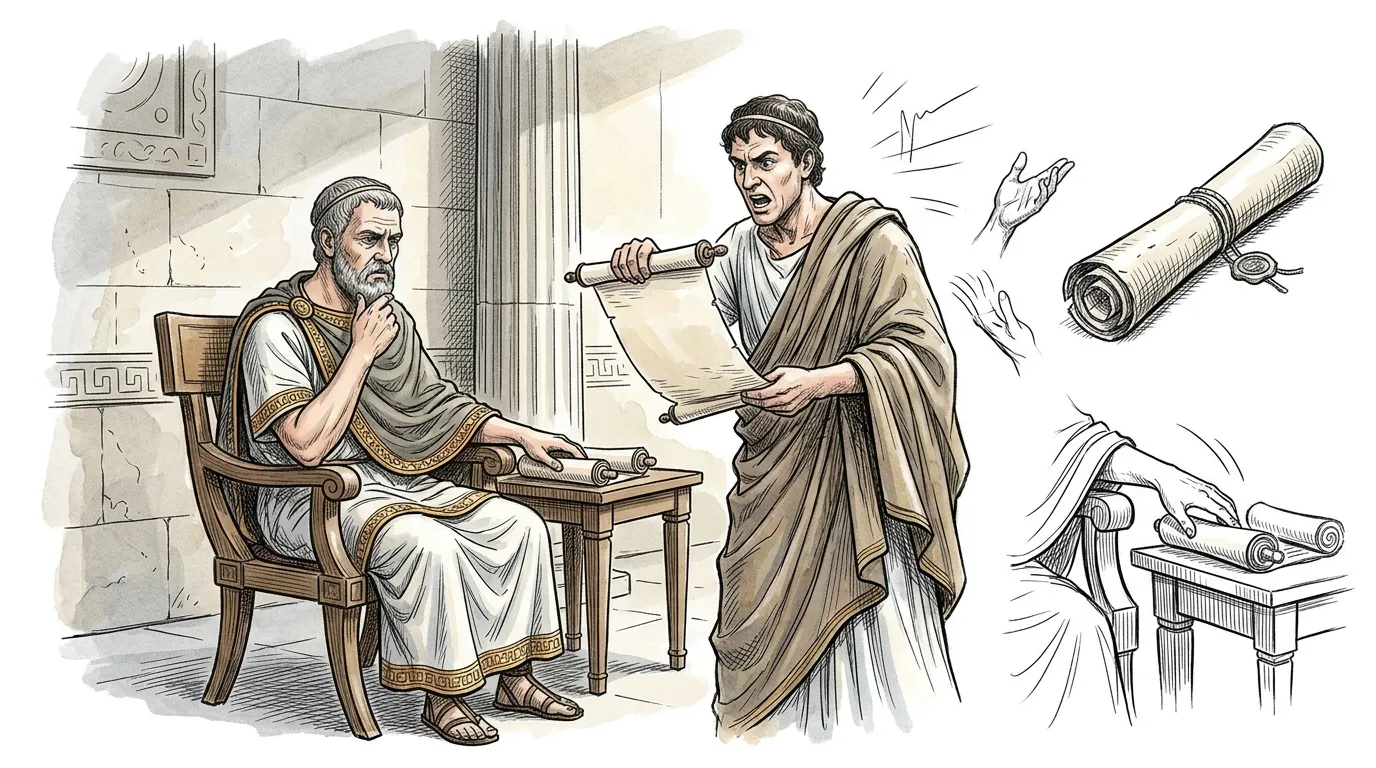
The resentment finally coalesced into formal charges. Meletus, Anytus, and Lycon, representing the poets, craftsmen, and orators respectively, presented an indictment to the Athenian archon. Socrates was accused of 'impiety' for not believing in the city's gods and 'corrupting the youth' by teaching them to question authority. This legal action marked the inevitable confrontation between Socrates's philosophy and the state's power.
"'I, Meletus, son of Meletus, of the deme Pittheus, formally accuse Socrates, son of Sophroniscus, of the deme Alopece,' Meletus declared, his voice ringing with conviction as he presented the charges to a seated archon. 'He is guilty of corrupting the youth and of not believing in the gods in whom the state believes, but in other new divinities.' The archon, a solemn figure of authority, listened gravely, his hand resting on official scrolls."
Page 8
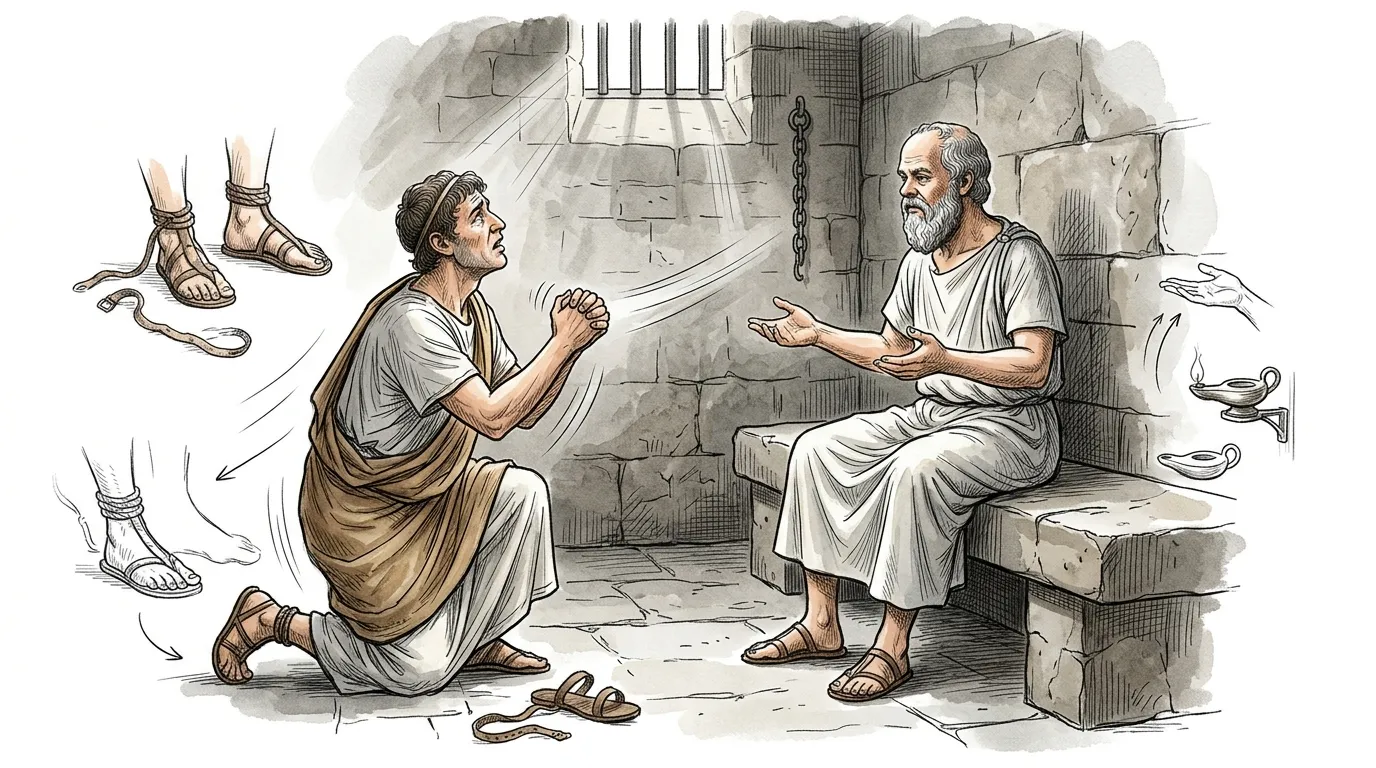
Following his condemnation, Socrates's devoted friend Crito visited him in prison, pleading with him to escape. Crito had arranged everything, offering wealth and sanctuary, but Socrates, true to his principles, steadfastly refused. For him, escaping would be an act of injustice, a violation of the very laws of Athens he had lived under and taught others to respect. This decision, born from his deep philosophical conviction, solidified his impact on legal and ethical thought.
"'How can I, a man who has lived eighty years in Athens, now betray its laws?' Socrates gently questioned Crito, his voice firm despite the grim setting. 'As I have often said, 'It is better to suffer injustice than to commit it.' To escape would be to commit an injustice against the very city that nurtured me. This is not about fear of death; it is about upholding the principles by which I have lived.'"
Page 9
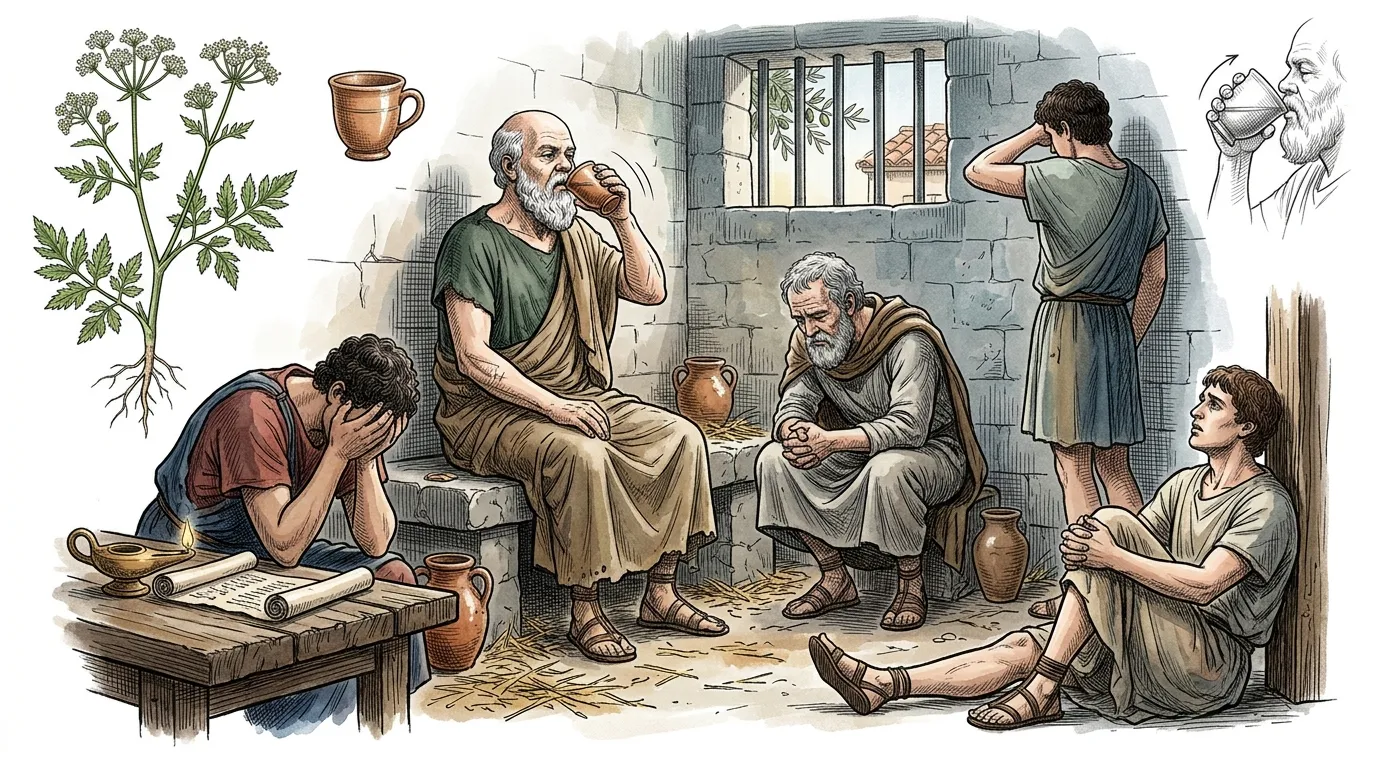
Surrounded by his weeping students, Socrates drank the hemlock. His final moments were not of despair, but of philosophical discussion, calm instruction, and unwavering composure. He faced death with the same intellectual courage he had lived, turning his execution into his ultimate lesson on the pursuit of truth and the integrity of the soul. This profound act cemented his place in history, transforming a condemnation into a triumph of spirit.
"'Do not grieve, my friends, for the soul is immortal,' Socrates spoke softly, his voice clear even as the poison began its work. He then turned to Crito. 'Remember, we owe a cock to Asclepius. Please, do not forget to pay the debt.' His final words, a simple request for a sacrifice to the god of healing, symbolized his belief in purification and the natural order, even in death."
Page 10
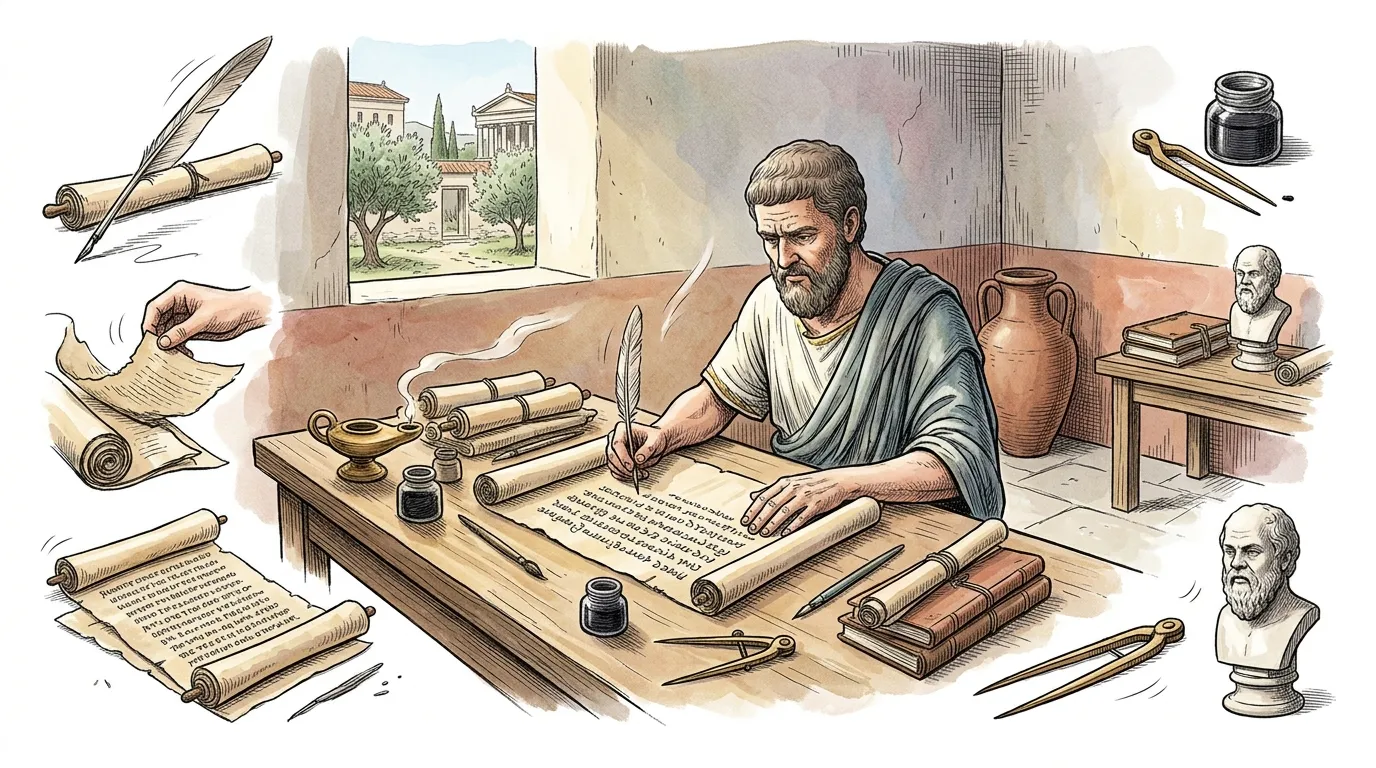
Socrates left no writings, but his legacy was secured through the dedicated efforts of his students, most notably Plato. Through Plato's dialogues, Socrates's ideas, his method of inquiry, and his unwavering commitment to virtue and justice transcended his execution, becoming foundational to Western philosophy. His questions continue to challenge generations, a timeless echo urging all to examine their lives and the world around them.
"Years later, Plato, his quill scratching across papyrus, recorded Socrates's teachings, ensuring their immortality. 'The unexamined life is not worth living,' Plato wrote, quoting his mentor, the words now powerful testaments to a man who chose principle over life. 'His death was not an end, but a beginning for philosophy itself,' Plato reflected, forever enshrining Socrates's profound impact."
About this story
- Audience: general readers
Questions and answers
Read Wonder People on your phone
Wonder People is available on Android. Get Wonder People on Google Play.