Augustine of Hippo
Augustine of Hippo — an illustrated philosophy story. 8 illustrated pages, free to read on Wonder Philosophy.
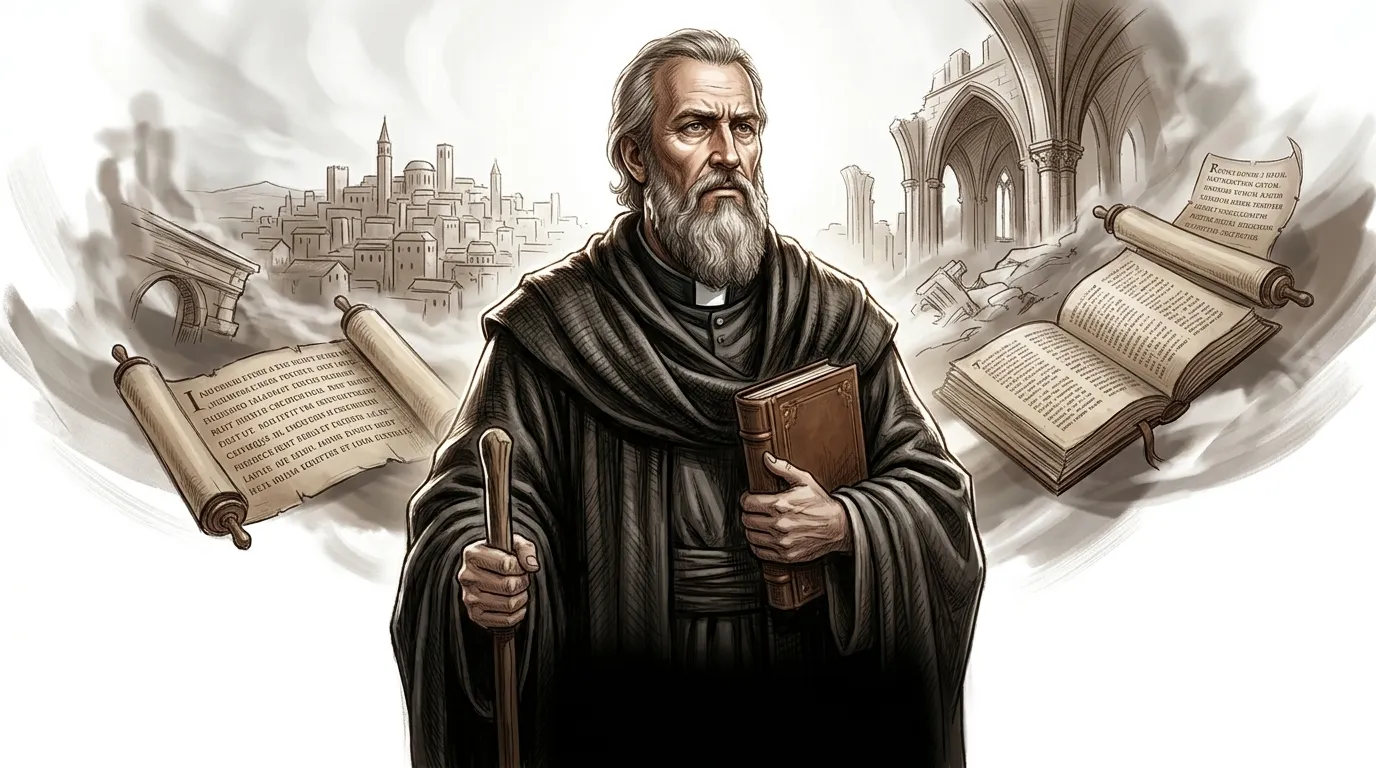
Page 1
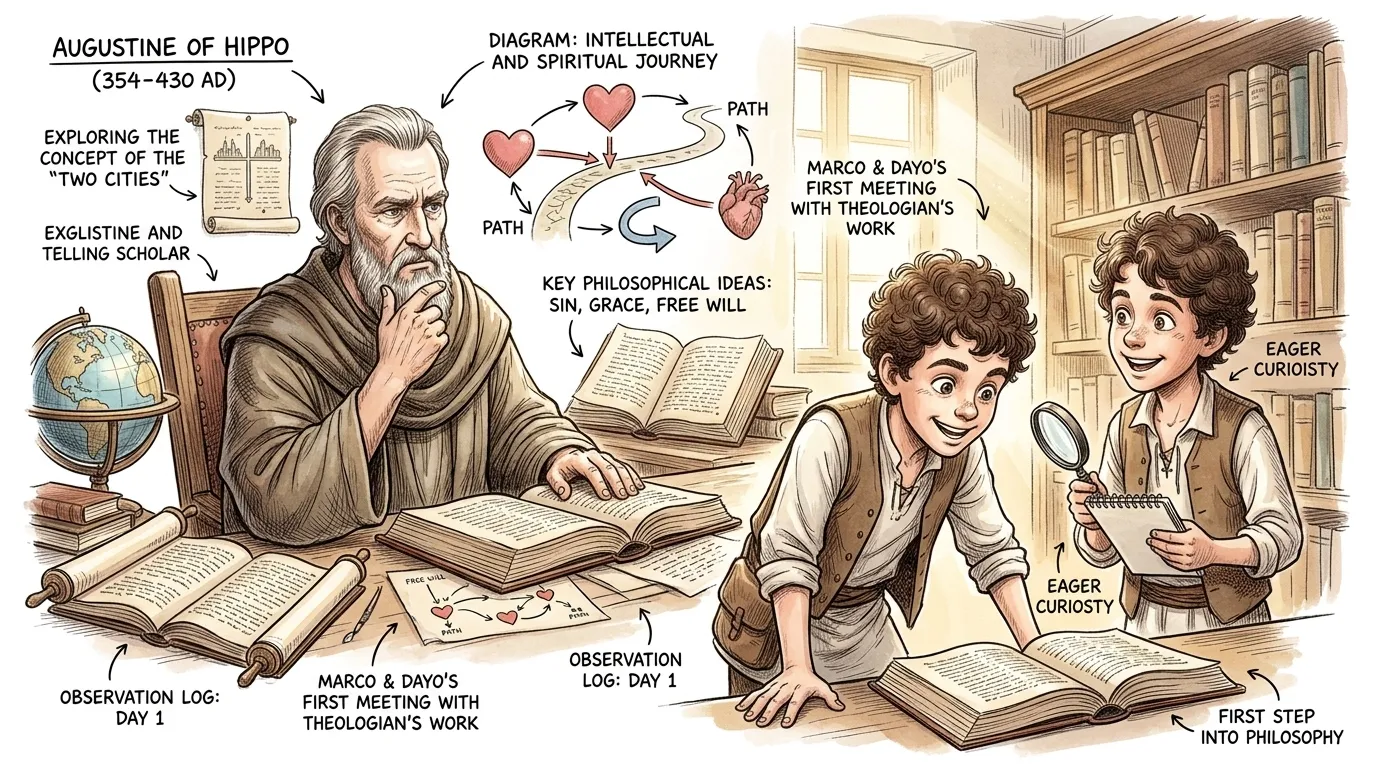
Augustine of Hippo's ideas about sin, grace, and free will have shaped Western thought for centuries. His concept of original sin [Original sin: the Christian doctrine that all humans are born with an inherent inclination toward evil, stemming from Adam and Eve's disobedience in the Garden of Eden] still influences debates about human nature. But why does a philosopher from the 4th century [4th Century: Augustine lived from 354 AD to 430 AD] matter to us today?
""People are still wrestling with the same questions Augustine did," says Dr. Eleanor Vance, a professor of philosophy. "How do we reconcile our flaws with our aspirations? How do we find meaning in a world filled with suffering?""
Philosophy Note: Augustine's 'Confessions' is considered one of the first autobiographies in Western literature.
Page 2
![Augustine was born in Thagaste [Thagaste: A town in Roman North Africa (modern-day Souk Ahras, Algeria) where Augustine was born], in present-day Algeria, in…](https://thewonderbooks.com/images/stories/augustine_of_hippo/illustrations/augustine_of_hippo_page_02_v1775192964451.webp "Augustine was born in Thagaste [Thagaste: A town in Roman North Africa (modern-day Souk Ahras, Algeria) where Augustine was born], in present-day Algeria, in…")
Augustine was born in Thagaste [Thagaste: A town in Roman North Africa (modern-day Souk Ahras, Algeria) where Augustine was born], in present-day Algeria, in 354 AD. He was a brilliant student of rhetoric, the art of persuasive speaking. But beneath his intellectual pursuits lay a deep spiritual unease.
"Professor Vance explains, "Augustine was searching. He explored Manichaeism [Manichaeism: A dualistic religious movement that believed in a struggle between good and evil] and Neoplatonism [Neoplatonism: A philosophical school that synthesized Plato's ideas with Eastern mysticism]. Neither fully satisfied him. His mother, Monica, a devout Christian, prayed for his conversion for years.""
Philosophy Note: Monica is now recognized as Saint Monica, the patron saint of mothers.
Page 3
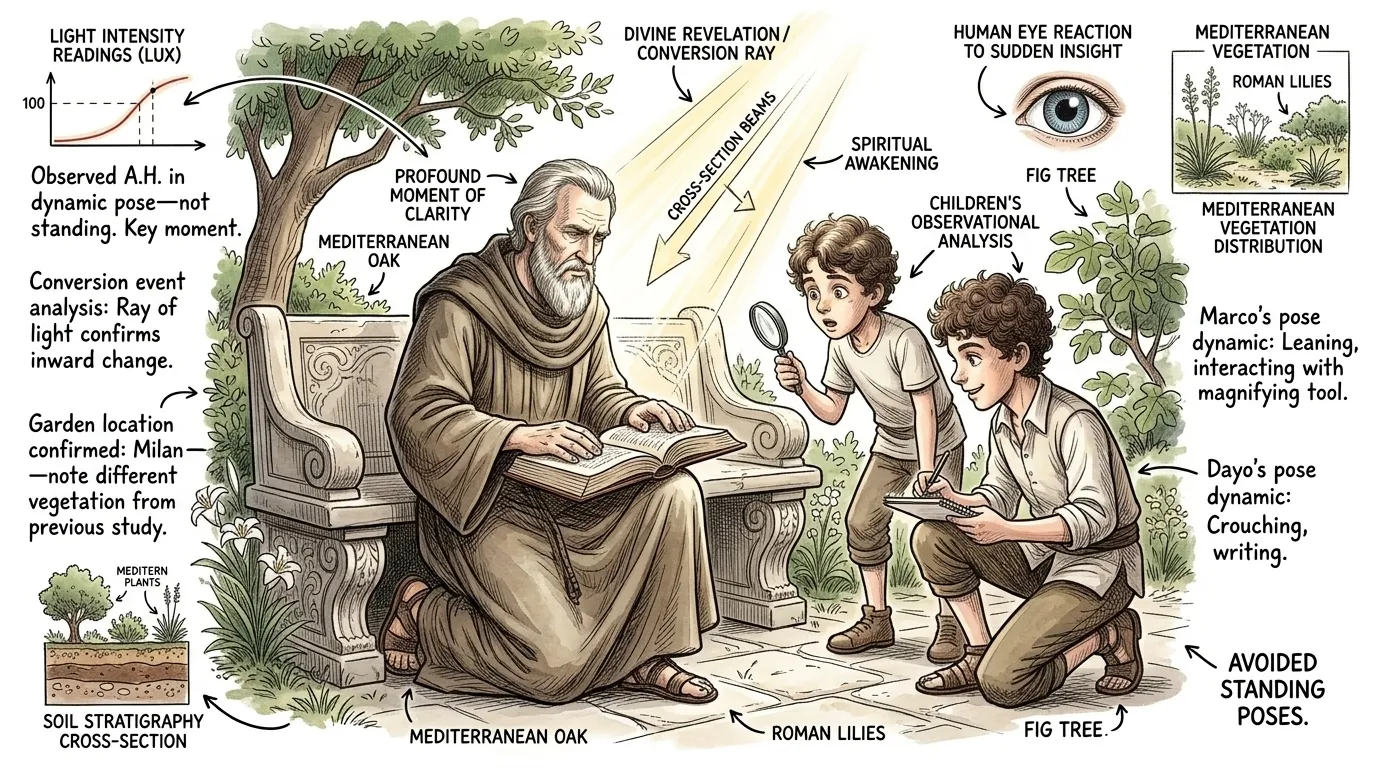
The pivotal moment came in a garden in Milan. Tormented by his inner conflicts, Augustine heard a child's voice chanting, 'Tolle lege, tolle lege' ['Take up and read, take up and read': The phrase Augustine heard that prompted him to open the Bible and read the passage that led to his conversion]. He opened the Bible at random and read a passage from Romans.
""That was it," Dr. Vance says. "The words resonated with him, offering a path out of his moral turmoil. He converted to Christianity and dedicated his life to God.""
Philosophy Note: Augustine's conversion experience is described in detail in his 'Confessions'.
Page 4
![As Bishop of Hippo [Bishop of Hippo: Augustine served as the Bishop of Hippo Regius (modern Annaba, Algeria) from 396 AD until his death in 430 AD], Augustine…](https://thewonderbooks.com/images/stories/augustine_of_hippo/illustrations/augustine_of_hippo_page_04_v1775193023099.webp "As Bishop of Hippo [Bishop of Hippo: Augustine served as the Bishop of Hippo Regius (modern Annaba, Algeria) from 396 AD until his death in 430 AD], Augustine…")
As Bishop of Hippo [Bishop of Hippo: Augustine served as the Bishop of Hippo Regius (modern Annaba, Algeria) from 396 AD until his death in 430 AD], Augustine wrote extensively. His most famous work, 'The City of God,' was a response to the sack of Rome by the Visigoths in 410 AD. People were losing faith.
""Augustine argued that there are two cities," explains Professor Vance. "The City of God, based on love of God, and the City of Man, based on love of self. Earthly cities will rise and fall, but the City of God endures eternally.""
Philosophy Note: 'The City of God' provided a theological framework for understanding history and the role of the Church.
Page 5
![Augustine grappled with the problem of free will in the face of divine omniscience [Divine omniscience: the capacity to know everything that there is to know].](https://thewonderbooks.com/images/stories/augustine_of_hippo/illustrations/augustine_of_hippo_page_05_v1775193053606.webp "Augustine grappled with the problem of free will in the face of divine omniscience [Divine omniscience: the capacity to know everything that there is to know].")
Augustine grappled with the problem of free will in the face of divine omniscience [Divine omniscience: the capacity to know everything that there is to know]. If God knows everything, are our choices truly free?
""Augustine argued that we have free will, but that God's grace is necessary for us to choose good," says Dr. Vance. "We are wounded by original sin, so our will is weakened. Divine grace heals our will and allows us to turn towards God.""
Philosophy Note: Augustine's views on grace and free will have been debated by theologians for centuries.
Page 6
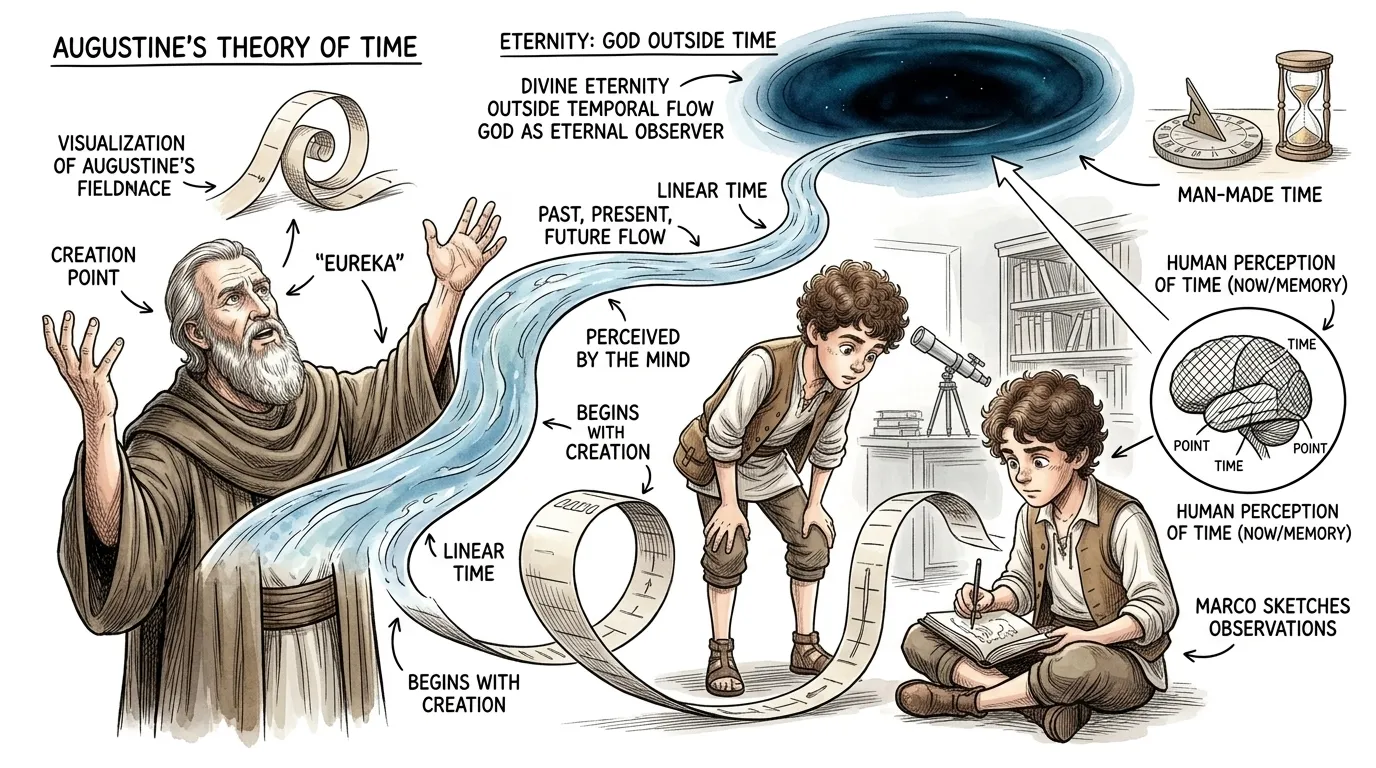
Augustine also pondered the nature of time. He argued that time is not something that exists independently of us, but rather something that is created by our minds.
""Before God created the world, there was no time," explains Professor Vance. "Time began with creation. God exists outside of time, in eternity.""
Philosophy Note: Augustine's concept of time influenced later philosophers like Immanuel Kant.
Page 7
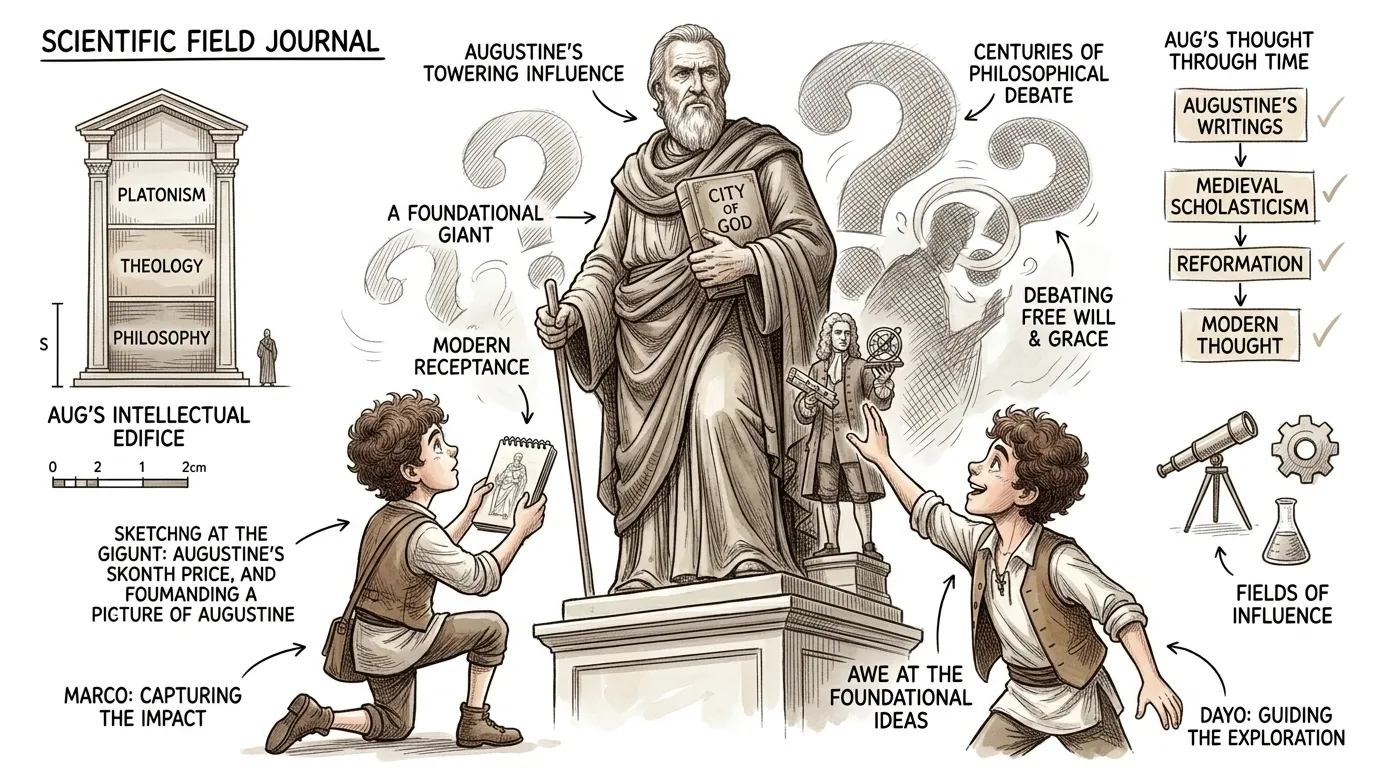
Augustine's ideas have been criticized over the centuries. Some find his views on original sin overly pessimistic. Others question his emphasis on divine grace.
"Dr. Vance says, "His ideas about predestination have been particularly controversial. But even his critics acknowledge his profound influence. As Isaac Newton said, 'If I have seen further it is by standing on the shoulders of giants.' Augustine is undoubtedly one of those giants. His thoughts laid the groundwork for much of Western thought, especially in the areas of morality, sin, and the concept of self.""
Philosophy Note: Augustine's writings continue to be studied and debated in philosophy and theology courses worldwide.
Page 8
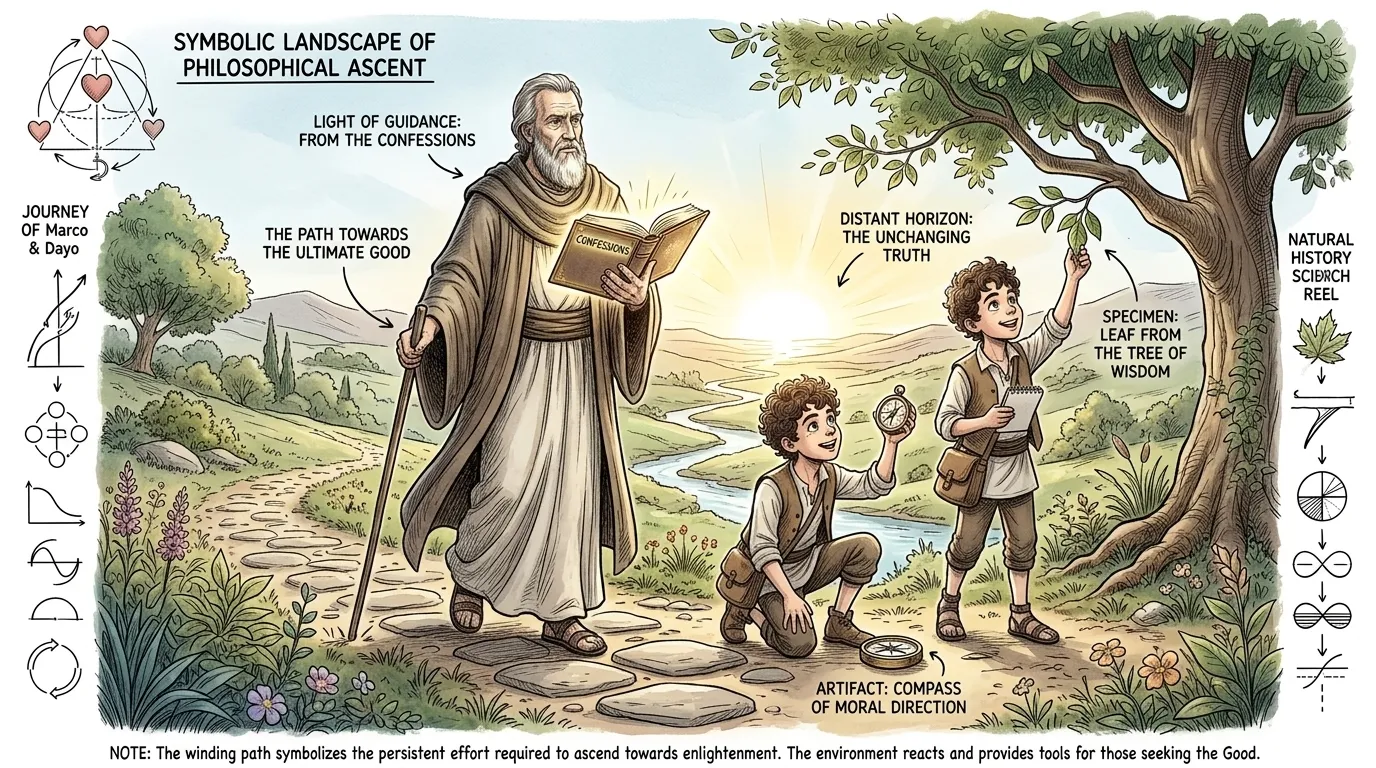
Despite living centuries ago, Augustine's questions are still relevant. We continue to grapple with our inner struggles, the search for meaning, and the relationship between faith and reason.
"Professor Vance concludes, "Augustine reminds us that the human condition is one of both great potential and profound limitation. He encourages us to strive for the good, even as we acknowledge our flaws.""
Philosophy Note: Augustine's 'Confessions' remains a popular and influential book for those seeking spiritual insight.
About this story
- Audience: general readers
Questions and answers
Read Wonder Philosophy on your phone
Wonder Philosophy is available on Android and iPhone and iPad. Get Wonder Philosophy on Google Play · Get Wonder Philosophy on the App Store.