Michel Foucault
Michel Foucault — an illustrated philosophy story. 10 illustrated pages, free to read on Wonder Philosophy.
Page 1
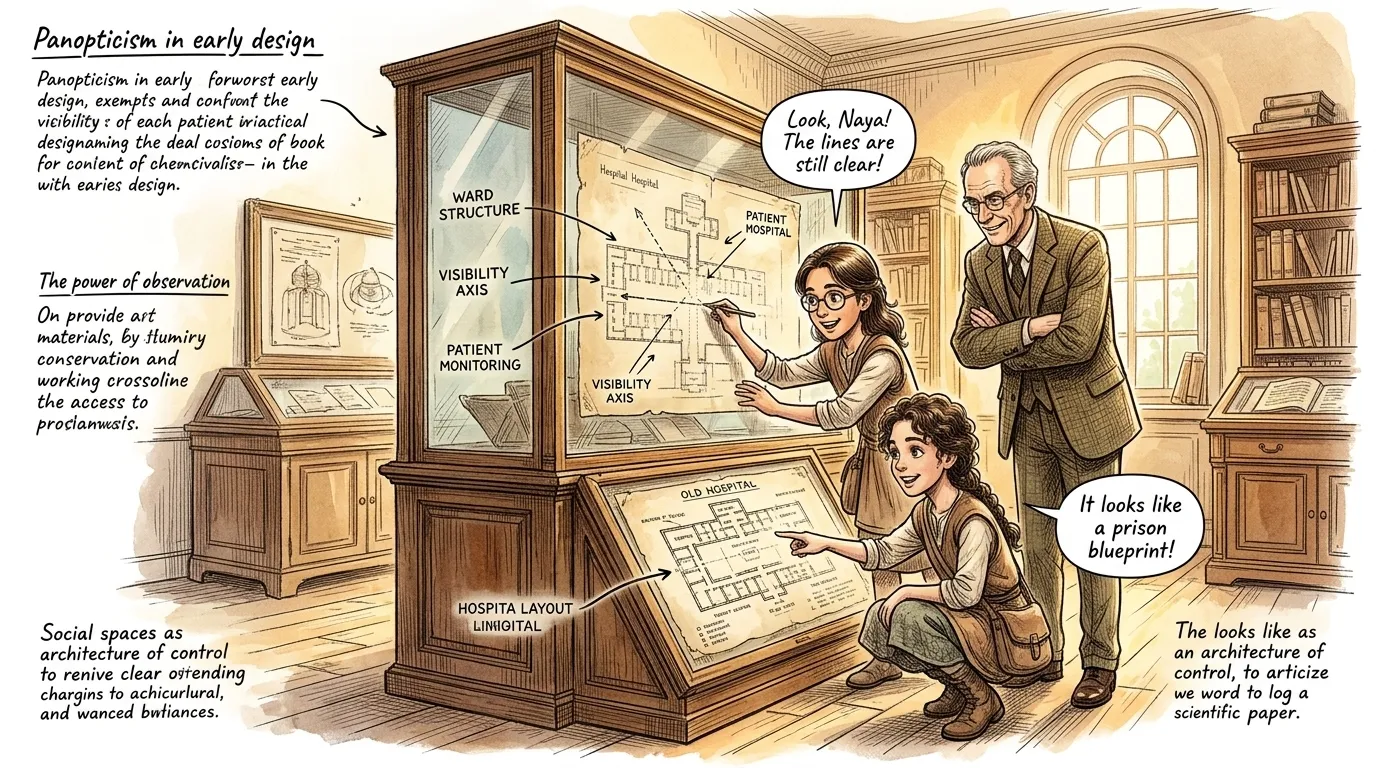
Priya and Naya stood before a large, aged exhibit case, their eyes tracing the faded diagrams and intricate texts. A sense of curiosity filled the quiet archive room, drawing them closer to understanding the hidden forces that shape our world.
""What's all this about, Priya?" Naya asked, pointing at a document detailing old hospital layouts. "It looks like a history lesson, but the captions talk about... 'power' and 'knowledge' being linked."
"That's exactly what Michel Foucault explored," Priya replied, adjusting her glasses. "He believed that what we consider 'knowledge' isn't neutral at all; it's deeply connected to who holds power and how society is organized."
"So, what's really going on in these old designs then?" Naya wondered aloud, her brow furrowed in concentration."
Philosophy Note: Michel Foucault (1926-1984) was a French philosopher who challenged traditional notions of power, knowledge, and truth. He argued that power is not just repressive but productive, shaping what counts as knowledge and normal behavior within society.
Page 2
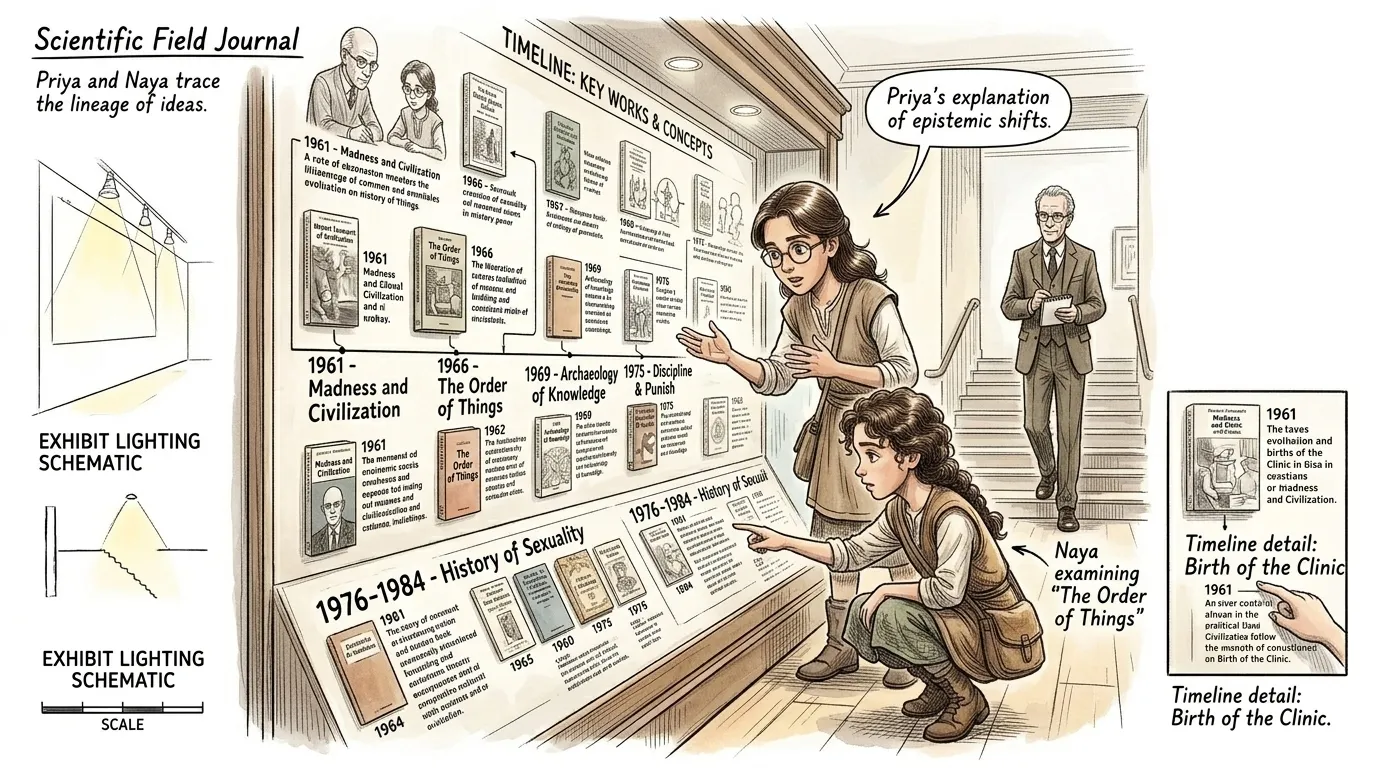
The girls moved to another section of the exhibit, where a timeline of Foucault's life and major works was displayed. They learned he wasn't just observing; he was actively dismantling accepted ideas about progress and reason.
""So, this Michel Foucault wasn't just a regular historian then?" Naya asked, tracing a finger along the timeline showing 'Madness and Civilization.'
"Not at all," Priya explained. "He didn't just study history; he questioned how history was written. He looked at things we take for granted, like mental health or crime, and showed how the 'truths' about them were created over time by powerful institutions."
"Like the ideas that people who are different are 'mad,' or that certain behaviors are 'criminal'?" Naya clarified, looking thoughtful."
Philosophy Note: Foucault's early works, such as 'Madness and Civilization' and 'Discipline and Punish,' traced how concepts like 'madness' or 'delinquency' were historically constructed, leading to new forms of societal control through institutions like asylums and prisons.
Page 3
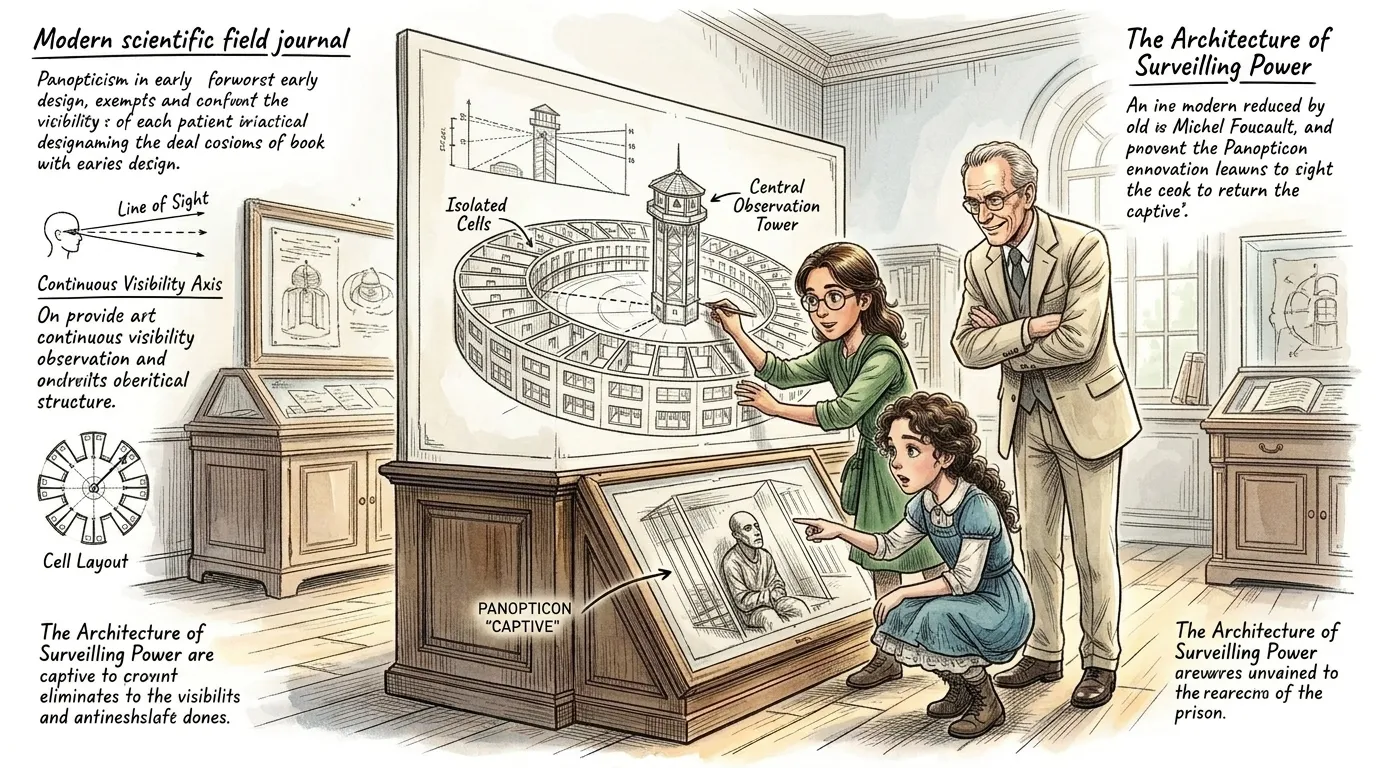
Further into the exhibit, they discovered a striking architectural drawing, different from anything they'd seen. It was a circular building, designed for constant observation, even if no one was actually watching.
""Look at this strange building plan," Priya murmured, pointing to an intricate blueprint. "It's a prison, but it's designed so one guard in the center can see all the cells without the prisoners knowing if they're being watched."
Naya leaned in, her eyes wide. "So, everyone just acts like they're being watched, all the time? Even if no one's there?"
"Exactly," Priya confirmed. "Foucault studied this idea, called the Panopticon. He believed its design was a perfect symbol for how power works in modern society, making us control ourselves.""
Philosophy Note: The Panopticon, a design by Jeremy Bentham, became a key metaphor for Foucault. It illustrates how disciplinary power operates not through overt force, but through constant, unseen surveillance, leading to self-regulation of behavior.
Page 4
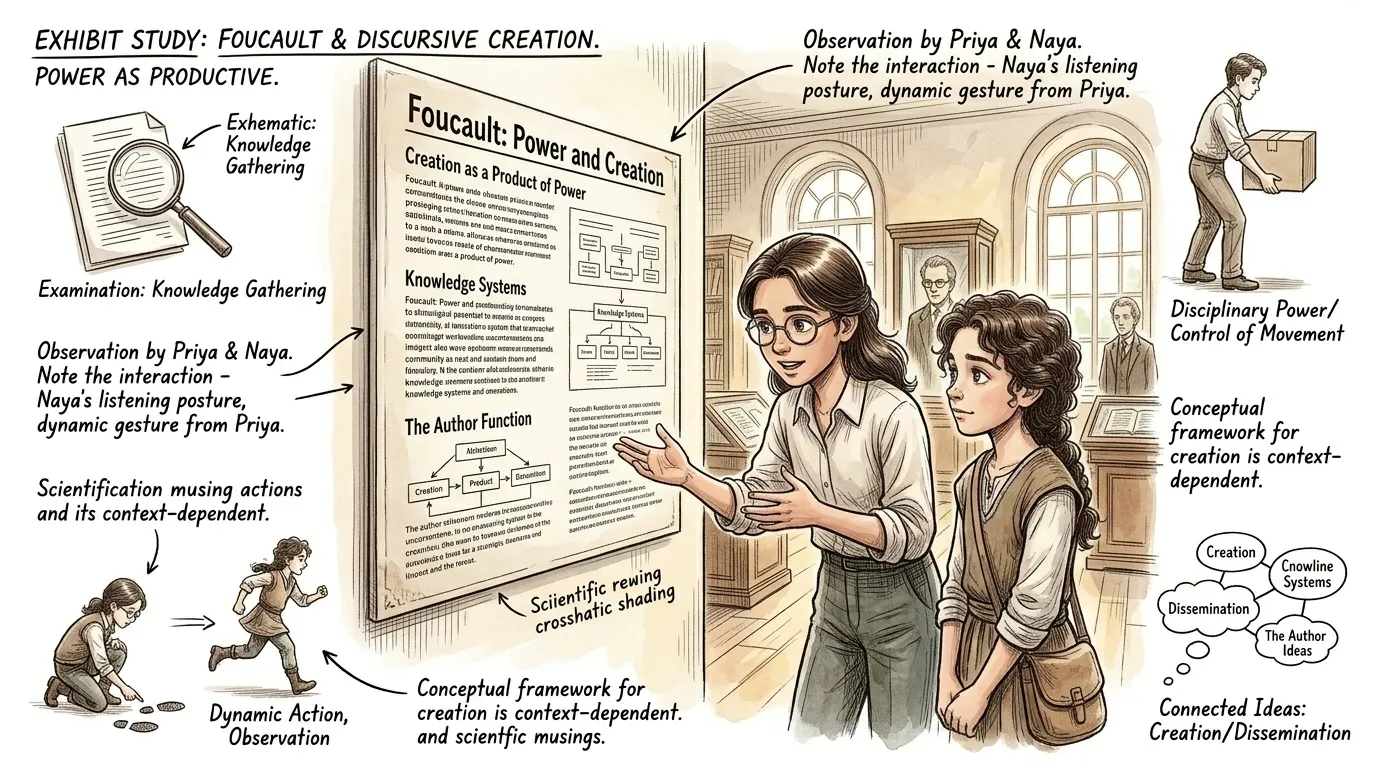
Priya found another display, explaining how Foucault saw power as more than just saying 'no.' It was also about creating categories and identities, defining who we are and what is 'normal.'
""Foucault argued that power isn't just about leaders telling people what not to do," Priya explained, reading from an exhibit panel. "He said power also creates things: it defines what's 'normal' or 'healthy,' and even what it means to be a 'person' in a certain way."
"So, like, how doctors decide what's an illness, or how schools decide what's 'smart'?" Naya mused, nodding slowly.
"Precisely. These definitions give power to certain groups and shape how we see ourselves and others," Priya confirmed, looking at Naya meaningfully."
Philosophy Note: Foucault's concept of 'power/knowledge' highlights that power is not merely a prohibitive force. It actively produces discourses, categories, and subjects, establishing norms and defining what is considered 'true' or 'rational' at a given time.
Page 5
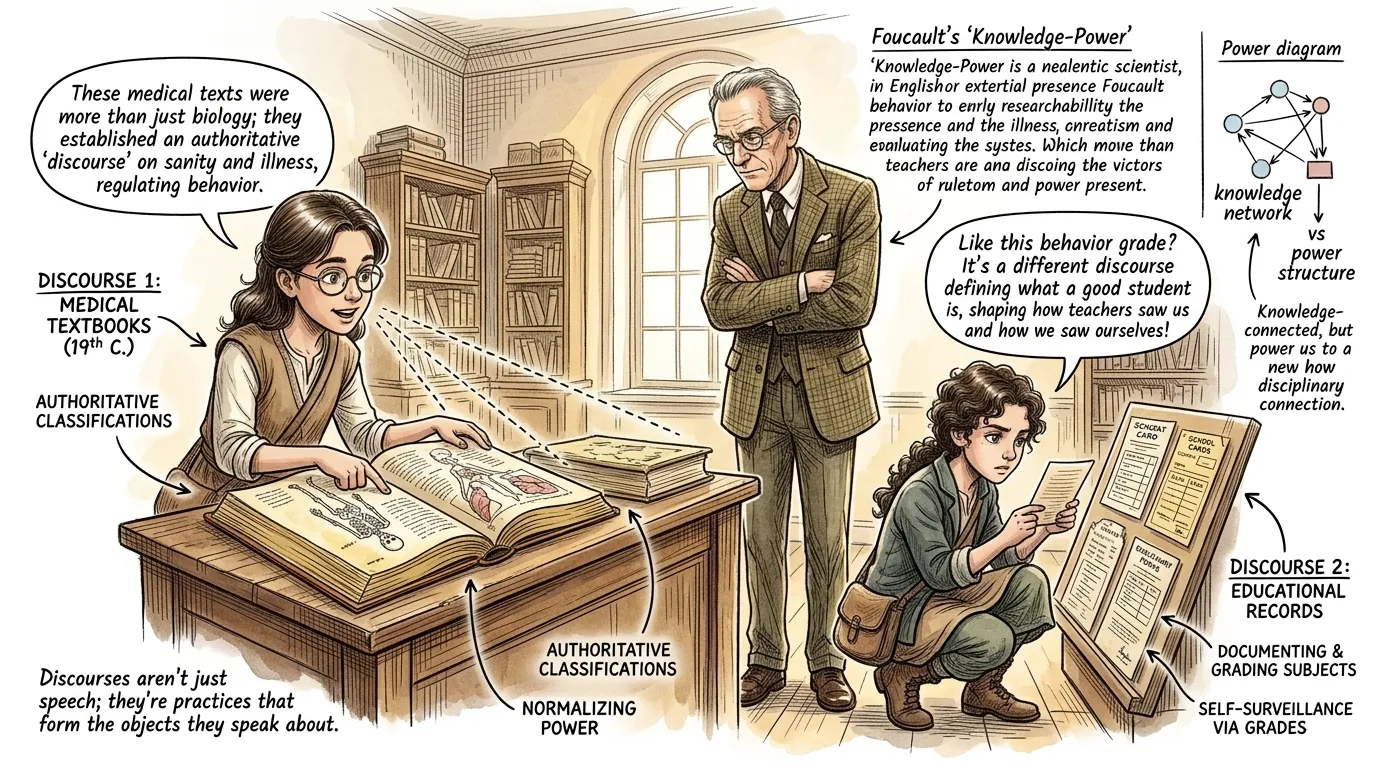
They moved past old legal documents and scientific classifications. Priya pointed out how the very language used in these texts was a form of power, shaping what could be thought or said.
""Foucault called these systems of language and thought 'discourses'," Priya said, tapping a finger on an old medical textbook. "The way we talk about things—like 'delinquents' or 'patients'—isn't just describing reality; it's actually creating it."
"You mean like how calling someone a 'genius' makes us expect certain things from them, and how they act?" Naya asked, looking at an old school report card display.
"Yes, and it limits other ways of thinking too. Discourses determine what is considered valid knowledge, and who gets to speak with authority about it," Priya explained, her gaze serious."
Philosophy Note: Discourse, for Foucault, refers to systems of thought, language, and practices that construct the objects of which they speak. They establish what can be said, by whom, and with what authority, shaping our understanding of reality and individual identities.
Page 6
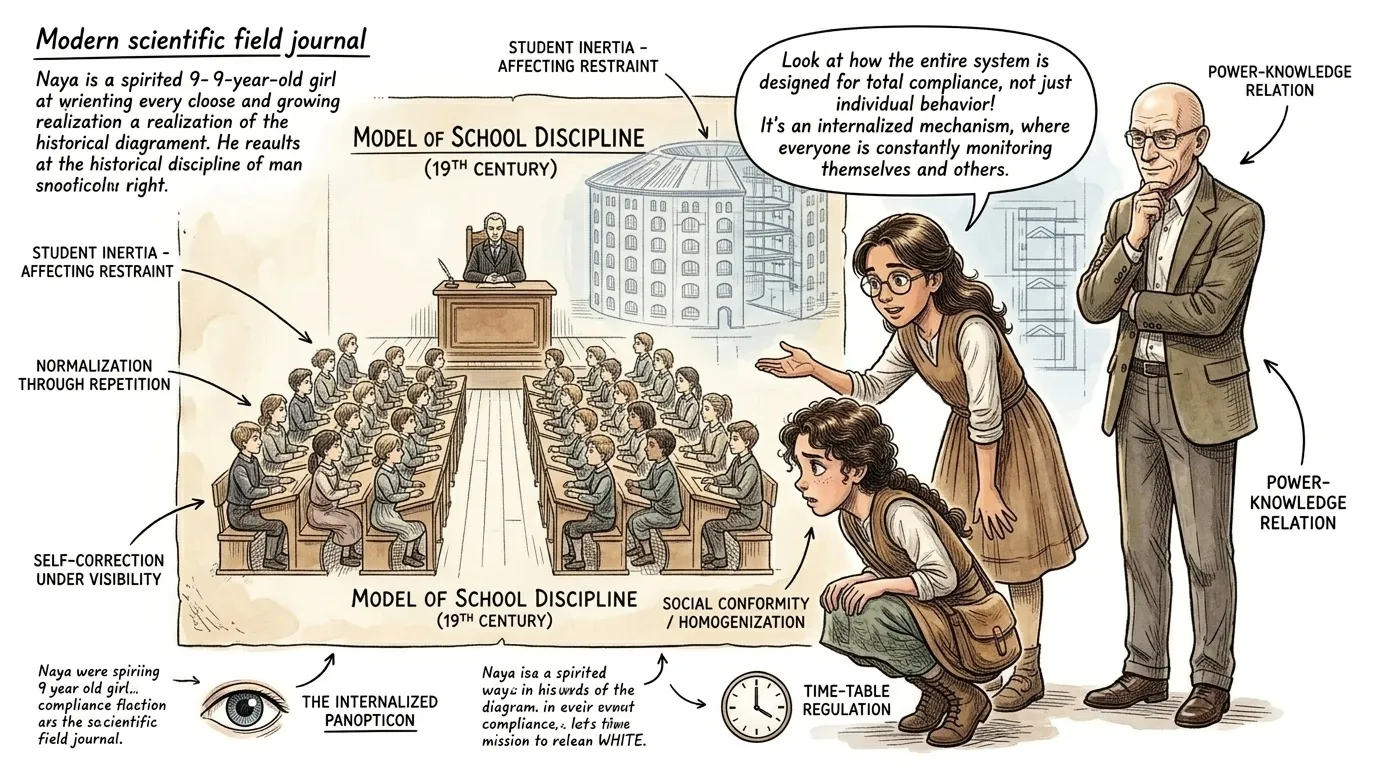
As they continued their exploration, the girls saw how Foucault's ideas connected to the subtle ways societies encouraged people to conform, making them police their own actions without needing an obvious guard.
""It's like how everyone in that Panopticon prison starts to act 'good' because they might be watched," Naya observed, remembering the blueprint from earlier. "We start to govern ourselves."
"Exactly! Foucault called this 'disciplinary power' – it creates 'docile bodies' that are easier to manage," Priya added, pointing to a historical diagram illustrating school discipline.
"So, even when we think we're being totally free, we're often following rules that have been built into society for a long time?" Naya wondered, her expression a mix of realization and unease."
Philosophy Note: Disciplinary power, according to Foucault, is a form of power that operates through the creation of norms, surveillance, and examinations. It aims to train individuals into 'docile bodies' that self-regulate their behavior, making them productive and manageable subjects.
Page 7
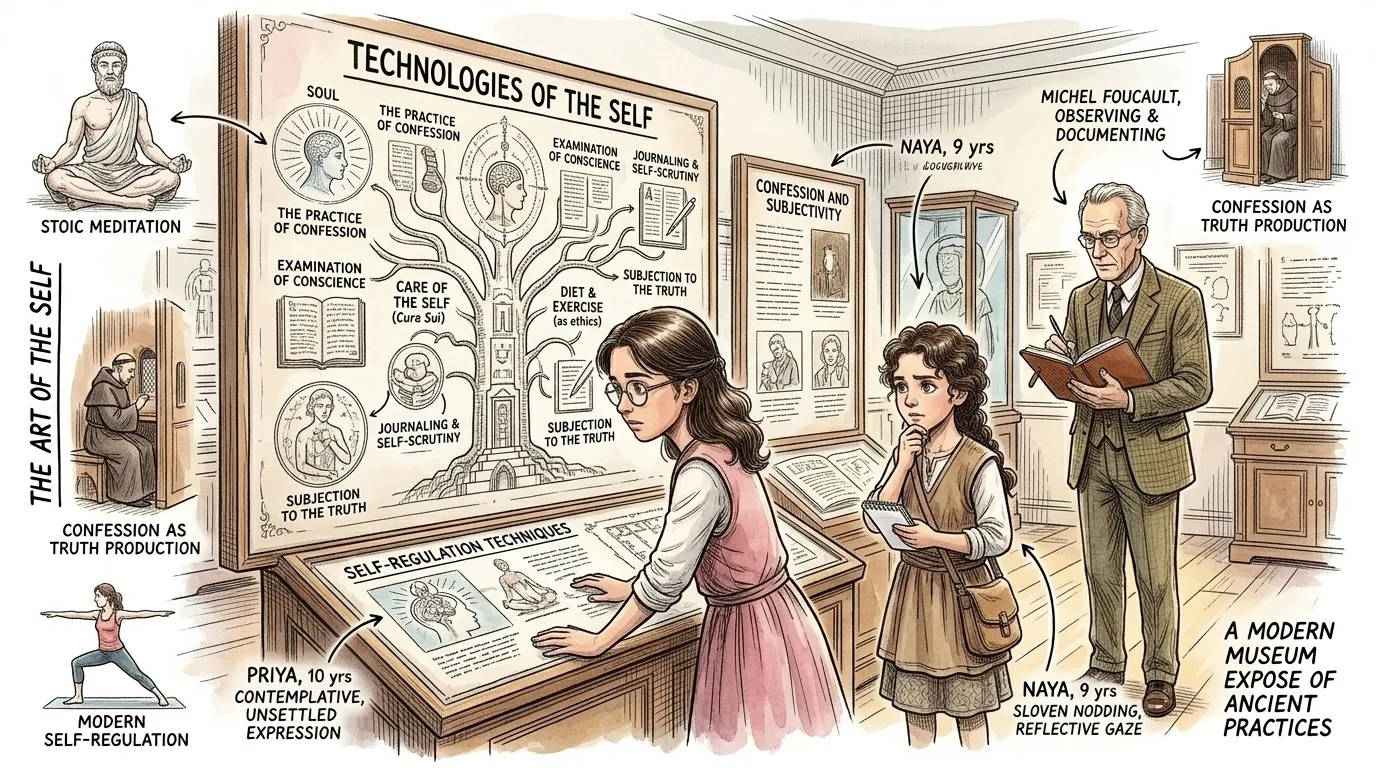
The ideas felt heavy, making them question long-held beliefs about personal freedom. If so much of what we knew and did was shaped by power, where did true liberty lie?
""It's a bit unsettling, isn't it?" Priya said, looking at a display on 'Technologies of the Self.' "It makes you wonder how much of what we believe to be 'true' or 'normal' is actually just what power has decided for us."
Naya nodded slowly. "It feels like even our thoughts aren't entirely our own. How can you be truly free if you're always living inside these frameworks?"
"That's a core challenge Foucault posed. He didn't offer easy answers, but he wanted us to be aware of these forces," Priya replied, her voice soft."
Philosophy Note: Foucault's work implicitly challenges liberal notions of individual freedom by demonstrating how subjects are constituted through power relations. He emphasized the need for constant critique and 'care of the self' to navigate these complex dynamics.
Page 8
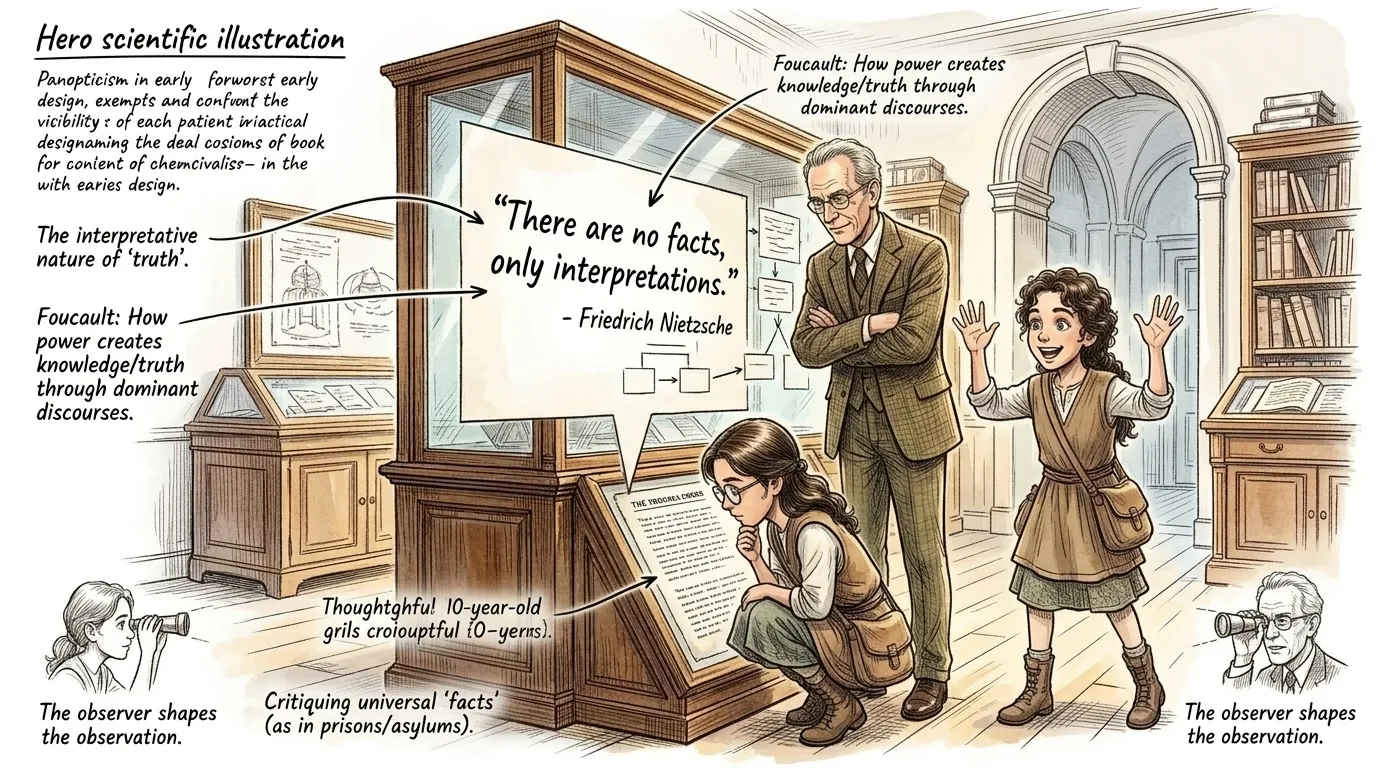
A quote on a nearby panel caught Priya's eye, a stark reminder of the depth of Foucault's influence and the thinkers who inspired him.
""You know," Priya said, her voice thoughtful, "I remember reading something in one of my philosophy books. The German philosopher Friedrich Nietzsche once said, 'There are no facts, only interpretations.'"
Naya's eyes widened. "That fits with Foucault, doesn't it? Like how the Panopticon isn't just a building, but an interpretation of how to control people, and how that interpretation then becomes a kind of 'fact' for those inside it."
"Exactly!" Priya exclaimed. "It's about understanding that what we consider objective truth is often shaped by unseen forces and historical context.""
Philosophy Note: Friedrich Nietzsche (1844-1900) was a German philosopher whose ideas on power, truth, and interpretation heavily influenced Foucault. Nietzsche's genealogical method, which Foucault adopted, challenged the idea of universal, objective truths, viewing them instead as products of historical and power-laden processes.
Page 9
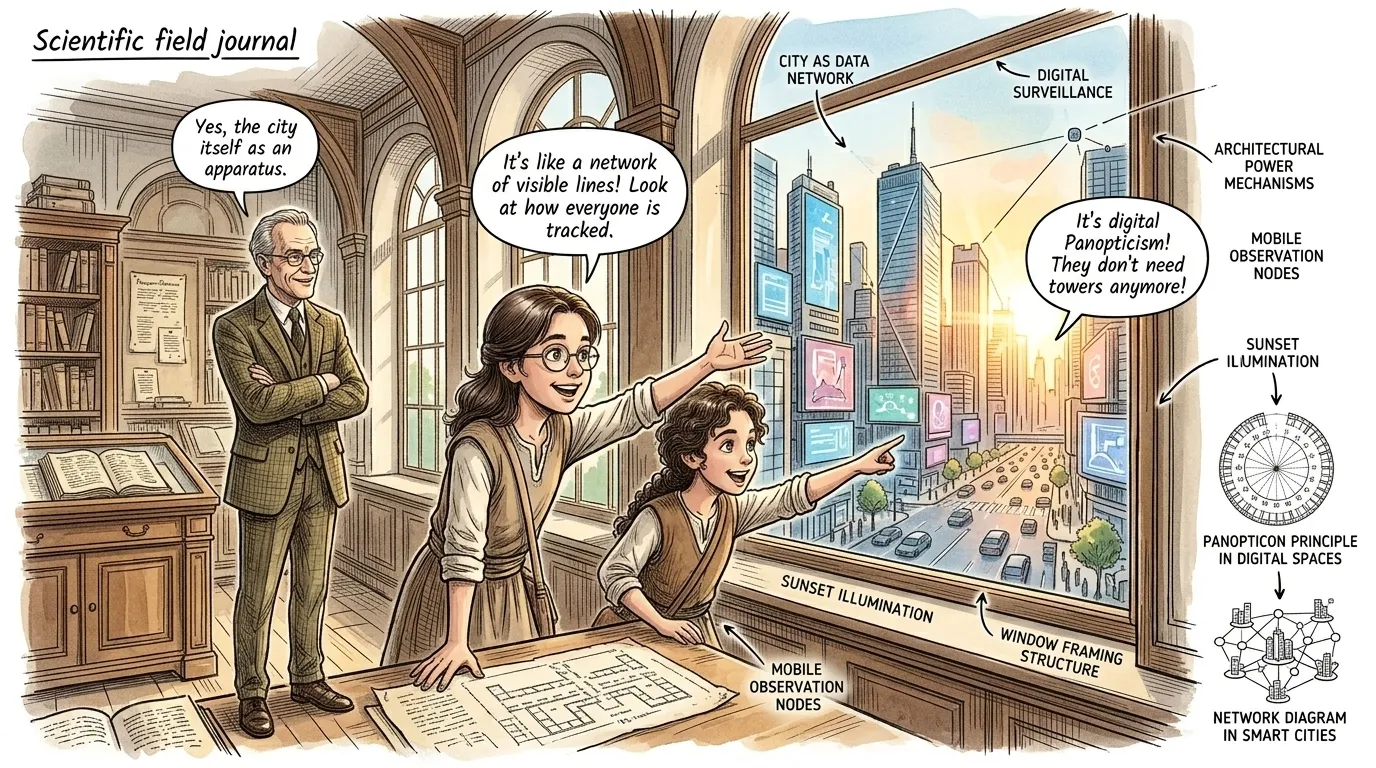
Stepping out of the exhibit, the sunlight felt different. Foucault's ideas resonated in every corner of the modern world, from digital spaces to healthcare systems.
""This makes me think about social media," Naya suddenly said. "We post things, always thinking about who might see it, even if we don't know. It's like a digital Panopticon, right?"
"That's a brilliant connection, Naya!" Priya agreed. "And think about online reviews, or how our medical data is used. These systems categorize us, create norms, and subtly influence our choices, all without a visible 'guard' telling us what to do."
"So, Foucault's ideas are still super important, even today," Naya concluded, looking out at the city bustling beyond the archive windows."
Philosophy Note: Foucault's analysis remains highly relevant for understanding contemporary phenomena such as digital surveillance, social media's impact on identity, the medicalization of everyday life, and the role of data in shaping individual behavior and societal norms.
Page 10
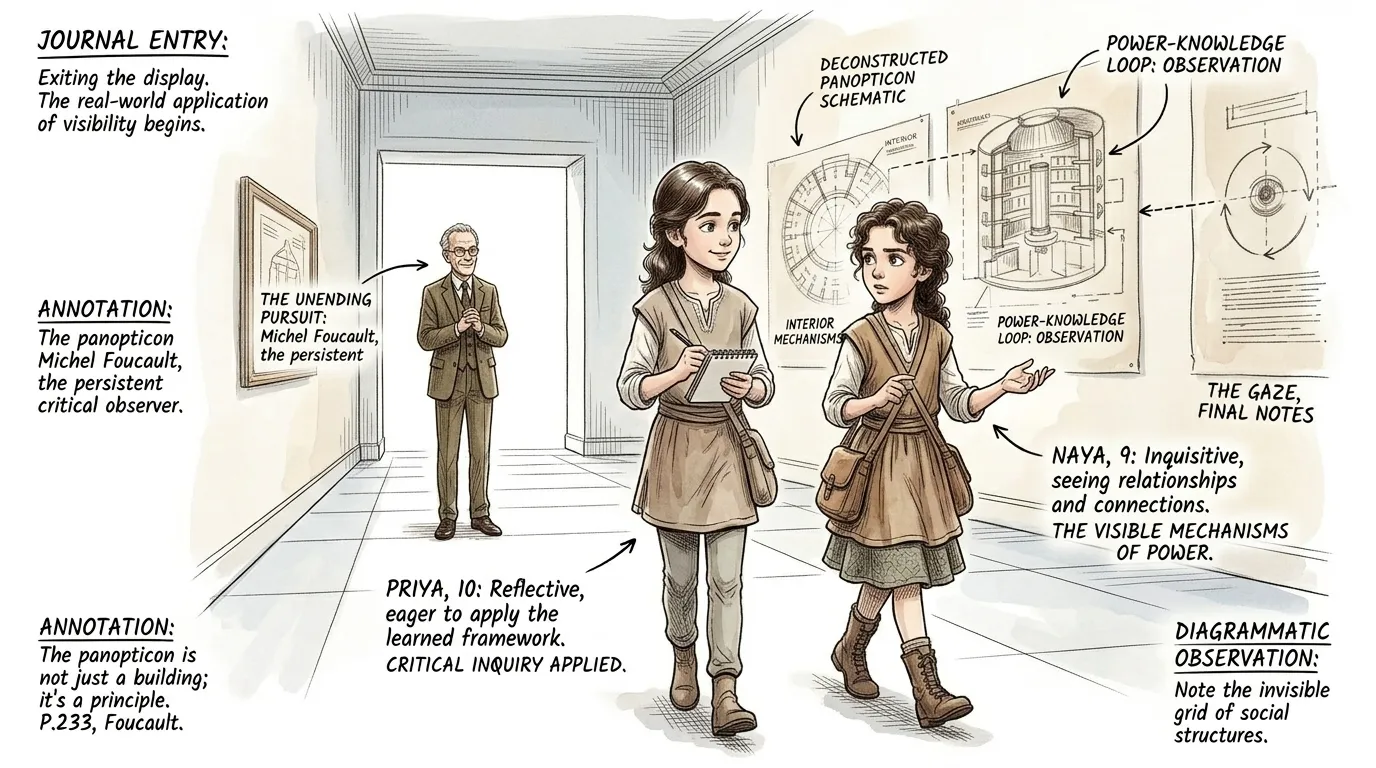
Foucault's work doesn't offer easy solutions, but it provides a powerful lens through which to examine our own lives and the systems we inhabit. It's an invitation to question, to think critically, and to recognize the subtle workings of power.
""It's not about finding a simple answer or escaping power completely," Priya mused, as they walked towards the exit. "Foucault just wants us to be aware, to understand how things are put together, so we can challenge them when necessary."
"So, it's like learning to see the hidden strings," Naya added, a determined look on her face. "Not just accepting things as 'just the way they are'."
"Exactly. It's a continuous invitation to critically analyze, to never stop asking: 'How did this come to be, and whose interests does it serve?'" Priya finished, smiling softly at her friend."
Philosophy Note: Foucault's legacy is an encouragement to adopt a critical stance towards established knowledge, power structures, and the 'truths' that govern our lives. His work provides tools for understanding how identities and social realities are constructed, fostering a continuous process of questioning and self-reflection.
About this story
- Audience: kids (ages 6–12)
Questions and answers
Read Wonder Philosophy on your phone
Wonder Philosophy is available on Android and iPhone and iPad. Get Wonder Philosophy on Google Play · Get Wonder Philosophy on the App Store.