Protagoras
Protagoras — an illustrated philosophy story. 10 illustrated pages, free to read on Wonder Philosophy.
Page 1
![What if truth isn't fixed, but changes with each person's perspective? This is the radical idea proposed by Protagoras [490-420 BC], a philosopher from ancient…](https://thewonderbooks.com/images/stories/protagoras/illustrations/protagoras_page_01_v1775185567737.webp "What if truth isn't fixed, but changes with each person's perspective? This is the radical idea proposed by Protagoras [490-420 BC], a philosopher from ancient…")
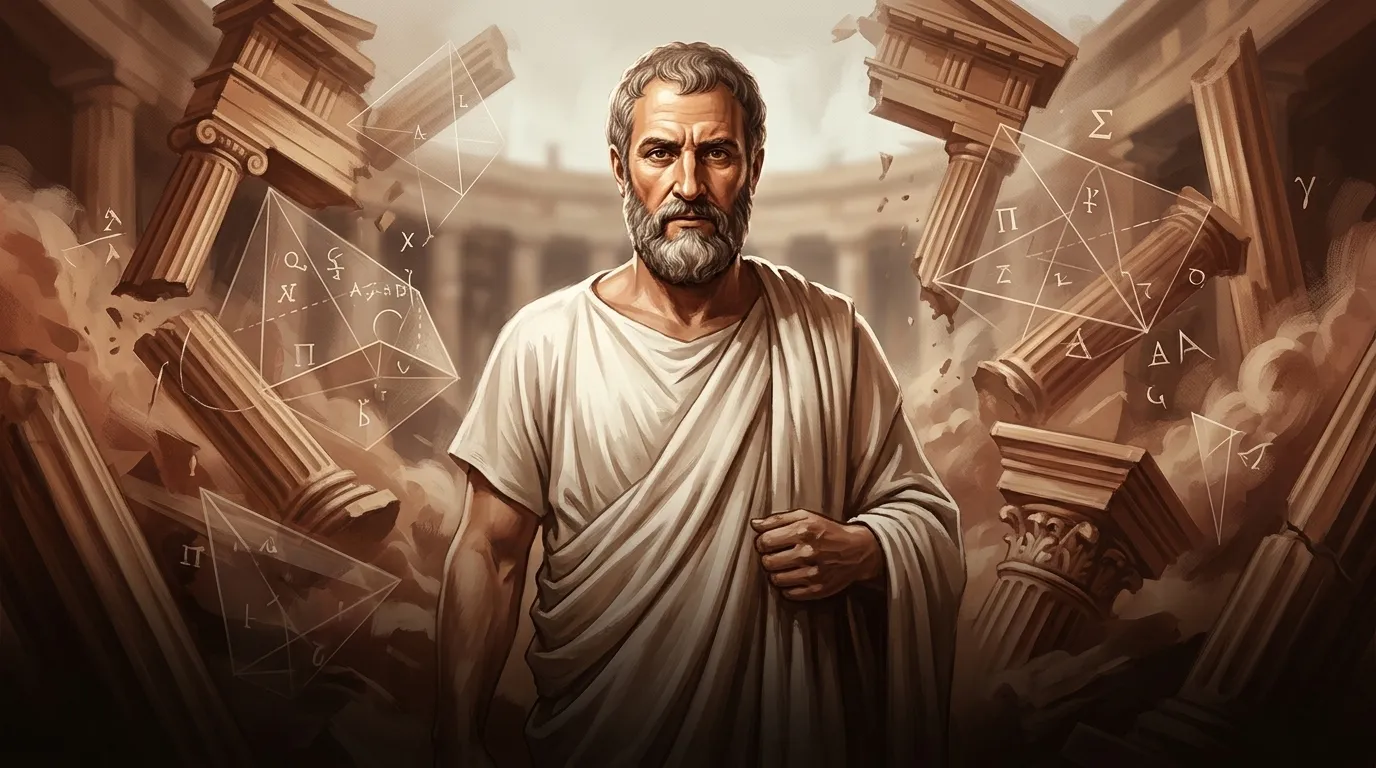
What if truth isn't fixed, but changes with each person's perspective? This is the radical idea proposed by Protagoras [490-420 BC], a philosopher from ancient Greece. His ideas challenge the very notion of objective reality and continue to spark debate today. Imagine a world where your understanding is your truth.
Philosophy Note: Protagoras's most famous saying is, 'Man is the measure of all things,' suggesting individual perception shapes reality.
Page 2
![Protagoras was a Sophist [teachers of rhetoric and philosophy in ancient Greece]. Unlike philosophers seeking universal truths, Sophists focused on practical…](https://thewonderbooks.com/images/stories/protagoras/illustrations/protagoras_page_02_v1775185693565.webp "Protagoras was a Sophist [teachers of rhetoric and philosophy in ancient Greece]. Unlike philosophers seeking universal truths, Sophists focused on practical…")
Protagoras was a Sophist [teachers of rhetoric and philosophy in ancient Greece]. Unlike philosophers seeking universal truths, Sophists focused on practical skills like rhetoric. They traveled from city to city, teaching citizens how to argue effectively and succeed in public life. This approach put him at odds with philosophers such as Socrates, who believed in objective moral standards.
"Kai, what's a 'Sophist'?"
Philosophy Note: Sophists were often criticized for prioritizing persuasion over truth, a point of contention for many traditional philosophers.
Page 3
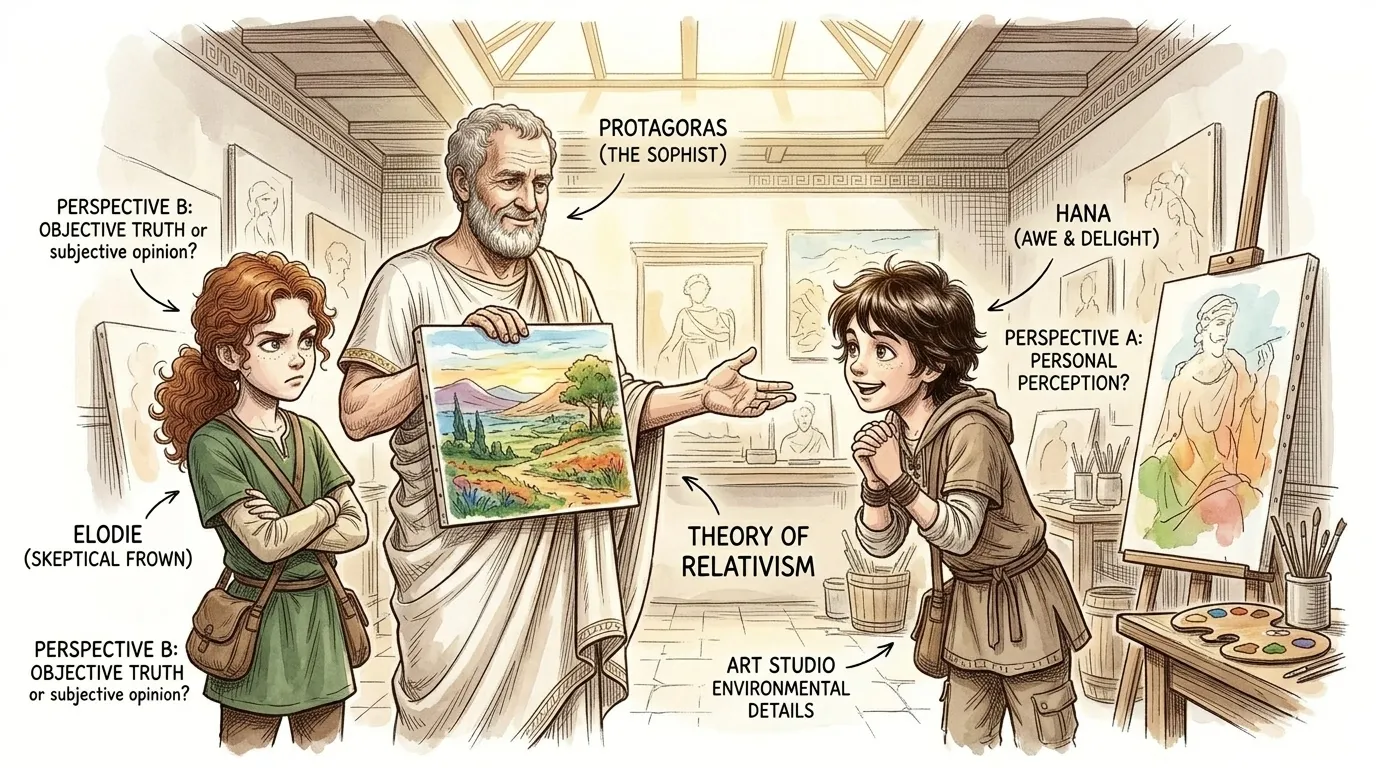
Protagoras believed that every issue has two sides and that skillful rhetoric could make either side appear stronger. This idea challenges the notion that there is one 'right' answer or one 'true' perspective. Consider a painting: is it beautiful or ugly? Protagoras might argue it depends entirely on the viewer's eye.
"Do you mean that what's right for me might be wrong for someone else?"
Philosophy Note: This relativism is the heart of Protagoras's philosophy, and it has profound implications for ethics, politics, and knowledge.
Page 4
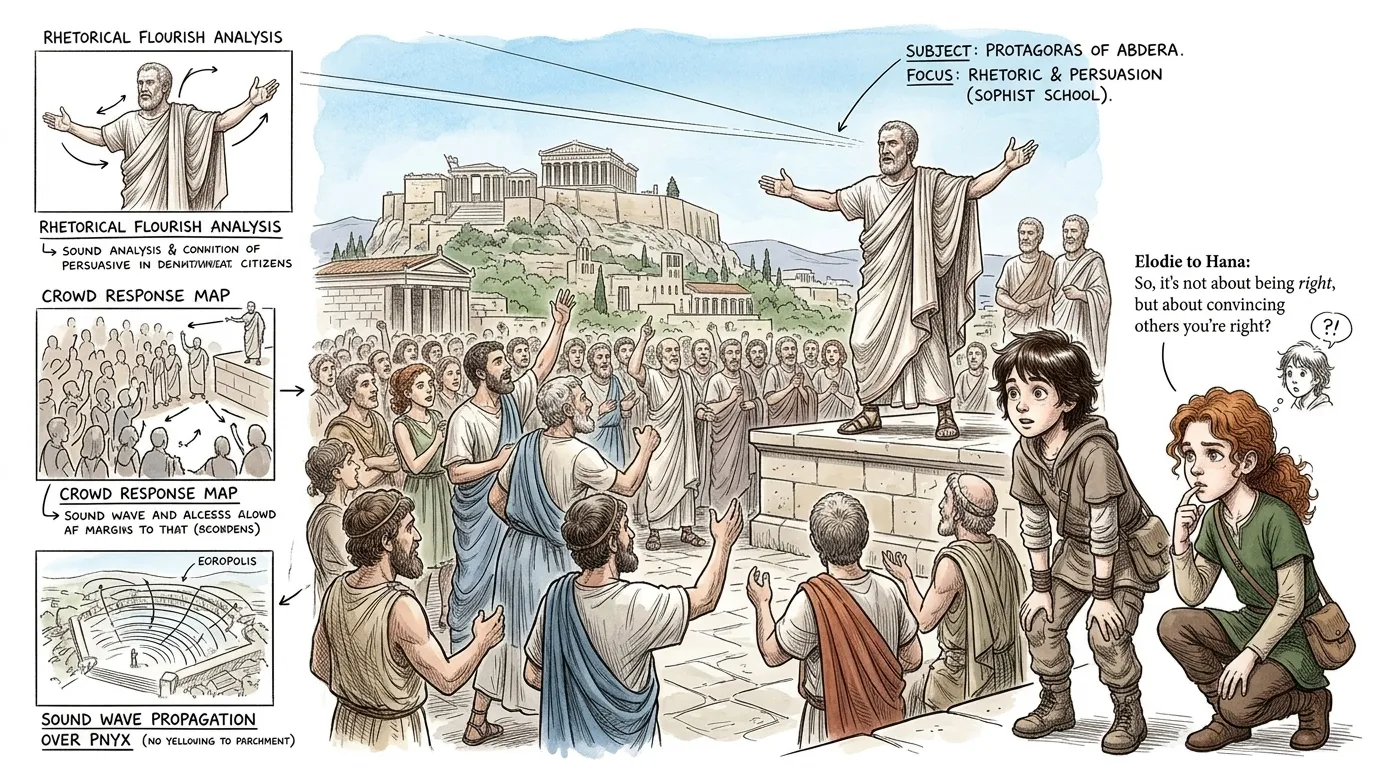
For Protagoras, the goal wasn't to discover absolute truth, but to persuade others to adopt your viewpoint. He saw rhetoric as a powerful tool for shaping society. By mastering persuasive language, individuals could influence laws, policies, and even moral codes. This emphasis on rhetoric had a major influence on Athenian democracy.
"So, it's not about being right, but about convincing others you're right?"
Philosophy Note: Protagoras's emphasis on rhetoric reflects the importance of public speaking and debate in ancient Athenian society.
Page 5
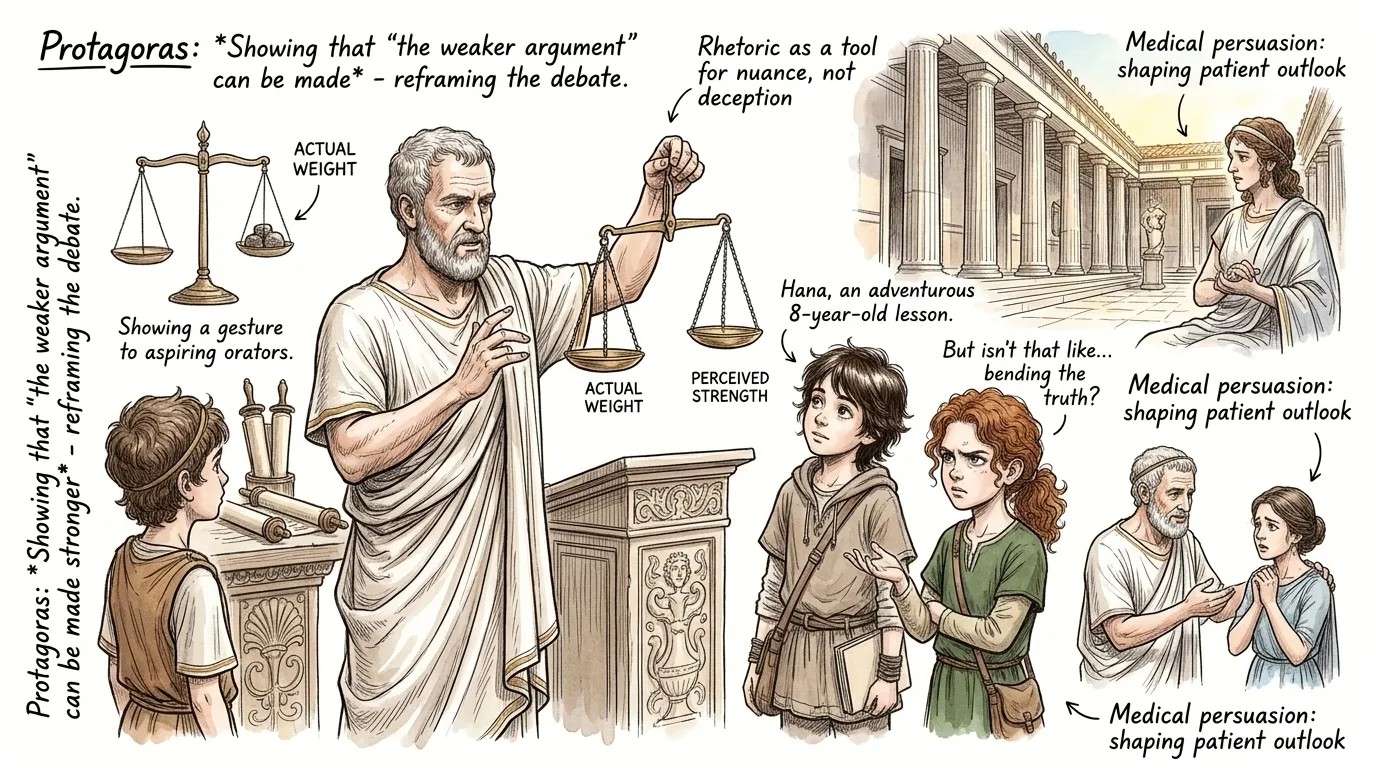
Protagoras famously claimed he could make the weaker argument the stronger. This wasn't about deception. It was about understanding the nuances of an issue and presenting it in the most convincing way. Think of a doctor explaining a treatment: they must persuade the patient it will work, even if the science is complex.
"But isn't that like... bending the truth?"
Philosophy Note: The ability to present any argument persuasively was highly valued in Athenian law and politics.
Page 6
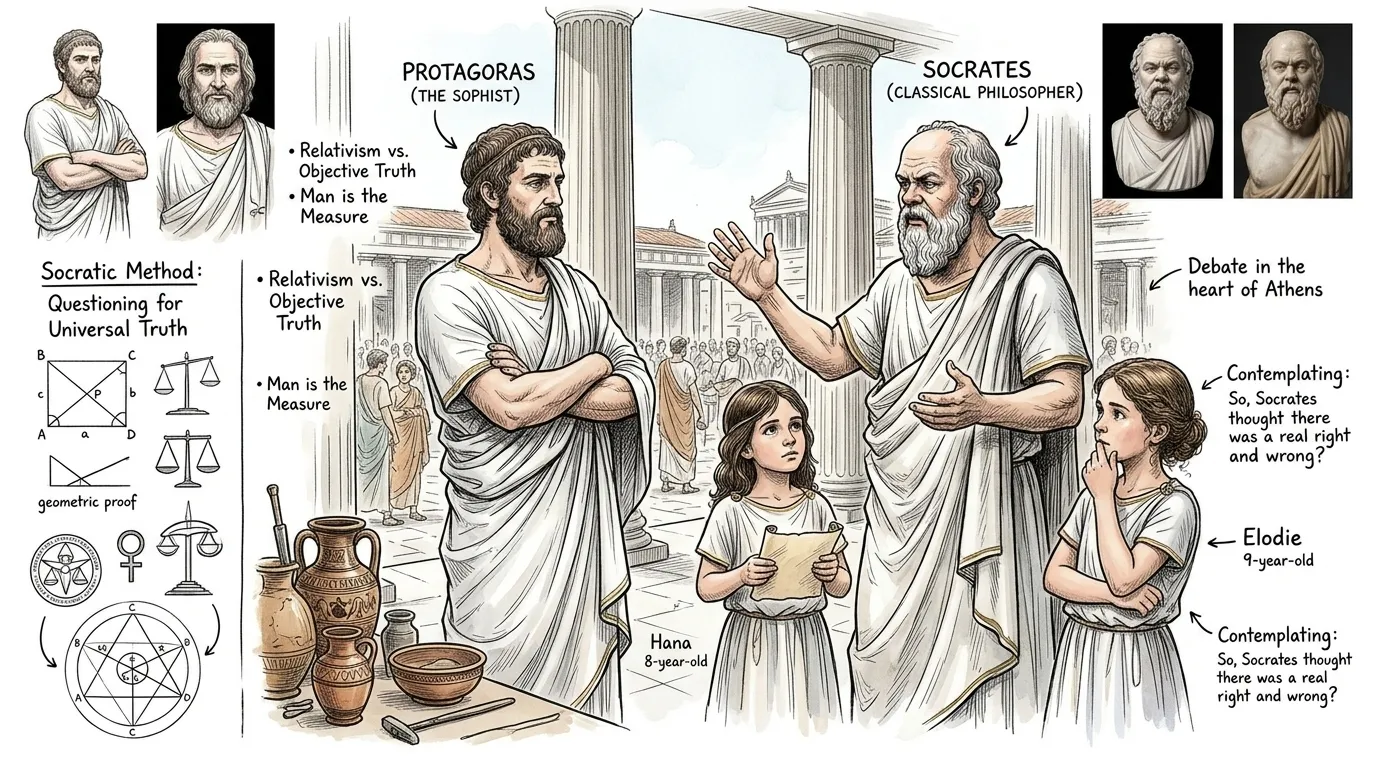
Socrates strongly disagreed with Protagoras. He believed in objective truth and moral principles. For Socrates, some actions are inherently right or wrong, regardless of individual perception. This clash between relativism and objectivism continues to be a central debate in philosophy today. He felt it was leading to a moral decay within Athens.
"So, Socrates thought there was a real right and wrong?"
Philosophy Note: The philosophical tension between Protagoras and Socrates shaped much of Western thought. Socrates [470-399 BC] believed there was objective truth, not variable.
Page 7
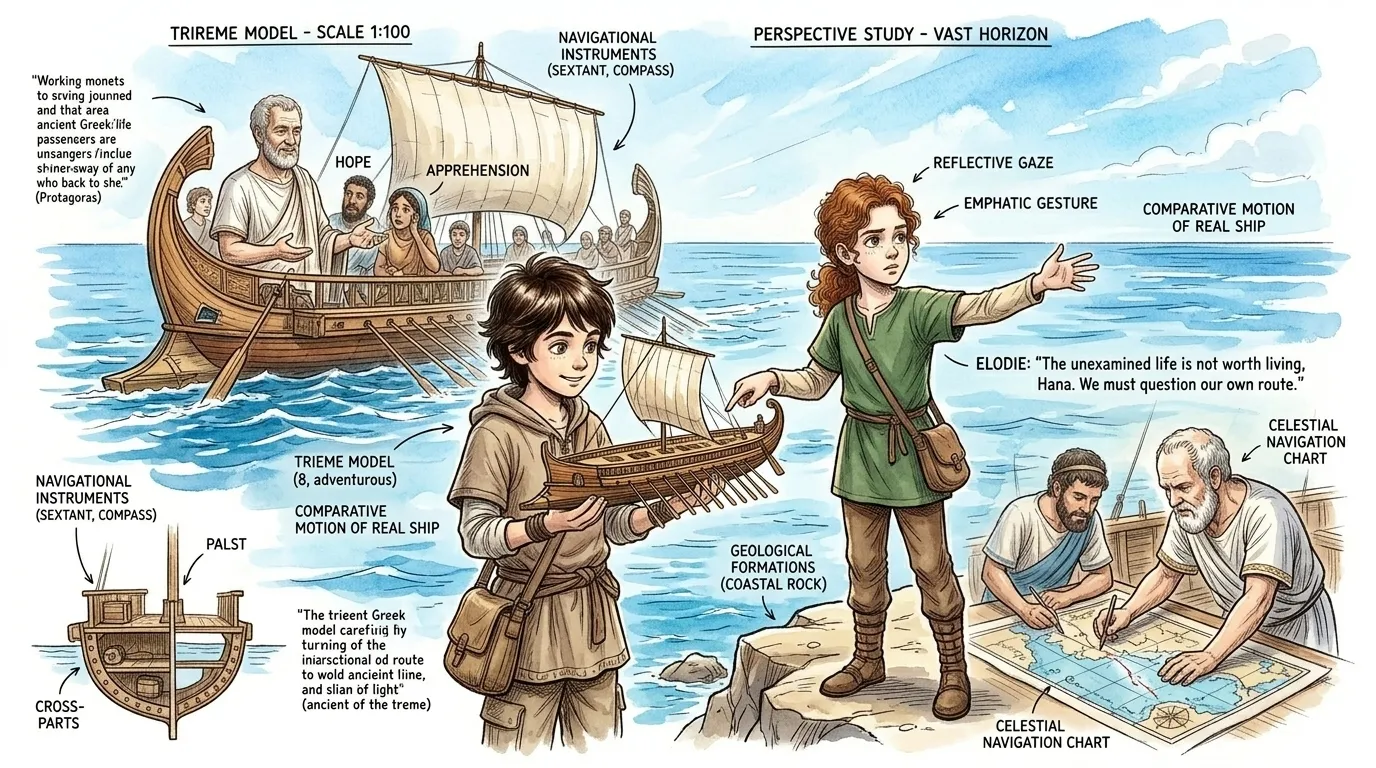
Imagine a ship sailing at sea. Protagoras might say each passenger has their own truth about the journey – their experience, their fears, their hopes. Socrates, on the other hand, would argue that the true course of the ship is objective, determined by navigation and the destination, not by individual feelings. Who is right?
"'The unexamined life is not worth living,' Kai said, remembering what Socrates said. 'He meant that we need to always question what we believe."
Philosophy Note: Socrates' famous quote emphasizes the importance of self-reflection and critical thinking.
Page 8

Protagoras's ideas are still relevant. In a world of diverse cultures and beliefs, understanding relativism can promote tolerance. It reminds us that our own perspectives are shaped by our experiences. However, it also raises challenges: how do we resolve conflicts if there is no objective truth? How do we define justice?
"So, knowing about Protagoras helps us understand each other better?"
Philosophy Note: Understanding diverse perspectives is vital in a globalized world, but pure relativism also has dangers.
Page 9
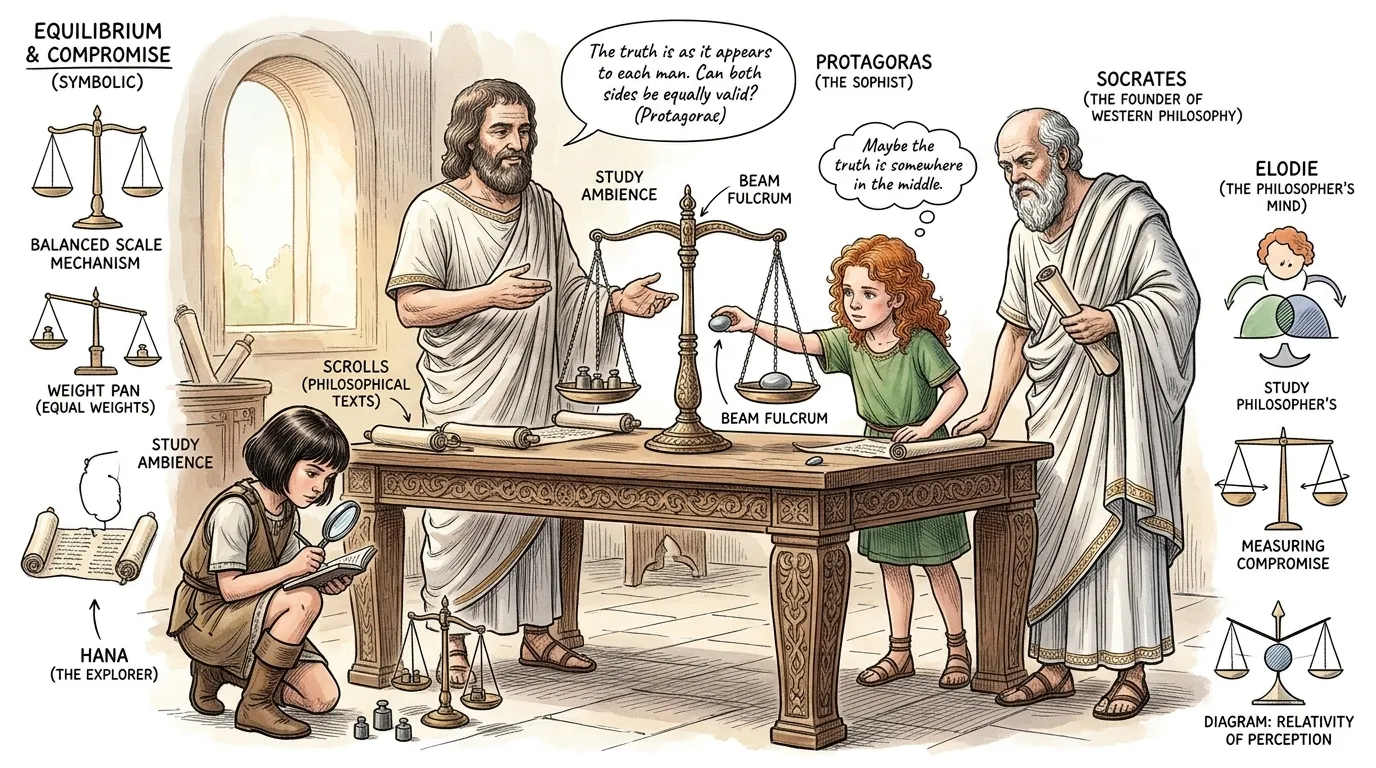
Ultimately, Protagoras teaches us to be aware of our own biases and to consider other viewpoints. While objective truth may be elusive, striving to understand different perspectives can lead to greater empathy and more informed decisions. It encourages us to be critical thinkers in a complex world.
"Maybe the truth is somewhere in the middle."
Philosophy Note: The search for truth may be a lifelong journey, requiring both personal reflection and open-mindedness.
Page 10
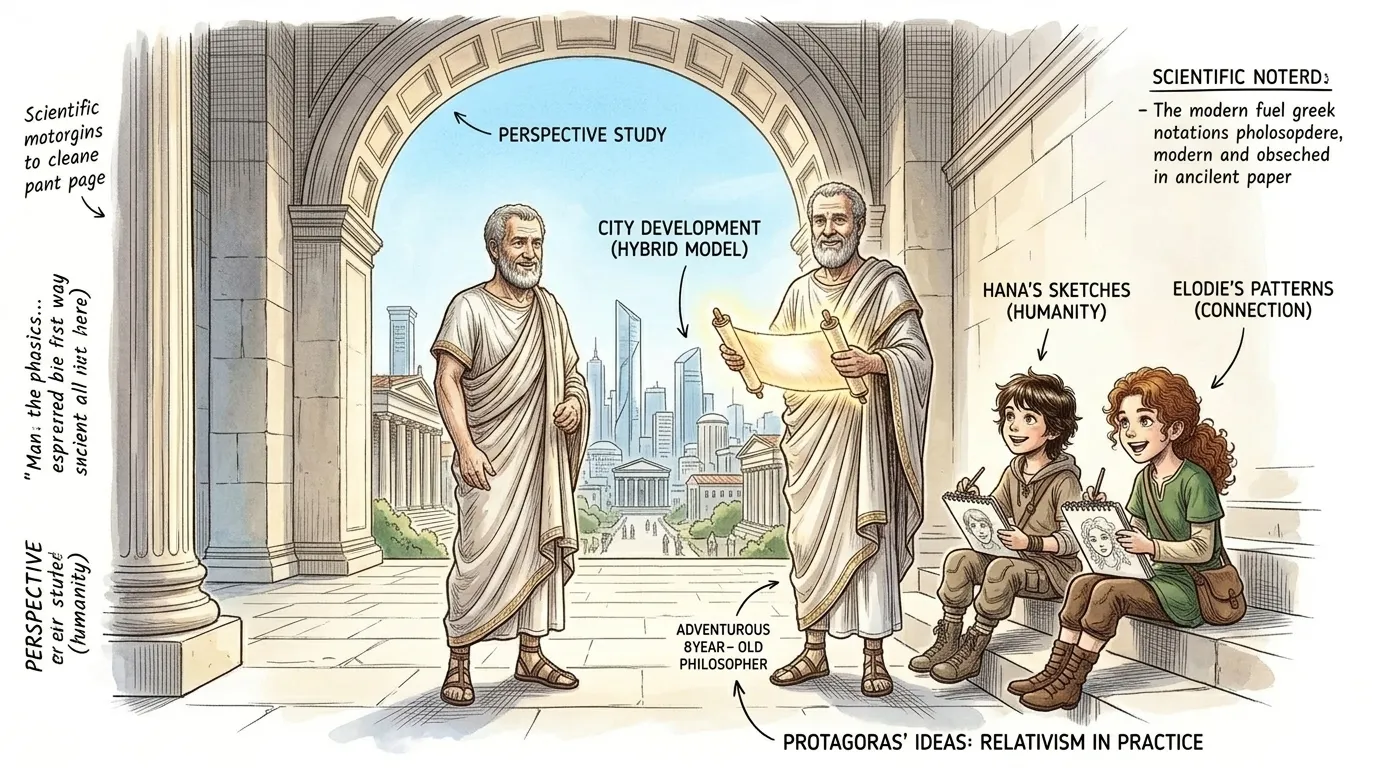
Protagoras's legacy is a reminder that knowledge is not simply about discovering facts, but about understanding perspectives. By acknowledging the subjective nature of reality, we can engage in more meaningful conversations and build a more inclusive world. His ideas will continue to challenge us for ages.
Philosophy Note: Protagoras's ideas continue to inspire debate and critical thinking in diverse fields, from philosophy to politics.
About this story
- Audience: kids (ages 6–12)
Questions and answers
Read Wonder Philosophy on your phone
Wonder Philosophy is available on Android and iPhone and iPad. Get Wonder Philosophy on Google Play · Get Wonder Philosophy on the App Store.