Ramanuja
Explore Ramanuja’s Vishishtadvaita, which presents a loving divine reality, a meaningful world, and devotion as a path to liberation.
Page 1
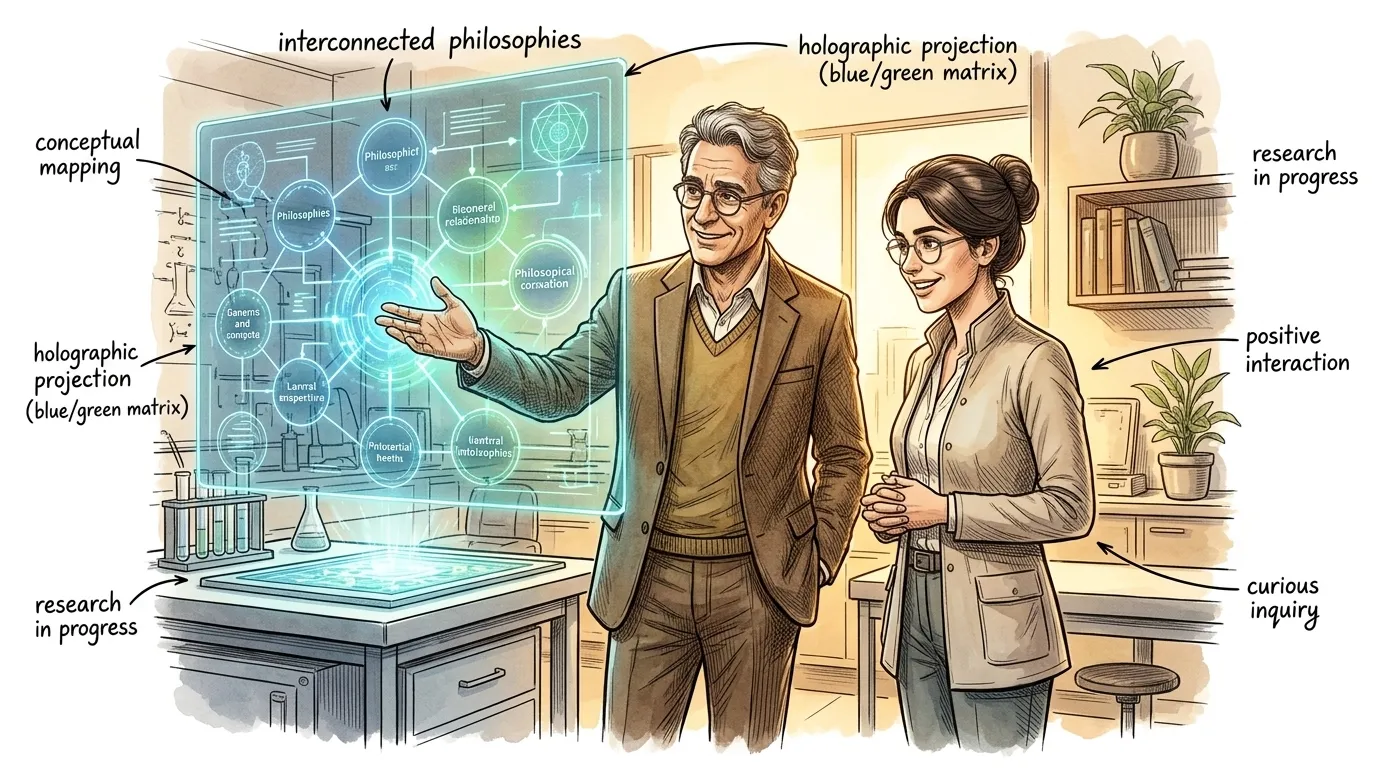
Professor Rohan Kumar gestured to the holographic display, its intricate diagram glowing. "Ramanuja confronted the prevailing notion of an entirely impersonal ultimate reality, proposing instead a God with infinite, beautiful attributes." Dr. Anika Sharma nodded, observing the visual representation of interconnectedness. "He didn't reject non-duality entirely, but critically re-framed it, making the divine both supreme and deeply relational."
Philosophy Note: Ramanuja, 11th-12th Century CE, Vishishtadvaita: Qualified Non-Dualism. Reconciling the Divine, Souls, and World.
Page 2
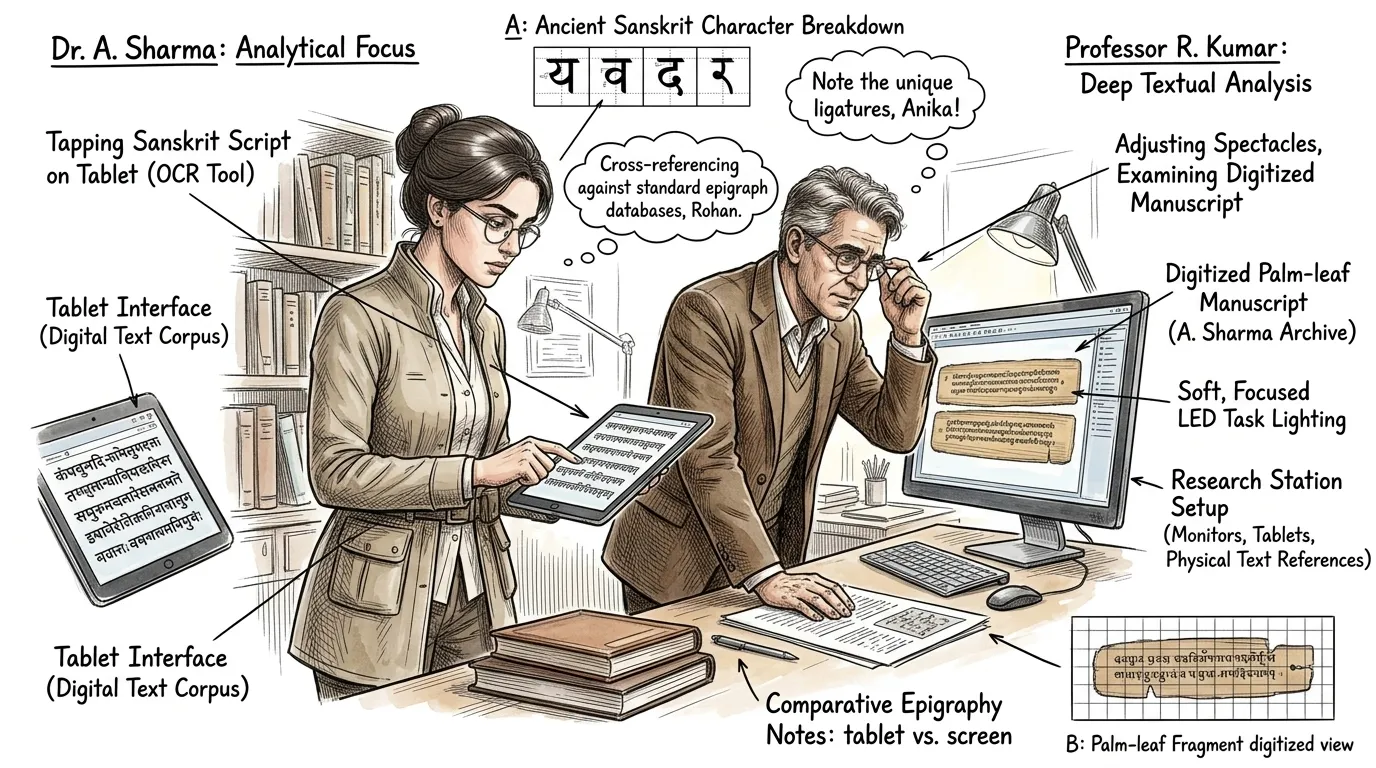
Dr. Sharma tapped a finger on her tablet, displaying ancient Sanskrit script. "Before Ramanuja, Shankara's Advaita Vedanta held significant intellectual sway, emphasizing Brahman as utterly featureless and the world as ultimately an illusion." Professor Kumar adjusted his spectacles, examining a digitized palm-leaf manuscript shown on a nearby screen. "This posed a profound challenge for those seeking a personal, loving God and a meaningful purpose for human existence within a real world."
Philosophy Note: Shankara (8th Century CE), Advaita Vedanta: Brahman Alone Is Real.
Page 3
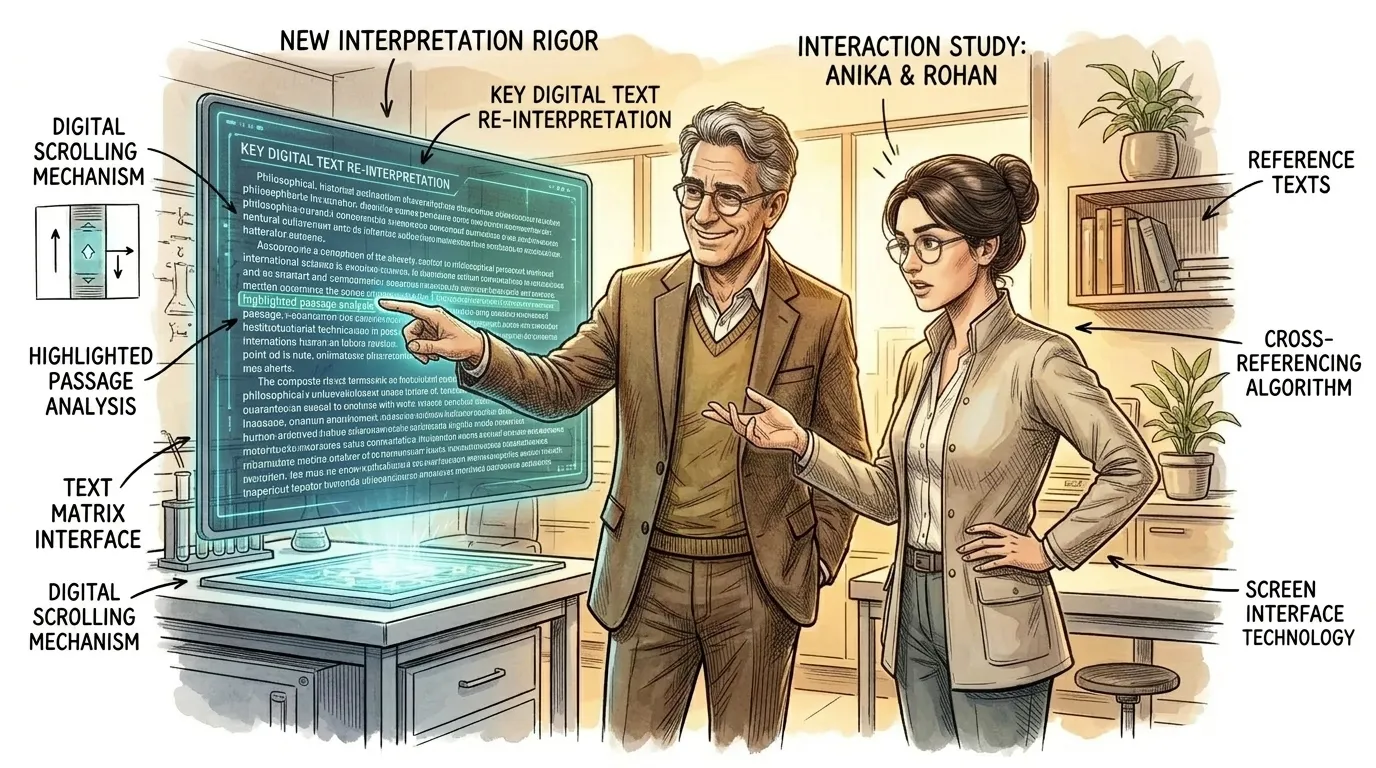
Professor Kumar highlighted a passage on the digital text. "Ramanuja's genius lay in his meticulous re-interpretation of foundational texts like the Upanishads and Brahma Sutras, arguing that they affirm a Brahman replete with attributes." Dr. Sharma concurred, emphasizing the rigor. "He demonstrated this wasn't mere theological assertion, but a rigorous philosophical re-evaluation, using the very methods of logic to challenge established understandings."
Philosophy Note: Key Texts: Upanishads, Brahma Sutras. Hermeneutics: Scriptural Interpretation.
Page 4
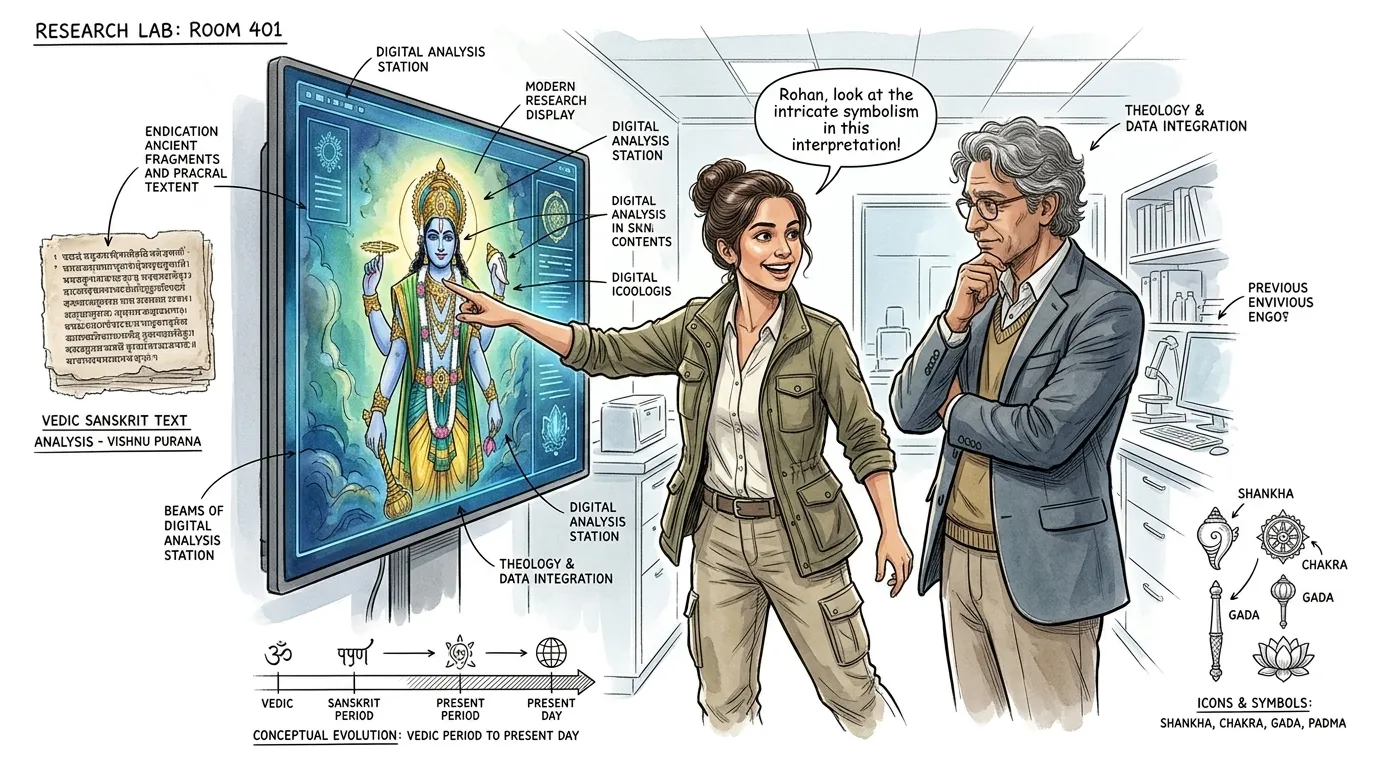
Dr. Sharma pointed to a vibrant depiction of Vishnu on the display. "Ramanuja introduced the concept of Saguna Brahman – a personal God, specifically Vishnu, possessing infinite auspicious qualities." Professor Kumar added, "This was a radical departure, making the divine not an abstract 'It,' but an accessible, lovable 'He,' directly challenging the impersonal, attribute-less Nirguna Brahman of earlier schools."
Philosophy Note: Saguna Brahman: God with Attributes. Nirguna Brahman: Attribute-less God.
Page 5
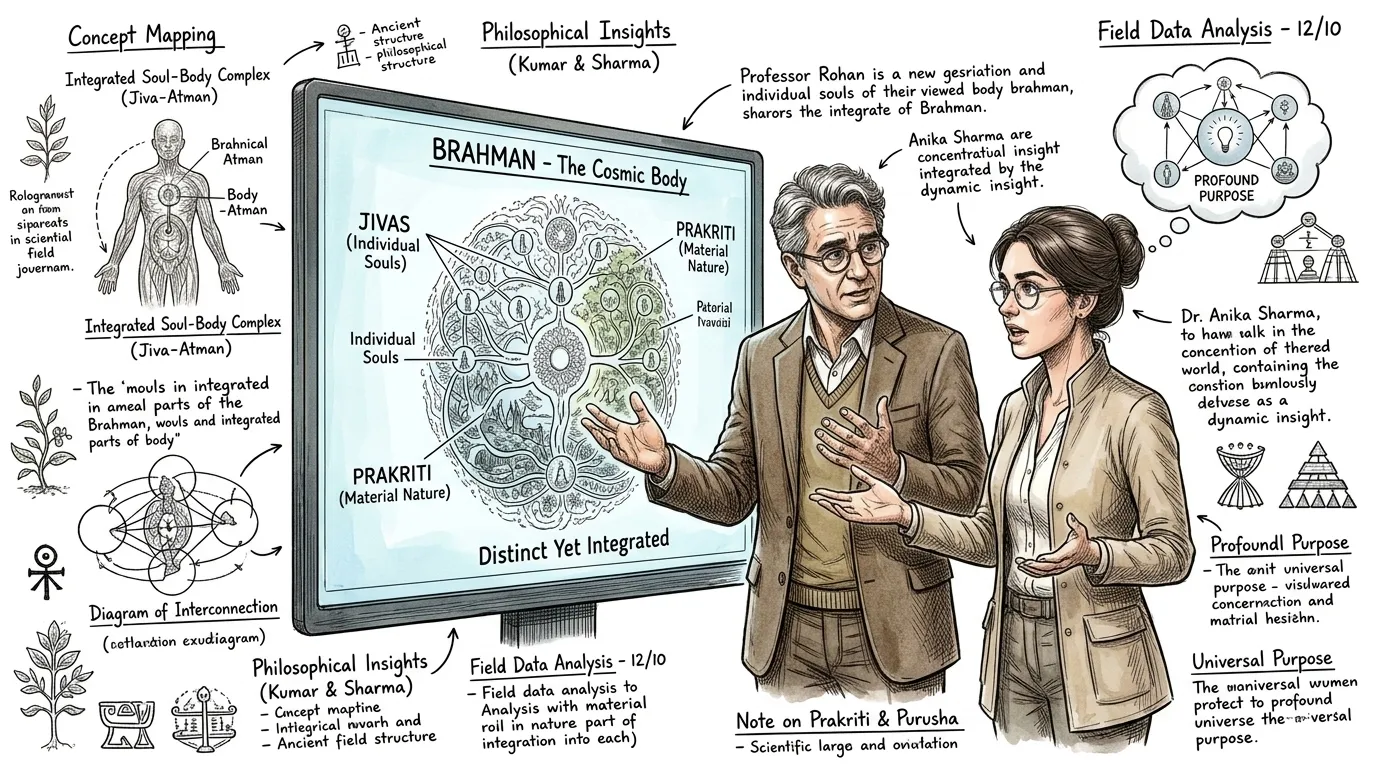
Professor Kumar explained, "For Ramanuja, individual souls, or jivas, and the material world, prakriti, are not illusions but real, distinct entities, forming the very 'body' of Brahman." Dr. Sharma elaborated, "This means our experiences, our moral actions, and indeed the entire universe have a profound, inherent purpose and reality, rather than being mere temporary manifestations of an ultimate illusion."
Philosophy Note: Jiva (Soul), Prakriti (Matter). Brahman's Body-Analogy.
Page 6
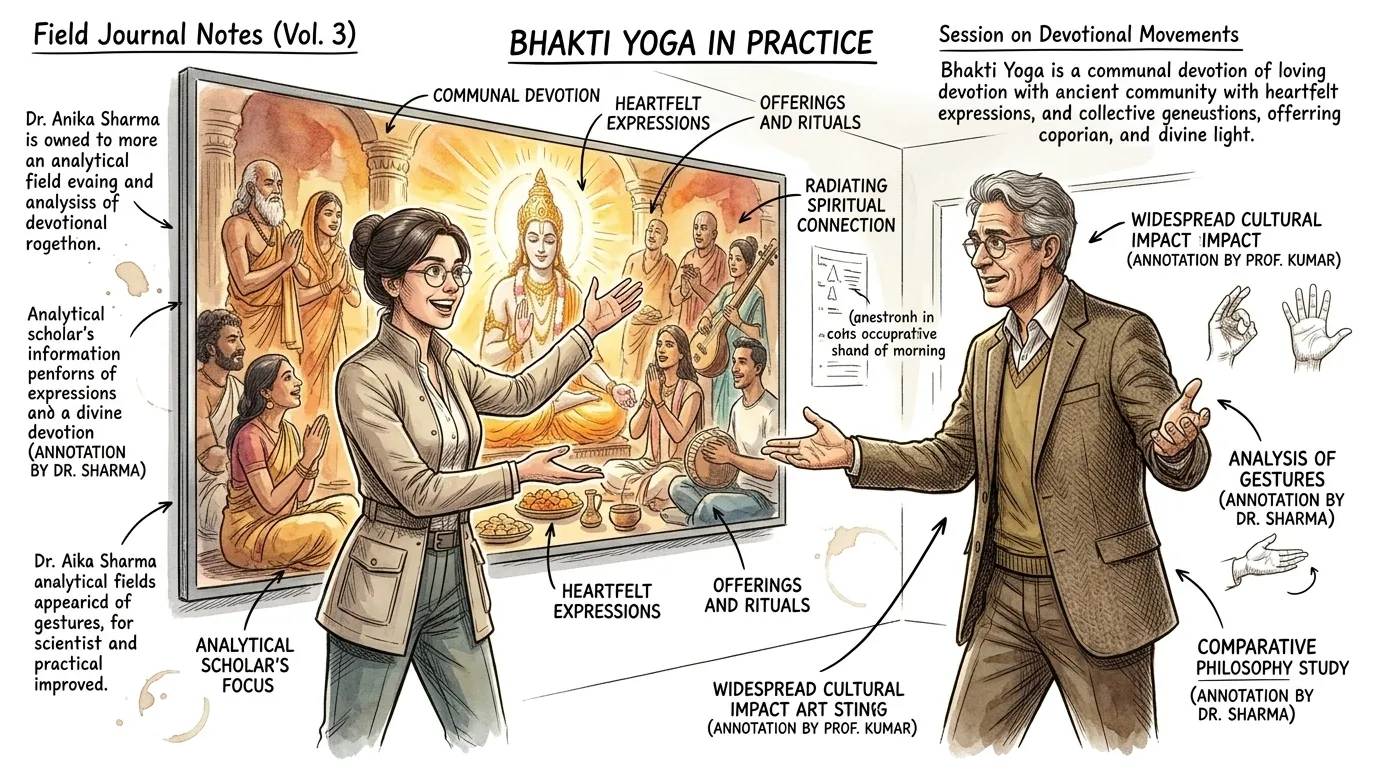
Dr. Sharma described the natural progression. "With a personal God who possesses qualities and with a real world, Vishishtadvaita logically leads to Bhakti Yoga – the path of loving devotion – as the primary means to liberation, rather than solely abstract knowledge." Professor Kumar connected its impact. "This provided a powerful, emotional, and communal pathway to spiritual realization, allowing a direct, heartfelt relationship with the divine that resonated widely."
Philosophy Note: Bhakti Yoga: Path of Devotion. Moksha: Liberation.
Page 7

Professor Kumar emphasized the intellectual clash. "The fundamental tension between Advaita's ultimate, undifferentiated oneness and Vishishtadvaita's qualified difference created a dynamic, intense philosophical debate, each claiming scriptural authority." Dr. Sharma added, "As the American writer Ralph Waldo Emerson once wisely put it, 'A foolish consistency is the hobgoblin of little minds.' Ramanuja, by challenging the dominant Advaita paradigm, demonstrated that true philosophical progress often demands a willingness to question established 'consistency'."
Philosophy Note: Advaita vs. Vishishtadvaita. Ontological Debate.
Page 8
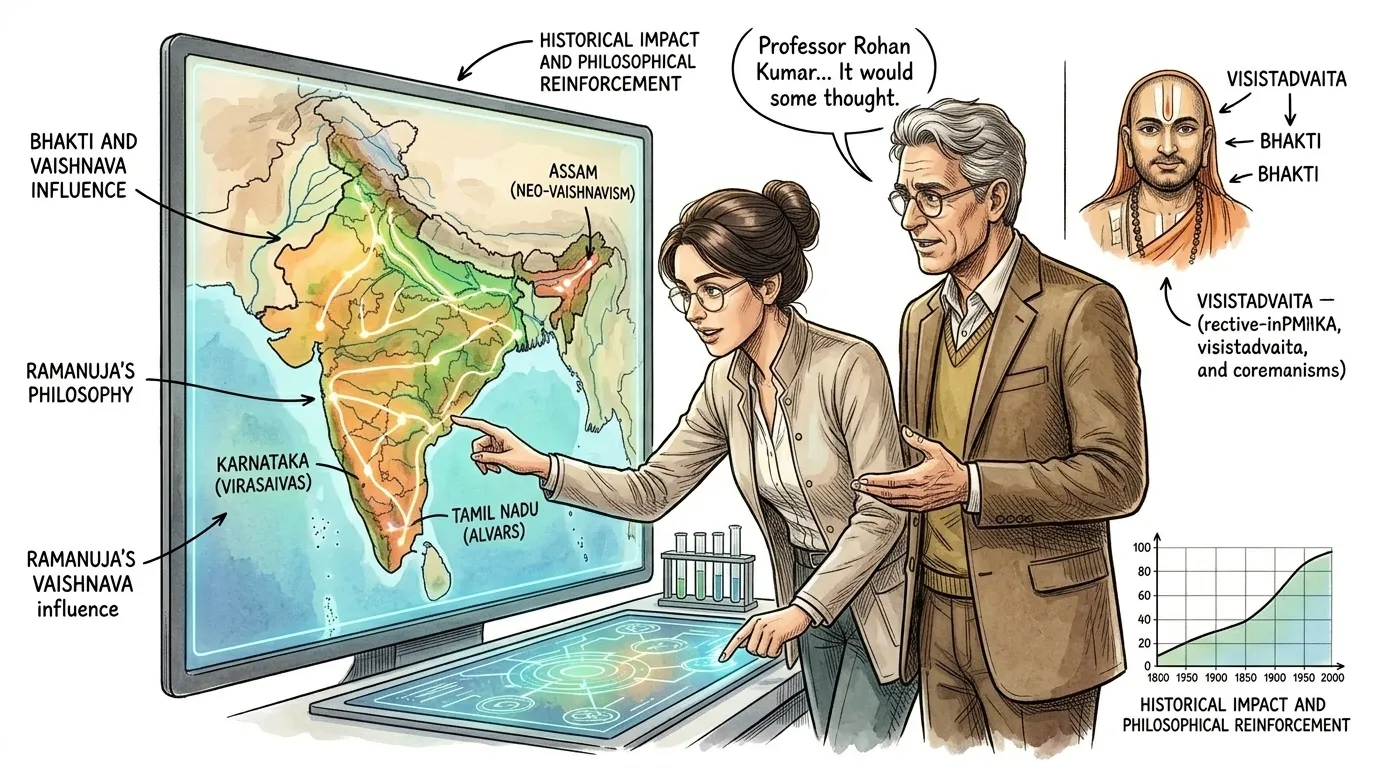
Dr. Sharma traced the historical impact. "Ramanuja's philosophy profoundly influenced subsequent Bhakti movements and Vaishnava traditions that spread across the Indian subcontinent, shaping devotional landscapes for centuries." Professor Kumar concluded, "Remember how Ramanuja's detailed textual reinterpretations allowed him to prove Brahman possesses attributes? That very methodological rigor became the template for later Bhakti thinkers, proving that philosophical depth could indeed support a devotional path, a direct consequence of his early textual work we discussed."
Philosophy Note: Bhakti Movements, Vaishnava Traditions, Historical Influence.
Page 9
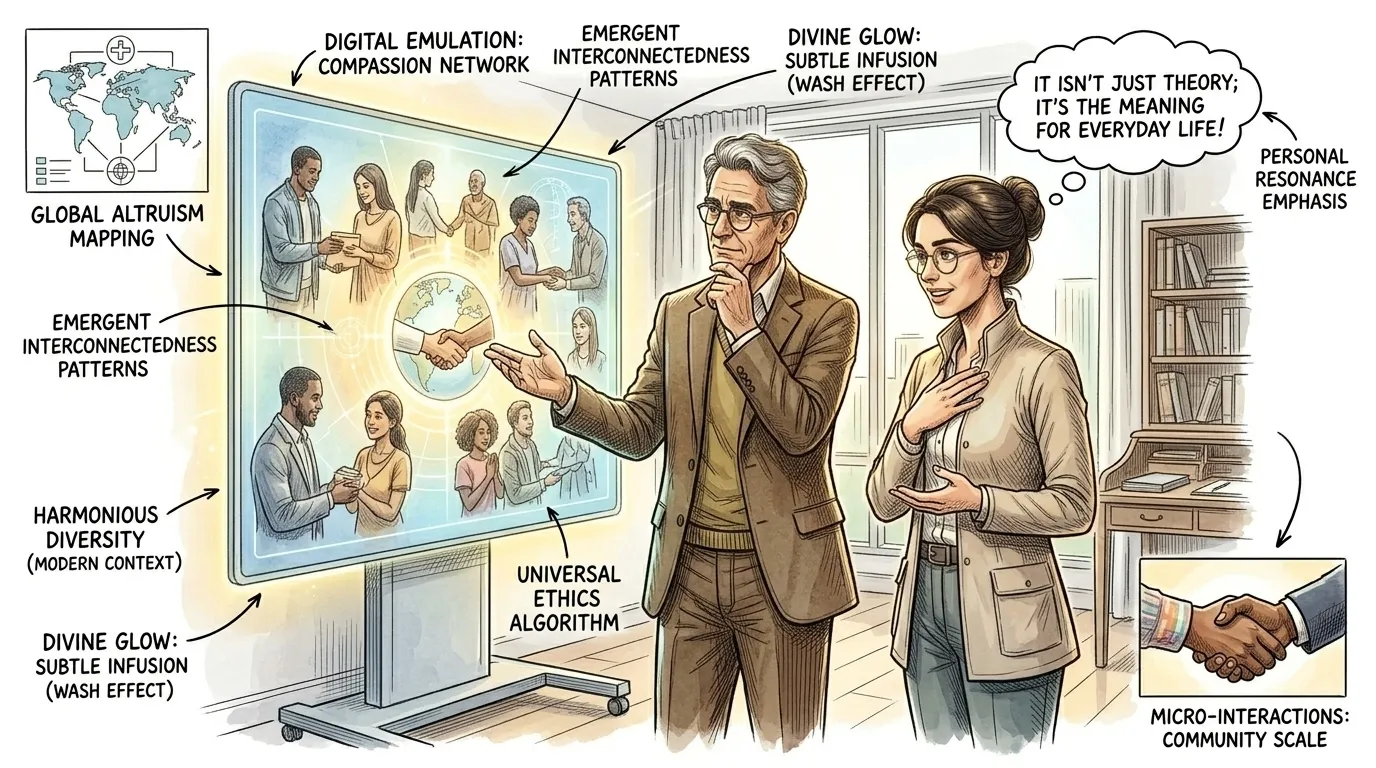
Professor Kumar observed the contemporary implications. "Vishishtadvaita offers a profound framework for ethical action in the modern world, as seeing all beings as parts of the divine fosters universal compassion and social responsibility." Dr. Sharma emphasized its personal resonance. "It provides a deeply personal path for spiritual connection, giving meaning and purpose to everyday life beyond purely abstract contemplation, making the divine both grand and intimate."
Philosophy Note: Ethical Living, Compassion, Personal Spirituality, Ecological View.
Page 10
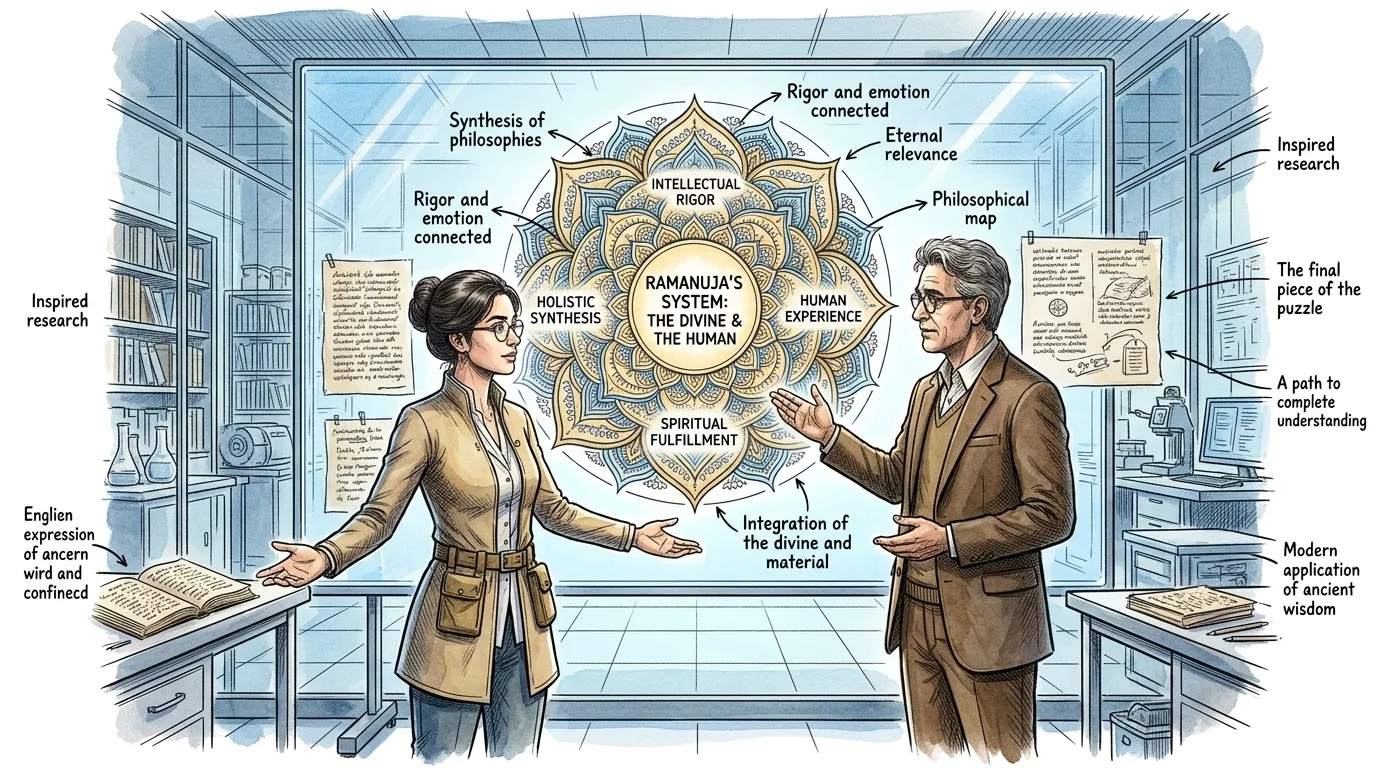
Dr. Sharma offered a concluding thought. "Ramanuja's system remains a cornerstone of Indian philosophy, offering a comprehensive vision that rigorously acknowledges the reality of human experience, the personal nature of the divine, and the validity of devotional practice." Professor Kumar affirmed, "Its enduring appeal lies in its ability to reconcile intellectual rigor with spiritual fulfillment, providing a rich, consistent framework for understanding ourselves, the world, and the ultimate reality."
Philosophy Note: Comprehensive Vision: Philosophy & Devotion.
About this story
- Audience: general readers
Questions and answers
Read Wonder Philosophy on your phone
Wonder Philosophy is available on Android and iPhone and iPad. Get Wonder Philosophy on Google Play · Get Wonder Philosophy on the App Store.