Pythagoras

Pythagoras — an illustrated philosophy story. 10 illustrated pages, free to read on Wonder Philosophy.
Pythagoras — book cover — Wonder Philosophy
Pythagoras — an illustrated philosophy story. 10 illustrated pages, free to read on Wonder Philosophy.

Page 1
Pythagoras, an enigmatic figure from ancient Greece, left an indelible mark on mathematics, philosophy, and music. His most famous contribution, the Pythagorean…
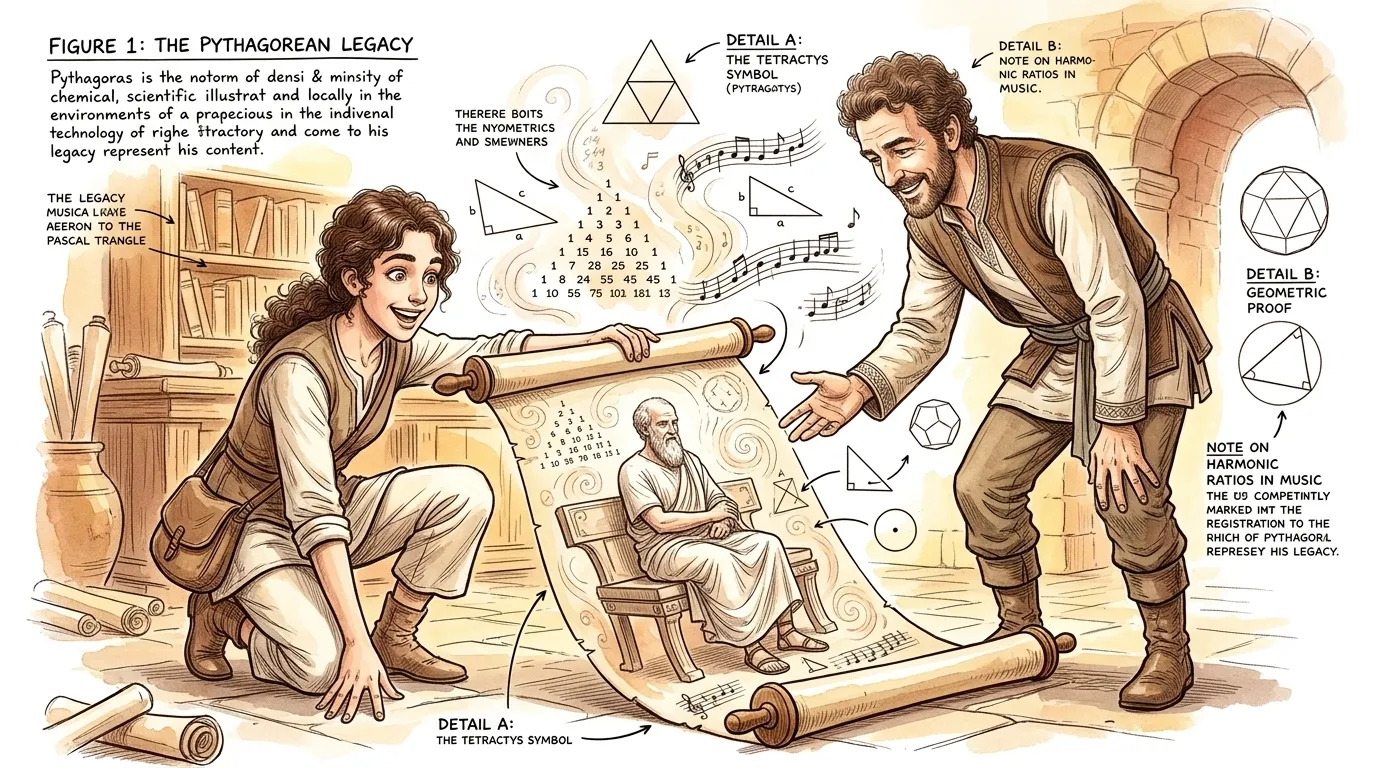
Pythagoras, an enigmatic figure from ancient Greece, left an indelible mark on mathematics, philosophy, and music. His most famous contribution, the Pythagorean theorem, is still taught in schools worldwide. But Pythagoras was more than just a mathematician; he was a philosopher who believed that numbers held the key to understanding the universe and the soul's journey. Philosophy Note: Pythagoras lived circa 570–495 BC. Croton was a major Greek city in southern Italy.

Pythagoras, an enigmatic figure from ancient Greece, left an indelible mark on mathematics, philosophy, and music. His most famous contribution, the Pythagorean theorem, is still taught in schools worldwide. But Pythagoras was more than just a mathematician; he was a philosopher who believed that numbers held the key to understanding the universe and the soul's journey.

Philosophy Note: Pythagoras lived circa 570–495 BC. Croton was a major Greek city in southern Italy.

Page 2
Pythagoras founded a secretive philosophical and religious school in Croton, a Greek city in southern Italy. His followers, known as Pythagoreans, lived a…
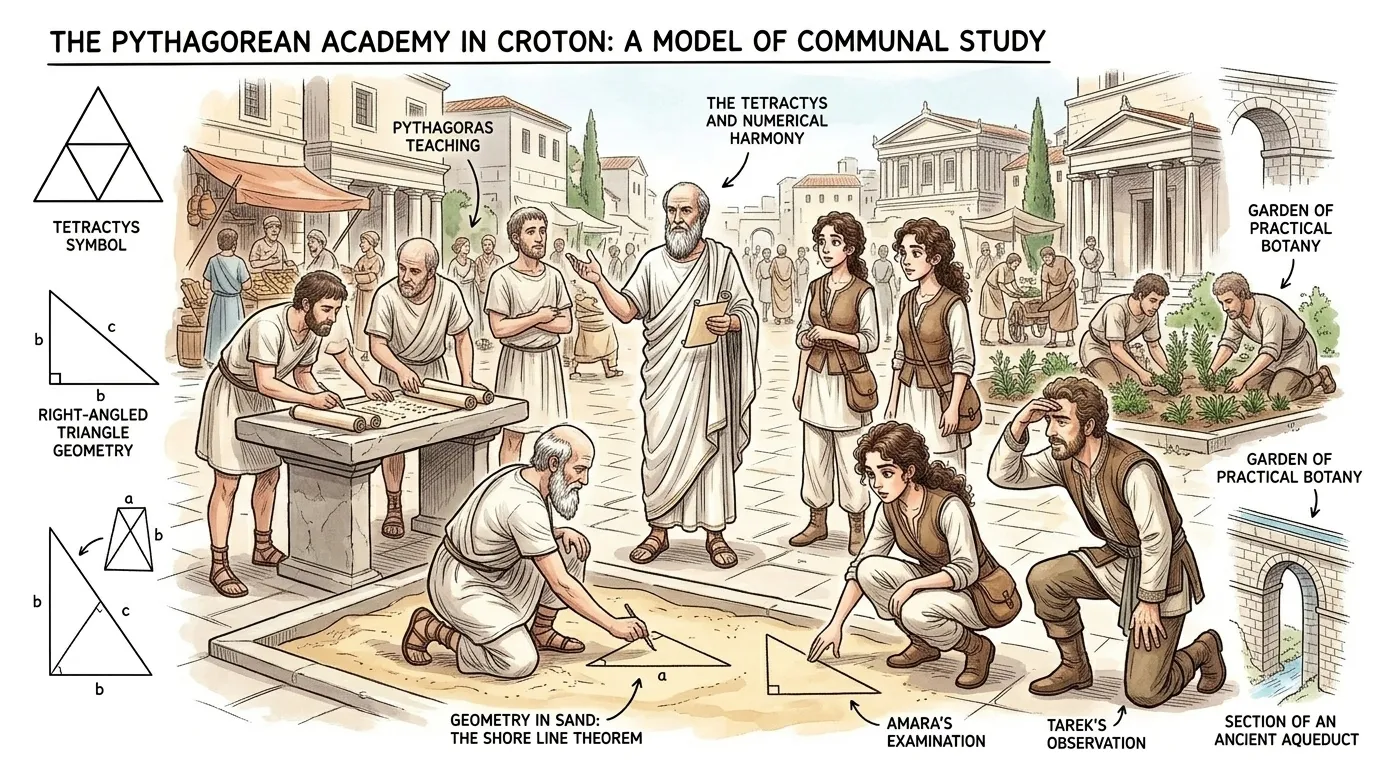
Pythagoras founded a secretive philosophical and religious school in Croton, a Greek city in southern Italy. His followers, known as Pythagoreans, lived a communal life, adhering to strict rules of conduct, diet, and study. They believed in the transmigration of souls and sought to purify themselves through intellectual and spiritual discipline. Philosophy Note: The Pythagorean school was known for its secrecy and esoteric teachings.

Pythagoras founded a secretive philosophical and religious school in Croton, a Greek city in southern Italy. His followers, known as Pythagoreans, lived a communal life, adhering to strict rules of conduct, diet, and study. They believed in the transmigration of souls and sought to purify themselves through intellectual and spiritual discipline.

Philosophy Note: The Pythagorean school was known for its secrecy and esoteric teachings.

Page 3
For Pythagoras, numbers were not merely abstract symbols but the fundamental building blocks of reality. He believed that the universe was structured according…
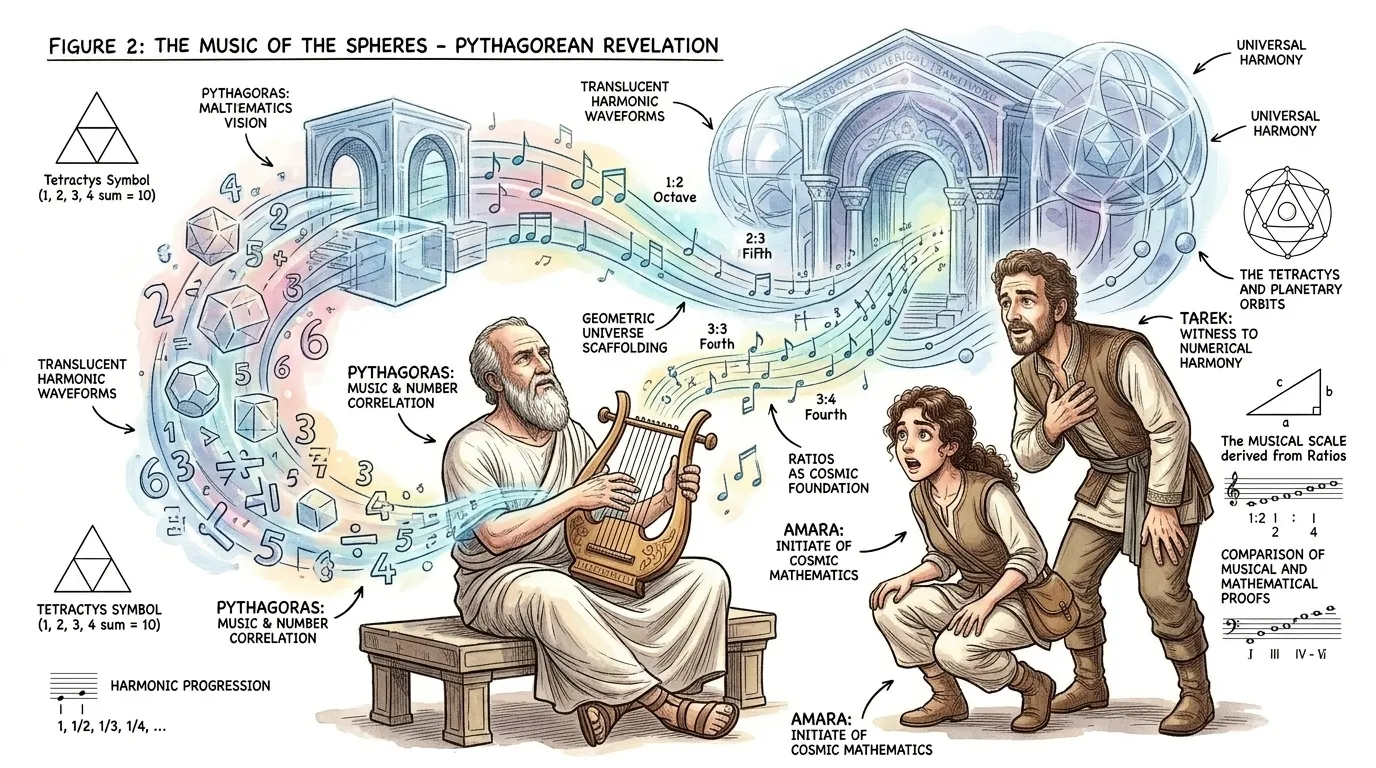
For Pythagoras, numbers were not merely abstract symbols but the fundamental building blocks of reality. He believed that the universe was structured according to numerical ratios and proportions, which could be discovered through mathematical investigation. This idea extended to music, where he found that harmonious intervals could be expressed as simple numerical ratios.

For Pythagoras, numbers were not merely abstract symbols but the fundamental building blocks of reality. He believed that the universe was structured according to numerical ratios and proportions, which could be discovered through mathematical investigation. This idea extended to music, where he found that harmonious intervals could be expressed as simple numerical ratios.

Philosophy Note: Pythagoras is credited with discovering the mathematical ratios underlying musical consonance.

Page 4
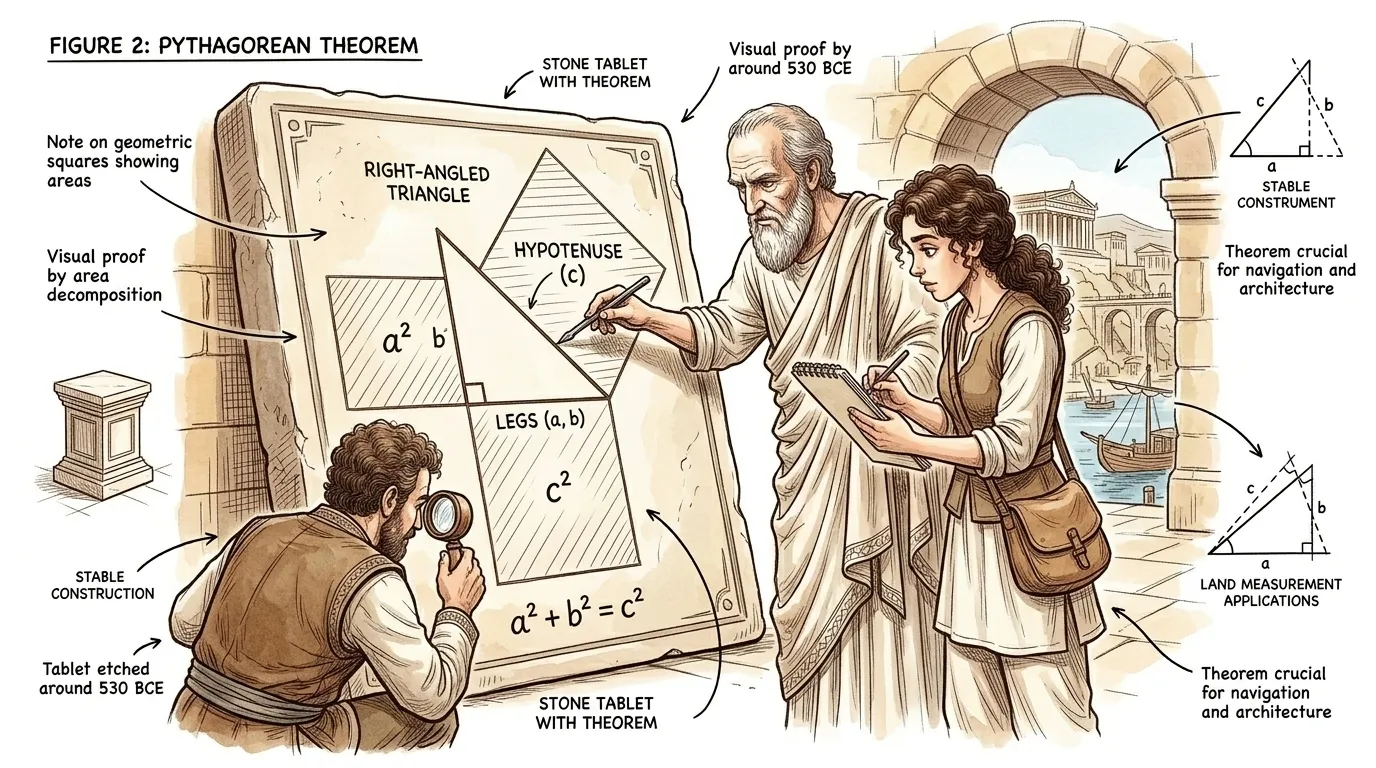
The most famous legacy of Pythagoras is undoubtedly the Pythagorean theorem: a2 b2 c2. This theorem states that in a right-angled triangle, the square of the…
The most famous legacy of Pythagoras is undoubtedly the Pythagorean theorem: a2 b2 c2. This theorem states that in a right-angled triangle, the square of the hypotenuse (the side opposite the right angle) is equal to the sum of the squares of the other two sides. This seemingly simple equation has profound implications for geometry, architecture, and engineering.

The most famous legacy of Pythagoras is undoubtedly the Pythagorean theorem: a2 b2 c2. This theorem states that in a right-angled triangle, the square of the hypotenuse (the side opposite the right angle) is equal to the sum of the squares of the other two sides. This seemingly simple equation has profound implications for geometry, architecture, and engineering.

Philosophy Note: The Pythagorean theorem was known in other cultures before Pythagoras, but he is credited with providing a general proof.

Page 5
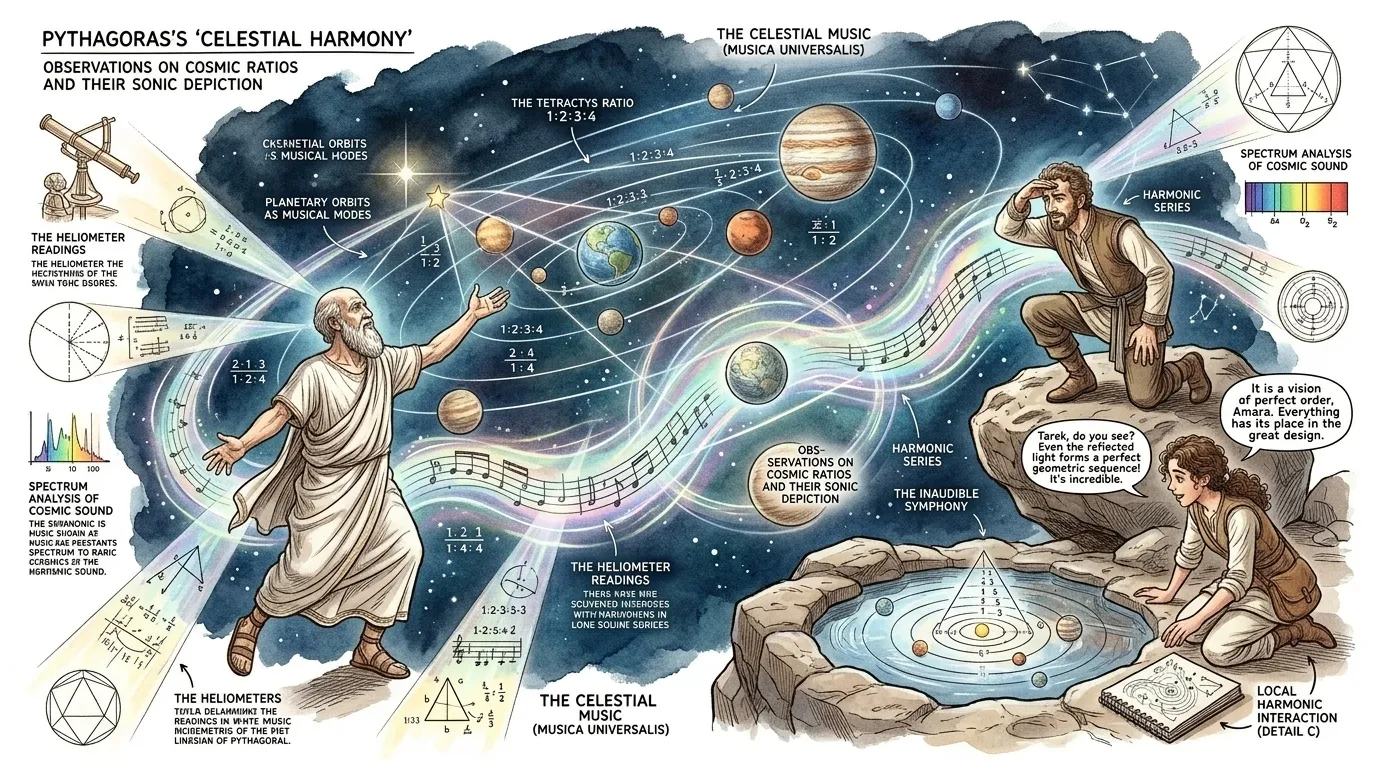
Pythagoras extended his numerical theories to the cosmos, proposing the concept of the "harmony of the spheres." He believed that the planets and stars moved…
Pythagoras extended his numerical theories to the cosmos, proposing the concept of the "harmony of the spheres." He believed that the planets and stars moved according to mathematical ratios, producing a celestial music that was inaudible to human ears. This idea influenced Western thought for centuries, inspiring astronomers and musicians alike. Philosophy Note: The concept of the 'harmony of the spheres' linked mathematics, music, and astronomy.

Pythagoras extended his numerical theories to the cosmos, proposing the concept of the "harmony of the spheres." He believed that the planets and stars moved according to mathematical ratios, producing a celestial music that was inaudible to human ears. This idea influenced Western thought for centuries, inspiring astronomers and musicians alike.

Philosophy Note: The concept of the 'harmony of the spheres' linked mathematics, music, and astronomy.

Page 6

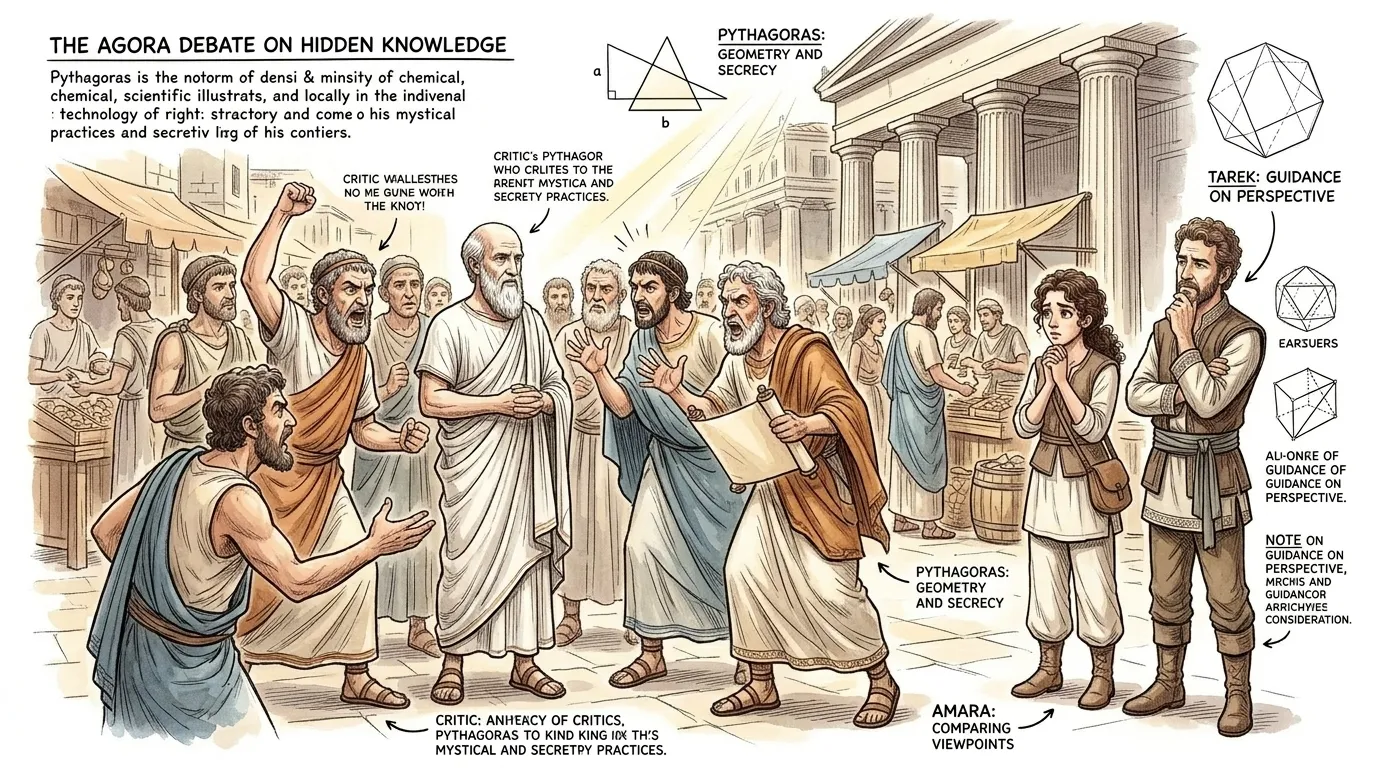
Despite his profound influence, Pythagoras's ideas were not without their critics. Some questioned his mystical approach to mathematics, arguing that it…
Despite his profound influence, Pythagoras's ideas were not without their critics. Some questioned his mystical approach to mathematics, arguing that it obscured the more practical applications of numbers. Others challenged his secretive practices and the strict lifestyle imposed on his followers. Philosophy Note: Pythagoreanism faced both philosophical and political opposition.

Despite his profound influence, Pythagoras's ideas were not without their critics. Some questioned his mystical approach to mathematics, arguing that it obscured the more practical applications of numbers. Others challenged his secretive practices and the strict lifestyle imposed on his followers.

Philosophy Note: Pythagoreanism faced both philosophical and political opposition.

Page 7
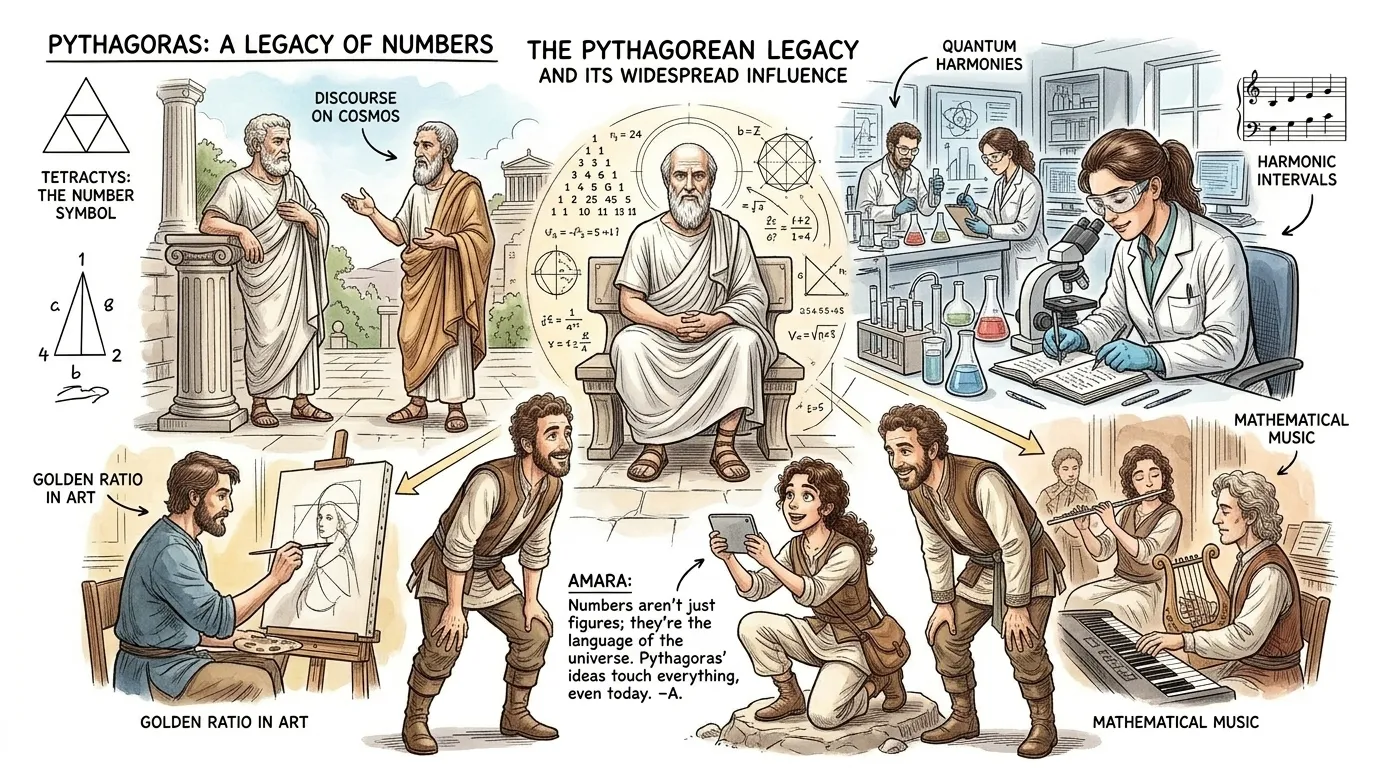
Pythagoras's influence extends far beyond mathematics. His emphasis on the importance of reason, order, and harmony shaped Western philosophy and science.
Pythagoras's influence extends far beyond mathematics. His emphasis on the importance of reason, order, and harmony shaped Western philosophy and science. His belief in the power of numbers to reveal the secrets of the universe continues to inspire mathematicians, physicists, and artists today. "Remember what Pythagoras said, 'Number is the ruler of forms and ideas, and the cause of gods and daemons'.

Pythagoras's influence extends far beyond mathematics. His emphasis on the importance of reason, order, and harmony shaped Western philosophy and science. His belief in the power of numbers to reveal the secrets of the universe continues to inspire mathematicians, physicists, and artists today.

"Remember what Pythagoras said, 'Number is the ruler of forms and ideas, and the cause of gods and daemons'. It seems quite relevant to even our modern ideas of digital information, doesn't it? Numbers as the hidden foundations of all things." Marco said with a chuckle. Kailani responded, "Wow!"

Philosophy Note: Pythagoras' ideas influenced Plato and subsequent Western philosophical traditions.

Page 8
In today's digital world, Pythagoras's ideas resonate more than ever. Computer code, data analysis, and artificial intelligence all rely on the power of numbers…
In today's digital world, Pythagoras's ideas resonate more than ever. Computer code, data analysis, and artificial intelligence all rely on the power of numbers to create, analyze, and understand the world around us. Even seemingly abstract concepts like art and music can be expressed and manipulated through digital algorithms. Philosophy Note: Digital technology demonstrates the power of numbers to structure and manipulate reality.

In today's digital world, Pythagoras's ideas resonate more than ever. Computer code, data analysis, and artificial intelligence all rely on the power of numbers to create, analyze, and understand the world around us. Even seemingly abstract concepts like art and music can be expressed and manipulated through digital algorithms.

Philosophy Note: Digital technology demonstrates the power of numbers to structure and manipulate reality.

Page 9
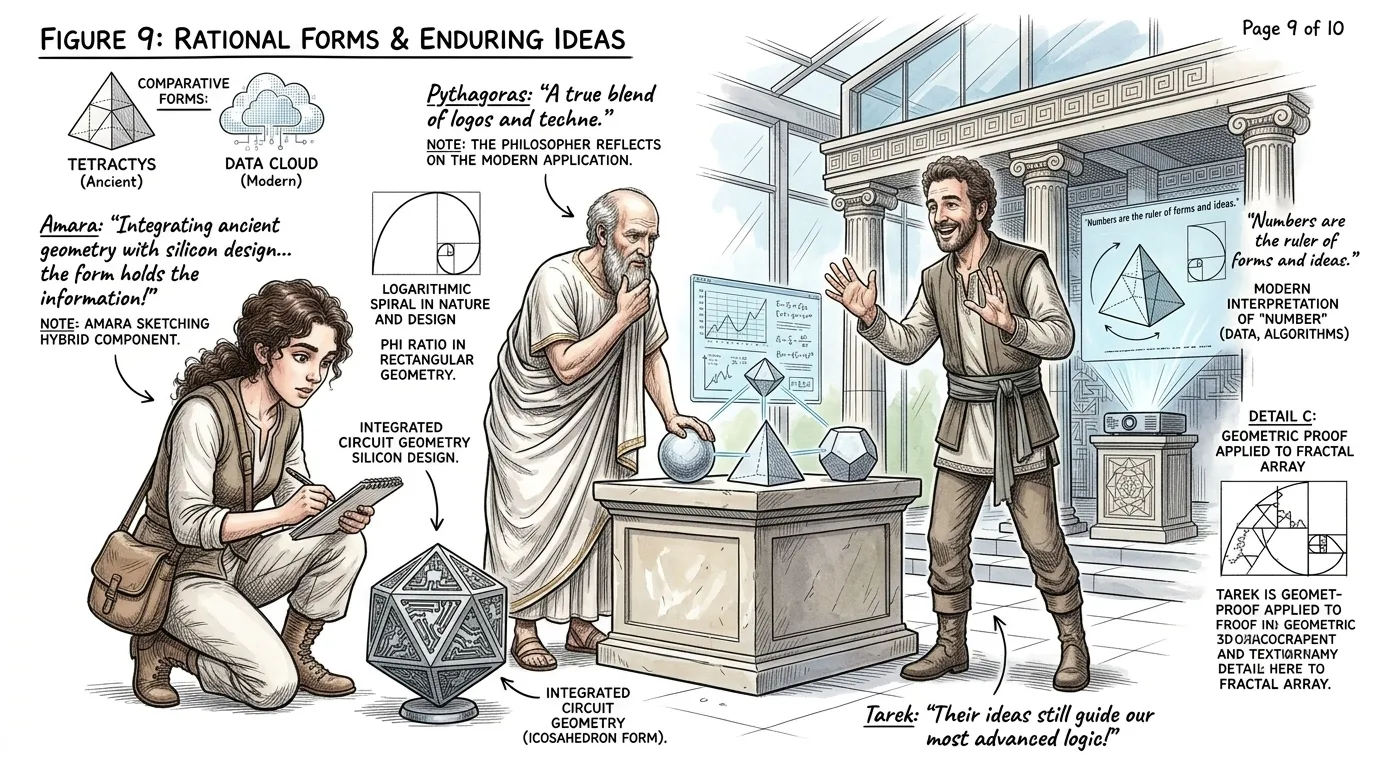
Pythagoras encourages us to look beyond the surface and seek the underlying order and structure of things. His emphasis on the importance of reason, harmony…
Pythagoras encourages us to look beyond the surface and seek the underlying order and structure of things. His emphasis on the importance of reason, harmony, and intellectual discipline remains relevant in a world often characterized by chaos and uncertainty. Even today, his core idea continues to echo across millennia. Philosophy Note: Pythagorean ideals of harmony and reason remain valuable in contemporary society.

Pythagoras encourages us to look beyond the surface and seek the underlying order and structure of things. His emphasis on the importance of reason, harmony, and intellectual discipline remains relevant in a world often characterized by chaos and uncertainty. Even today, his core idea continues to echo across millennia.

Philosophy Note: Pythagorean ideals of harmony and reason remain valuable in contemporary society.

Page 10
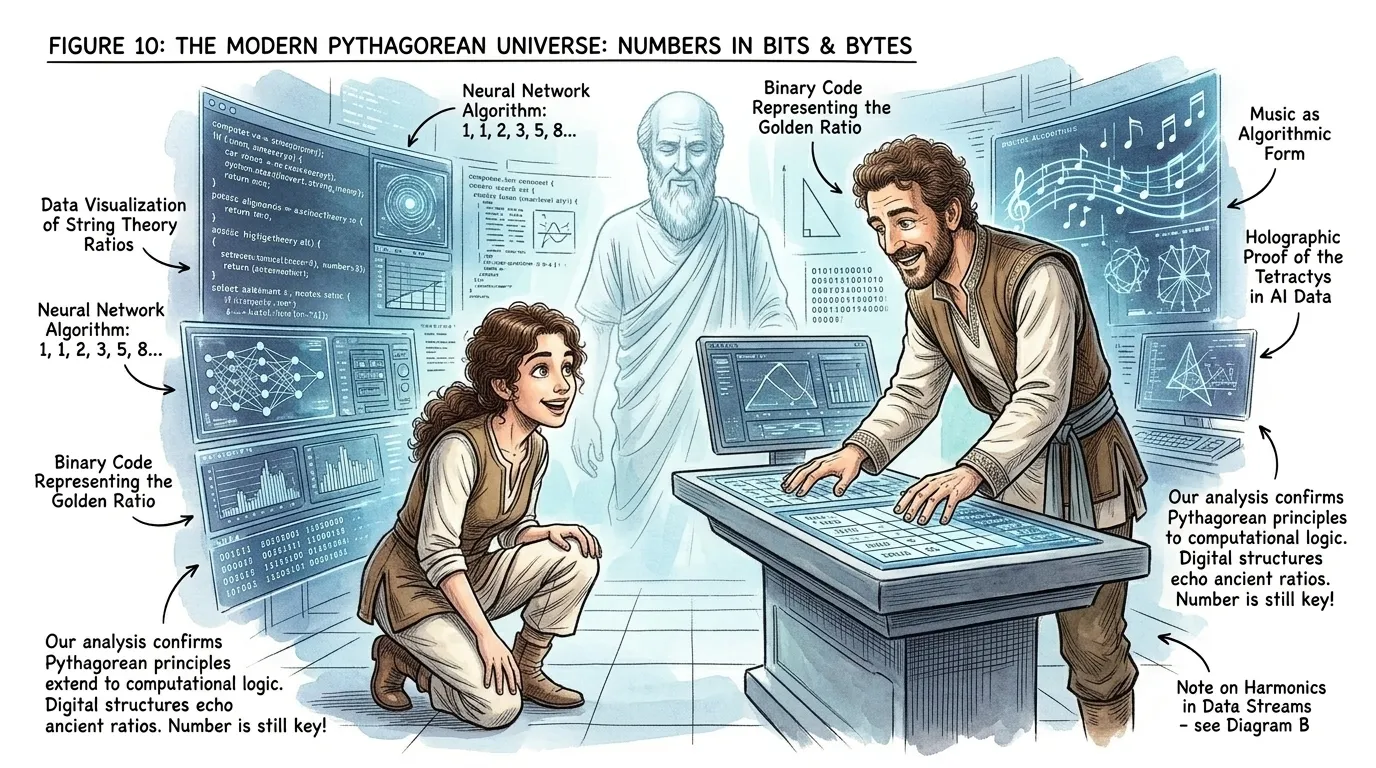
The quest to understand the universe through numbers, initiated by Pythagoras, continues to this day. Modern physics, cosmology, and mathematics build upon his…
The quest to understand the universe through numbers, initiated by Pythagoras, continues to this day. Modern physics, cosmology, and mathematics build upon his foundational insights, seeking to uncover the hidden patterns and relationships that govern the cosmos. Pythagoras's legacy reminds us that the pursuit of knowledge is an ongoing journey, fueled by curiosity and a deep sense of wonder.

The quest to understand the universe through numbers, initiated by Pythagoras, continues to this day. Modern physics, cosmology, and mathematics build upon his foundational insights, seeking to uncover the hidden patterns and relationships that govern the cosmos. Pythagoras's legacy reminds us that the pursuit of knowledge is an ongoing journey, fueled by curiosity and a deep sense of wonder.

Philosophy Note: The scientific quest to understand the universe continues Pythagoras's legacy.

About this story

  • Audience: general readers

More Wonder Philosophy stories

All Wonder Philosophy stories · Open the library