Patanjali
Explore Patanjali's Yoga Sutras, an ancient guide to mental tranquility. Discover how to quiet the mind's fluctuations through practice and non-attachment, leading to inner peace.
Page 1
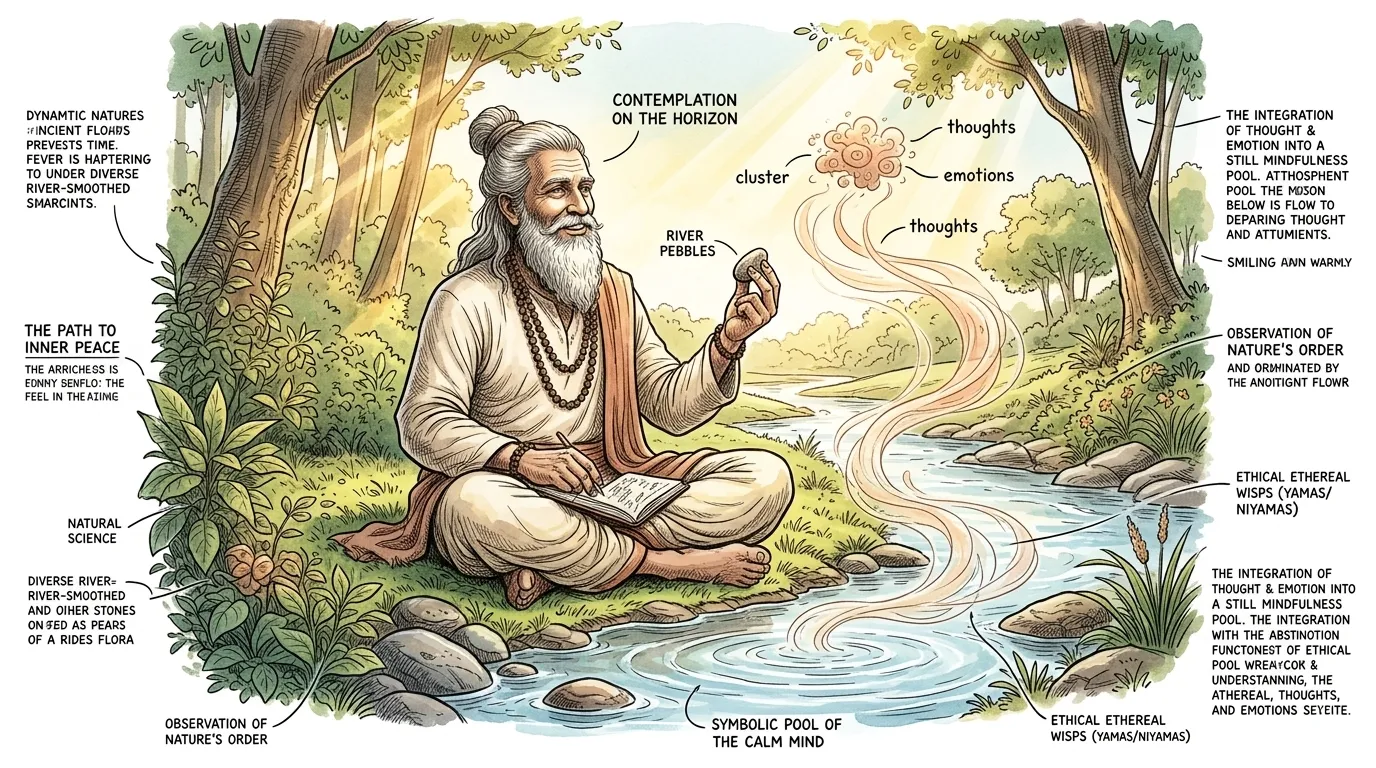
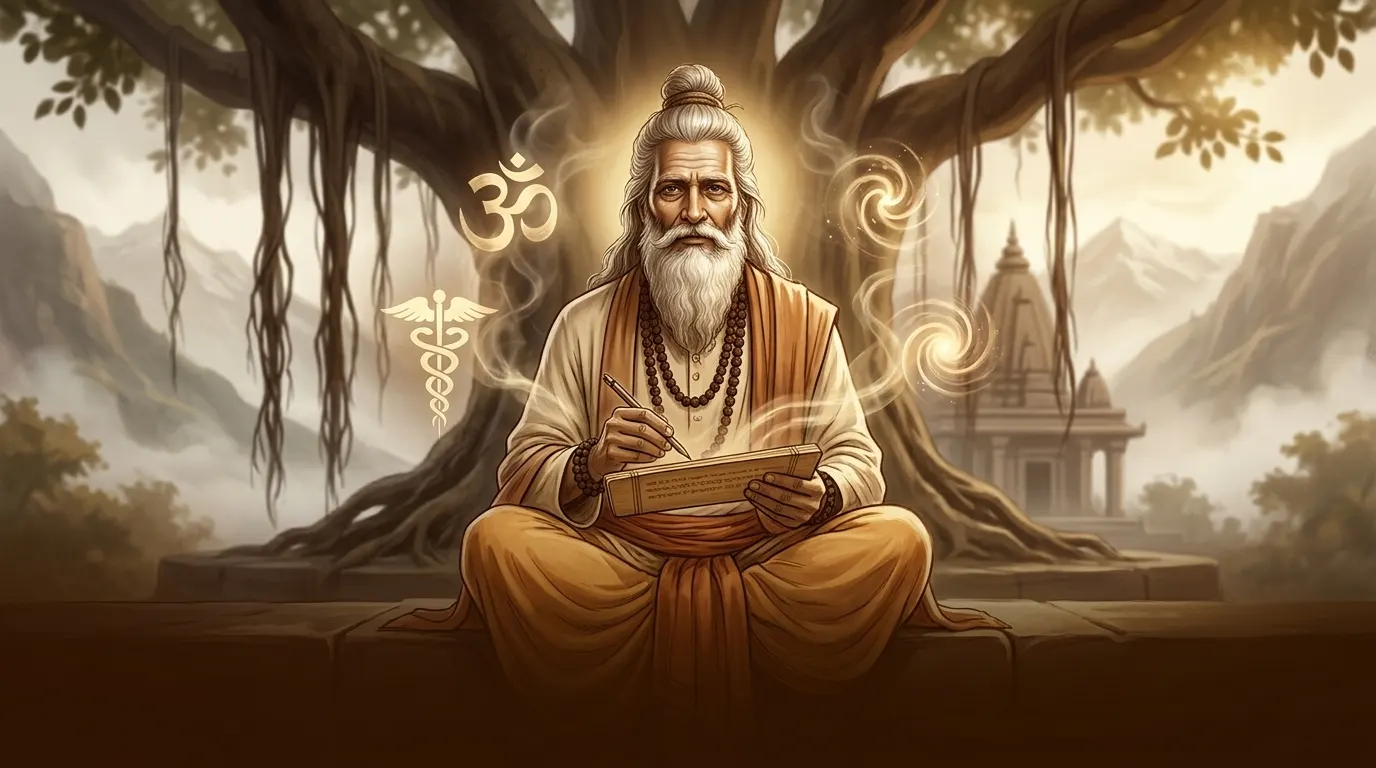
Across millennia, the human mind has grappled with its own restless nature—a constant flow of thoughts, emotions, and sensations. How does one achieve true inner peace amidst this ceaseless churn? This fundamental question found its profound answer in the ancient Indian sage, Patanjali.
Philosophy Note: Patanjali: Ancient Indian sage (circa 2nd century BCE to 4th century CE). School: Yoga Darśana. Core Idea: Yoga Sutras, outlining the path to mental tranquility and liberation.
Page 2
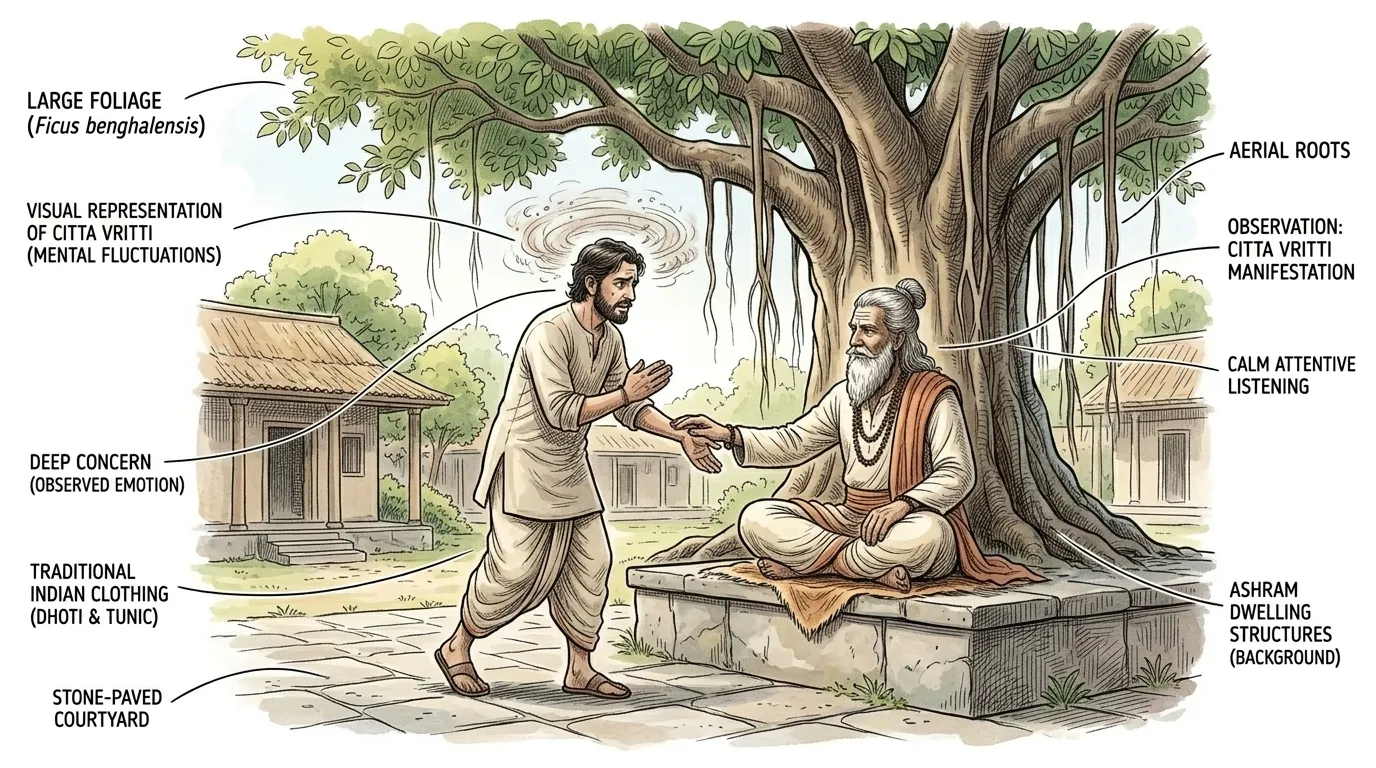
Before Patanjali, various yogic practices existed, but they lacked a unified, systematic framework. Seekers often struggled with the 'fluctuations of the mind,' known as citta vritti, finding their spiritual efforts fragmented and elusive. One such earnest seeker, Vasudeva, approached Patanjali with his dilemma.
"'Revered teacher,' Vasudeva began, his brow furrowed with concern, 'my mind is a marketplace of constant noise. Even in quietude, thoughts of past duties and future worries clamor for attention. How can one ever hope to find stillness amidst such an internal din?'"
Philosophy Note: Citta Vritti: Sanskrit term for 'mind-stuff fluctuations.' These are the various thought patterns, emotions, and sensory perceptions that constantly agitate the mind. Patanjali's system aims to quiet these fluctuations.
Page 3
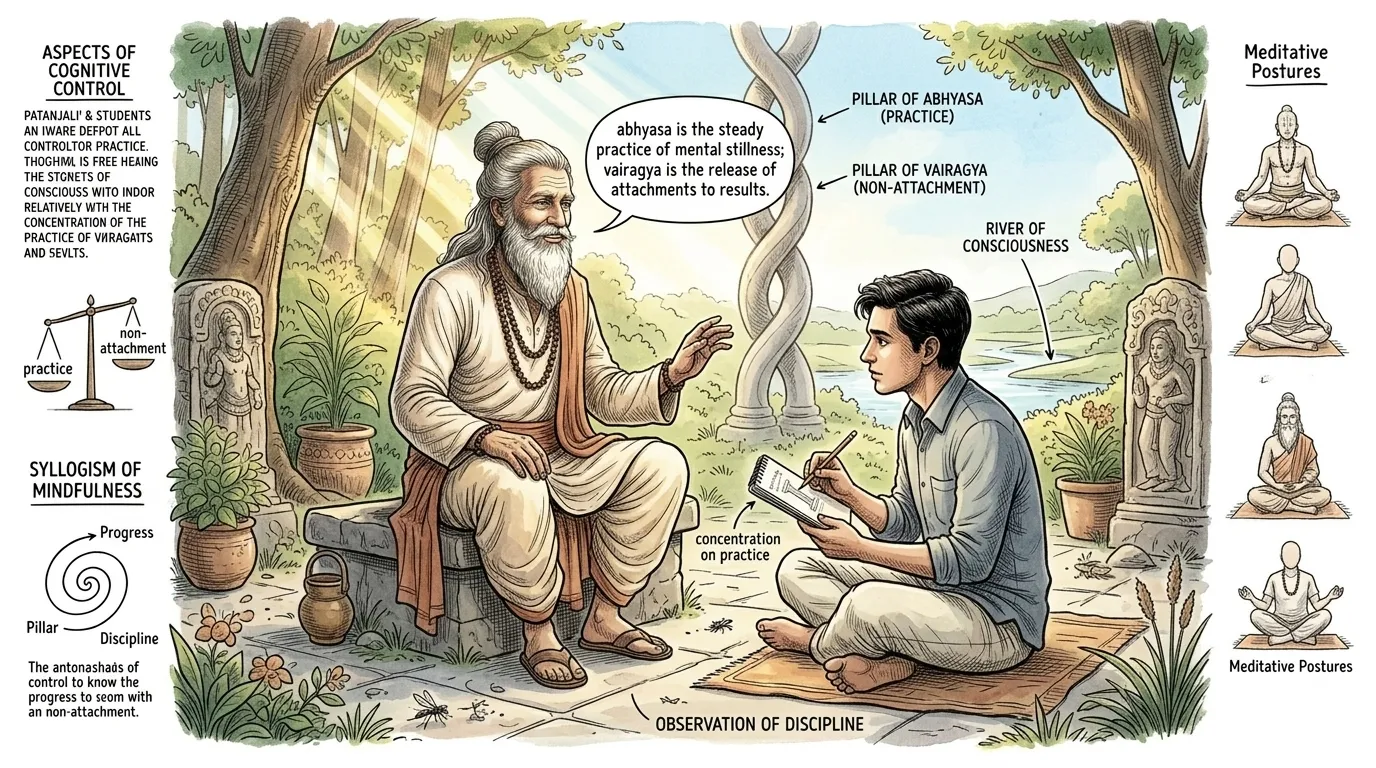
Patanjali, observing Vasudeva's sincere struggle, understood the universal nature of this challenge. He knew that merely wishing for a quiet mind was insufficient; a disciplined, two-pronged approach was essential. He began to explain the foundational principles of persistent practice and non-attachment.
"'Vasudeva,' Patanjali responded with a calm voice, 'the mind is indeed like a wild river, but it can be guided. Its currents are brought to peace through abhyasa – persistent, dedicated practice – and vairagya – non-attachment to both desires and aversions. These are the twin pillars of inner mastery.' Vasudeva listened intently, his gaze thoughtful."
Philosophy Note: Abhyasa (Practice): The consistent, unwavering effort to stabilize the mind. Vairagya (Non-Attachment): The cultivated dispassion towards worldly desires and experiences, freeing the mind from their pull.
Page 4
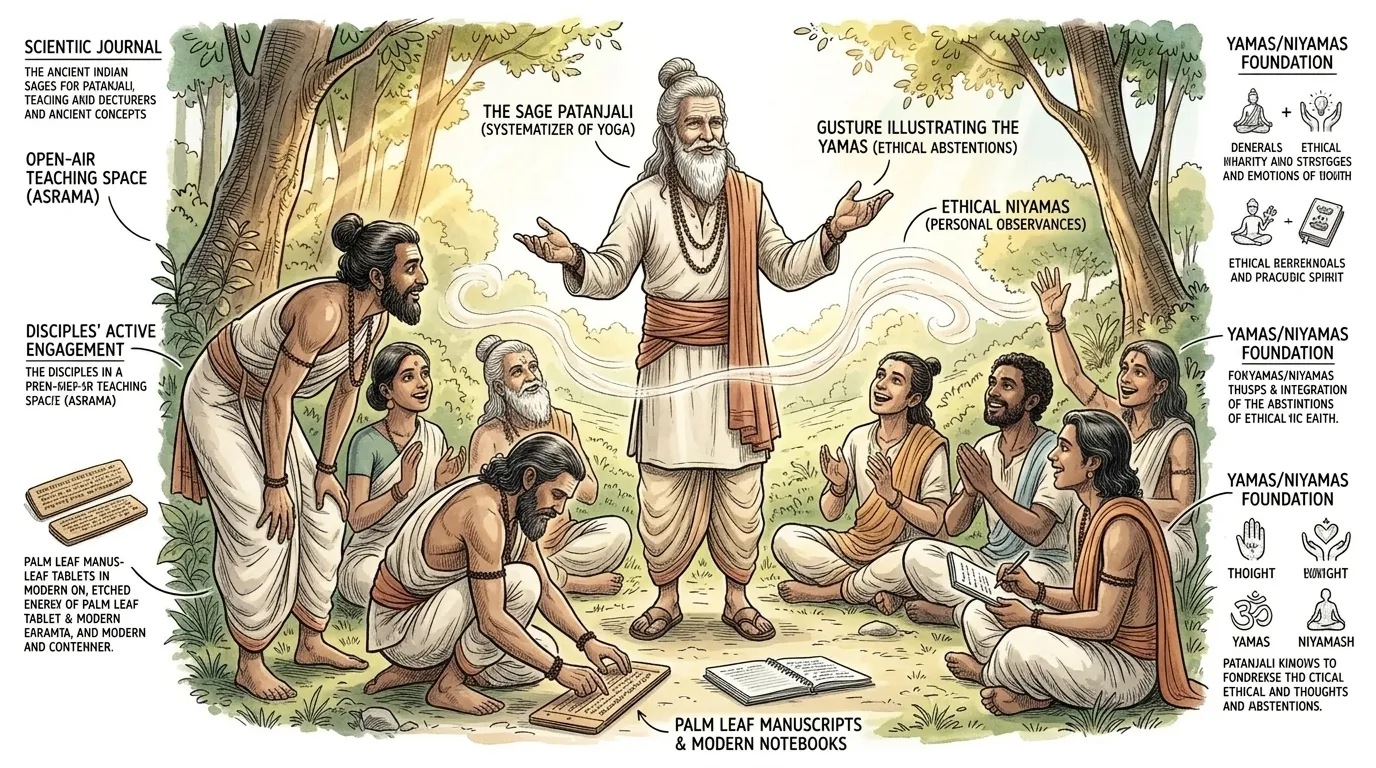
Patanjali did not merely offer concepts; he provided a structured, eight-fold path, Ashtanga Yoga, designed to systematically purify and train the mind and body. This was not just physical exercise, but a comprehensive lifestyle for spiritual evolution. Each limb builds upon the last, guiding the practitioner towards profound self-realization.
"'The journey begins not on the mat, but in our interactions with the world and ourselves,' Patanjali instructed a group of eager disciples, including Vasudeva. 'The Yamas, our ethical restraints, like non-violence and truthfulness, set the foundation. Then the Niyamas, our observances, cultivate purity and contentment within. These are the bedrock upon which all further practice rests.'"
Philosophy Note: Ashtanga Yoga: Patanjali's eight-limbed path: Yama (ethical restraints), Niyama (observances), Asana (postures), Pranayama (breath control), Pratyahara (sense withdrawal), Dharana (concentration), Dhyana (meditation), Samadhi (absorption).
Page 5
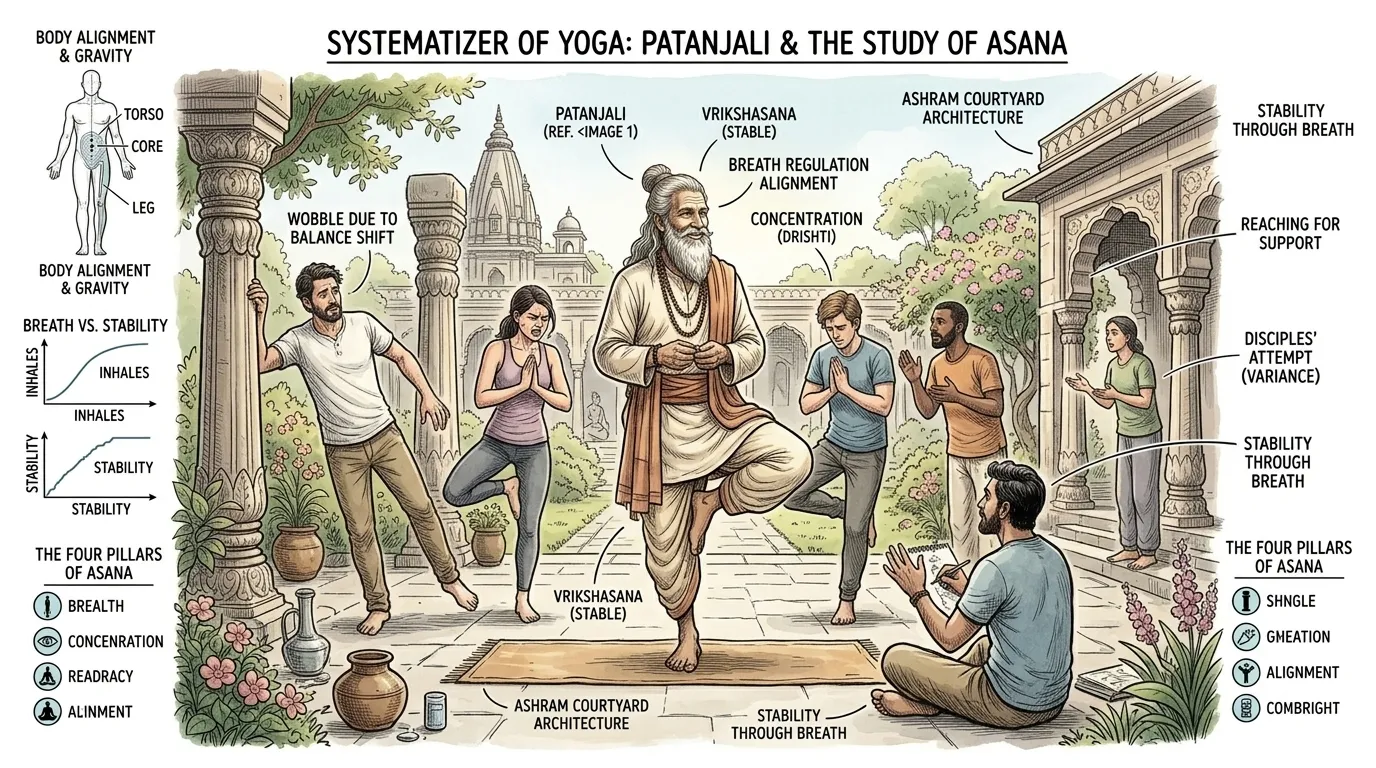
With the ethical groundwork laid, Patanjali's system then turns to the physical and energetic dimensions of the self. He recognized that a stable body and regulated breath were indispensable tools for calming the agitated mind. These practices prepared the practitioner for deeper internal work.
"'Once our conduct and inner disposition are aligned,' Patanjali explained, demonstrating a gentle posture, 'we cultivate the Asana, a steady and comfortable seat. This stability of body then allows for Pranayama, the conscious regulation of our breath, which directly influences the mind's rhythm. Observe how a calm breath leads to a calm mind.' Vasudeva, with other disciples, attempted the posture with varying degrees of grace, focusing on their breath."
Philosophy Note: Asana (Postures): Steady and comfortable physical postures that stabilize the body and prepare it for meditation. Pranayama (Breath Control): Techniques for regulating the breath, which directly impacts mental state and energy flow.
Page 6
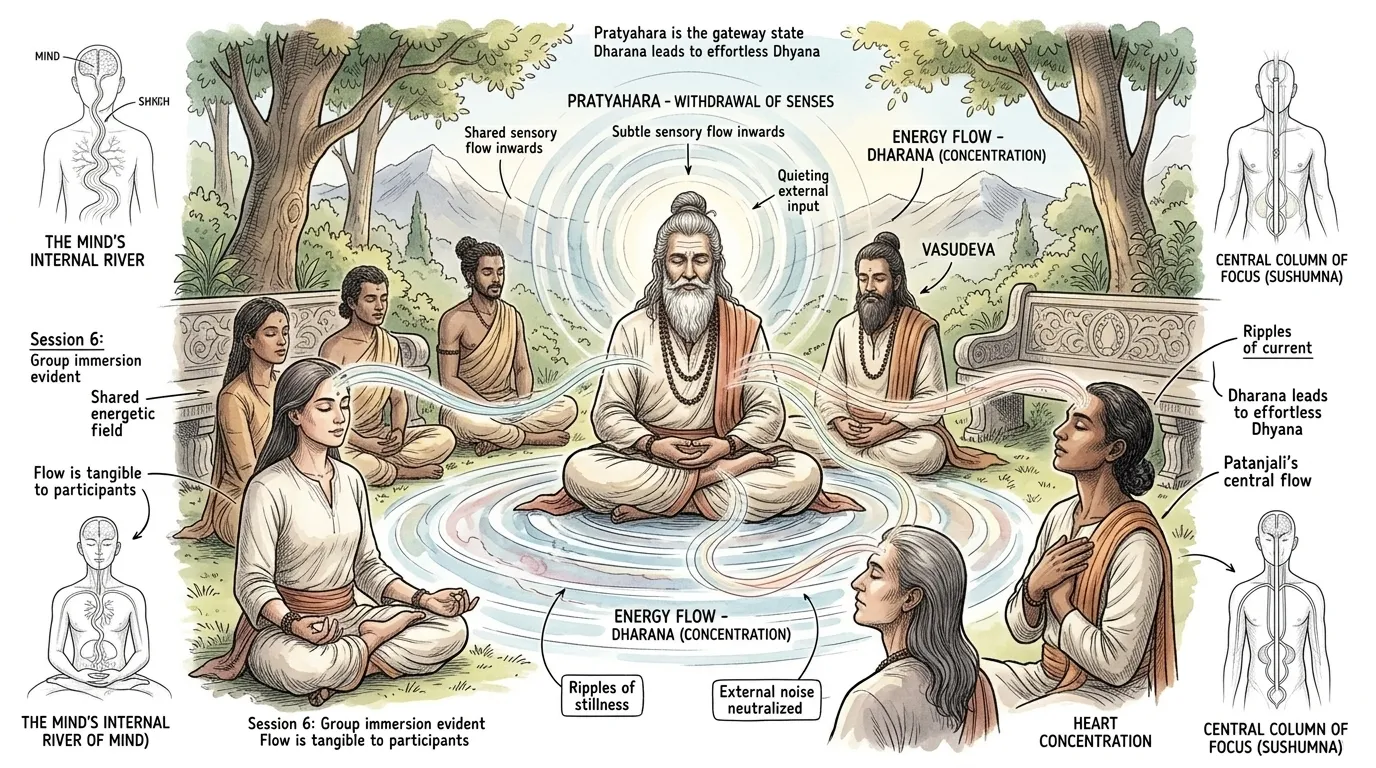
Having mastered the body and breath, the path progresses inward, guiding the practitioner to disengage from external distractions and cultivate intense focus. These deeper limbs mark the shift from outer discipline to profound internal exploration, leading towards unwavering concentration.
"'Now, the senses, which constantly pull our attention outward, must be gently withdrawn in Pratyahara,' Patanjali elaborated, closing his eyes briefly. 'This leads to Dharana, singular concentration on one point. From that sustained focus emerges Dhyana, pure meditation, where the mind flows effortlessly without distraction.' The disciples sat in rapt silence, visualizing these internal states."
Philosophy Note: Pratyahara (Sense Withdrawal): Detaching the mind from external sensory input. Dharana (Concentration): Focusing the mind on a single object or idea. Dhyana (Meditation): Sustained, uninterrupted concentration, a deep flow state.
Page 7
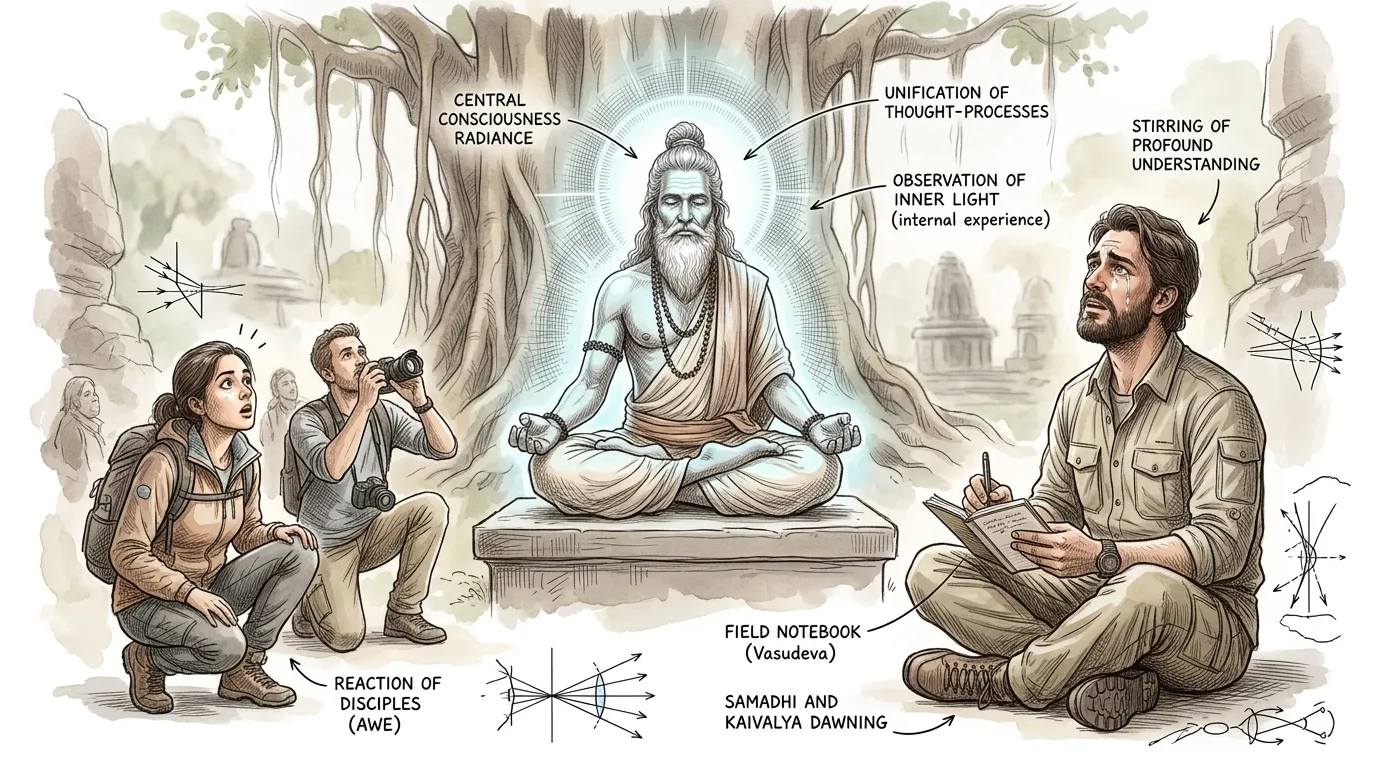
The final limb, Samadhi, represents the ultimate state of absorption, where the meditator, the act of meditating, and the object of meditation become one. This is the gateway to Kaivalya, absolute liberation—a state of profound freedom from suffering and the cycles of existence. It is the cessation of all mental fluctuations.
"'In Samadhi,' Patanjali's voice resonated, 'the very distinction between the seer and the seen dissolves. The mind, utterly still, reflects pure consciousness. This state, my students, is the culmination, leading to Kaivalya, where the true self shines forth, unburdened. It is the cessation of all suffering.' Vasudeva, deeply moved, felt a stirring of profound understanding."
Philosophy Note: Samadhi (Absorption): A state of deep meditative absorption where the mind becomes one with the object of meditation. Kaivalya (Liberation): The ultimate goal of Yoga, a state of absolute independence and freedom from the cycle of birth and death, achieved by realizing the true self.
Page 8

Days later, Vasudeva found himself grappling with profound internal agitation. News of a famine in a neighboring village filled him with sorrow and anxiety, threatening to overwhelm his inner quietude. The marketplace of his mind, once again, roared to life.
"'My heart is heavy,' Vasudeva confided to an elder disciple, his voice trembling. 'The suffering of others weighs upon me, and my mind races with helplessness. How can I practice non-attachment when compassion demands engagement? I fear my efforts with abhyasa and vairagya are failing.' The elder listened patiently. Vasudeva paused, then recalled Patanjali's words: 'As the great teacher himself once said, "Yoga is the cessation of the fluctuations of the mind." It's not about indifference, but about clear action from a place of peace, not agitation.' He took a deep breath, consciously letting go of the overwhelming anxiety, returning his focus to the present moment."
Philosophy Note: Duhkha: Sanskrit for suffering, pain, or dissatisfaction. Patanjali's Yoga aims to alleviate duhkha by overcoming ignorance and attachment, leading to liberation.
Page 9
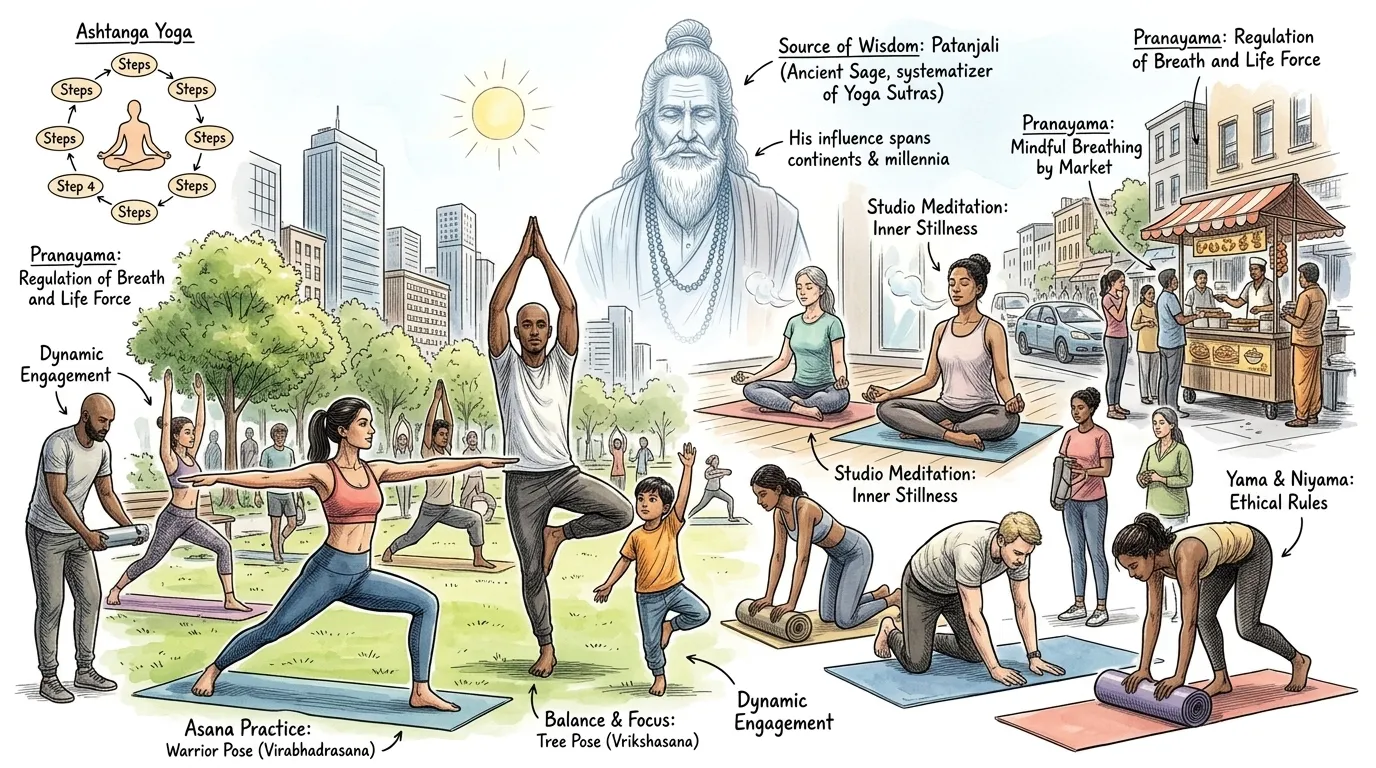
Patanjali's systematization of Yoga has transcended its ancient origins, becoming a globally recognized path for mental, physical, and spiritual well-being. His wisdom continues to offer practical tools for navigating the complexities of modern life, addressing challenges from stress to ethical living.
Philosophy Note: Yoga in the Modern Era: From physical postures (Asana) to mindfulness and meditation, Patanjali's principles are widely adopted for stress reduction, mental clarity, physical health, and ethical living in contemporary society.
Page 10
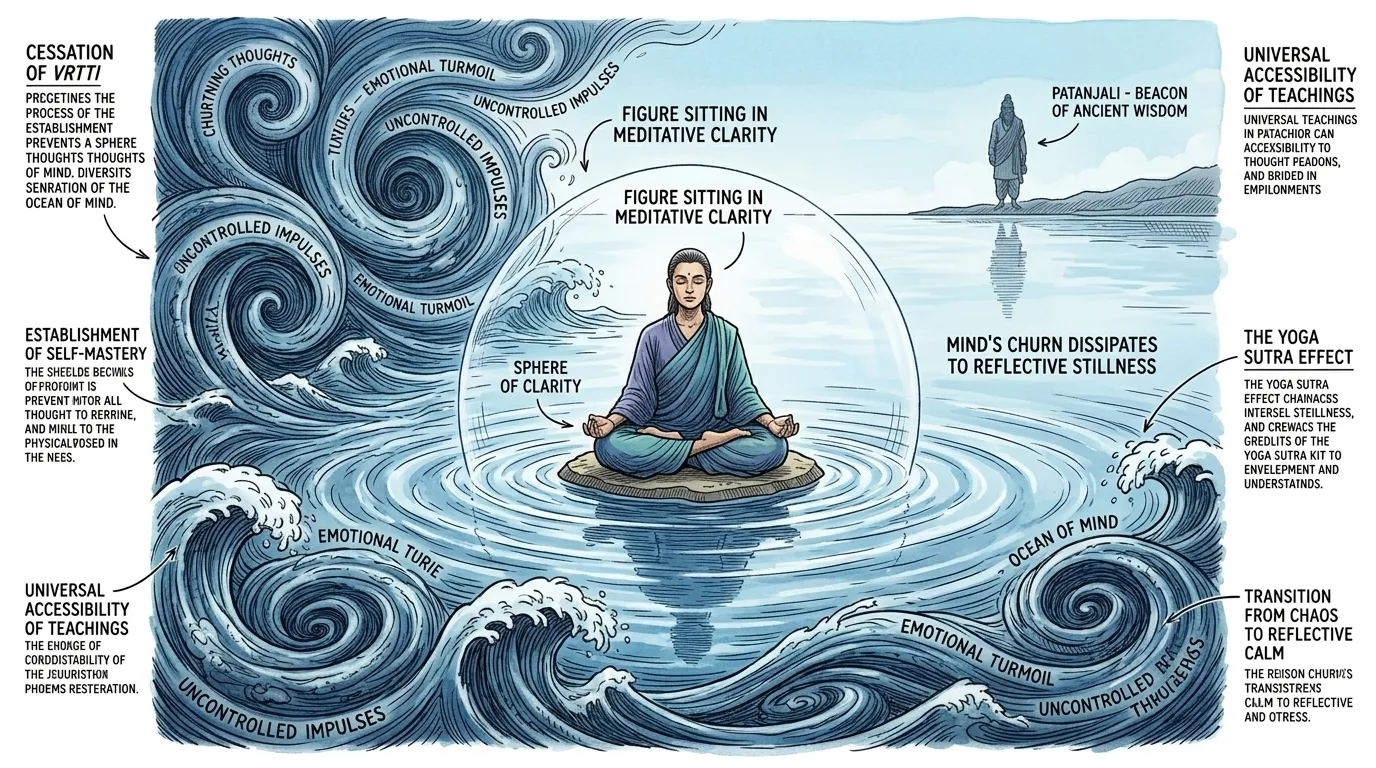
Patanjali's teachings remind us that the path to inner peace and self-mastery is not a mystical pursuit reserved for a few, but a systematic discipline accessible to all. Through mindful practice and ethical living, anyone can navigate the turbulent waters of the mind and discover the profound stillness within.
Philosophy Note: Global Impact: Patanjali's Yoga Sutras underpin much of modern yoga and mindfulness movements, offering timeless principles for self-awareness, emotional regulation, and spiritual growth applicable across cultures and beliefs.
About this story
- Audience: general readers
Questions and answers
Read Wonder Philosophy on your phone
Wonder Philosophy is available on Android and iPhone and iPad. Get Wonder Philosophy on Google Play · Get Wonder Philosophy on the App Store.