Paul Ricoeur
Paul Ricoeur — an illustrated philosophy story. 10 illustrated pages, free to read on Wonder Philosophy.

Page 1

Dr. Evelyn Reed stands before a holographic display, introducing the profound impact of a pivotal thinker. "Paul Ricoeur, a French philosopher, offered us a radical lens through which to view human existence: narrative identity," she articulates, gesturing towards a glowing visual. "He argued that we don't just have stories; we are our stories, constantly weaving and re-weaving the narratives that constitute our very sense of self."
""Paul Ricoeur, a French philosopher, offered us a radical lens through which to view human existence: narrative identity," Dr. Evelyn Reed articulates, gesturing towards a glowing visual. "He argued that we don't just have stories; we are our stories, constantly weaving and re-weaving the narratives that constitute our very sense of self.""
Philosophy Note: Paul Ricoeur (1913-2005): A pivotal figure in 20th-century philosophy, bridging phenomenology, hermeneutics, and existentialism.
Page 2
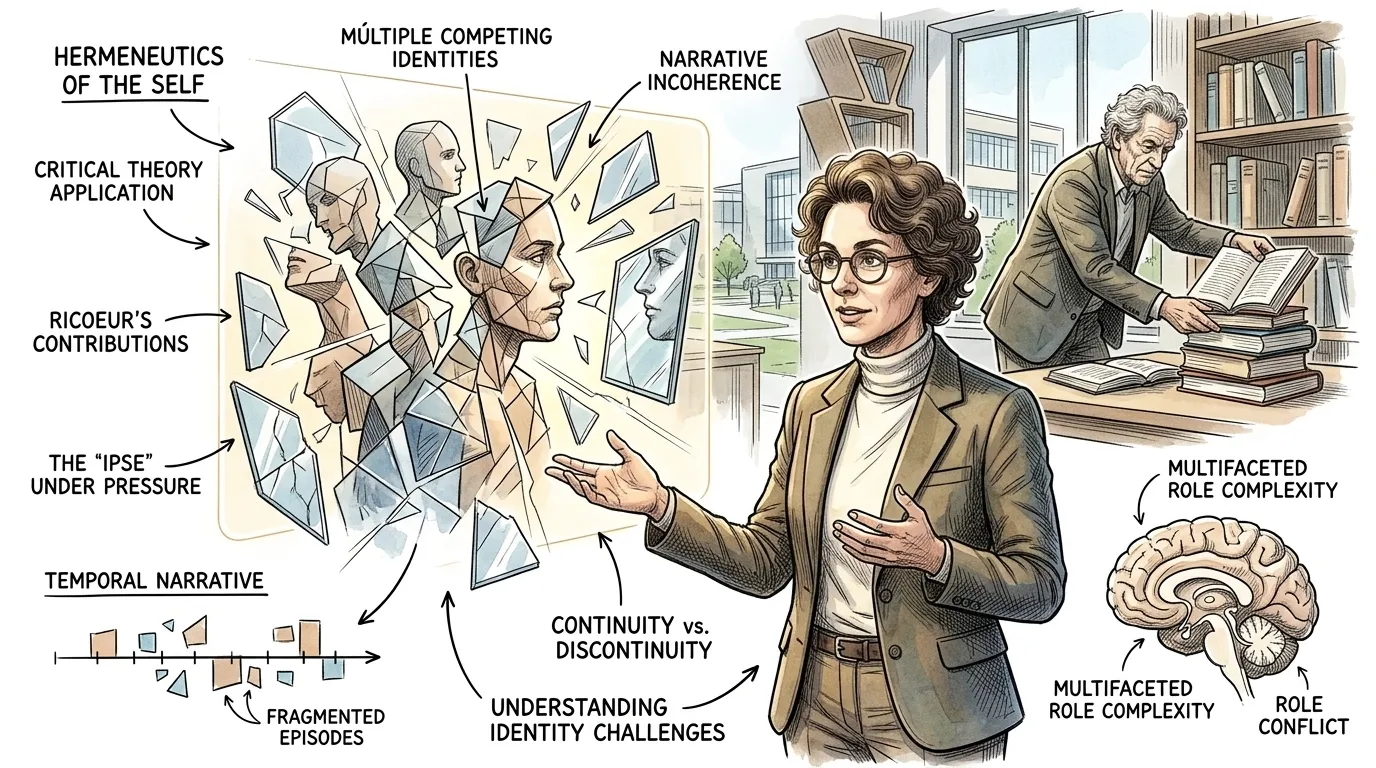
Dr. Reed turns to face an unseen audience, her expression thoughtful. "Before Ricoeur, modern thought often grappled with a fragmented self – a Cartesian 'I think' disconnected from the messy 'who I am' of daily life," she explains. "This left us with an individual constantly struggling to reconcile inner experience with external roles, searching for a coherent core amidst a multitude of competing identities."
""Before Ricoeur, modern thought often grappled with a fragmented self – a Cartesian 'I think' disconnected from the messy 'who I am' of daily life," Dr. Evelyn Reed explains, her expression thoughtful. "This left us with an individual constantly struggling to reconcile inner experience with external roles, searching for a coherent core amidst a multitude of competing identities.""
Philosophy Note: Descartes' 'Cogito': 'I think, therefore I am' posited a self grounded in pure thought, often detached from lived experience.
Page 3

Dr. Reed steps towards a historical projection of Ricoeur, gesturing as if to engage him in dialogue. "Ricoeur synthesized phenomenology, the study of lived experience, with hermeneutics, the theory of interpretation," she states clearly. "He proposed that our existence isn't just felt, but also understood through the stories we tell, making interpretation central to how we grasp our own being."
""Ricoeur synthesized phenomenology, the study of lived experience, with hermeneutics, the theory of interpretation," Dr. Evelyn Reed states clearly, stepping towards a historical projection of Ricoeur. "He proposed that our existence isn't just felt, but also understood through the stories we tell, making interpretation central to how we grasp our own being.""
Philosophy Note: Phenomenology: The philosophical study of structures of consciousness as experienced from the first-person point of view. Hermeneutics: The theory and methodology of interpretation.
Page 4
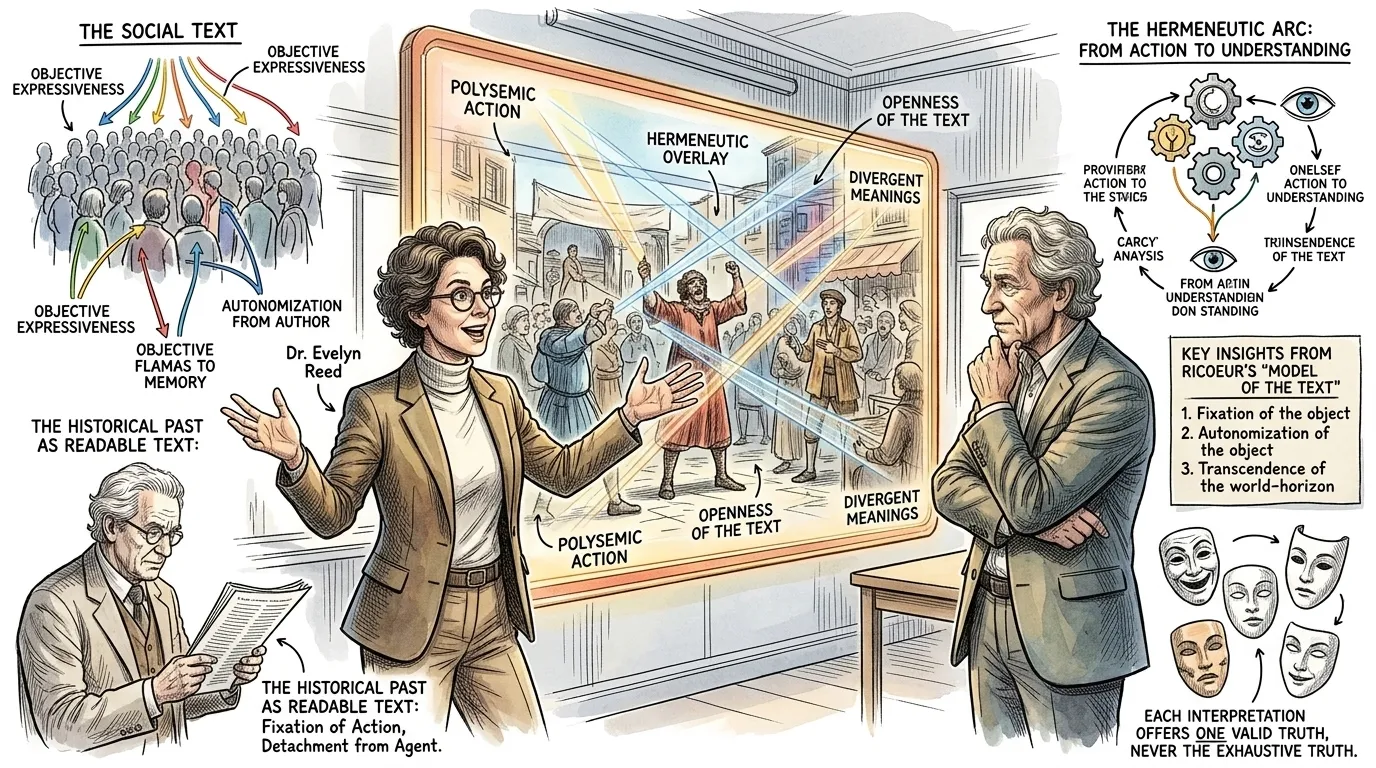
Dr. Reed gestures emphatically towards a vibrant display depicting a historical scene. "Ricoeur famously argued that human actions can be 'read' much like texts – public performances detached from their author's immediate intent, open to multiple interpretations," she explains. "This revolutionary idea transformed how we analyze historical events, social movements, and even our everyday interactions, acknowledging the rich ambiguity of human behavior."
""Ricoeur famously argued that human actions can be 'read' much like texts – public performances detached from their author's immediate intent, open to multiple interpretations," Dr. Evelyn Reed explains, gesturing emphatically towards a vibrant display depicting a historical scene. "This revolutionary idea transformed how we analyze historical events, social movements, and even our everyday interactions, acknowledging the rich ambiguity of human behavior.""
Philosophy Note: Ricoeur's Action as Text: Proposing that meaningful human action leaves a 'trace,' becoming 'fixed' and interpretable like a written text.
Page 5
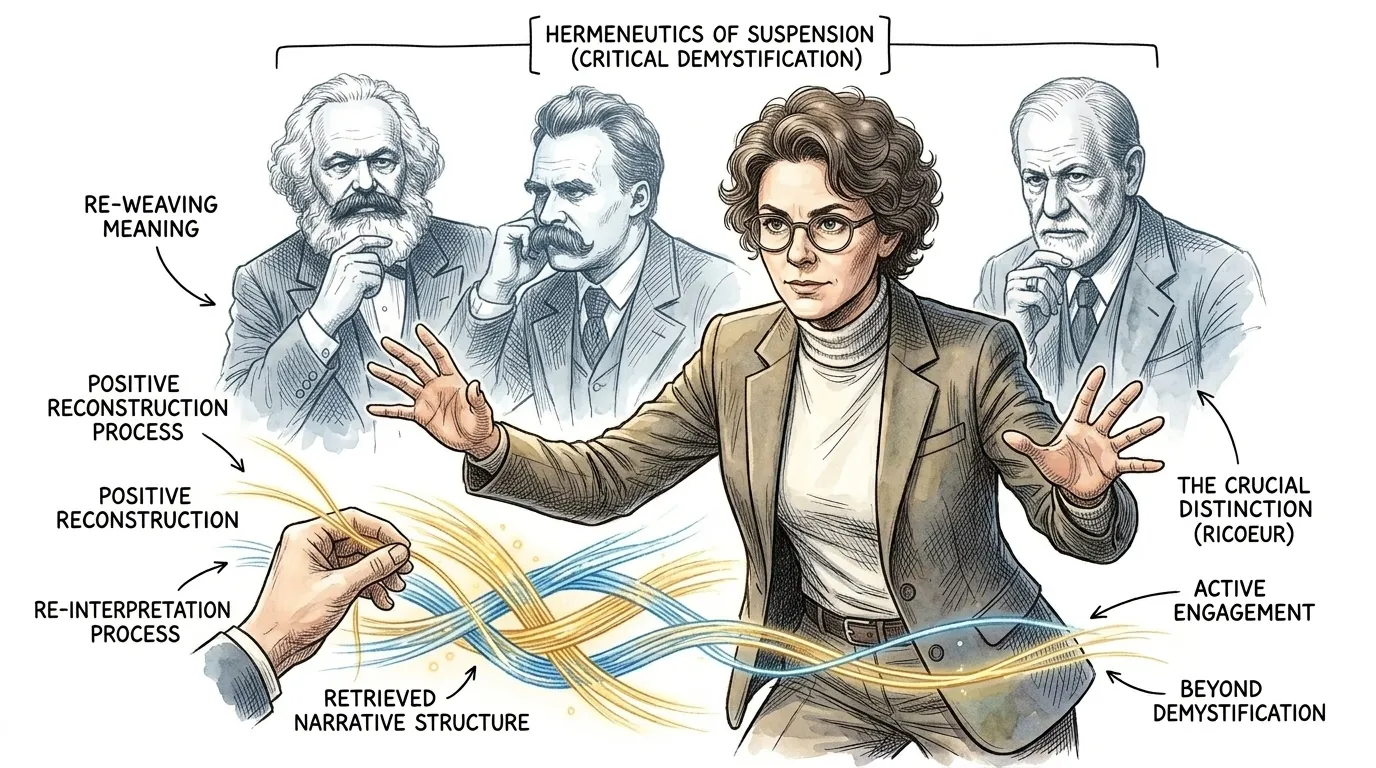
Dr. Reed emphasizes a crucial distinction, her voice steady. "Ricoeur confronted the 'masters of suspicion' – Marx, Nietzsche, Freud – who sought to unmask hidden power dynamics or unconscious motives within texts and actions," she elaborates. "Yet, he argued we must move beyond mere demystification, developing a 'hermeneutics of retrieval' to uncover new meanings and rebuild understanding, rather than leaving everything in ruins."
""Ricoeur confronted the 'masters of suspicion' – Marx, Nietzsche, Freud – who sought to unmask hidden power dynamics or unconscious motives within texts and actions," Dr. Evelyn Reed elaborates, her voice steady. "Yet, he argued we must move beyond mere demystification, developing a 'hermeneutics of retrieval' to uncover new meanings and rebuild understanding, rather than leaving everything in ruins.""
Philosophy Note: Masters of Suspicion: Philosophers who aimed to unmask illusions and hidden motives in human thought and culture, challenging established truths.
Page 6

Dr. Reed points to a visual illustrating the fluid nature of selfhood. "Ricoeur distinguished between idem identity – the sameness of character or traits over time – and ipse identity – the self-constancy maintained through promises and commitments despite changes," she explains. "He showed that our identity isn't a fixed essence, but a dynamic narrative we continually compose, integrating past experiences with future aspirations."
""Ricoeur distinguished between idem identity – the sameness of character or traits over time – and ipse identity – the self-constancy maintained through promises and commitments despite changes," Dr. Evelyn Reed explains, pointing to a visual illustrating the fluid nature of selfhood. "He showed that our identity isn't a fixed essence, but a dynamic narrative we continually compose, integrating past experiences with future aspirations.""
Philosophy Note: Idem Identity: Identity as sameness (e.g., character traits). Ipse Identity: Identity as selfhood, maintained through narrative, promises, and the capacity for self-interpretation.
Page 7
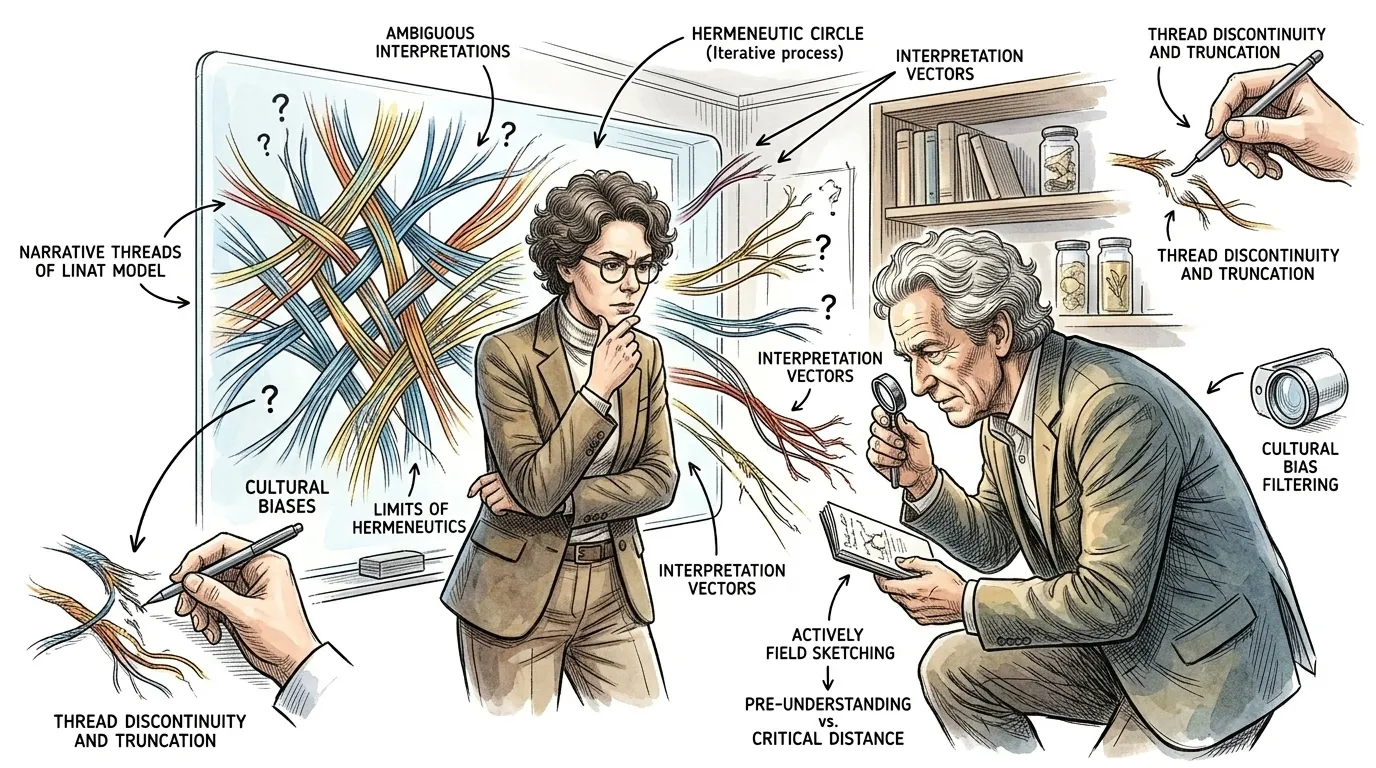
Dr. Reed shifts her focus to the complexities and criticisms inherent in Ricoeur's framework. "While powerful, Ricoeur's emphasis on narrative isn't without its challenges," she acknowledges, considering the intricate implications. "Critics question the limits of interpretation, asking if some experiences defy being neatly woven into a coherent story, or if cultural biases might unduly shape our understanding of 'texts' and 'actions'."
""While powerful, Ricoeur's emphasis on narrative isn't without its challenges," Dr. Evelyn Reed acknowledges, shifting her focus to the complexities and criticisms inherent in Ricoeur's framework. "Critics question the limits of interpretation, asking if some experiences defy being neatly woven into a coherent story, or if cultural biases might unduly shape our understanding of 'texts' and 'actions'.""
Philosophy Note: Hermeneutic Circle: The process of understanding a part in relation to the whole, and the whole in relation to its parts – a continuous, iterative process.
Page 8
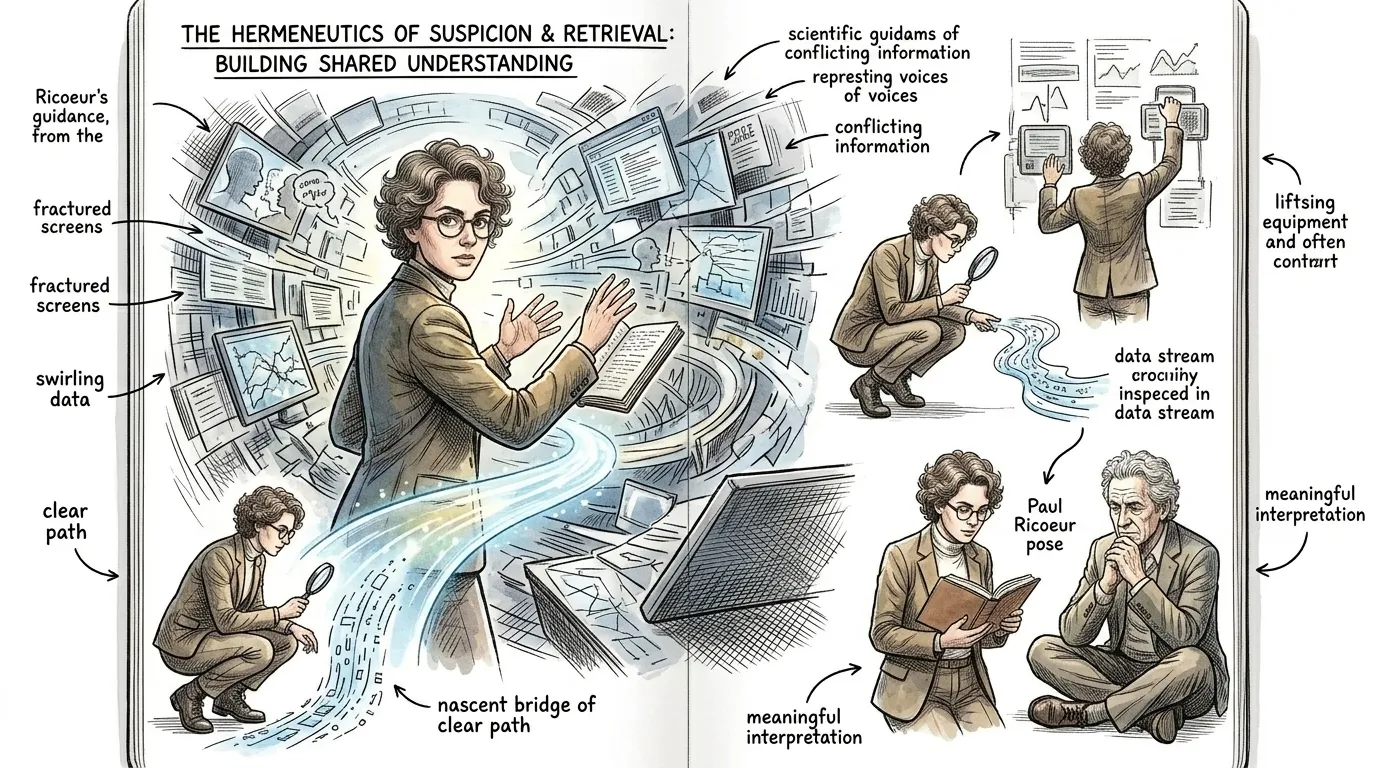
Dr. Reed turns to the pressing issues of our time, her gaze earnest. "In today's complex world, bombarded by conflicting information, Ricoeur's framework offers vital guidance," she asserts. "As the philosopher Jacques Derrida once noted, 'There is nothing outside the text.' This underscores Ricoeur's point that everything is interpretation. But Ricoeur gave us a way forward. Remember our discussion on the hermeneutics of suspicion and retrieval?"
""In today's complex world, bombarded by conflicting information, Ricoeur's framework offers vital guidance," Dr. Evelyn Reed asserts, her gaze earnest. "As the philosopher Jacques Derrida once noted, 'There is nothing outside the text.' This underscores Ricoeur's point that everything is interpretation. But Ricoeur gave us a way forward. Remember our discussion on the hermeneutics of suspicion and retrieval? In today's misinformation landscape, we must learn to be suspicious of intent, yes, but also work to retrieve the potential for shared meaning, to avoid mere nihilism. This is how we move beyond simply deconstructing narratives to building shared understanding.""
Philosophy Note: Jacques Derrida (1930-2004): French philosopher, often associated with deconstruction, emphasized the textual nature of reality and interpretation.
Page 9

Dr. Reed emphasizes the ethical imperative of Ricoeur's philosophy, her voice gaining gravity. "Ricoeur's work profoundly impacts our understanding of ethics and justice, especially in acknowledging the narratives of victims and marginalized voices," she states. "It compels us to listen, to interpret, and to integrate these stories into a broader, more just collective narrative, fostering empathy and accountability within society."
""Ricoeur's work profoundly impacts our understanding of ethics and justice, especially in acknowledging the narratives of victims and marginalized voices," Dr. Evelyn Reed states, her voice gaining gravity. "It compels us to listen, to interpret, and to integrate these stories into a broader, more just collective narrative, fostering empathy and accountability within society.""
Philosophy Note: Narrative Ethics: An approach to ethics that emphasizes the role of stories and personal narratives in moral reasoning and understanding.
Page 10
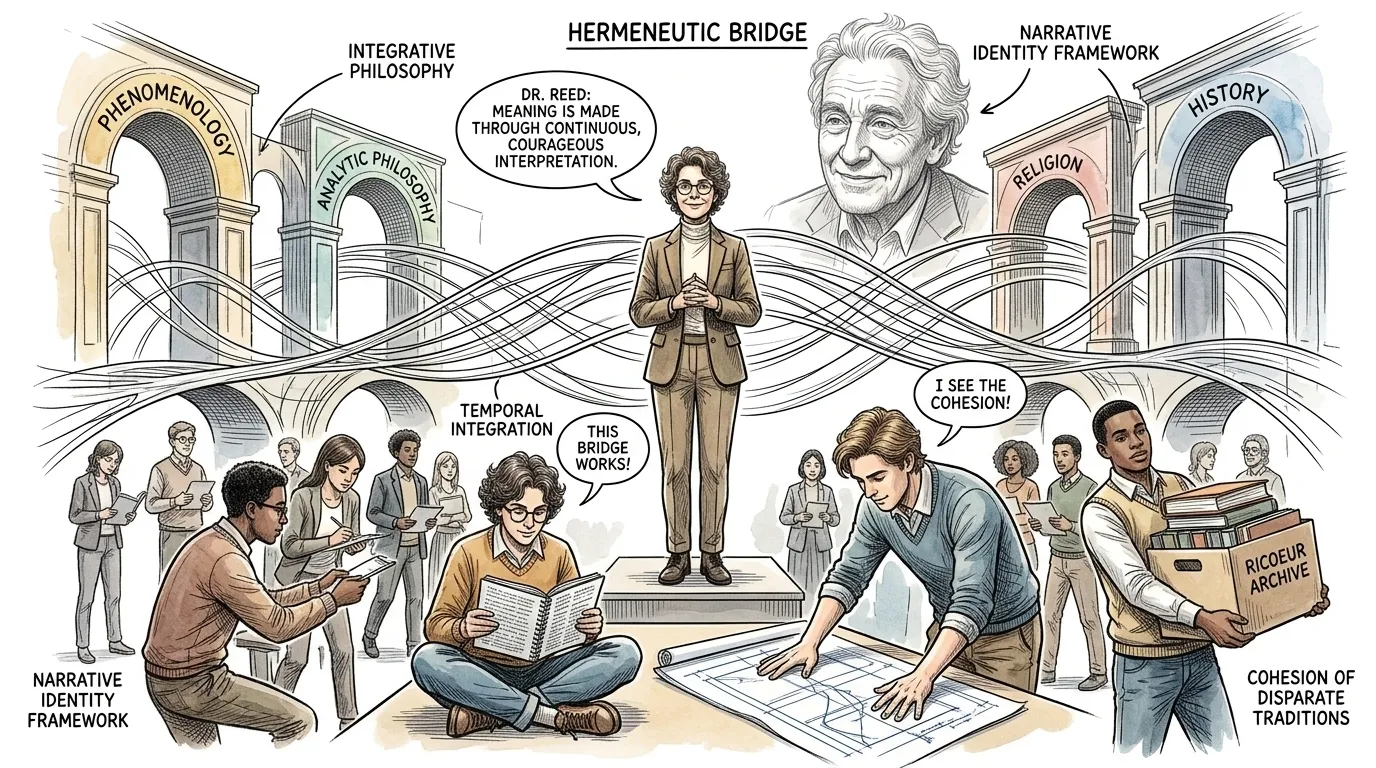
Dr. Reed stands reflectively, encapsulating Ricoeur's immense contribution. "Paul Ricoeur leaves us a legacy as a profound bridge-builder, connecting disparate philosophical traditions and offering practical tools for understanding ourselves and our complex world," she concludes. "His ideas continue to resonate, reminding us that meaning is not found, but made, through the continuous, courageous act of interpretation."
""Paul Ricoeur leaves us a legacy as a profound bridge-builder, connecting disparate philosophical traditions and offering practical tools for understanding ourselves and our complex world," Dr. Evelyn Reed concludes, standing reflectively. "His ideas continue to resonate, reminding us that meaning is not found, but made, through the continuous, courageous act of interpretation.""
Philosophy Note: Ricoeur's influence extends across theology, literary theory, law, history, ethics, and the social sciences, underscoring the ubiquity of interpretation.
About this story
- Audience: general readers
Questions and answers
Read Wonder Philosophy on your phone
Wonder Philosophy is available on Android and iPhone and iPad. Get Wonder Philosophy on Google Play · Get Wonder Philosophy on the App Store.