Plato
Plato — an illustrated philosophy story. 10 illustrated pages, free to read on Wonder Philosophy.
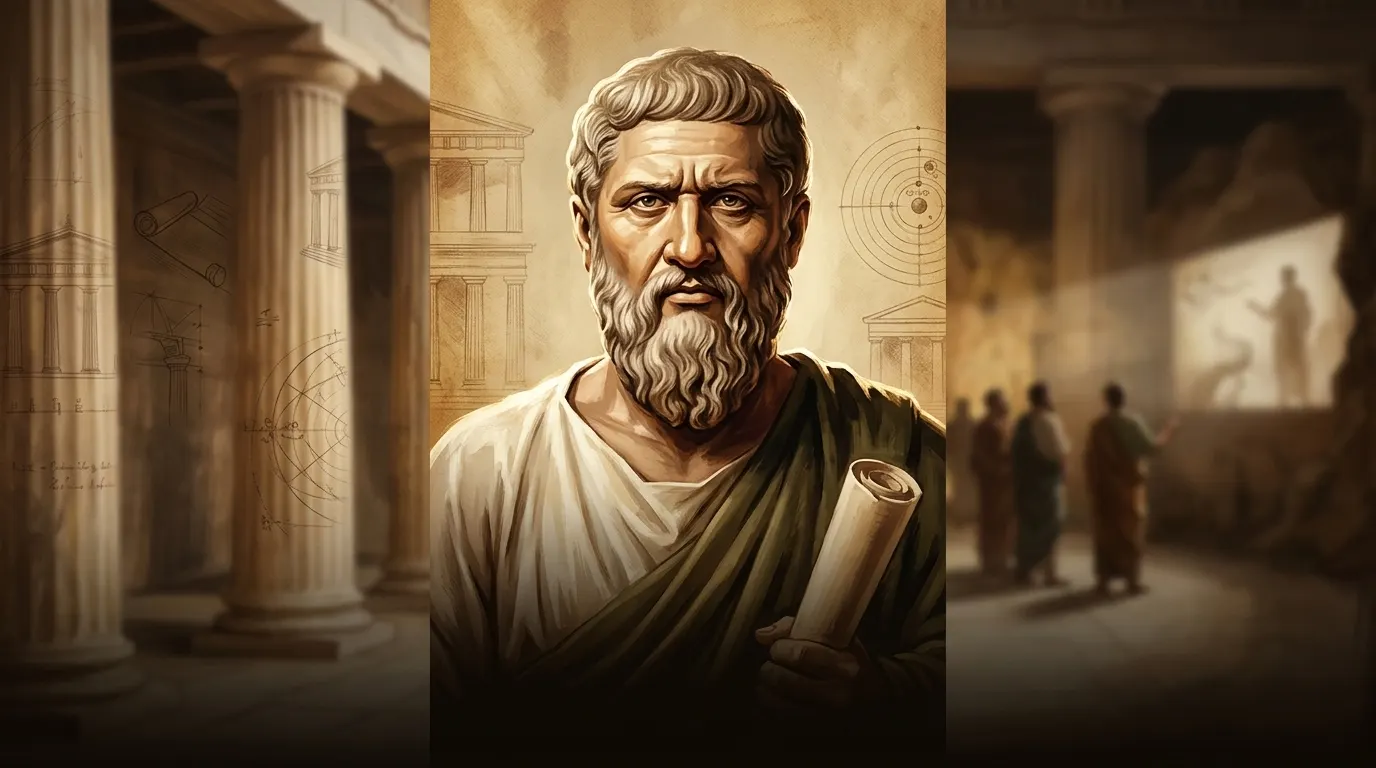
Page 1
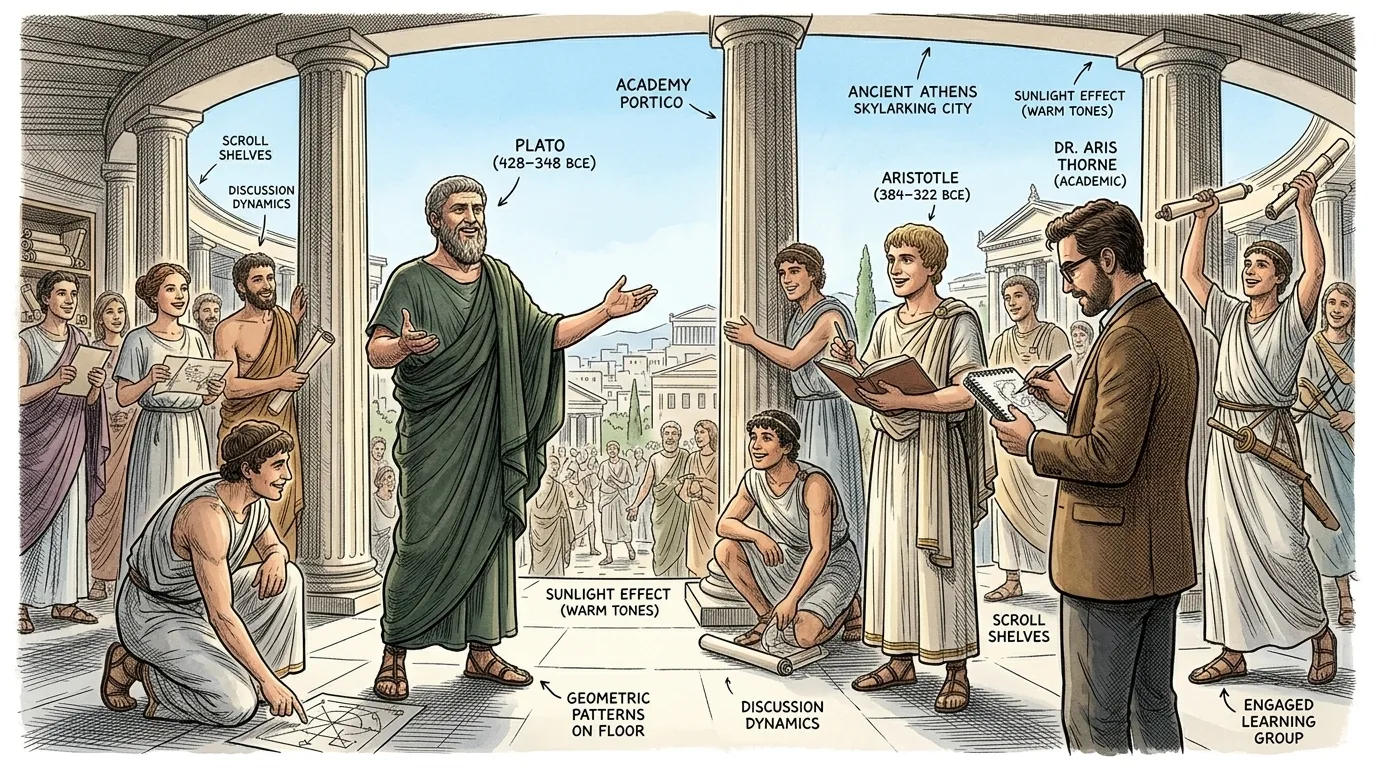
Amidst the bustling intellectual energy of ancient Athens, the revered philosopher Plato addressed a gathering of eager minds.
""Friends, we seek not fleeting opinions, but enduring truth," Plato declared, his voice resonating through the sunlit portico. "How can we understand justice, beauty, or goodness itself, when all we see around us changes like the wind?" His words invited deep contemplation, laying the groundwork for a revolutionary idea that would reshape Western thought."
Philosophy Note: Plato (c. 428–348 BCE), Ancient Greek philosopher, student of Socrates, teacher of Aristotle. Founder of the Academy in Athens. Core Idea: The Theory of Forms. Addresses: The problem of objective knowledge in a changing world. Location: The Academy, Athens. Era: 4th Century BCE.
Page 2
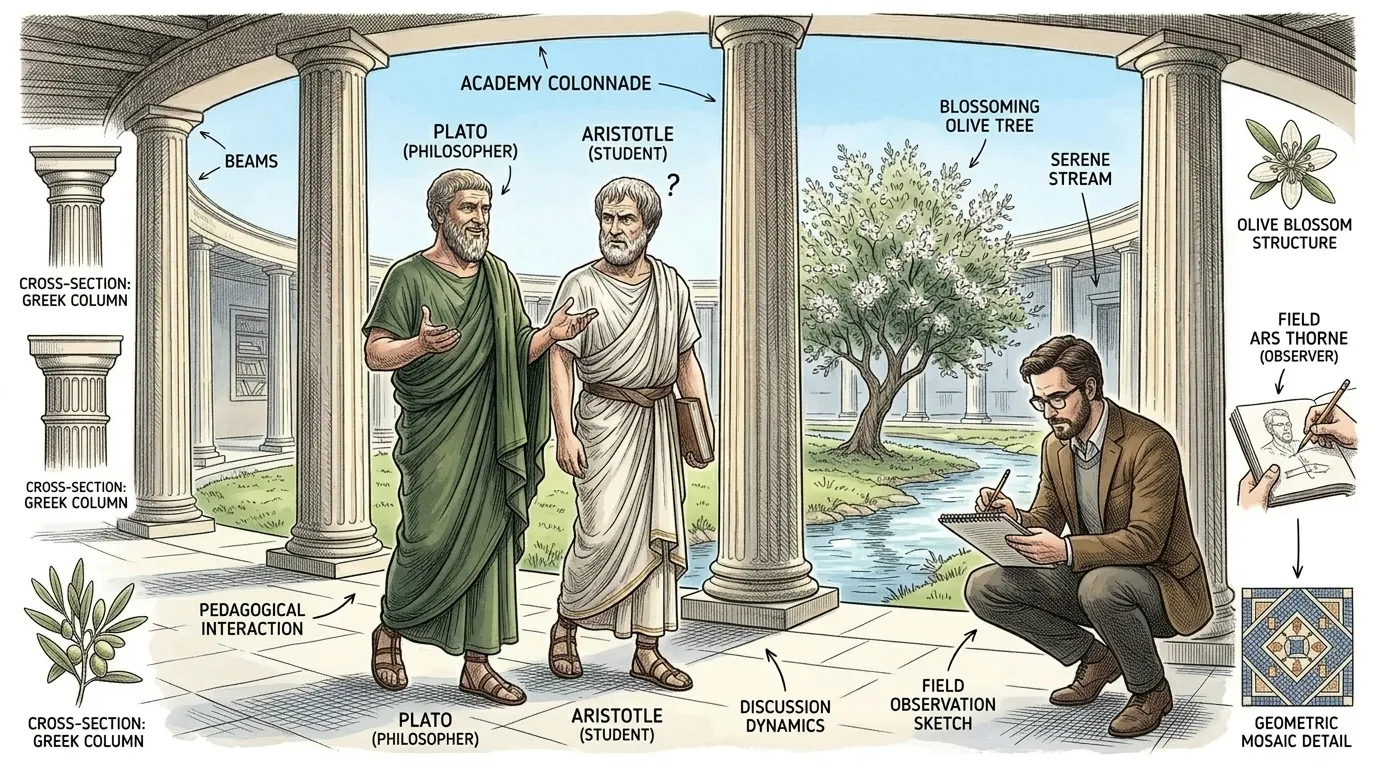
Later, walking through the shaded colonnades of the Academy, Plato conversed with his brilliant young student, Aristotle, about the nature of reality.
""Master," Aristotle began, his brow furrowed, "you teach us to question everything, as Socrates did. Yet, if all we perceive with our senses—this flowing stream, that blossoming olive tree—is constantly changing, how can we ever grasp something truly permanent?" Plato nodded, a knowing smile playing on his lips, recognizing the profound question at the heart of their philosophy."
Philosophy Note: The Academy: Founded by Plato in Athens, one of the earliest institutions of higher learning. Socrates: Plato's teacher, known for his method of questioning (Socratic method) to expose ignorance and seek truth. Aristotle (384–322 BCE): Plato's most famous student, whose empirical approach would later diverge from Plato's idealism.
Page 3
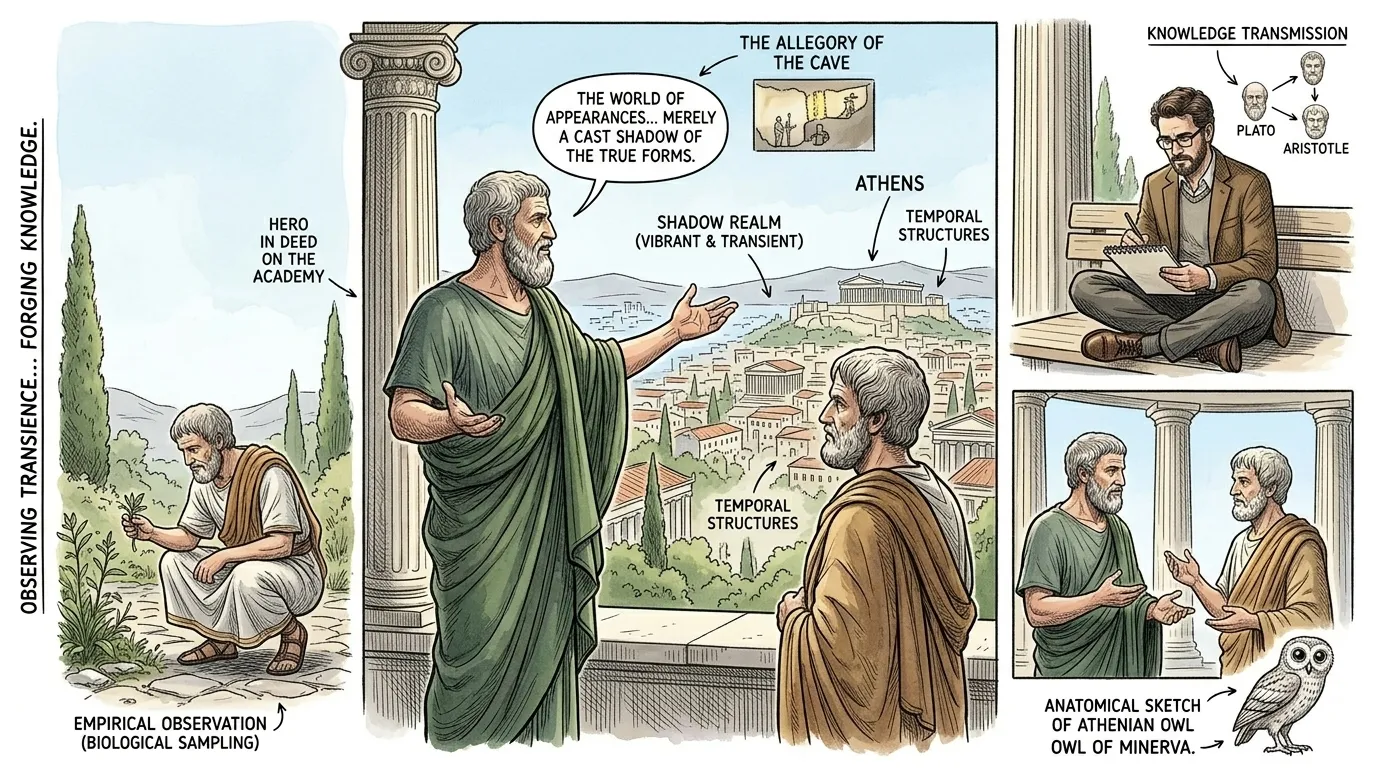
Plato paused, turning to face Aristotle, his gaze sweeping across the vibrant, yet transient, landscape of Athens.
""Indeed, Aristotle, the physical world is a realm of shadows, mere imperfect copies of a truer reality," Plato explained, gesturing towards the distant city. "But imagine a realm of perfect, unchanging 'Forms'—the ideal blueprint of Justice itself, the essence of Beauty, the true Circle beyond any drawn on sand." He then added, "To truly understand this, we must consider a profound thought experiment, a story of prisoners in a cave, to illustrate our journey towards pure knowledge.""
Philosophy Note: The Theory of Forms: Plato's metaphysical concept that non-physical, perfect, and unchanging archetypes (Forms) exist independently of the physical world and are the truest reality. Allegory of the Cave: A famous thought experiment introduced by Plato in 'The Republic' to explain the nature of reality and knowledge.
Page 4
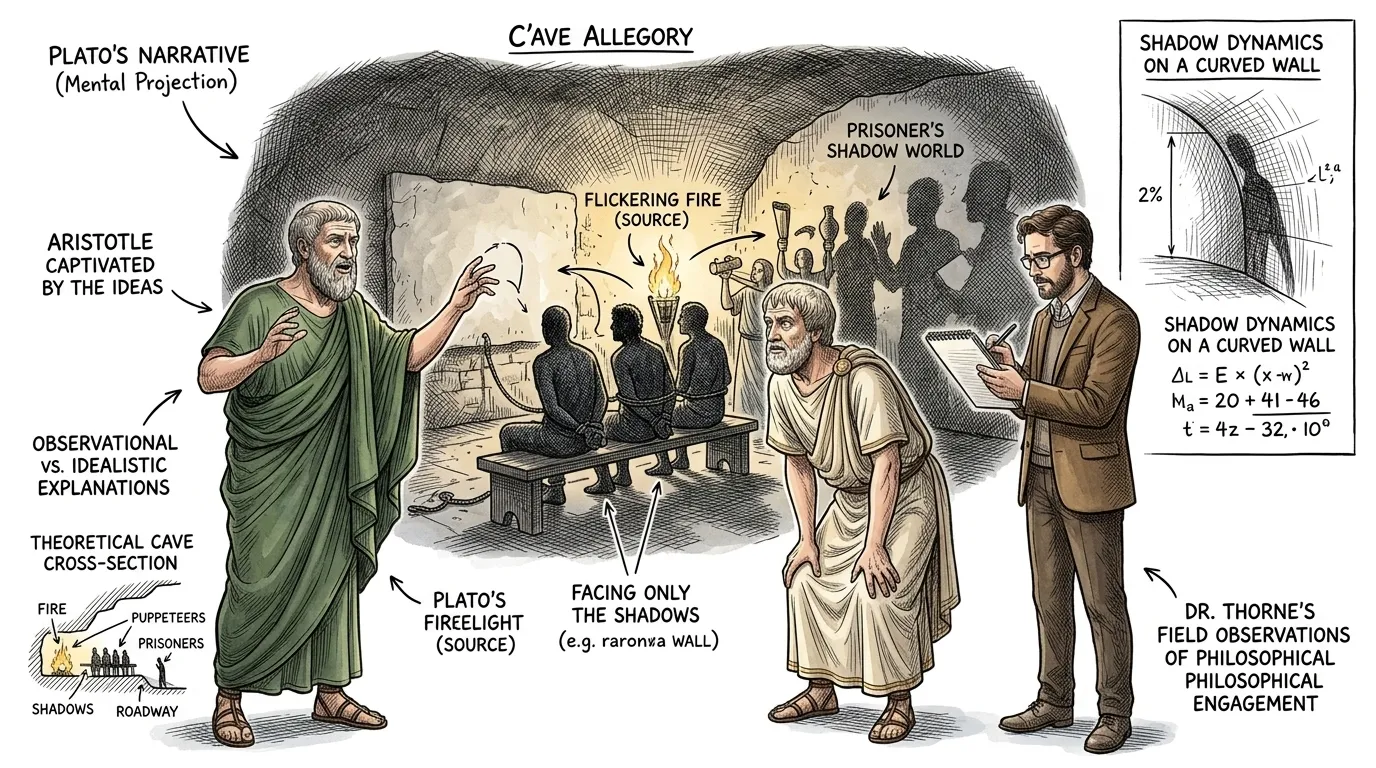
Plato's voice grew hushed as he began to paint a vivid mental picture for Aristotle, drawing him deeper into the famed allegory.
""Picture prisoners chained from birth deep inside a cave, facing a blank wall, unable to turn their heads," Plato described, his hand tracing shapes in the air. "Behind them, a fire burns, and between the fire and the prisoners, puppeteers carry objects, casting only their shadows onto the wall before the captives. These shadows are all the prisoners have ever known, believing them to be the only reality. They name the shadows, study them, believing they know the world." Aristotle listened intently, captivated by the stark image."
Philosophy Note: The Allegory of the Cave: In Plato's 'Republic,' this allegory explores how our perceptions can be misleading and how philosophical enlightenment is a challenging journey. Prisoners: Represent humanity trapped in ignorance, perceiving only sensory data.
Page 5
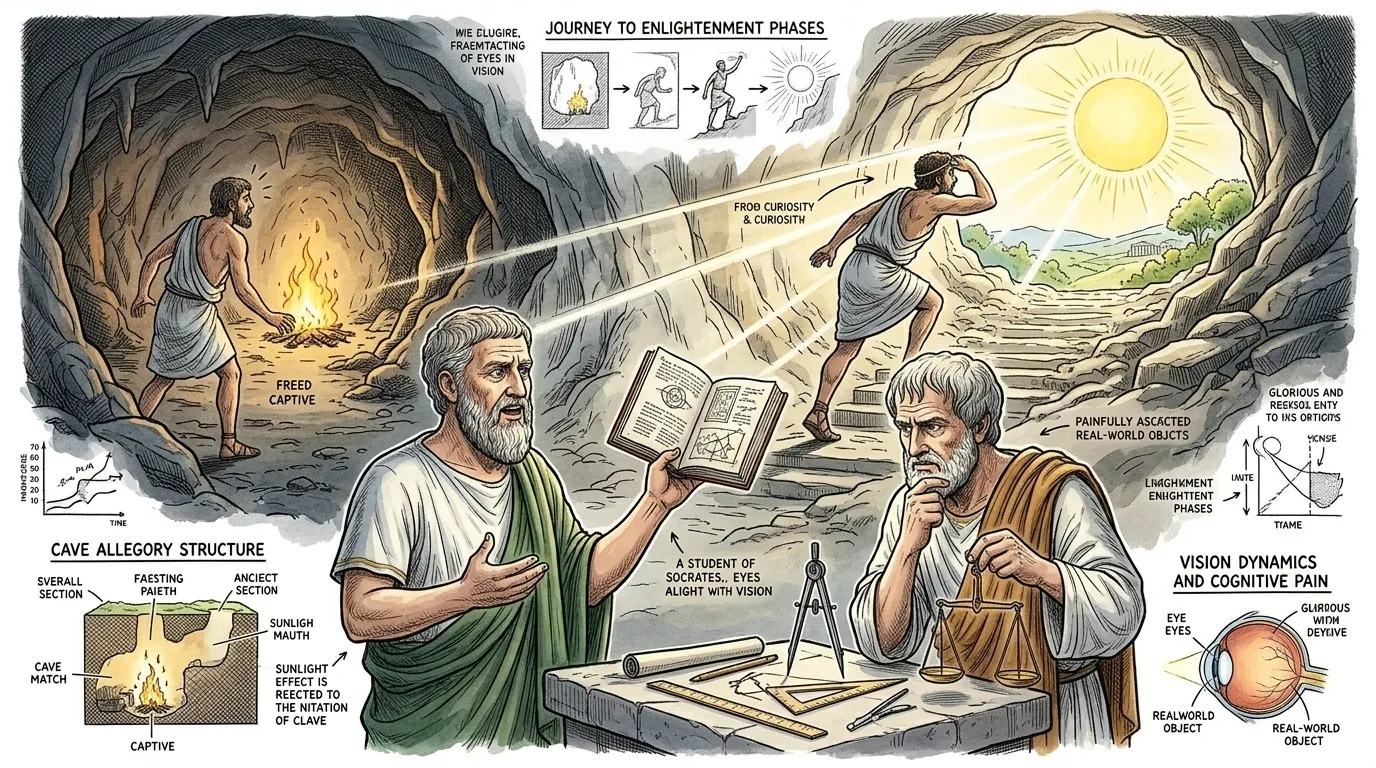
Plato continued, his narrative leading them from the dim confines of the cave into the blinding brilliance outside.
""Now, imagine one prisoner is freed, forced to turn, and see the fire, then dragged out of the cave," Plato urged, his eyes alight. "The journey would be painful, the sunlight dazzling, and the true objects initially bewildering. But gradually, his eyes would adjust, first seeing shadows, then reflections, then the true sun and the world in its full glory! This painful ascent, Aristotle, is the path of the philosopher, moving from sensory illusions to the Forms, to the ultimate truth, the Good." Aristotle gazed, imagining the painful, yet ultimately liberating, revelation."
Philosophy Note: The Ascent: Represents the philosophical journey from ignorance (shadows) to knowledge (true Forms). The Sun: Symbolizes the Form of the Good, the ultimate source of all truth and knowledge. Philosopher-King: Plato believed those who completed this journey were best suited to govern.
Page 6
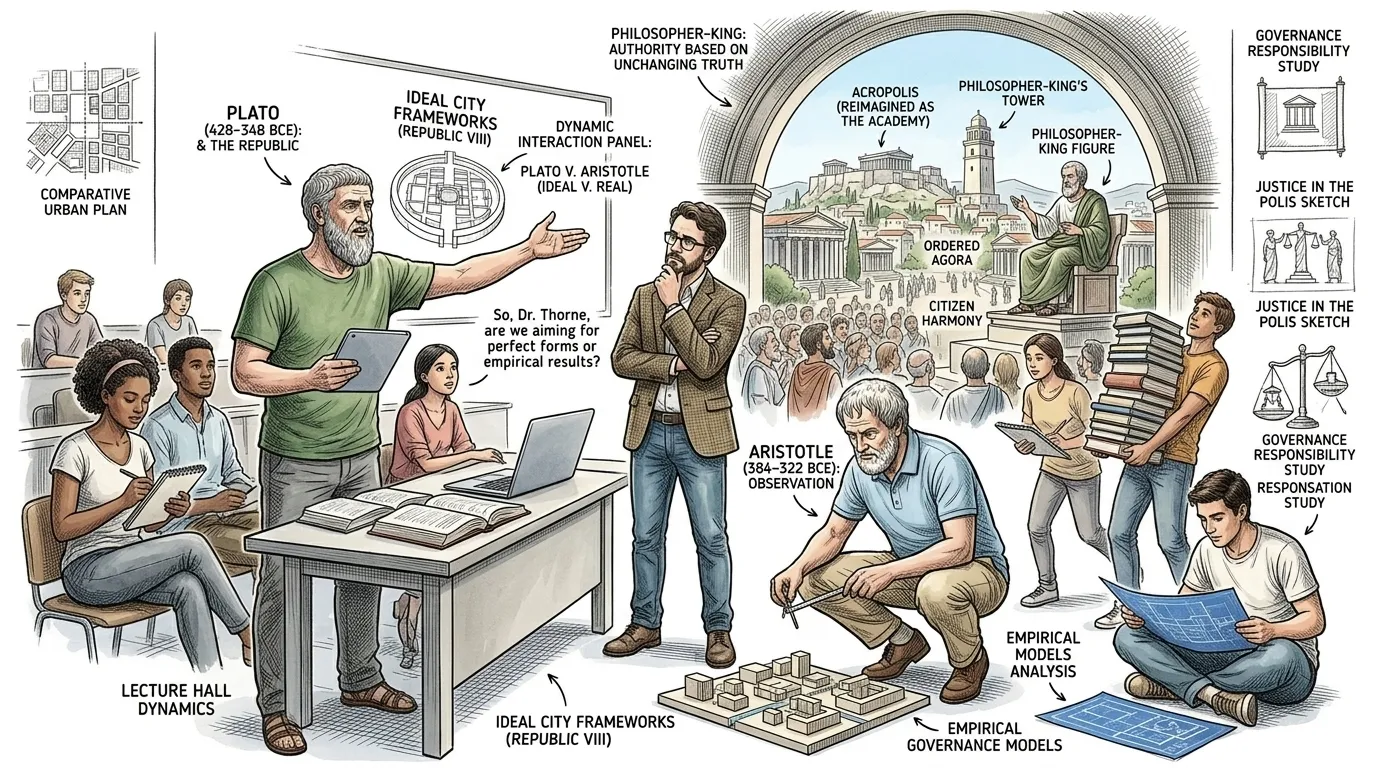
The allegory complete, Plato then spoke of its radical implications for the very fabric of society and governance.
""One who has seen the true sun, who understands the Form of Justice itself, would be foolish to return to the cave and its shadows," Plato asserted, his voice firm. "But if they did, compelled by duty, they would be uniquely qualified to guide the city, to establish laws based not on shifting opinions, but on unchanging truth." Aristotle considered this, pondering the immense responsibility this would place upon such a 'philosopher-king,' and the challenges they would face among those still content with shadows."
Philosophy Note: The Republic: Plato's most famous work, outlining his vision of an ideal state governed by philosopher-kings, whose rule is based on perfect knowledge (the Forms). Justice and Governance: Plato believed that true justice could only be achieved by aligning the city and its citizens with the unchanging Forms.
Page 7
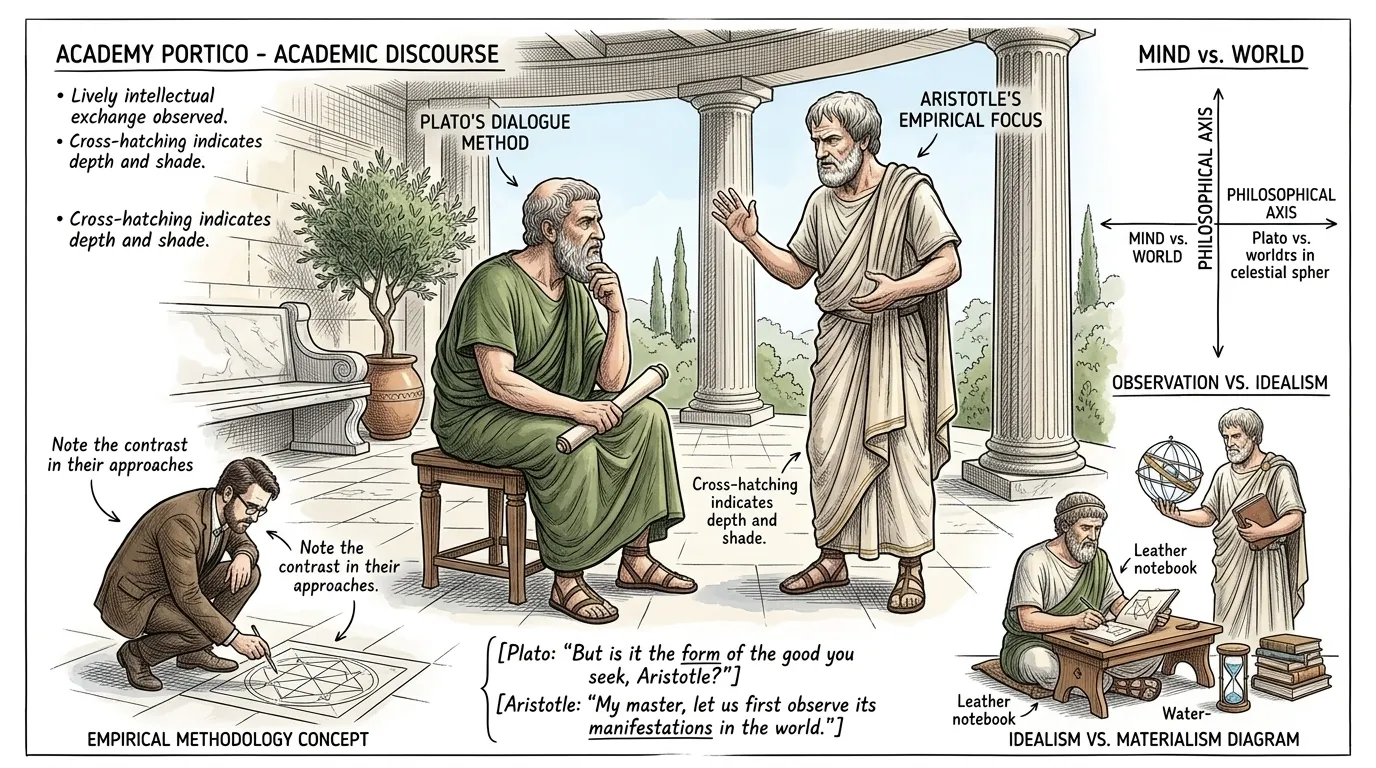
Though he deeply admired his teacher, Aristotle, with his keen empirical mind, could not let some of Plato's grandest claims pass unchallenged.
""Master, your Forms offer a beautiful vision of perfection," Aristotle conceded, his tone respectful yet probing. "But if the ideal Form of a horse exists in a separate, perfect realm, how does it actually make a physical horse, here in our world, a horse? As the philosopher Critias once argued against the Forms, 'If there is a Form of Man, must there also be a Form of 'Man-ness' to explain the Form of Man itself, leading to an infinite regress?' This 'Third Man Argument' suggests a problem of infinite separation." Plato listened, a familiar glint in his eye, ready for intellectual debate."
Philosophy Note: Aristotle's Criticisms: Argued that Forms are not separate from particulars but are inherent in them (immanent). Third Man Argument: A criticism, often attributed to Aristotle, that if particulars participate in Forms, then a third Form is needed to explain the relationship, leading to an infinite regress and undermining the explanatory power of Forms.
Page 8
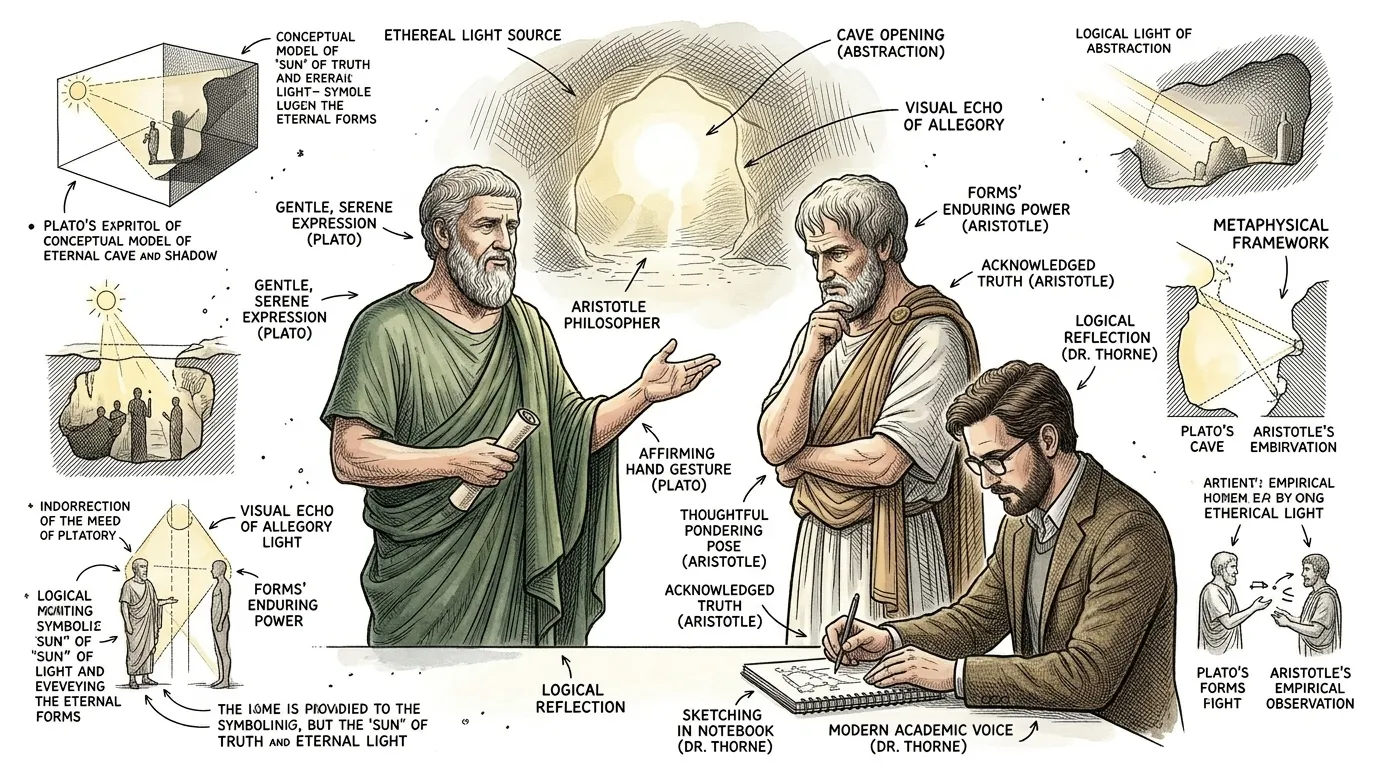
The debate between teacher and student highlighted the fundamental tension at the heart of metaphysics: the relationship between the ideal and the real.
""The difficulty in grasping the connection does not negate the Forms' necessity, my dear Aristotle," Plato calmly replied. "Without them, how do we define what is truly good, or beautiful, or just? Do we not still, even unconsciously, strive towards an ideal? Remember our cave: those who've seen the sun understand why the shadows are insufficient, even if they struggle to perfectly describe the light to those still chained." Aristotle pondered this, acknowledging the enduring power of the allegory's vision."
Philosophy Note: Participation/Imitation: Plato believed particulars 'participate' in or 'imitate' the Forms. Metaphysical Dualism: The idea of two fundamental kinds of reality (physical and non-physical), central to Plato's philosophy. Enduring Value: Even with criticisms, Plato's Forms compel us to seek deeper, more perfect realities beyond superficial appearances.
Page 9
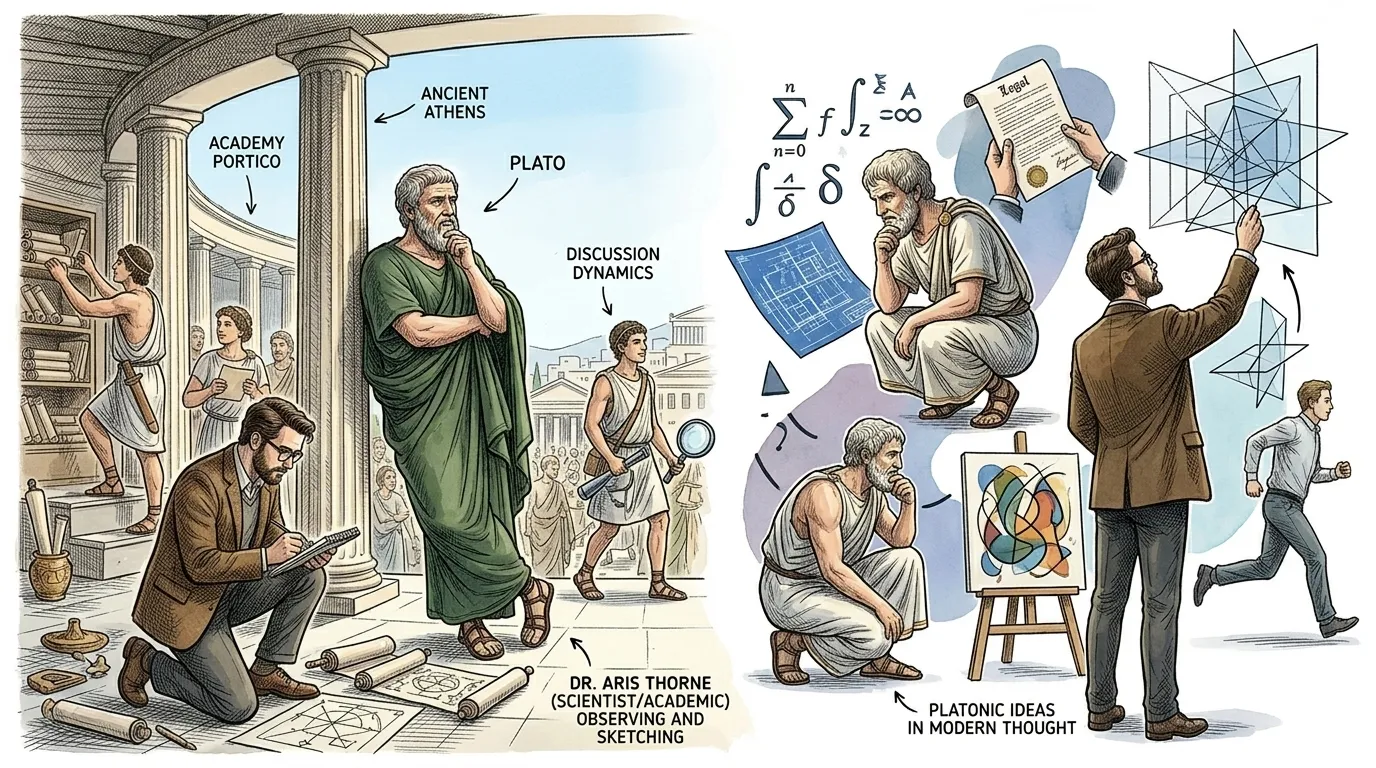
Centuries later, Plato's profound ideas continue to resonate, shaping our understanding of the world in myriad ways, even if often unseen.
""Look around, Aristotle," Plato might have mused, if he saw our modern world. "The search for perfect mathematical truths, the pursuit of ethical ideals in law and governance, even the longing for abstract beauty in art—do these not all echo the soul's yearning for the Forms?" Aristotle, perhaps observing, would acknowledge, "Indeed, Master. Though the methods change, humanity's quest for underlying patterns and universal principles, for the very essence of things, remains your enduring legacy.""
Philosophy Note: Influence on Mathematics: Plato's emphasis on abstract, unchanging truths influenced mathematicians and scientists for millennia. Ethics and Politics: His ideas of ideal justice and governance continue to shape political philosophy. Aesthetics: The concept of ideal beauty informs discussions in art and philosophy.
Page 10
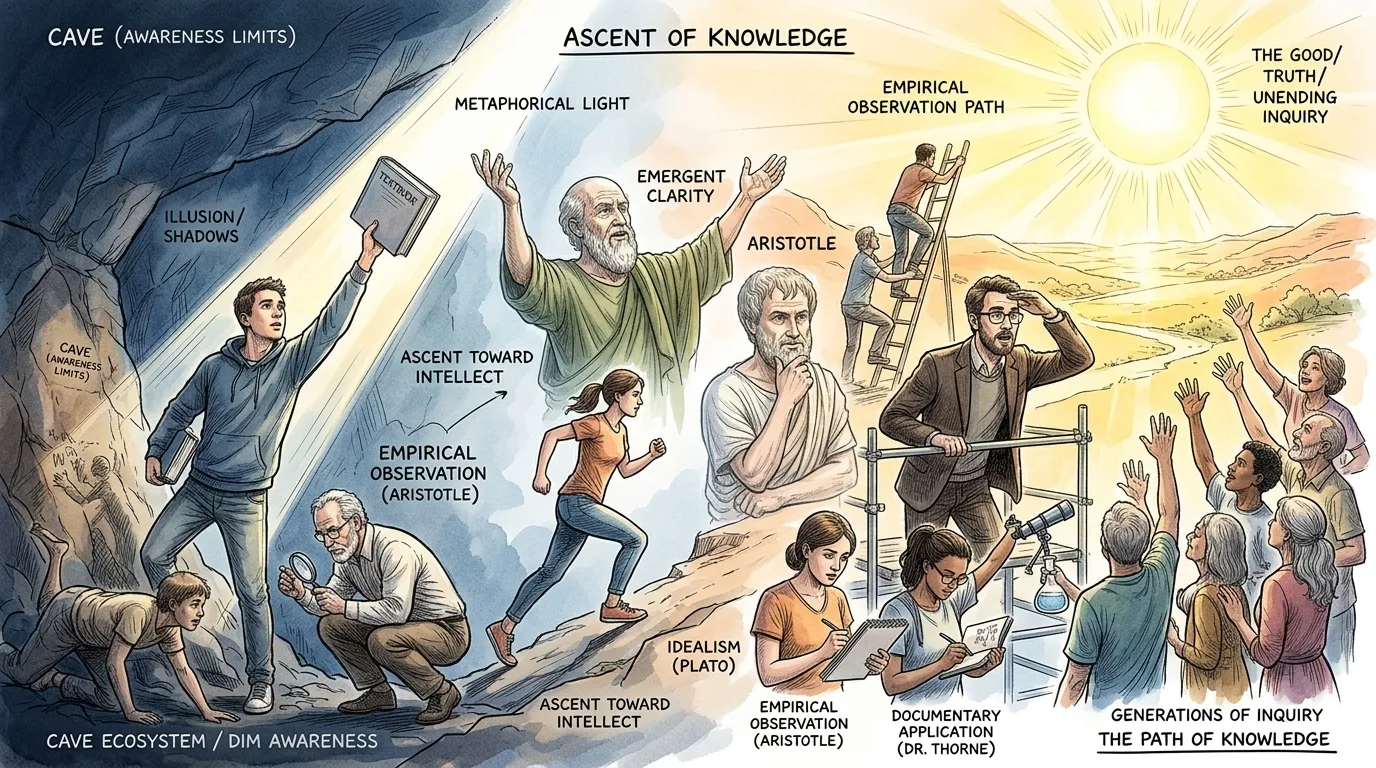
Plato's philosophy remains a powerful invitation: to look beyond the immediate, to question assumptions, and to embark on the challenging, yet ultimately rewarding, journey towards deeper understanding.
""The journey out of the cave is never truly finished," Plato's timeless voice seemed to whisper across the millennia. "For each generation must find its own way to distinguish shadows from the sun. The true philosopher never ceases to ascend." Aristotle's spirit would reply, "And in that unending quest, Master, lies the very essence of human thought—the drive to clarify, to categorize, and to build knowledge upon the enduring principles you first illuminated.""
Philosophy Note: Legacy of Idealism: Plato's philosophy encourages the pursuit of ideals and abstract knowledge. Enduring Questions: His questions about reality, knowledge, and ethics remain central to philosophy. Call to Philosophy: The journey from opinion to knowledge is a continuous, vital human endeavor.
About this story
- Audience: general readers
Questions and answers
Read Wonder Philosophy on your phone
Wonder Philosophy is available on Android and iPhone and iPad. Get Wonder Philosophy on Google Play · Get Wonder Philosophy on the App Store.