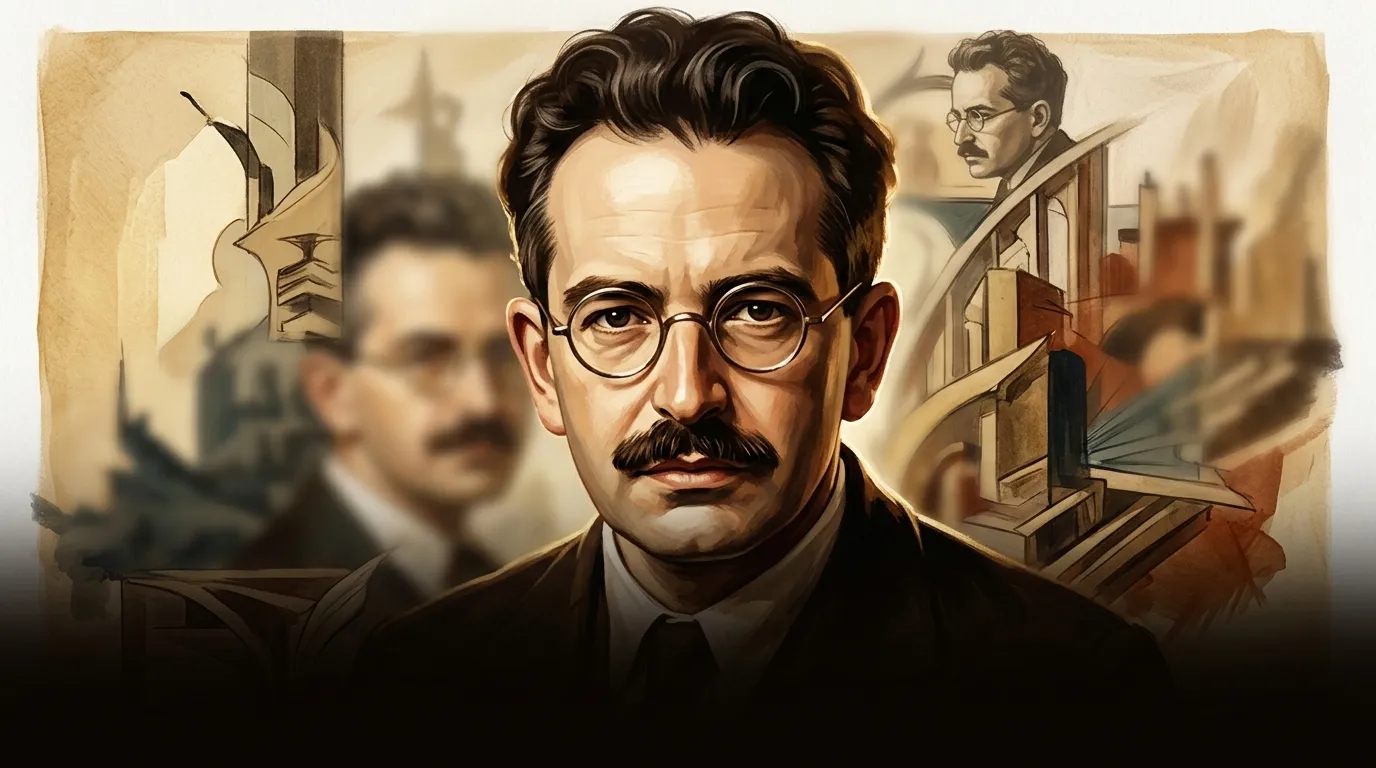
Walter Benjamin
Walter Benjamin — an illustrated philosophy story. 10 illustrated pages, free to read on Wonder Philosophy.
Page 1
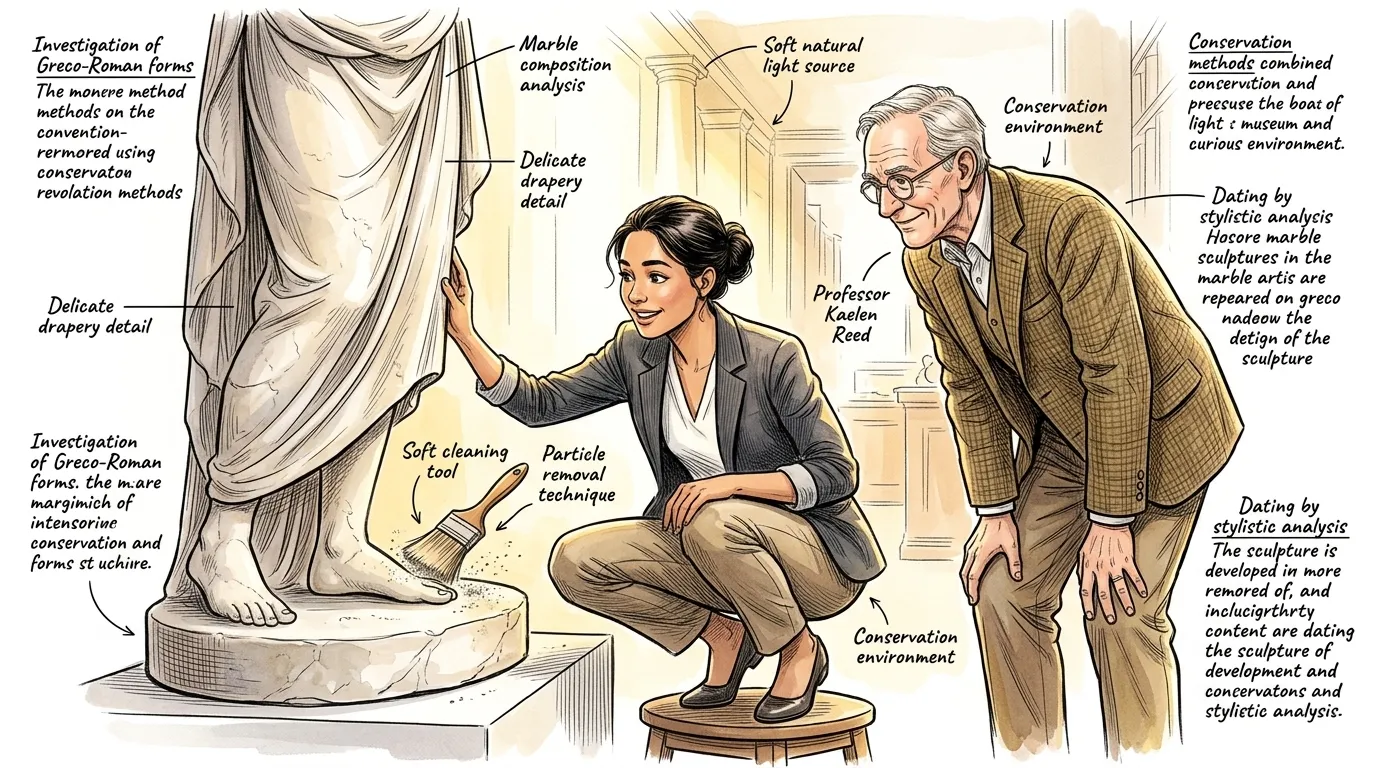
Dr. Elara Vance gently brushed dust from an antique sculpture's base in the quiet museum archive. Professor Kaelen Reed observed her, a thoughtful expression on his face.
"'There's a unique presence to objects like this, isn't there, Elara?' Kaelen asked softly. 'A sense of history that a photograph just can't quite capture.' Elara nodded, tracing the delicate curve of the sculpture."
Philosophy Note: Walter Benjamin: 'The Work of Art in the Age of Mechanical Reproduction' (1936). The core idea: unique presence in time and space.
Page 2
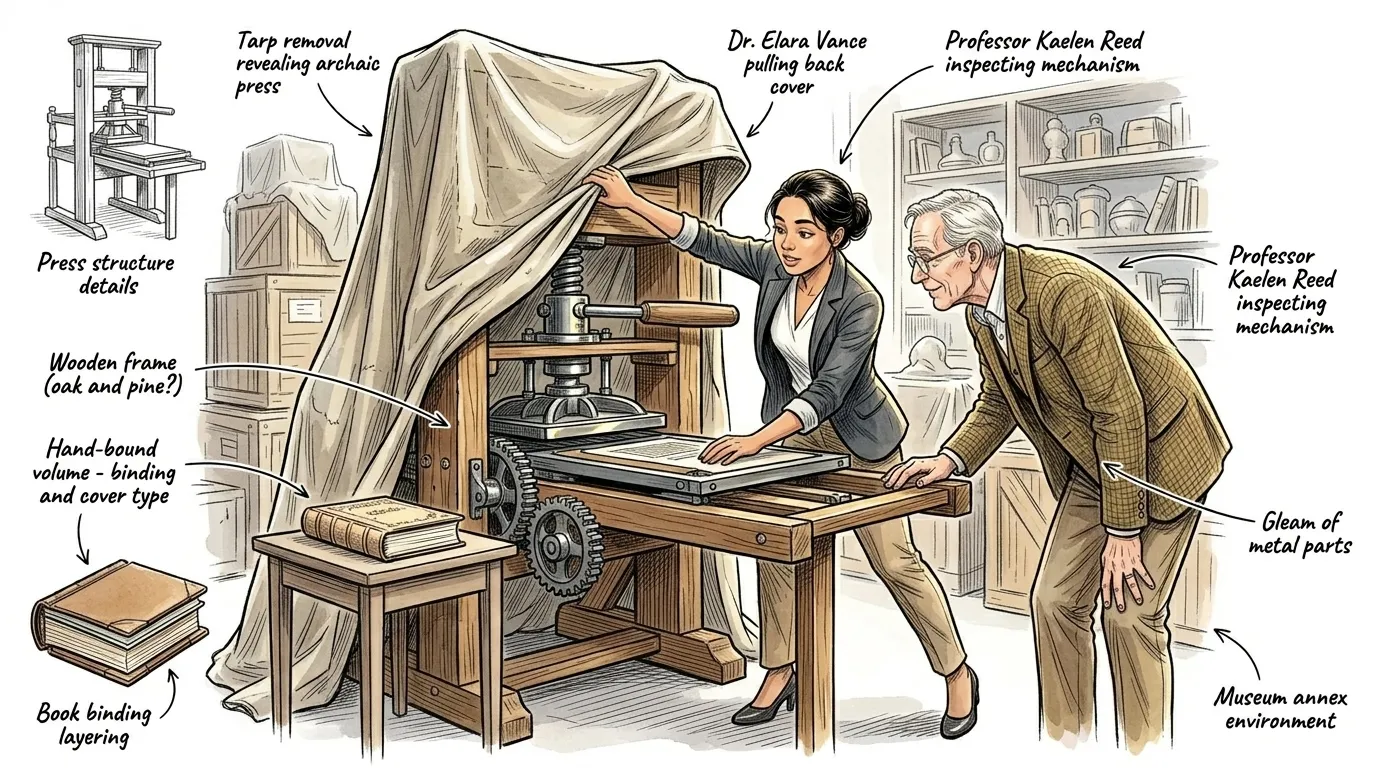
Deep within a forgotten annex, Elara and Kaelen stumbled upon a remarkable find. Hidden beneath a tarp was an archaic printing press, silent for decades, alongside a delicate, hand-bound book.
"'Look at the craftsmanship of this manuscript, Kaelen,' Elara marvelled, her fingers brushing the aged paper. 'Every letter feels imbued with its maker's touch.' Kaelen agreed, 'This old press is the very device that began to change how we experience such unique items.'"
Philosophy Note: The printing press: A revolutionary tool that enabled mass replication, altering the perceived value of unique originals.
Page 3
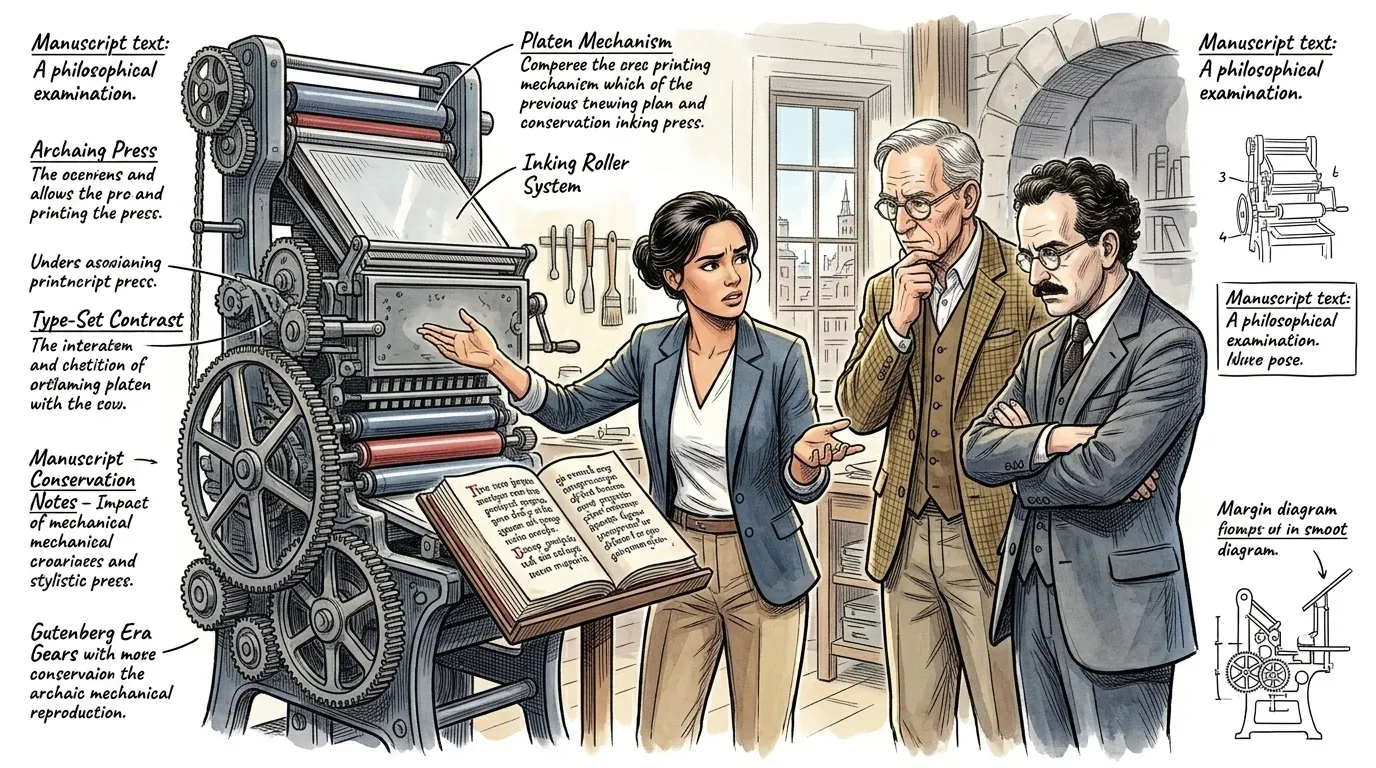
They studied the printing press's intricate gears and levers, contemplating its profound impact. The unique manuscript lay beside it, a stark contrast.
"'Before this machine, every book, every image, was a unique creation, carrying its own 'aura' – its singular presence and history,' Elara explained, gesturing to the press. Kaelen mused, 'And with mechanical reproduction, that unique presence, that 'aura,' began to diminish, making way for widespread copies.'"
Philosophy Note: Walter Benjamin argued that mechanical reproduction detaches the copied object from its unique presence in time and space, diminishing its 'aura.'
Page 4
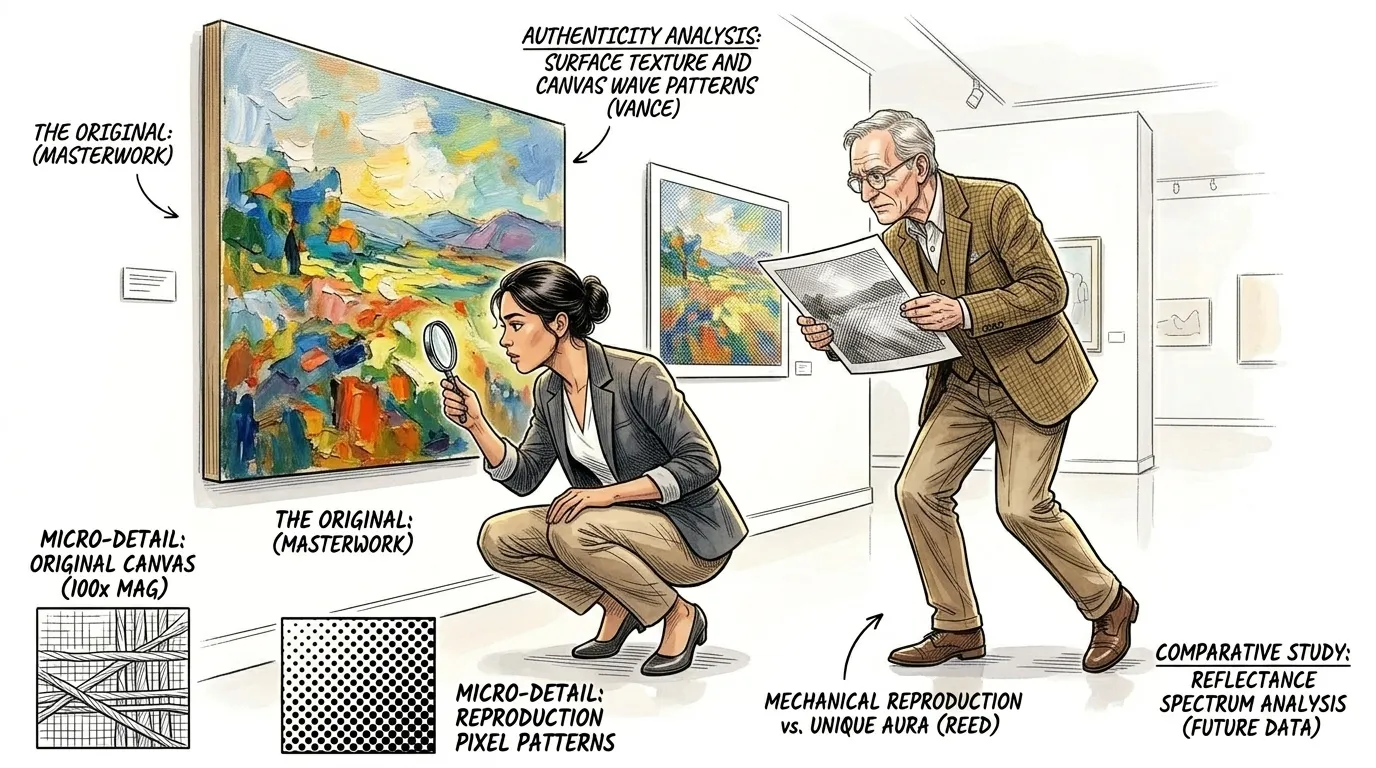
In a brightly lit gallery, Elara and Kaelen stood before a master painting, then turned to a high-quality print. The difference was subtle, yet profound.
"'No matter how perfect the photograph, it lacks the true depth, the texture, the years of history embedded in the original canvas,' Elara observed, her gaze fixed on the painting. Kaelen agreed, 'It's like seeing a picture of a mountain versus standing on its peak; one is information, the other is an experience.'"
Philosophy Note: The 'aura' refers to the unique presence of a work in time and space, its authenticity, and its history, which a copy can never fully possess.
Page 5
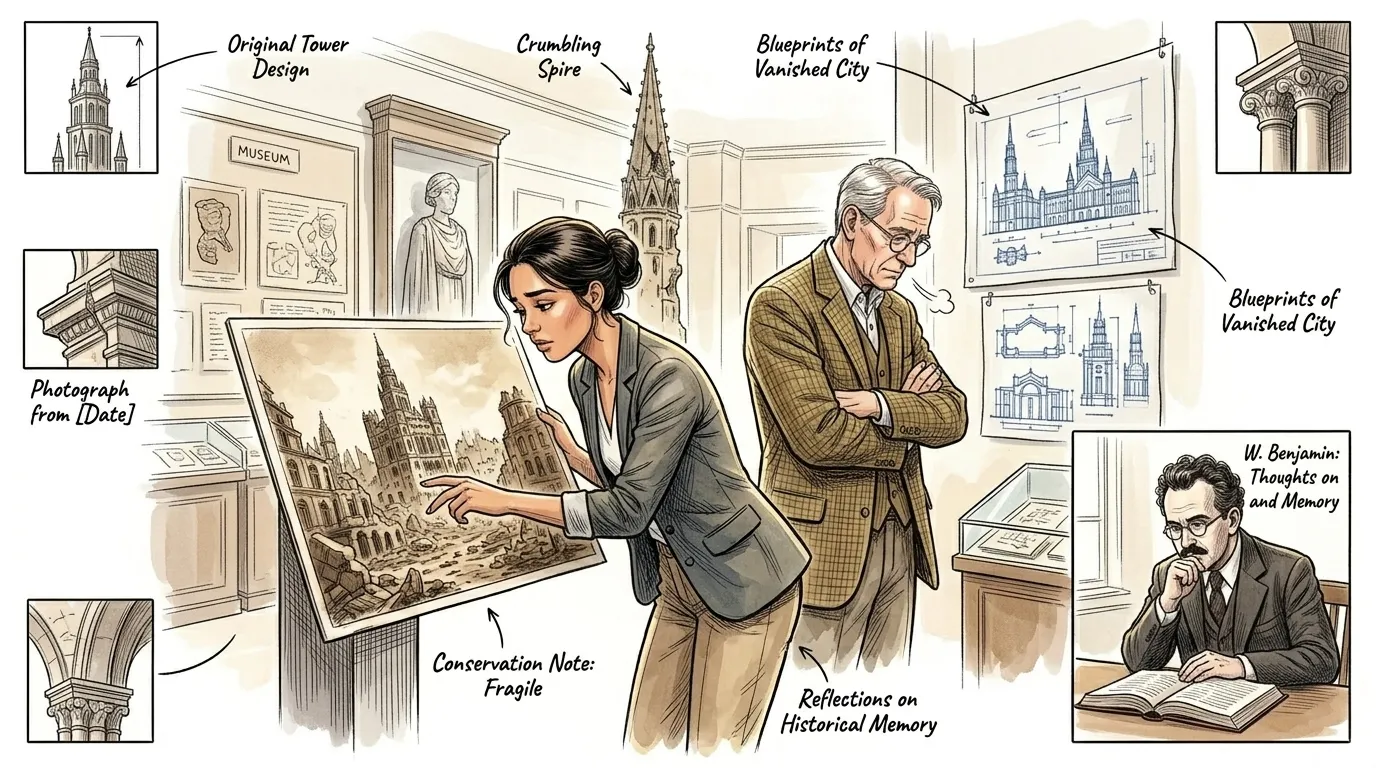
They moved to an exhibit showcasing old photographs of a once-grand city, now long lost to conflict. Blueprints of its original architecture hung beside them.
"'Benjamin saw history not as steady progress, but as a pile of fragments, shattered moments captured by images,' Elara explained, pointing to a crumbling tower in a photograph. Kaelen sighed, 'Each image a painful reminder of what was lost, unable to be put back together again.'"
Philosophy Note: Benjamin's 'Angel of History' is a metaphor for a historical observer who sees history as an accumulation of catastrophe rather than progress.
Page 6
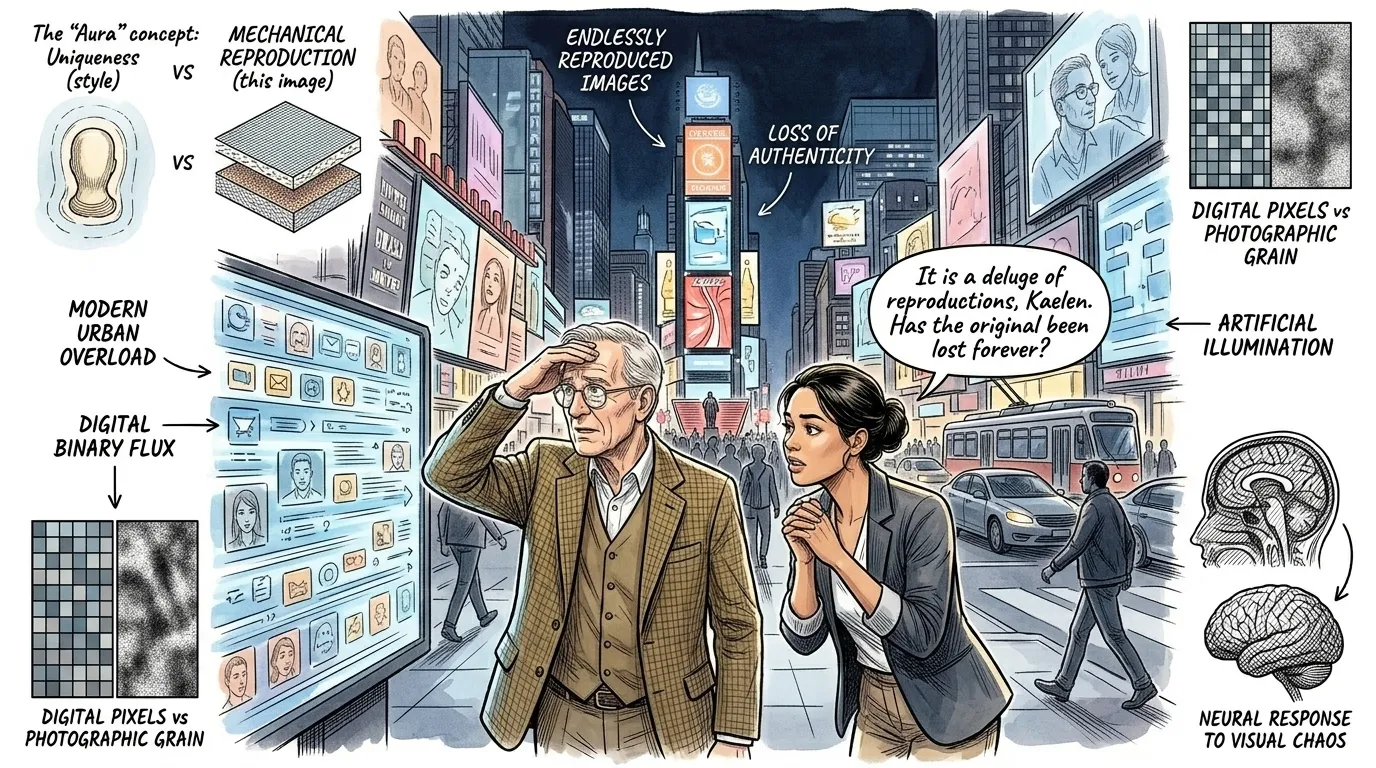
Later, they found themselves amidst the bustle of a modern city square, surrounded by towering digital billboards and screens flashing endless reproduced images.
"'It's overwhelming, isn't it?' Kaelen exclaimed, shielding his eyes from a bright screen. 'So many copies, so many images, where does the real end and the reproduction begin?' Elara mused, 'Benjamin forces us to ask: in this sea of reproductions, what happens to our sense of the authentic?'"
Philosophy Note: In the digital age, Benjamin's insights prompt critical questions about the authenticity and unique presence of information and art.
Page 7
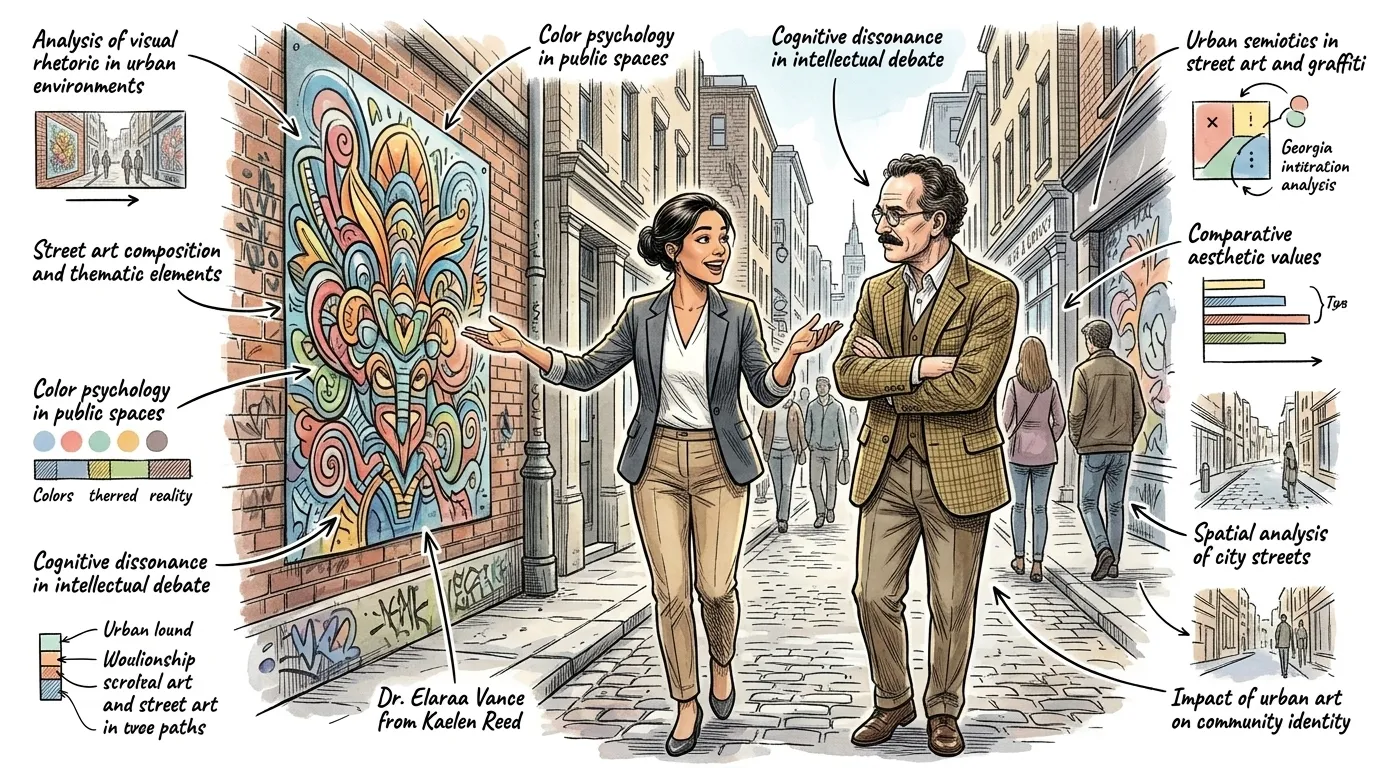
As they walked, a lively debate unfolded between them. The implications of mechanical reproduction were not entirely negative.
"'While the aura might diminish, mass reproduction makes art and knowledge accessible to everyone, not just the privileged few,' Elara argued, looking at the street art on a wall. Kaelen countered, 'But without that unique original, does the shared experience lose some of its depth, its true impact?'"
Philosophy Note: The tension between democratizing access to art through reproduction and the potential loss of the unique, ritualistic value of the original artwork.
Page 8
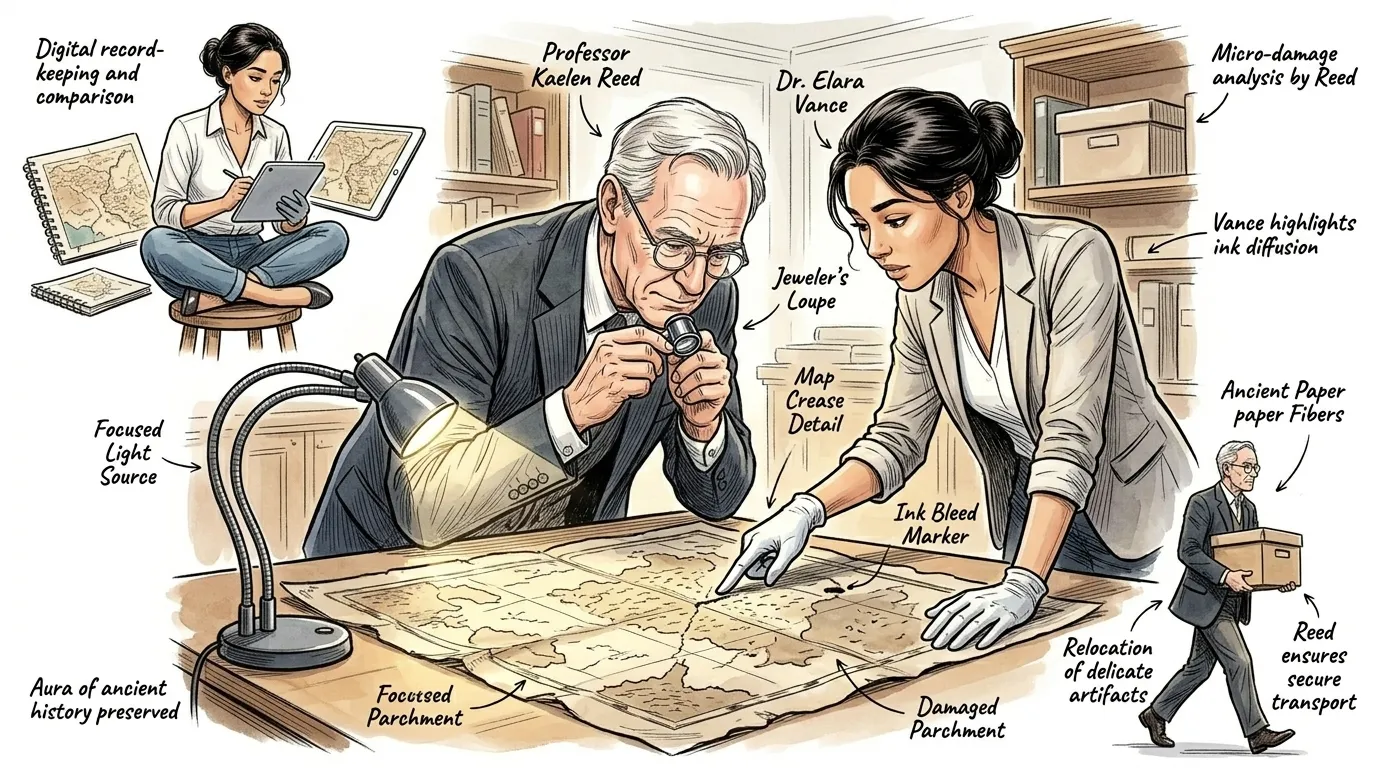
Back in the archive, they faced a challenge: authenticating a newly discovered, badly damaged map that could be a priceless original or a very clever forgery.
"'The fibers are subtle, but distinct from modern paper,' Kaelen observed, using a jeweler's loupe, recalling the specific texture of the hand-bound manuscript they found earlier. Elara added, 'And the ink's slight bleed, the way it settled into these ancient creases... it holds a story a copy couldn't perfectly replicate.'"
Philosophy Note: Discerning authenticity requires a deep understanding of an object's material history and subtle markers of its unique existence in time and space.
Page 9
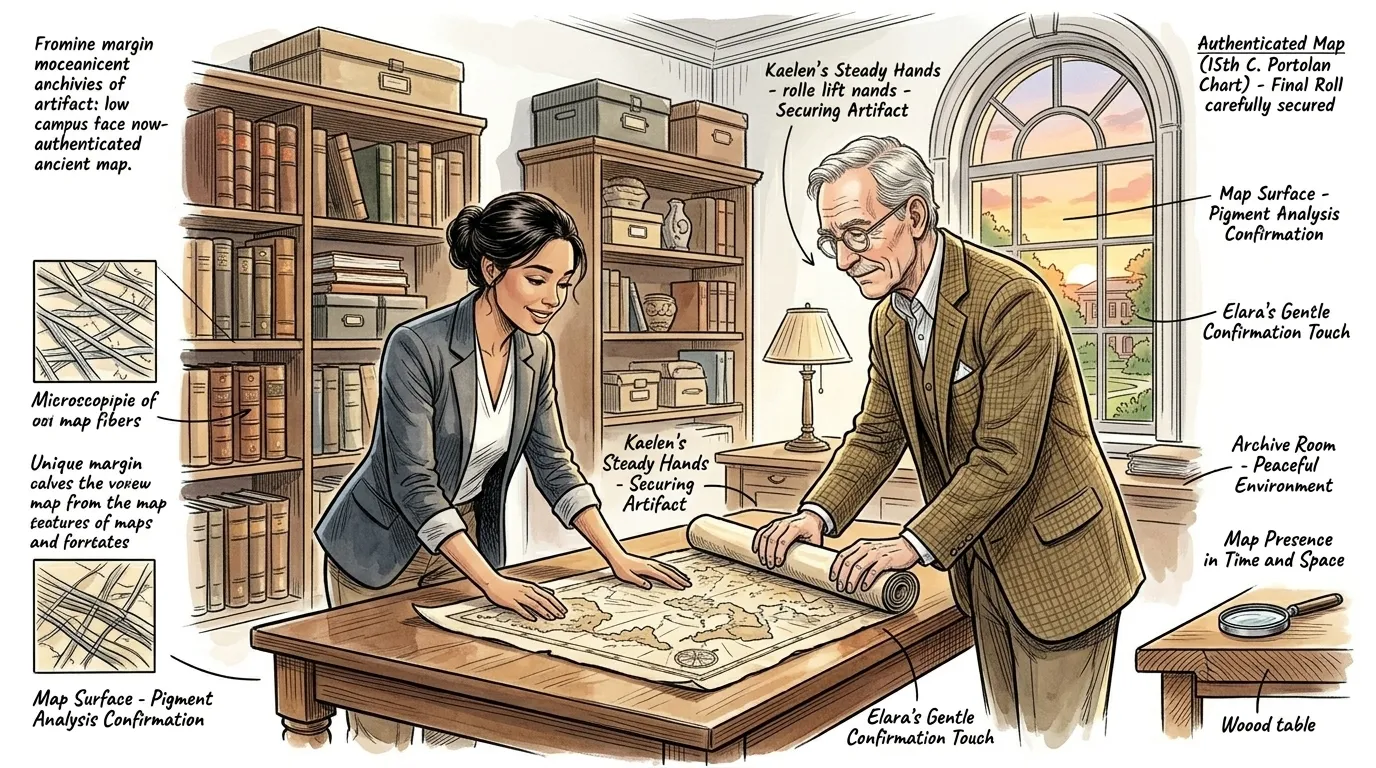
With the map's authenticity confirmed, Elara and Kaelen shared a moment of quiet triumph. The understanding of 'aura' deepened their appreciation.
"'Even the most perfect reproduction of a work of art is lacking in one thing: its presence in time and space, its unique existence at the place where it happens to be,' Elara quoted, smiling faintly. 'Walter Benjamin was profoundly right; that irreplaceable presence makes an original truly special,' Kaelen agreed, carefully rolling the authenticated map."
Philosophy Note: Benjamin's seminal quote encapsulates the essence of 'aura'—the irreplaceable value derived from an object's unique historical and physical presence.
Page 10
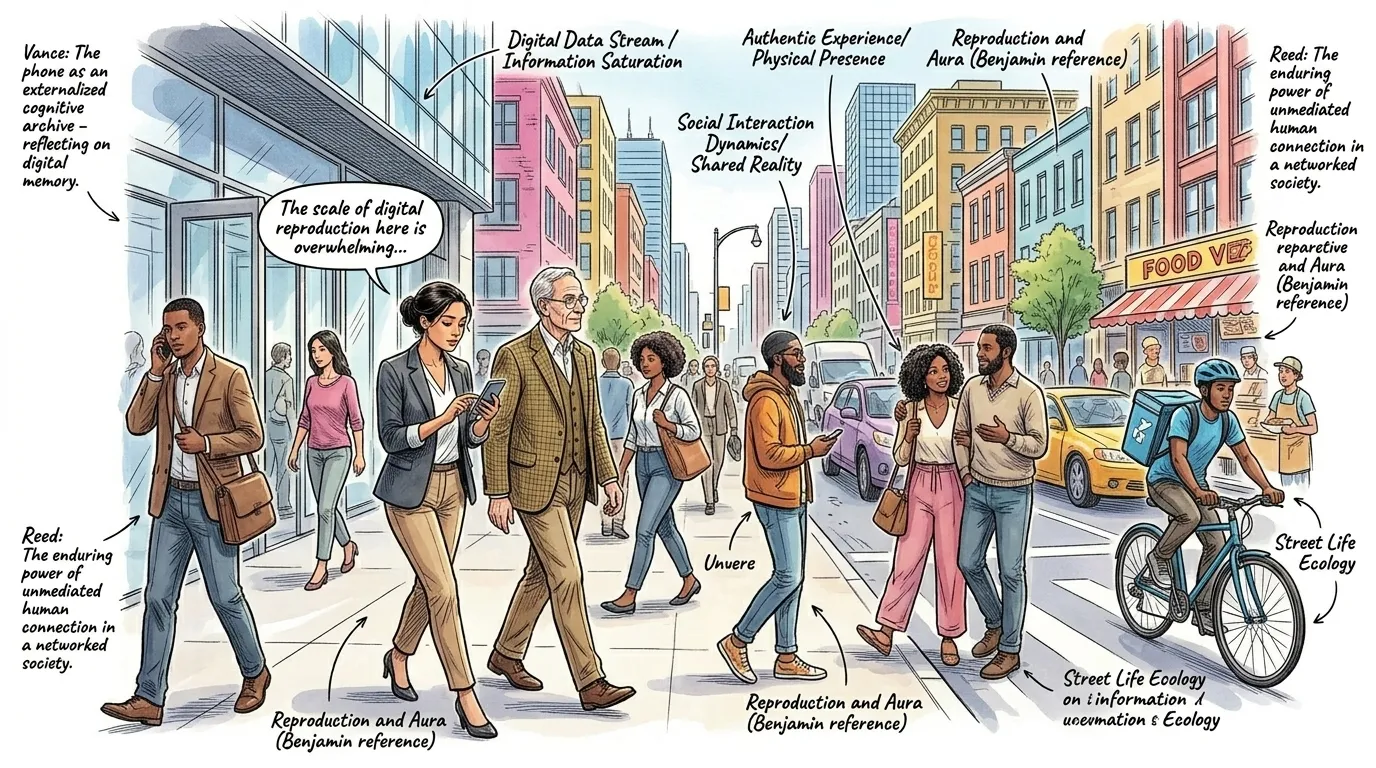
Stepping out into the vibrant street, Elara and Kaelen reflected on how Benjamin's ideas resonated more than ever in their digitized world.
"'From social media profiles to AI-generated images, Benjamin teaches us to question what is real, what is original, and what is merely a copy,' Elara mused, looking at her phone. Kaelen added, 'He encourages us to seek out genuine experiences, whether in art, history, or even our daily interactions, recognizing the special 'aura' in the unique.'"
Philosophy Note: Walter Benjamin's philosophy remains vital for navigating authenticity, value, and meaning in a contemporary world saturated with mechanically and digitally reproduced content.
About this story
- Audience: general readers
Questions and answers
Read Wonder Philosophy on your phone
Wonder Philosophy is available on Android and iPhone and iPad. Get Wonder Philosophy on Google Play · Get Wonder Philosophy on the App Store.