Hatshepsut: The Pharaoh Someone Tried to Erase
She ruled Egypt for over twenty peaceful, prosperous years and built one of its greatest temples. After her death, someone systematically chiseled her name off nearly every monument.
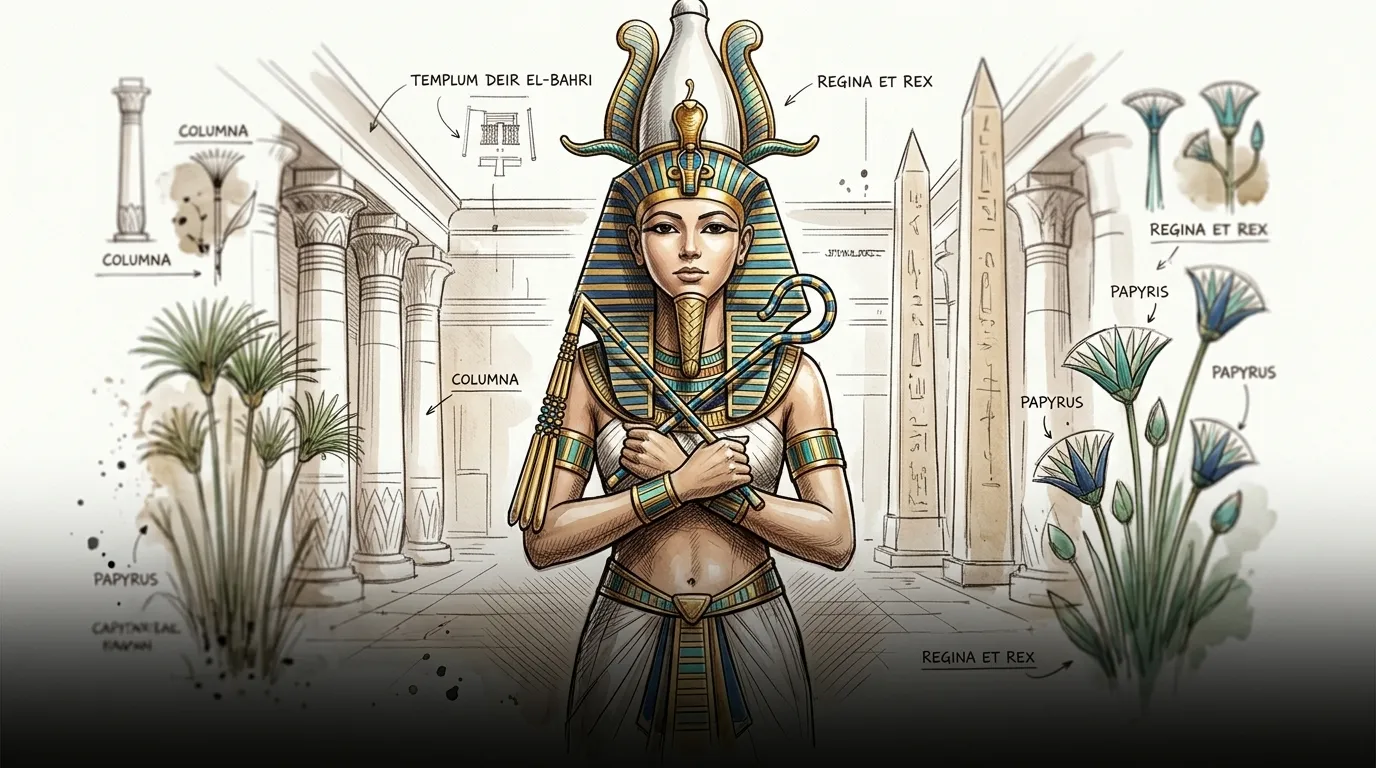
Hatshepsut ruled Egypt as pharaoh for roughly two decades in the 15th century BC, initially as regent for her young stepson Thutmose III and then, unusually, as a full co-ruler in her own right, using the same royal titles as any male pharaoh before her. Egyptologists generally rank her reign among the most successful of the 18th dynasty — she oversaw major building projects, restored trade routes disrupted by earlier foreign rule, and kept the kingdom largely at peace. Statues and reliefs from her reign frequently show her wearing the traditional false beard and male royal regalia of a pharaoh, a convention of royal iconography rather than a claim about her actual appearance.
The expedition to Punt
One of the best-documented achievements of her reign is a major trade expedition to the land of Punt, a region generally placed somewhere along the Red Sea coast of Africa, whose exact location is still debated by historians. Detailed relief carvings at her mortuary temple record the voyage in unusual specificity — the ships, the goods traded, and the Puntite ruler and his wife who met the Egyptian delegation — returning with incense trees, ebony, ivory, gold, and myrrh, a level of documented detail rare for any ancient Egyptian expedition.
What happened to her monuments after her death
Sometime after Hatshepsut's death, many of her statues were smashed, her images chiseled from temple walls, and her name removed from official king lists — a targeted campaign of erasure historians generally attribute to Thutmose III, though the exact timing and motive remain debated. Some Egyptologists argue it was a delayed political move to secure his son's succession by eliminating any precedent for a woman ruling as pharaoh; others note the damage happened years into Thutmose III's own reign, suggesting a more specific and personal grievance. Whatever the cause, the erasure was so effective that her existence was essentially unknown to modern scholars until 19th-century archaeologists began reassembling the evidence from what survived.
Told as an illustrated story
Frequently Asked Questions
Why is Hatshepsut shown with a beard in Egyptian art?
The false beard was part of the standard royal regalia every pharaoh wore in official art, regardless of gender — it was a symbol of the office, not a claim about her actual appearance.
Who erased Hatshepsut from Egyptian monuments?
Historians generally attribute the destruction of her images and name to her successor Thutmose III, though the exact timing (it happened years into his reign) and motive are still debated among Egyptologists.
Was Hatshepsut a successful pharaoh?
Yes — Egyptologists generally rank her roughly two-decade reign among the most stable and prosperous of the 18th dynasty, marked by major building projects and restored trade, including a well-documented expedition to the land of Punt.