Why So Many Fairy Tales Involve a Trip Into the Woods
Hansel and Gretel wander into one. Snow White flees into one. Sleeping Beauty's castle disappears behind one. The forest shows up in fairy tales so often that folklorists treat it as a category of its own.
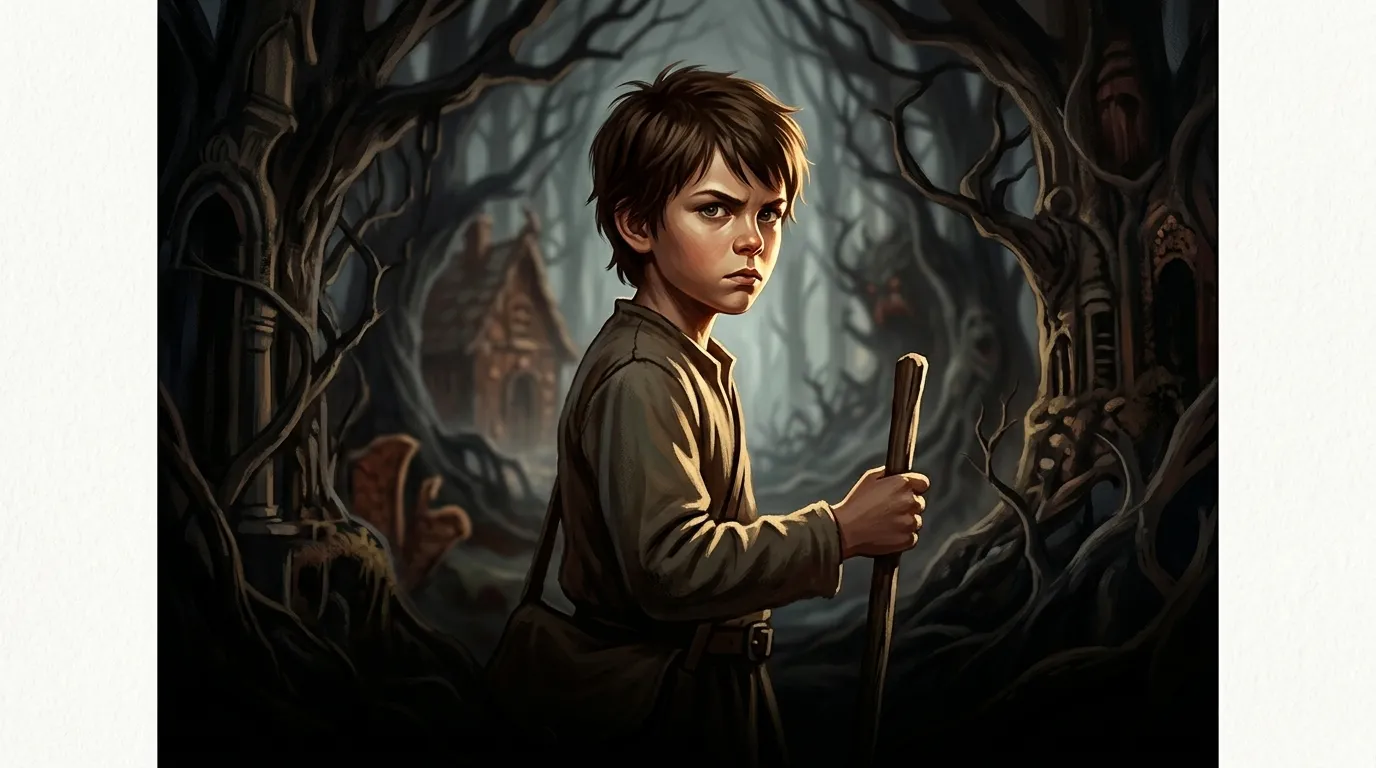
A surprising number of fairy tales share a single move: at some point, a character leaves the house, the village, or the castle and goes into the woods. Hansel and Gretel are led there by their parents. Snow White runs there to escape a huntsman. Sleeping Beauty's whole castle vanishes behind a wall of thorny forest for a hundred years. The forest isn't incidental scenery in these stories — it's doing real narrative work, and it shows up too consistently, across too many unrelated tales, to be a coincidence of setting.
Folklorists have a name for what the forest is actually doing: it's a liminal space — a threshold between one state and another, rather than a place in its own right. Almost nothing important in a fairy tale happens in the safety of home, and almost nothing happens once a character has fully arrived somewhere new and stable either. The forest is the passage in between, and that in-between quality turns out to be the whole point of putting a character there.
One of fairy tales' three basic settings
Scholars studying fairy tale structure generally describe stories as built from a small set of recurring location types: a safe space (home, the village), an unsafe space (the witch's cottage, the giant's hall), and a liminal space connecting the two — overwhelmingly, the forest. That connecting role is what makes it useful to a storyteller: it is a space where the normal rules of home no longer apply, but the story's real danger hasn't fully arrived yet either, which makes it exactly the right setting for a character to be tested, tempted, or lost before the plot's central threat appears. Psychologist Bruno Bettelheim, in his influential study of fairy tales The Uses of Enchantment, read the forest more specifically as a stand-in for the unconscious mind — a place where a character without a fully developed sense of self has to find their own way, and where getting out again represents real psychological growth rather than just a change of scene.
A real, historical edge of the map
The symbolism has a plain historical root, too. Most of the fairy tales collected and written down in the 1700s and 1800s came out of a northern and western Europe that was, in living memory, still heavily forested — and forests were genuinely where the familiar world of the village ended. Bandits, wolves, and simply getting lost were real, practical risks of the actual woods surrounding an actual town, not just an author's invention. Losing your way past the last field or the last house, in other words, was not an abstract fear for the people who first told these stories — it described an ordinary hazard of stepping past the edge of settled land. That gave the forest a double meaning that has outlasted the historical conditions that created it: a literal boundary of safety, and a metaphor for leaving safety behind, folded into the same setting.
Two tales that use the woods differently
Wonder Tales carries a wide range of stories that lean on this same setting for different purposes. Hansel and Gretel are abandoned in the forest by circumstance and have to survive it through their own cleverness, turning the woods into a test of resourcefulness. Mother Holle sends its heroine down a well into an entirely different kind of threshold — not a forest, but the same underlying idea of a passage between the ordinary world and somewhere stranger, where she is tested and rewarded before returning home changed.
Frequently Asked Questions
What does the forest symbolize in fairy tales?
Folklorists generally treat it as a liminal space — a threshold between the safety of home and whatever danger or transformation the story is building toward, rather than a location in its own right. Bruno Bettelheim's influential reading in The Uses of Enchantment ties it more specifically to the unconscious mind and personal growth.
Is the forest always a dangerous place in these stories?
Usually threatening rather than purely evil — it is where a character is tested, lost, or tempted, and getting through it is what allows the story to move forward. The danger is the point of putting a character there, not a flaw in the setting.
Why did so many old fairy tales specifically use a forest and not some other setting?
Partly because it reflected the real landscape around the storytellers — much of northern and western Europe was still heavily forested when these tales were collected in the 1700s and 1800s, and the forest genuinely marked the edge of safe, settled land.