How Visual Storytelling Works Differently From Prose
A comic page doesn't just illustrate a story — it asks the reader to do something a prose paragraph never does: fill in everything that happens in the gap between two panels.
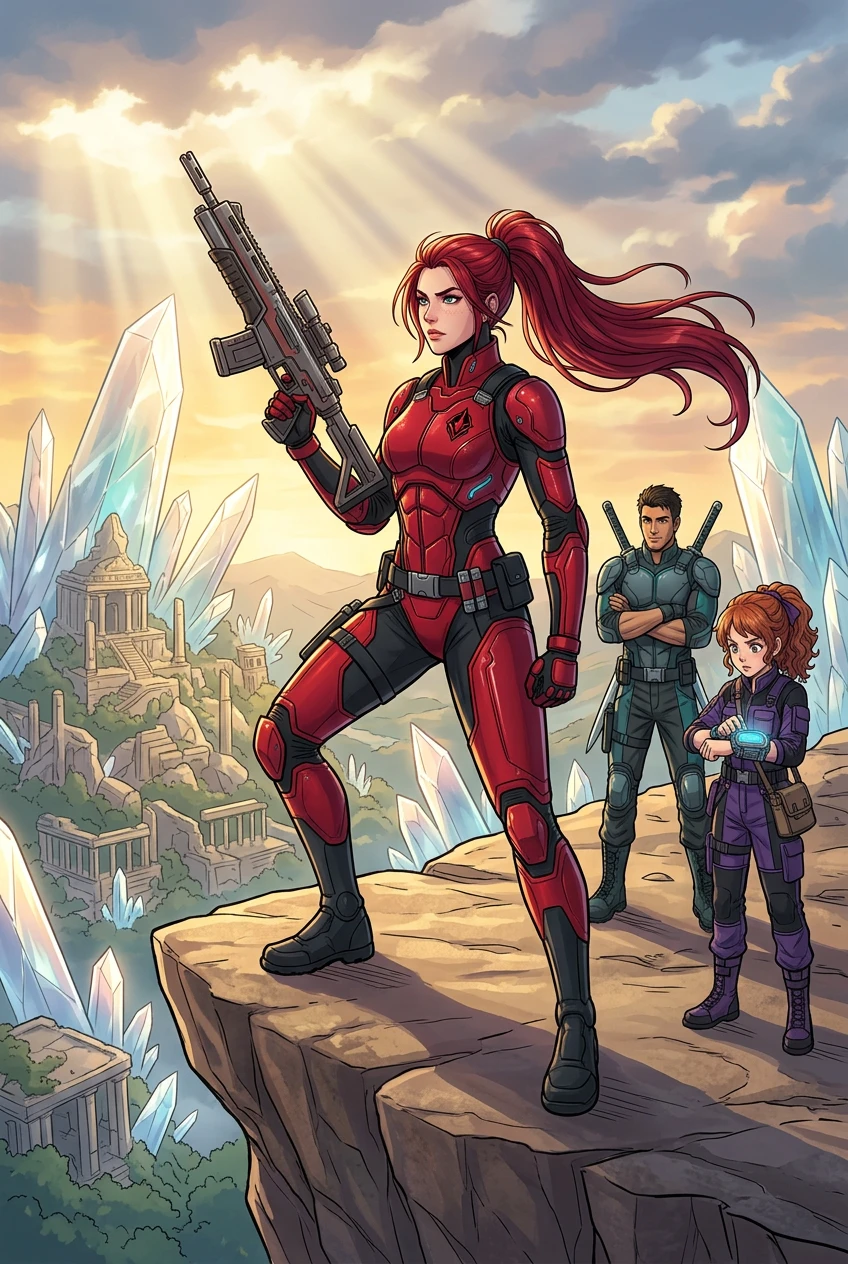
Comics scholar Scott McCloud, in his widely cited 1993 book Understanding Comics, named the mechanism at the centre of the medium "closure" — the reader's mind completing the action that happens in the gap between one panel and the next. Show a raised knife in one panel and a scream in the next, and the reader has supplied the stabbing themselves; the artist never drew it. Prose can withhold information too, but it does so through sentences the reader reads in sequence, one at a time. A comic page presents several moments at once, spatially, and lets the reader's eye decide how fast to move between them.
This is why pacing in visual storytelling is a genuinely different craft from pacing in prose, not just a shorter version of it. A prose writer controls time through sentence length, paragraph breaks, and how much is described versus summarised. A visual storyteller controls it through panel size, the number of panels on a page, and the gap between what one panel shows and the next reveals — a wide, uncluttered panel reads as a pause; a tight sequence of small panels reads as speed. Neither medium is more or less capable of nuance; they simply make different tools available to create it.
The 'closure' idea also explains why visual storytelling has historically reached readers that dense prose sometimes does not — younger readers, reluctant readers, readers working in a second language. The image is doing real narrative work, not just decorating the text, so a reader who struggles with a long paragraph can still follow what is actually happening from the sequence of panels alone.
Comics are older than the newspaper strip
The form is usually traced back further than most readers assume. Rodolphe Töpffer, a Swiss schoolteacher and professor in Geneva, published picture-stories in the 1830s and 1840s — sequences of captioned panels such as Histoire de M. Vieux Bois — that comics historians generally credit as the first true comic strips, decades before American newspapers popularized the form in the 1890s with strips like The Yellow Kid. Töpffer's books ran on the same mechanism a comic still runs on today: individual drawings that only make full sense once joined into a sequence, with the reader doing the work of connecting them.
Manga reads differently for a reason
Manga is read right to left because it follows tategaki, the traditional Japanese vertical-writing convention, rather than the left-to-right layout of most Western comics. Early English translations often mirror-flipped the artwork so it would read left to right for Western readers; by the early 2000s, reader demand for authenticity had reversed that practice, and most English manga translations now keep the original right-to-left orientation. Pacing changed too: after World War II, manga artist Osamu Tezuka introduced what's now called decompressed storytelling — stretching a single dramatic moment across many panels and page turns instead of compressing a whole scene into a few frames, borrowing techniques like the close-up from film. It's a useful reminder that 'visual storytelling' isn't one fixed grammar; Western comics, manga and European bande dessinée each pace a page differently, on purpose.
A library built around exactly this
Wonder Comics tells its stories entirely through this kind of sequential, illustrated pacing — action, mystery, science fiction and fantasy across 38 stories, each one carrying the plot through panels and momentum rather than dense description.
Frequently Asked Questions
What is 'closure' in comics?
Closure is comics scholar Scott McCloud's term for the mental work a reader does filling in the action that happens in the gap between two panels — the artist shows a before and an after, and the reader supplies what happened in between.
Why do manga read right to left?
Manga follows the traditional Japanese vertical-writing convention rather than the left-to-right layout used in most Western comics. Publishers used to mirror-flip manga for English editions, but reader demand for authenticity reversed that in the early 2000s, and most translations now keep the original orientation.
Do comics help kids who struggle with reading?
Literacy educators frequently point to comics as a genuine on-ramp rather than a lesser format, because the images carry real narrative and emotional information. A reader who finds a dense paragraph difficult can often still follow the plot and characters from the sequence of panels alone.