Why Kids Lose Interest in Science, and How a Story Brings It Back
Young children ask 'why' constantly and count as natural scientists. Educators consistently point to the same moment where that curiosity starts to fade — and to a fairly specific way of getting it back.
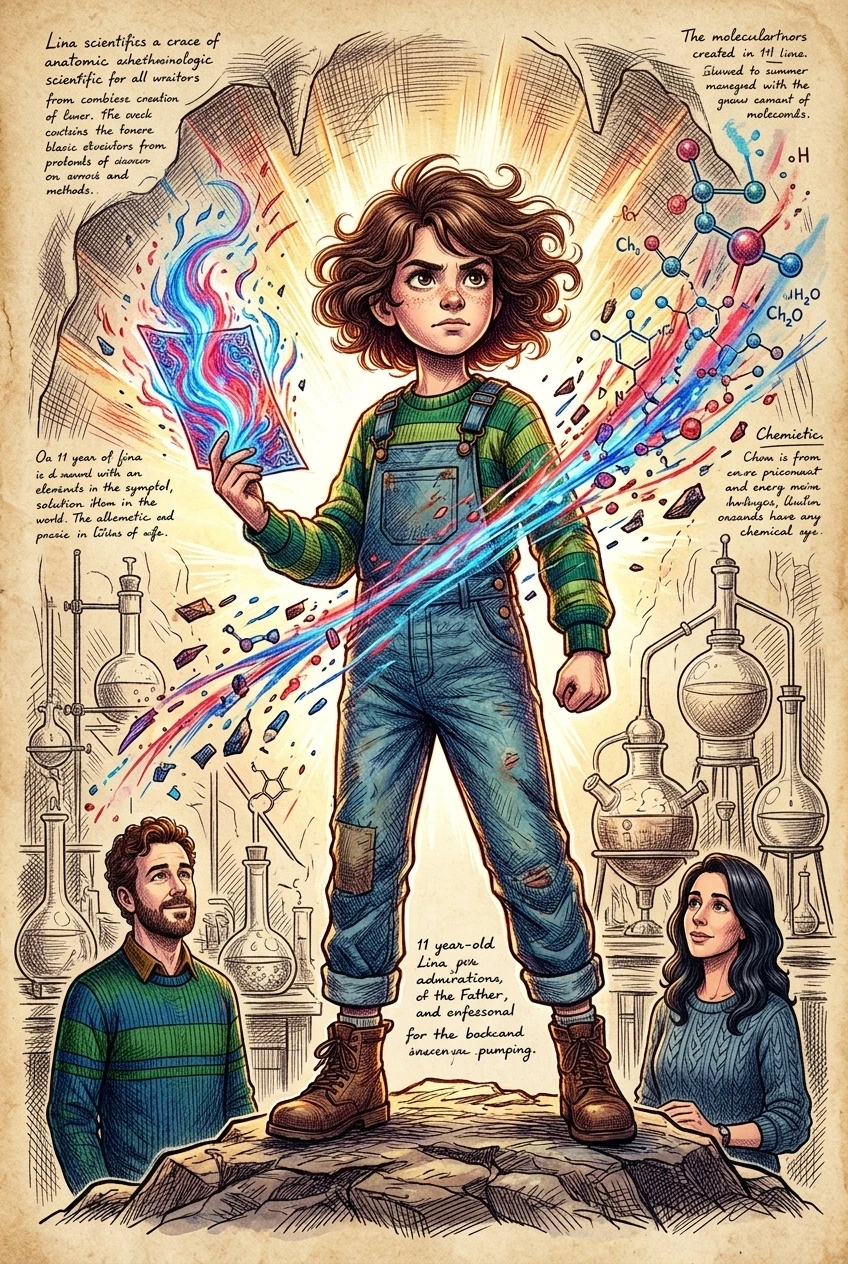
Young children are, by most educators' description, natural scientists before anyone teaches them to be: picking up bugs, asking why the sky changes color, testing what floats and what sinks without being told to. That instinct doesn't reliably survive into the school years. As science shifts from something a child does to something a child is taught — facts to be memorized rather than questions to be chased — many kids start experiencing it as just another subject rather than an extension of curiosity they already had.
The advice from science educators for reversing this is fairly consistent: make it hands-on rather than passive, follow a child's own questions instead of a fixed lesson plan, and treat 'I don't know, let's find out' as a legitimate answer rather than something to Google away instantly. Passive learning — reading a fact and being expected to retain it — is repeatedly named as the biggest source of boredom, regardless of how interesting the underlying subject actually is.
Storytelling shows up specifically, and often, in that same advice: attaching a scientific idea to a real moment — a specific discovery, a specific person, a specific mistake that led somewhere unexpected — gives a child something to follow the way they'd follow any other story, rather than a fact floating with no context. It's one of the few techniques that works even without lab equipment or a hands-on activity in front of them.
The questions really do drop off a cliff
The scale of the drop is one of the more striking findings in education research. Psychologist Susan Engel, who has spent years studying question-asking in classrooms, found that kindergartners ask dozens of questions an hour on average, a rate that falls to nearly none by middle school. A separate, widely cited longitudinal study tracking the same children's creative-thinking scores at ages five, ten and fifteen found the share reaching the highest possible score falling sharply at each stage. Researchers increasingly frame this less as something children simply outgrow and more as something classrooms train out of them: a culture that rewards giving the correct answer quickly, rather than asking a good question, teaches kids that certainty is worth more than curiosity.
International data shows the same dip, right on schedule
Large international assessments back this up. Students typically start school with favorable attitudes toward science, and researchers studying PISA and TIMSS data consistently find that interest declines through the school years, with the steepest drop-off arriving around the transition into secondary school. Oddly, the countries whose students score highest on international science tests, including Finland and Japan, often report some of the lowest levels of stated interest in continuing to study science. That gap suggests mastering the material and staying curious about it are two different achievements, and a curriculum can succeed at the first while quietly failing at the second.
One idea, one story, one sitting
Wonder Science takes that approach directly: each kids-level story attaches one science idea — why litmus paper changes color, how a bee actually flies — to a short illustrated story with a real moment behind it, rather than presenting the idea as a fact to memorize.
A couple of ideas, told as stories
Frequently Asked Questions
At what age do kids typically lose interest in science?
Question-asking in general starts declining early in the elementary years, but research on science specifically points to the transition into secondary school, typically around age eleven, as the point where the steepest drop in interest begins.
Does storytelling actually help kids learn science?
Science educators frequently recommend attaching a concept to a real narrative moment — a discovery, a person, a mistake that led somewhere unexpected — because it gives the idea context to hang on. It works alongside other techniques like hands-on activities rather than replacing them.
Is losing interest in science just a normal part of growing up?
Researchers increasingly argue it isn't purely developmental. Classrooms that reward quick correct answers over genuine questions appear to train curiosity down over time, which means the decline is shaped by environment as much as age — and isn't fixed or inevitable.