The Novel in Verse That Started Russian Literature
Eugene Onegin isn't a novel with some poetry in it — every line of it is verse, in a stanza form Pushkin invented for the book. Russian writers still measure themselves against it.
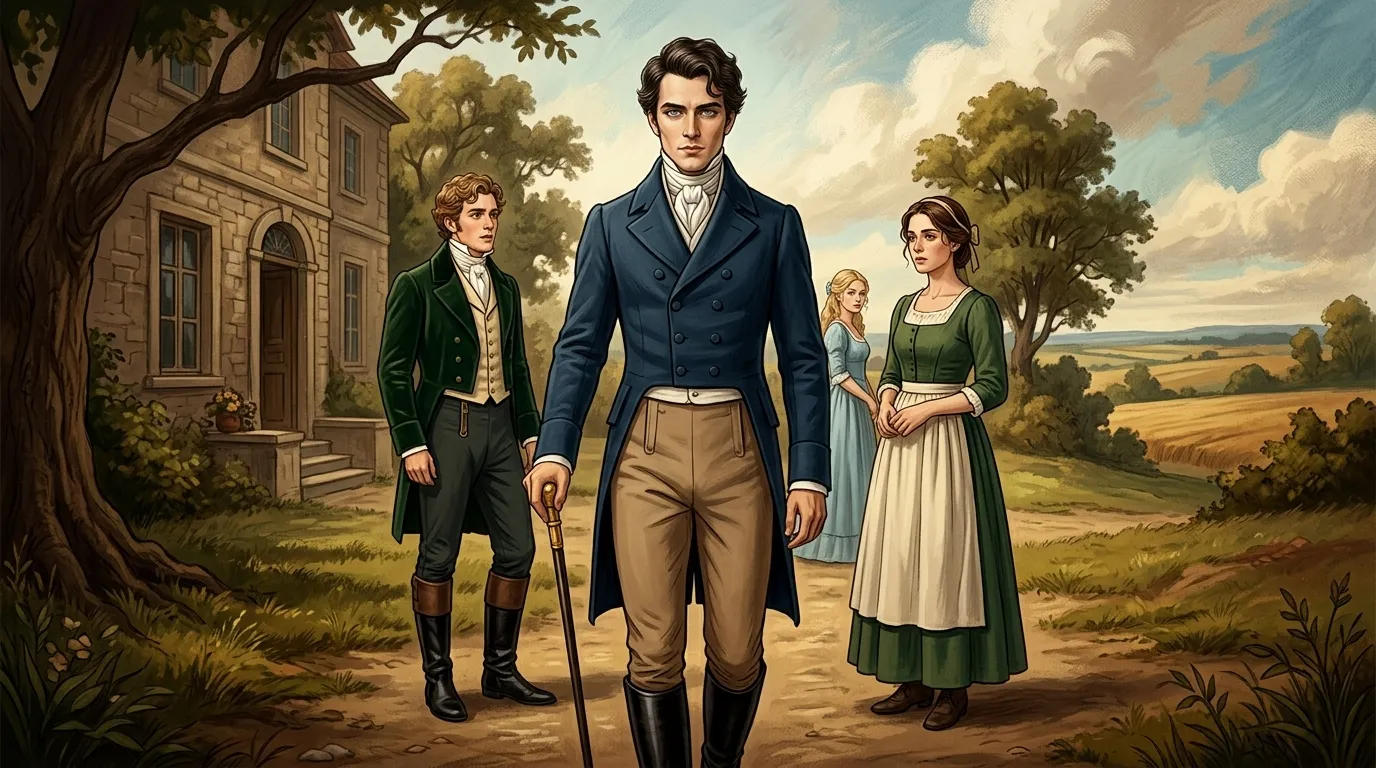
Alexander Pushkin published Eugene Onegin serially between 1825 and 1832, and Russian critics and writers have treated it as a foundational text of their national literature ever since — Fyodor Dostoevsky called Pushkin's Tatyana, the novel's heroine, close to a national ideal, and generations of Russian writers who followed, from Tolstoy to Nabokov, wrote in a literary language Pushkin's work had a hand in shaping. What makes the book structurally unusual is easy to miss in translation: it is written entirely in verse, roughly 5,500 lines of it, not prose interrupted by poems.
A stanza form built for this one book
Pushkin invented a specific 14-line stanza for the novel, now called the Onegin stanza — iambic tetrameter with a fixed rhyme pattern that echoes the structure of a sonnet without quite being one. Almost the entire novel is composed in this single repeating form, which Pushkin uses with enough flexibility to carry narrative scenes, letters between characters, and the narrator's own digressions and jokes, all inside the same tight structural rule. Vladimir Nabokov, who later produced a famously literal English translation with an extensive commentary, argued that reproducing both the story and the exact rhyme scheme in English simultaneously was effectively impossible — a large part of why so many competing English translations of the same book exist.
A love story told mostly through timing
The plot itself is comparatively simple: a bored, worldly aristocrat, Onegin, coldly rejects a young woman's earnest declaration of love, then years later, once she has married someone else and become a composed society figure, realizes he loves her and is in turn rejected. The story's power for Russian readers has less to do with plot mechanics than with how precisely it captures a specific type of person and social world — bored, over-educated Russian aristocrats disconnected from ordinary life, a figure so associated with the novel that Russian literary criticism still uses the term 'superfluous man' it helped popularize.
Told as an illustrated story
Frequently Asked Questions
Is Eugene Onegin a novel or a poem?
Both, in the sense that matters — it's a novel-length narrative told entirely in verse, roughly 5,500 lines, using a 14-line stanza form Pushkin invented specifically for the book, now called the Onegin stanza.
Why is Eugene Onegin considered so important to Russian literature?
It's widely credited with helping establish a modern Russian literary language and set a narrative template — including the archetype of the disaffected 'superfluous man' — that later major Russian writers, including Dostoevsky and Tolstoy, wrote in direct relation to.
Is it hard to translate Eugene Onegin into English?
Notoriously so. Vladimir Nabokov, who produced a major literal translation with extensive commentary, argued it's effectively impossible to preserve both the exact story and the precise rhyme scheme simultaneously in English, which is why many competing translations exist, each making different trade-offs.